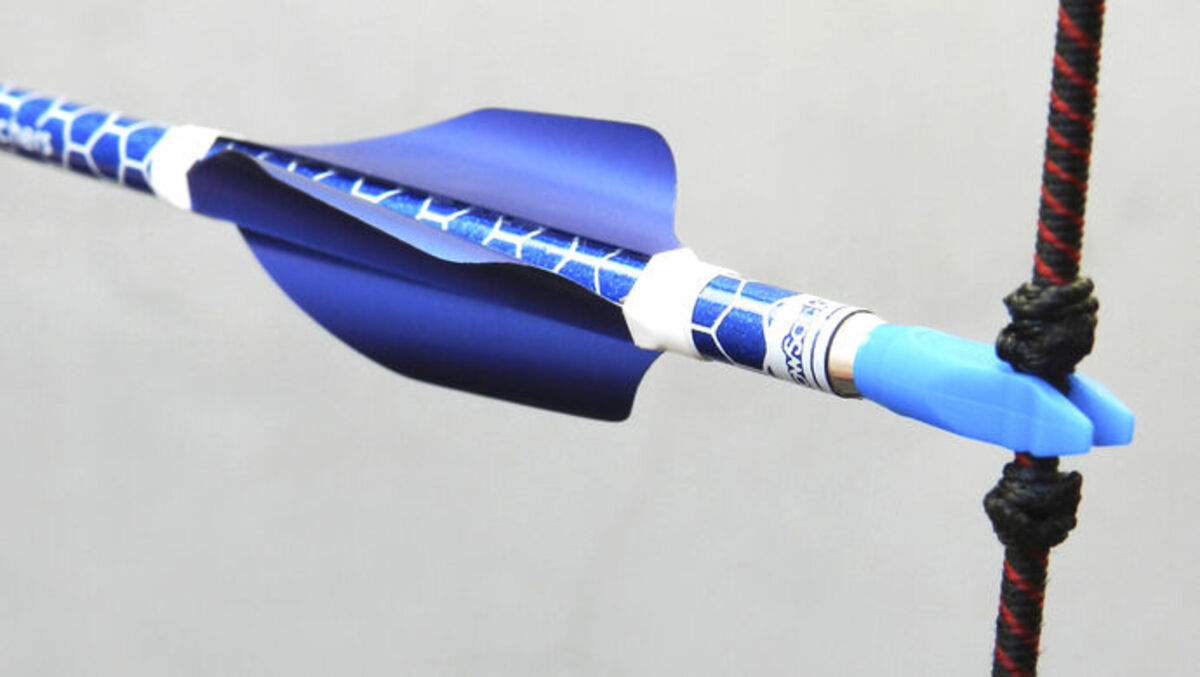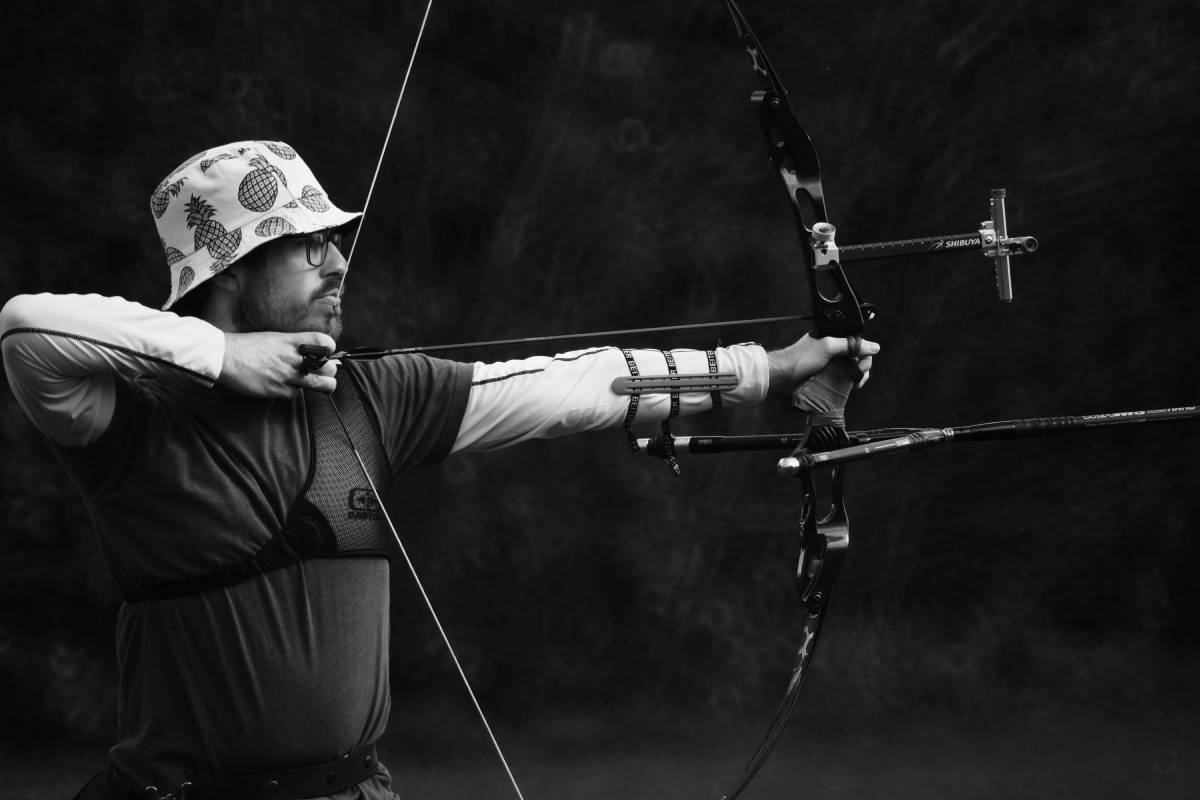

Bare shaft tuning shows you exactly what your bow is doing wrong. Follow these 7 steps to read the results and get perfect arrow flight and broadhead accuracy.
Tag Archives: archery tuning
Quick Answer: Paper tuning a compound bow means shooting an arrow through a suspended sheet of paper from about 6 to 8 feet away and reading the tear it leaves. A clean round hole means your arrow is flying straight. A tear with tails pointing up, down, left, or right tells you exactly which way […]
Cam timing is the single fix that turns an unexplained flier into a 3-inch group at 40 yards. On a compound bow, it means both cams (or the single cam plus the idler wheel) reach their stops at the same moment, so the string travels a straight, repeatable path on every shot. When timing slips […]
Most compound accuracy mysteries trace back to worn string hardware. Here’s how to diagnose nocking point and d-loop failure before it costs you a tournament.
An archery nocking point looks small, but it has a huge job. It tells your arrow exactly where to sit on the string, which affects arrow flight, clearance, and consistency on every shot. If your nocking point is too high, too low, or poorly secured, even a well-tuned bow can start throwing weak groups and […]
Learn how to tune a recurve bow using bare shaft, paper tuning, and walk-back methods. Step-by-step guide with setup tips and troubleshooting.
Learn how to sight in your compound bow with this complete step-by-step guide. Covers single-pin and multi-pin sights, 20-yard zero, chase-the-arrow method, and common mistakes that wreck your groups.
Follow this 9-step spring compound bow tuning checklist to get your setup shooting accurately. Covers string inspection, cam timing, paper tuning, broadhead testing, and more.