
Archery Blog
Broadhead Tuning: 6 Fixes When Broadheads Miss Field Points
Jun
Three weeks before opening day, the average bowhunter discovers their broadheads are printing four inches right of their field points at 30 yards. That gap is not a bow problem and it is not a bad broadhead. It is a tuning problem, and it is fixable in an afternoon if you know what to chase. Broadhead tuning is the process of making your hunting tips group with your field points so the bow you sighted in all summer still puts an arrow where the pin sits when there is a deer under it.
What follows is the exact six-fix sequence I use to close that gap. Skip steps and you will chase noise. Run them in order and the bow will fall into tune in two to four sessions, not two to four weekends.
What Broadhead Tuning Actually Means
Broadhead tuning is the alignment phase that happens after your bow is mechanically tuned with field points. A field point is round, smooth, and forgiving. It will hide minor cam timing problems, rest position errors, and arrow spine mismatches because it presents almost no surface for the air to grab. A broadhead has blades, and blades are wings. Every flaw in arrow flight gets amplified the instant a real hunting head comes off the string.
If your broadhead-tipped arrows hit inside the same dot as your field-tipped arrows out to 60 yards, your bow is broadhead tuned. Anything else is feedback you need to act on. Mechanical heads usually fly closer to field points than fixed blades, but the truth is most mechanicals still drift an inch or two until the rest gets a final nudge.
Before You Tune — 4 Things to Confirm First
Do not start broadhead tuning on a bow that has not already been paper tuned with field points. You will be solving two problems at once and you will solve neither. Confirm these four before you screw a broadhead onto anything.
- Centershot is set: the arrow rest is around 13/16 inch from the riser on a typical compound, and the arrow runs parallel to the inside of the riser at full draw.
- Arrows are correctly spined: match the spine to your draw weight, draw length, and point weight. An under-spined arrow flexes too much, and a broadhead exposes it instantly.
- Nock point is square: the arrow sits perpendicular to the string with a bow square, and the d-loop is tied tight against the serving.
- Field points already produce a clean bullet hole through paper at 6 feet. Until you have that, broadhead tuning is guessing.
For a deeper walkthrough of the paper-tear diagnosis and the fixes for each tear pattern, work through our paper tuning chart first. Skipping that step is the most common reason hunters waste a Saturday chasing imaginary problems.
Fix 1 — Spin Test Every Broadhead Before It Sees a Target
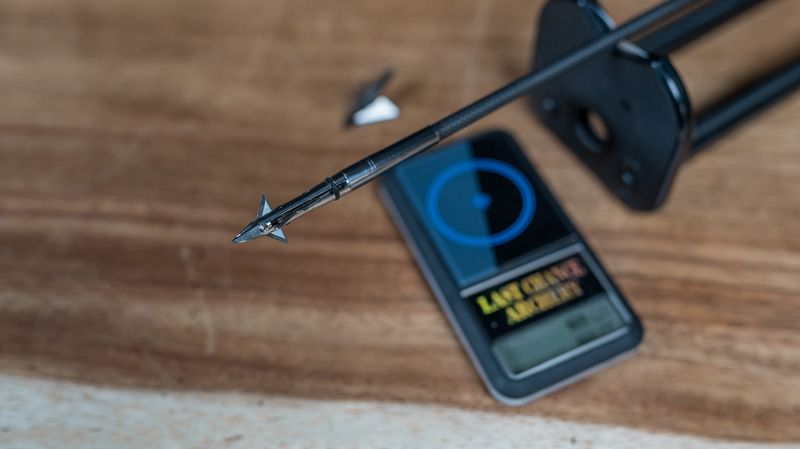
The fastest way to ruin a tuning session is to fight a single bent broadhead for an hour without knowing it. Stand each broadhead-tipped arrow on its tip on a flat hard surface and spin it. The shaft should rotate without the broadhead end wobbling. If the back end of the arrow draws a circle in the air, something is off — usually the broadhead is not seated square against the insert, or the insert itself is glued in crooked.
Pull every wobbly arrow out of rotation. Heat the insert, reseat it, or replace the head. A wobble of even a sixteenth of an inch at the broadhead translates into inches at 40 yards. You cannot tune that out with a rest adjustment, and trying to will only push the rest off where the field points like it.
Fix 2 — Match Broadhead and Field Point Weight to the Grain
This step gets skipped constantly. A 100-grain field point and a 100-grain broadhead from two different brands are rarely the same weight in the real world. Tolerances of plus or minus 3 grains are normal from the factory. Three grains on the tip moves point of impact more than people expect, especially at 50 yards and out.
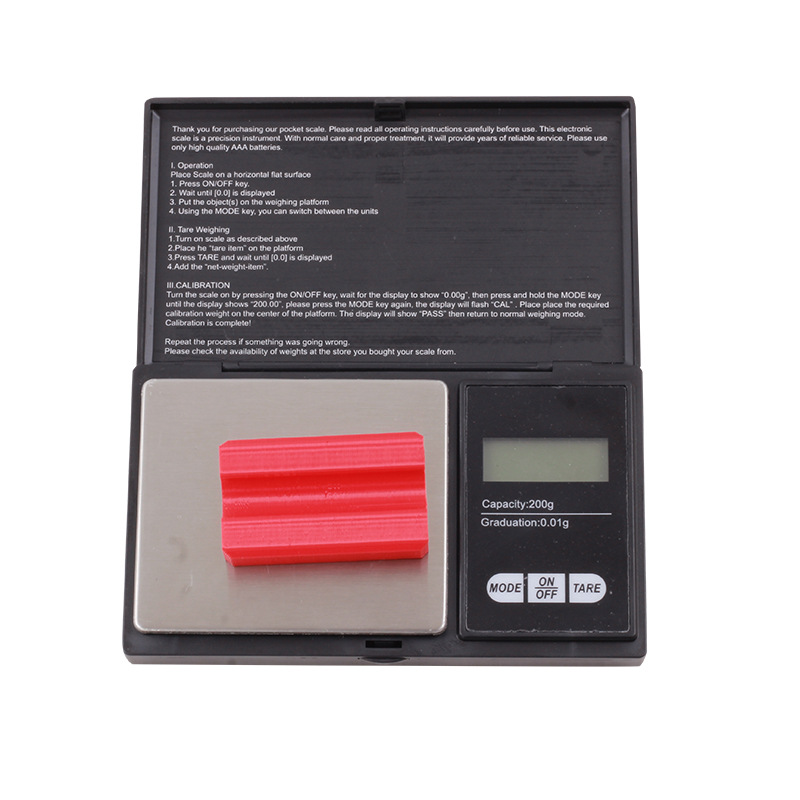
Weigh every field point and every broadhead on a grain scale. Sort them into matched sets. The broadhead you are tuning to should weigh within one grain of the field point you are tuning from, including the insert if it changes between practice and hunting setups. The whole arrow weight should also match — same shaft, same fletching, same nock. Practice shafts and hunting shafts swap fletch contour all the time, and that alone will throw groups apart.
If you are matching shafts, our arrow spine chart walks through how spine, point weight, and length combine to set dynamic spine for the bow you are shooting.
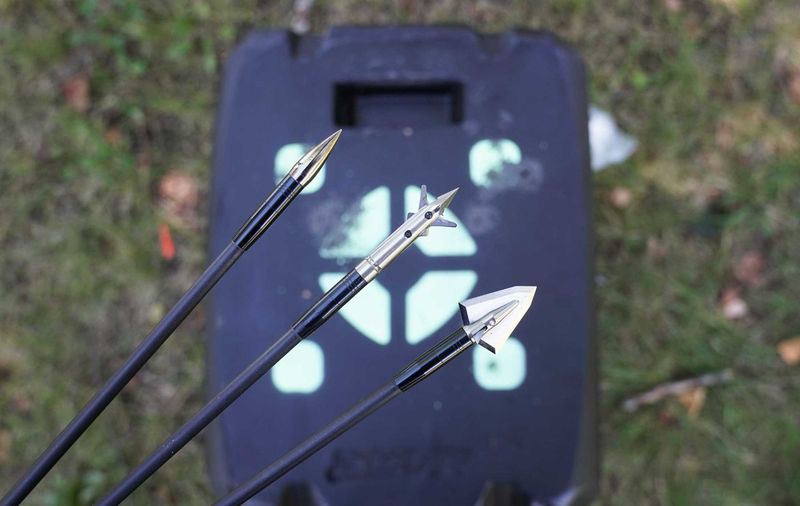
Fix 3 — Confirm a Bullet Hole With a Broadhead at 6 Feet
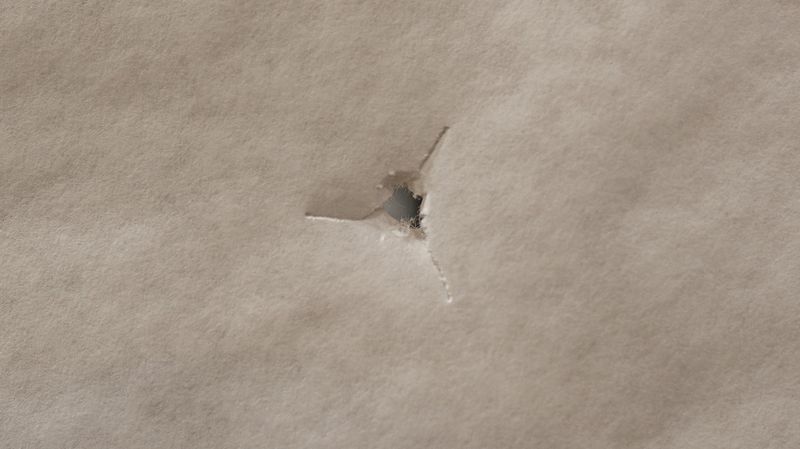
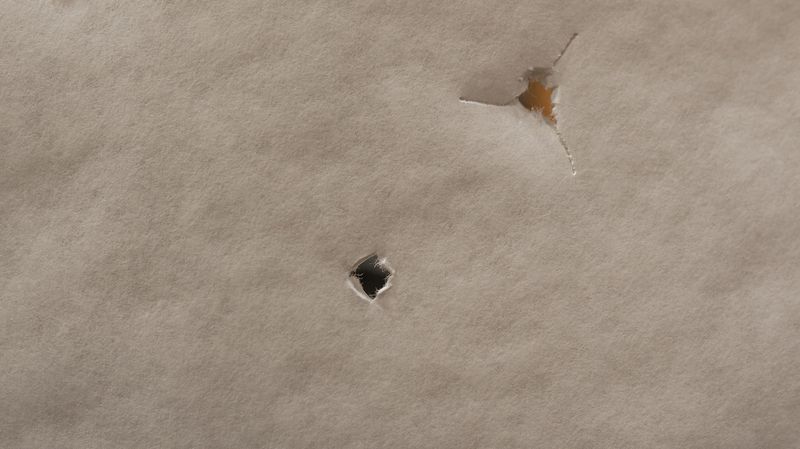
Now shoot a fletched, broadhead-tipped arrow through paper from six feet. You should see the same clean round hole with three or four even slits radiating from it that you got with field points. If the tear is identical to your field point tear, you are most of the way there and you can move straight to walk-back tuning.
If the tear shifts — high, low, left, or right — that is your rest telling you which direction to nudge. The fix is the same as paper tuning with field points: move the rest in the opposite direction the vanes tear. A high tear means rest goes down. A left tear (for a right-handed shooter) means rest goes right. Tiny moves only. A 64th of an inch on the rest is a real adjustment at 20 yards.
Fix 4 — Broadhead Tune by Chasing Impact at 20 Yards
This is the step every veteran bowhunter actually relies on, and it works whether or not you have a paper tuning frame. Shoot one field-tipped arrow at a target dot. Then shoot one broadhead-tipped arrow at the same dot from the same anchor. Mark where each hits.
If the broadhead hits left of the field point, move your rest left in 1/64-inch increments until they touch. If the broadhead hits high, move your rest down. The trick that catches new bowhunters off guard is that the rest moves toward the broadhead impact, not away from it. You are pulling the broadhead arrow back to where the field point landed.
Re-sight the bow after each meaningful move so your pins still match impact. Three or four small moves is usually all it takes. If you are still chasing impact after five adjustments, something upstream is wrong — usually arrow spine, a bent broadhead, or torque in the bow hand. Stop adjusting the rest and go investigate.
Fix 5 — Walk-Back Tune to Lock In Horizontal Centershot
Walk-back tuning catches the horizontal errors that 20-yard tuning hides. Set a single vertical line of tape on a target. Aim at the top of the line with your 20-yard pin. Shoot one arrow. Step back to 30 yards, aim at the same exact spot with your 20-yard pin, and shoot another. Step back to 40, then 50. Use the same 20-yard pin every shot.
The arrows will drop down the line, that is gravity, that is expected. What you are watching is whether they drop in a vertical straight line or drift sideways. A right drift means the rest is too far left. A left drift means the rest is too far right. Move the rest a hair toward the side the arrows are drifting toward, then repeat. When all four arrows form a clean vertical column, centershot is locked.
Walk-back tuning matters because broadheads punish horizontal errors more than vertical ones. A bow that is centershot-true with field points will keep broadheads in line out past 50 yards. A bow that is a sixteenth off will look fine at 20 and fly apart at 40.
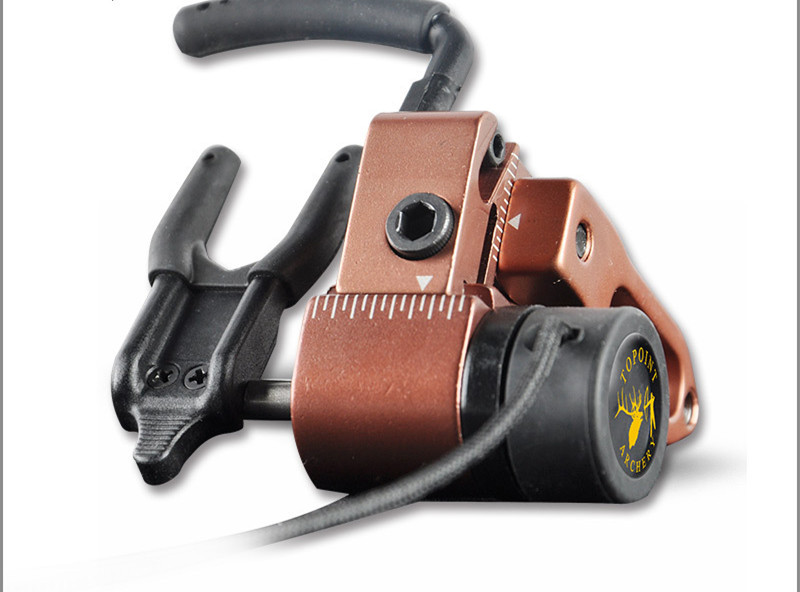
Fix 6 — Clean Up Form Variables That Look Like a Tuning Problem
This is the unwelcome news. Half the broadhead tuning calls a bow tech fields are actually shooter problems. Three form variables mimic a real tuning issue and will burn an afternoon if you do not rule them out first.
Bow hand torque. If you grip the riser with your palm rather than letting the bow sit in the meat of your thumb pad, broadheads will fight you constantly. A torqued bow rotates a few degrees at release and broadheads amplify that into a left or right flier. Drop the grip into your hand the same way every shot. If a left-handed glove fits the bow grip when you push your hand into it, you are torquing.
Inconsistent anchor. A floating anchor moves the rear sight of the arrow and broadheads expose it. Set a hard anchor — knuckle behind the jawbone, thumb to the ear, kisser button to the corner of the mouth — and use it every shot. Walk-back tuning will lie to you if your anchor drifts between groups.
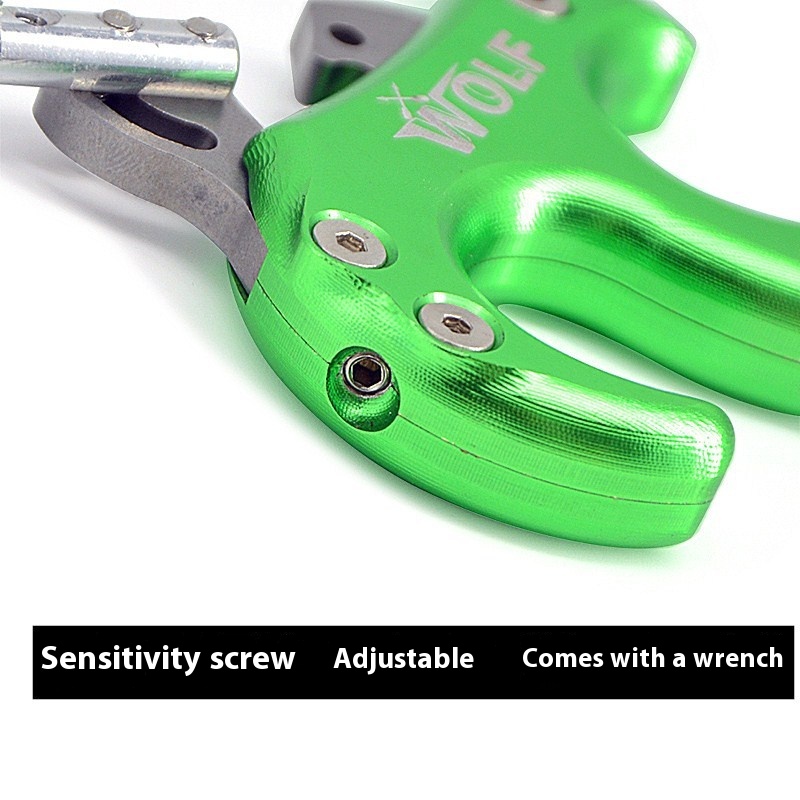
Release punch. Mechanical release shooters who slap the trigger throw broadheads sideways. A smooth back-tension or hinge pull keeps the arrow tracking straight off the string. If your release is the issue, no rest adjustment will fix it because the problem is happening after the bow is tuned.
For a refresher on what an anchor and full draw position should look like in slow motion, John Dudley walks through the broadhead tuning sequence with field points in this video, which still ranks at the top of the search for a reason:
Mechanical vs Fixed Blade — Which Tunes Easier
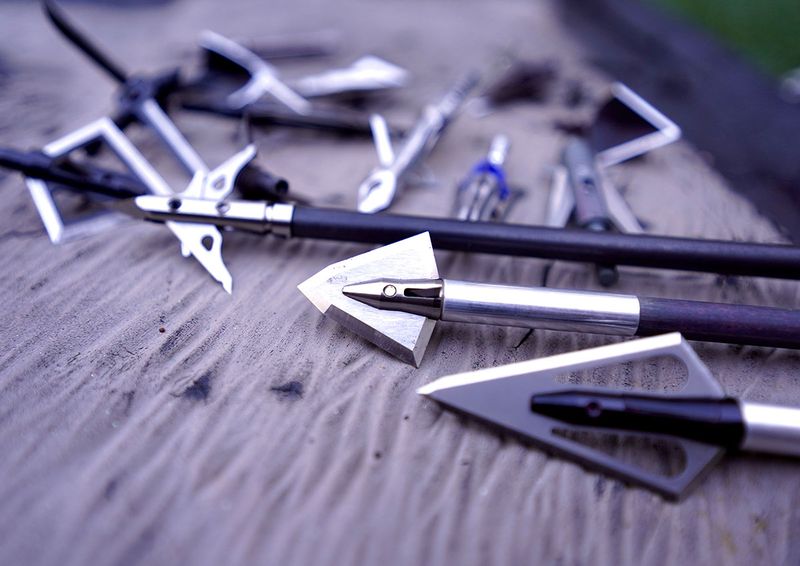
The truth most pro shops will tell you in confidence: mechanicals are easier to tune for accuracy, fixed blades are harder but cheaper to live with. A mechanical broadhead stays closed in flight, so it presents nearly the same profile as a field point. Out of a reasonably tuned bow, most mechanicals will land within an inch of field points at 30 yards with no rest adjustment at all. The trade is mechanical reliability: if the blades fail to deploy, or deploy on impact and steal kinetic energy, you have problems on the back end of the shot.
Fixed blades demand more from your tune but reward you with simplicity and penetration. A well-tuned bow shooting a sharp two-blade fixed head will outpenetrate a mechanical on bone every time. If your bow is north of 65 pounds, draw length over 28 inches, and arrow weight in the 450-grain neighborhood, fixed blades give up almost nothing in accuracy when the tune is right.
When to Stop Tuning and Start Trusting the Bow
If your broadheads and field points are inside three inches of each other at 40 yards, stop adjusting. You are in the ethical kill zone and the marginal returns on more rest tweaking are not worth the risk of pushing centershot somewhere the bow does not like. Shoot the rig as a hunting setup for a full week of practice. If the group holds, you are tuned.
One last check worth running: if you change anything mid-season — different arrow weight, different broadhead brand, new string after a serving slip — re-tune. Do not assume yesterday’s tune carries over. A new 125-grain broadhead on a rig built around 100s is a different bow.
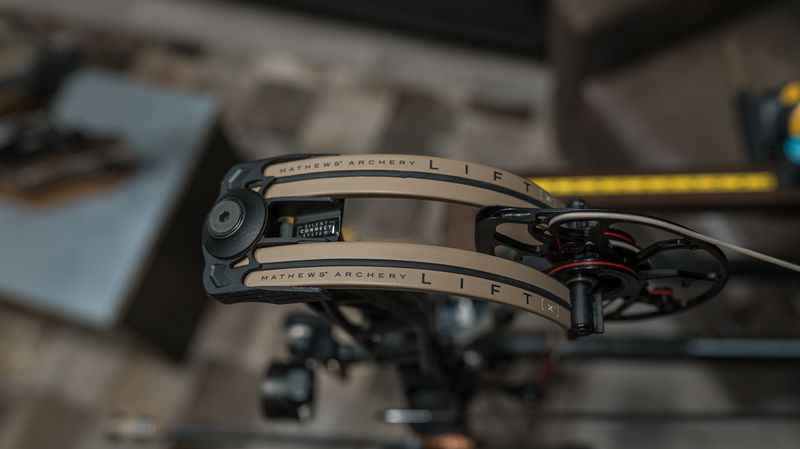
If something feels structurally off through any of this — uneven cam lean, draw cycle that surges, string slap on the arm guard — pull the rig and check your cam timing first. Our compound bow cam timing walkthrough covers the six-step inspection that catches most upstream tuning problems before they masquerade as broadhead issues.
Final Step Most Hunters Skip — Sharpen Every Broadhead Before It Goes in the Quiver
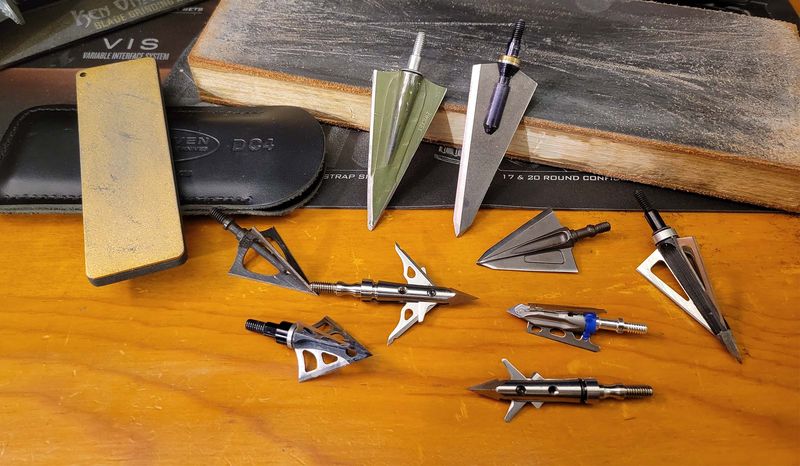
Broadhead tuning ends with a sharpening pass. Even out-of-the-box premium heads vary in factory edge quality. A blade that catches a thumbnail and shaves a hair is hunt-ready; one that does not will deflect off rib bone instead of cutting through it. Use a flat ceramic stone or a dedicated broadhead sharpener and finish every head before it enters the quiver. The sharpest head in your group is the standard, not the average. If one is duller than the rest, sharpen it or pull it.
Get this sequence done early. The bowhunters who close the broadhead-to-field-point gap weeks before opener walk into the woods with one fewer thing to think about when a buck steps into range. The ones who put it off discover the gap on the morning of day one, and that is the worst possible moment to find out the rig is not ready.
Sources
- How to Broadhead Tune a Compound Bow — Field & Stream broadhead tuning sequence and rest-adjustment direction reference.
- Why Mechanical Broadheads Are Still the Best Option for Most Deer Hunters — Outdoor Life on mechanical vs fixed broadhead trade-offs.
- How to Tune a Compound Bow: The Definitive Guide — GoHunt walkthrough on paper, bare-shaft, and broadhead tuning order.
- Easton Arrow Tuning and Maintenance Guide (PDF) — Manufacturer-level reference on centershot, nock height, and spine.
- Paper Tuning 101 — Lancaster Archery Supply on reading tear patterns.
Browse archery bows, arrows, and accessories at the Archery Supplier shop →
Shop on eBay
Broadheads on eBay →
We may earn a commission when you shop through our eBay links.
