Archery Blog
Longbow Buying Guide: 9 Specs to Check Before Your First Traditional Bow
Jun
Picking up a longbow for the first time feels different from any other bow you have handled. There is no let-off, no sight, no rest, no stabilizer — just wood, string, and your form. That simplicity is the appeal, but it also makes the buying decision harder. A longbow that is wrong for your draw length or too heavy for your strength will sit in a closet within a month.
This longbow buying guide walks through the nine specs that actually matter when you are picking your first traditional bow, the differences between English and American styles, realistic budget ranges, and the beginner mistakes that cost archers good shooting for an entire season.
What Actually Counts as a Longbow
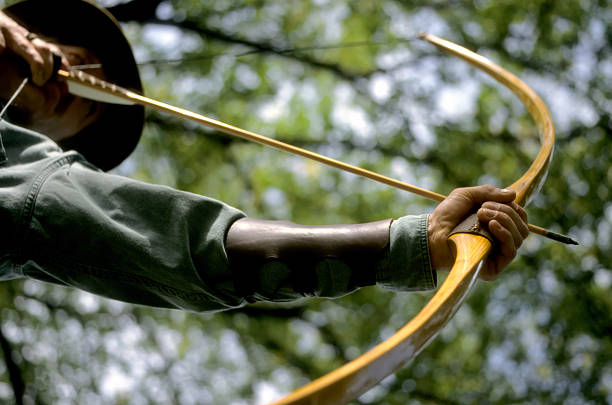
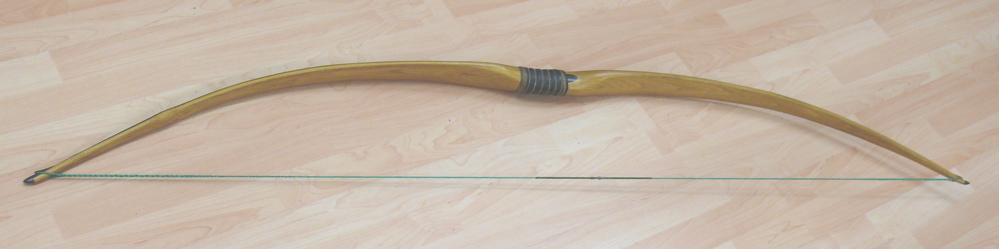
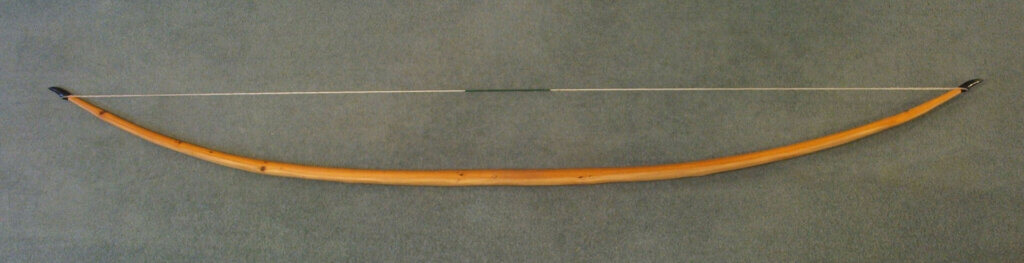
Strict definitions of longbow vary by region and federation, but the working version most archers use is this: a bow with limbs that touch or nearly touch the string at brace height, with a grip that is straight or only mildly contoured, and no sharp recurve at the limb tips.
That distinguishes it from a recurve, where the limb tips curve away from the archer at rest. It also separates the longbow from a compound, which uses cams and cables to give you mechanical let-off at full draw. A longbow stores energy in the limbs alone — you hold full draw weight at anchor, and you feel every pound of it.
English vs American Longbow
The traditional English warbow descended from Mary Rose-era bows is D-shaped in cross section, made from a single stave of yew or another bow wood, and notoriously heavy in draw weight — 60 to 150 lbs in historical examples. Most modern English-style longbows are scaled down for sport, with 30 to 50 lbs being common.
The American flatbow has rectangular limb cross sections, wider and flatter limbs, and usually a near-center-shot riser. It is more forgiving than the D-section English style and easier to tune.
A hybrid longbow — sometimes called a reflex-deflex longbow — adds a slight reflex curve to the limbs for more speed without crossing into recurve territory. These are the most popular designs for new archers buying their first traditional bow today.
Draw Weight: The Number That Trips Up Beginners
Almost everyone starts too heavy. The internet tells you a 50-lb bow is normal, then you pull one back at the shop, your form collapses, and you spend three months fighting a bow you cannot shoot well. Traditional archery rewards reps, and you need a draw weight you can fire 80-plus arrows with in a session without form breakdown.
Realistic starting draw weights look like this:
- Adult men with no archery background: 30-40 lbs
- Adult women with no archery background: 20-30 lbs
- Teens and smaller adults: 15-25 lbs
- Returning archers with existing shoulder conditioning: 40-50 lbs
You can always sell a lighter bow and move up. You cannot fix the shoulder injury you get from grinding through a bow that is 15 lbs heavier than your current strength supports. Buy lighter than you think you need, and let the months of practice tell you when to step up.
AMO Length and Your Draw Length
Longbows are sized by AMO length — the measurement standard set by the Archery Manufacturers Organization. Common AMO lengths run 58 to 68 inches. The rule of thumb: your bow’s AMO length should be at least 10 inches longer than your draw length, and ideally 12 or more.
A 28-inch draw archer wants a 64 to 68 inch bow. Shorter bows stack — the draw weight climbs sharply past a certain point — which makes them brutal at full draw and inconsistent shot to shot. Stack is the silent killer of beginner accuracy.
Finding Your Draw Length
The wingspan method works for a baseline: arms out in a T, fingertip-to-fingertip in inches, divided by 2.5. That gives a draw length within an inch of accurate for most people. A pro shop can refine it with a draw-length arrow against a wall, but the wingspan number is enough to start shopping.
Material: Self Bow vs Laminated
A self bow is made from a single piece of wood — osage orange, hickory, yew, or other bow woods. They are beautiful, they have soul, and they break. A self bow that takes a permanent set or develops a hairline crack is firewood.
Laminated longbows use thin layers of wood — often bamboo core with hardwood backing and belly — bonded with fiberglass on the back and belly. They are more durable, more weather-tolerant, more consistent shot to shot, and they cost less than equivalent-quality self bows. For your first bow, buy laminated.
Grip Style and Arrow Shelf
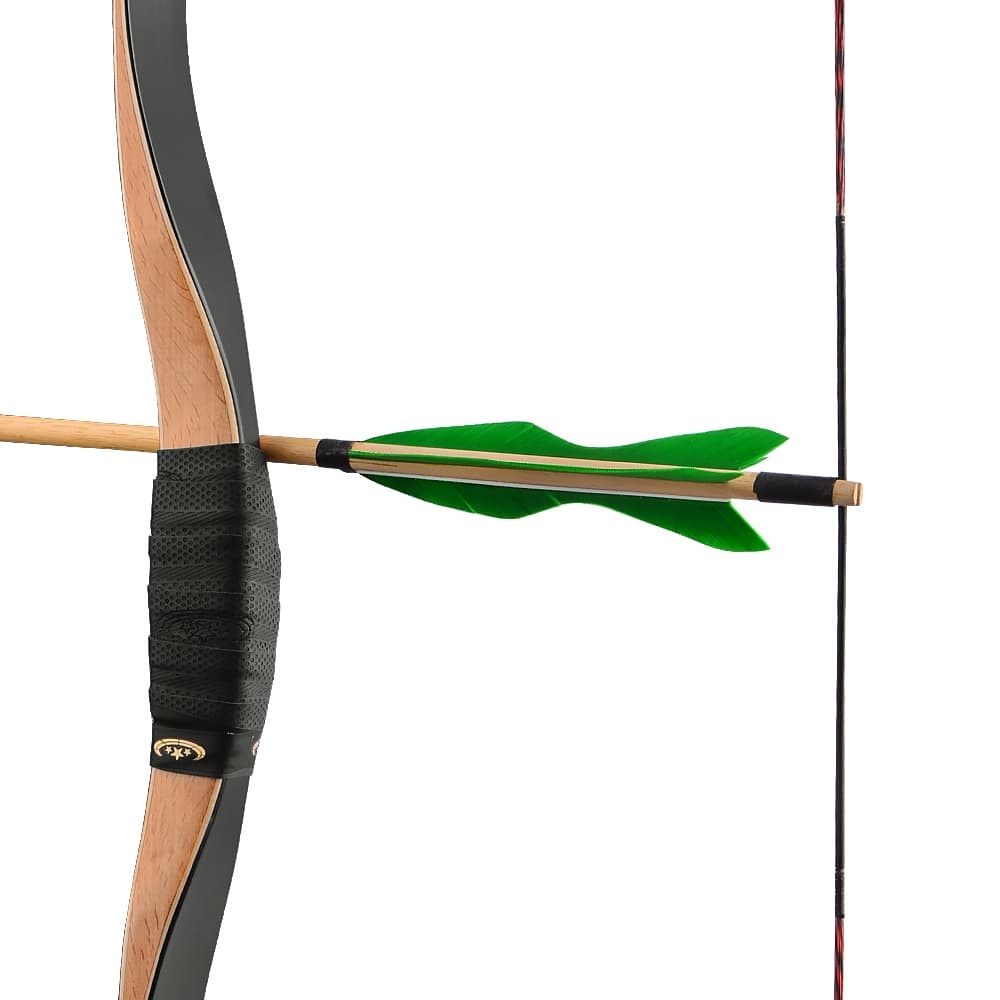
Most modern longbows have a slight grip contour and a shelf cut to or near center. Some traditional designs have no shelf at all — you shoot off the knuckle, which is a real skill that takes months to build. If you are starting out, you want a small but defined arrow shelf, a leather rest pad, and a grip that feels neutral when you relax your hand.
Avoid heavily contoured locator grips on your first bow. They mask grip torque issues that you should be learning to identify by feel. A clean straight grip teaches you bow hand mechanics faster than any sculpted handle ever will.
Takedown vs One-Piece Construction
One-piece longbows are exactly what they sound like — a single continuous limb-riser-limb construction. They are traditional, they look beautiful on a rack, and they are a pain to transport anywhere by car or plane.
Takedown longbows separate into riser and two limbs, usually with a bolt system. The advantages are huge for a beginner: you can swap limbs to change draw weight as you progress, you can fly with the bow in a normal suitcase, and resale value stays higher because the limbs are interchangeable across the brand’s lineup. For a first longbow, takedown wins unless you have a strong aesthetic preference for the one-piece silhouette.
Brace Height and Basic Tuning
Brace height — the distance from the string to the deepest part of the grip at rest — is set by twisting or untwisting the string. Manufacturer-recommended brace heights for most longbows fall in the 6.5 to 8 inch range, with the bow at its quietest and most forgiving somewhere in that window.
Tuning a longbow is simpler than tuning a compound but less forgiving of bad arrows. You need arrows spined correctly for your draw weight and length, a consistent nocking point, a brace height in the manufacturer’s range, and a bow square for measuring. Mismatched arrow spine is the single biggest reason new trad archers cannot group, and no amount of form work fixes a fishtailing arrow.
Budget Ranges and What You Actually Get
Entry Level — $100 to $250
Samick Sage longbow conversions, PSE Stalker, generic Amazon takedowns. These are shootable but rough. Limb pockets can be sloppy, finish work is utilitarian, and string quality is usually upgrade-worthy out of the box. Acceptable for finding out whether traditional archery is for you before committing real money.
Mid Range — $250 to $600
Bear Archery Montana, Martin Hunter, Ragim Wildcat, OMP Adventure series. Real bowyer attention to limb shape and tiller. Smooth draw, consistent shot-to-shot, fewer hand shock complaints. This is where most serious beginners should land if budget allows.
Premium — $600 to $1500 and Up
Custom bowyers: Black Widow, Border, Thunderhorn, and hundreds of small makers running waitlists. Hand-tillered limbs, exotic wood combinations, custom grip shapes molded to your hand. You are paying for craftsmanship and a bow that will likely outlast you with reasonable care.
Strings and Accessories You Need Day One
Most longbows ship with a basic Dacron B-50 string, which is fine. Dacron is slow but kind to bows — it stretches under shock, which protects the limbs. Faster strings like FastFlight and BCY-X exist but only run them on bows specifically rated for low-stretch strings, or you will hammer the limb tips into early retirement.
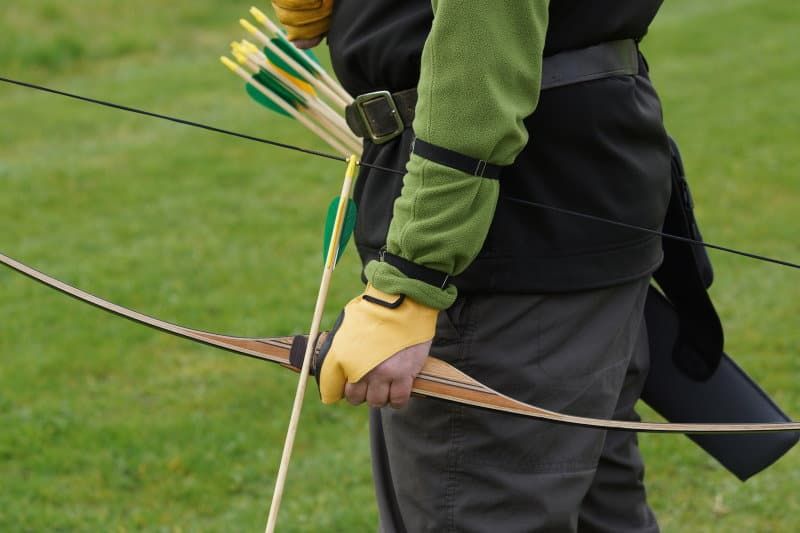
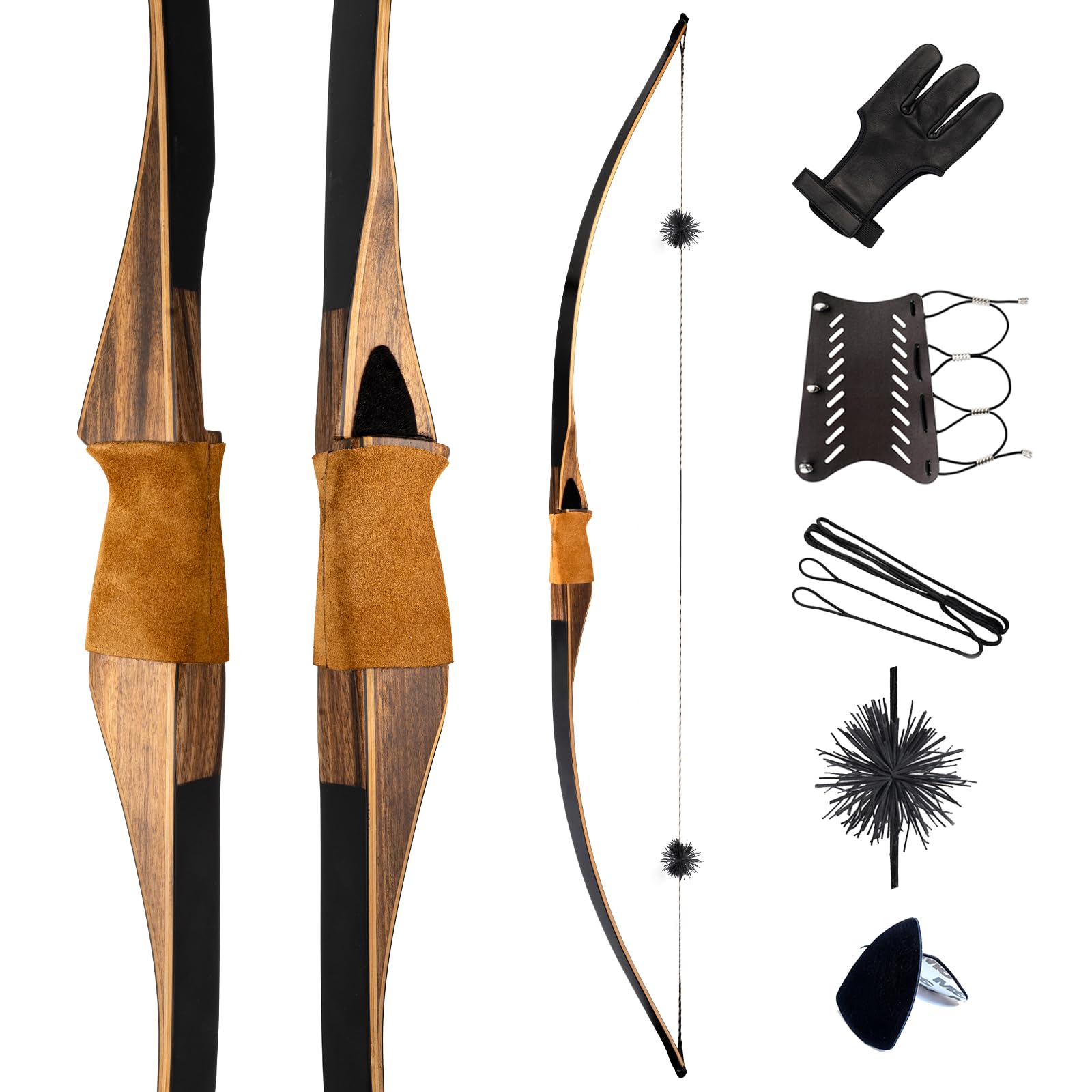
Beyond the string, you need a finger tab or shooting glove, an armguard, a quiver, a bowstringer, and arrows matched to your bow’s draw weight at your draw length. The bowstringer point is worth repeating: push-pull and step-through stringing methods common in old archery books can permanently torque a longbow’s limbs. A $15 stringer prevents a $300 mistake.
Where to Buy: Online vs Local Pro Shop
A local traditional archery shop is worth a 90-minute drive if you have one within range. You get to draw multiple bows, feel the difference between 35 lbs and 40 lbs in your fingers, hear the shop’s recommendation based on how you actually draw, and walk out with the bow set up correctly the first time.
If no shop is reachable, online dealers like 3Rivers Archery, Lancaster Archery Supply, and Kustom King have generous return policies and phone consultation. Amazon is fine for accessories and entry-level bows, but not for $500-plus purchases — you want a human you can call when something is off.
Beginner Mistakes That Cost You Months
Buying Too Much Draw Weight
Already covered, but it bears repeating because it is the number one problem in this longbow buying guide. If you cannot pull, hold, aim, and release without your bow shoulder rising or your string-side elbow collapsing, the bow is too heavy. Period.
Skipping the Arrow Tune
The bow does not aim itself. Arrows that are too stiff or too weak for the bow will fishtail, porpoise, and never group regardless of your form. Bare shaft tune or paper tune before blaming yourself for what is actually a spine problem.
Buying Used Without Inspection
A used longbow can be a great deal or a wall hanger. Look for hairline cracks at the limb tips, twisted limbs when you sight down the string, uneven tiller, and finish bubbles that indicate moisture damage. If you cannot inspect in person, ask the seller for video of the bow strung, drawn to your target weight, and unstrung.
Ignoring Brace Height
A bow strung at the wrong brace height will be loud, hand-shock heavy, and inconsistent. The recommended range is on the manufacturer’s spec sheet. Check it every shooting session with a simple bow square — it takes ten seconds and saves you from blaming your form for what the string is doing.
How Long Before You Outgrow Your First Longbow
If you buy a takedown bow at the right draw weight, the bow will grow with you for the first 2 to 3 years. New limbs in 5-lb increments are cheaper than new bows. If you buy a one-piece at the right draw weight, you will keep it as a permanent member of your collection even after you move to heavier bows down the road.
The mistake is buying with the I-will-grow-into-it mindset. You grow into a longbow by shooting it 200-plus arrows a week at a weight you can hold steady. You do not grow into a bow by suffering with it for six months.
The Bottom Line on Buying Your First Longbow
Pick a takedown in the 30 to 40 lb range for adult men, 20 to 30 lb for adult women, with an AMO length 10 or more inches longer than your draw. Spend $250 to $600 on a known brand with a reputation for clean tiller. Add a bowstringer, a tab, an armguard, and a dozen arrows spined to the bow. Practice for three months before changing anything.
Traditional archery is a long game. The bow you buy at the right weight, in the right length, from the right maker will outlast every gadget-laden compound on the rack — and it will teach you more about form in a season than a sighted bow teaches in a decade.
Sources
Browse archery bows, arrows, and accessories at the Archery Supplier shop →
