
Archery Blog
Bow Quiver Types: Hip, Back & Bow-Mounted Compared 2026
Jun
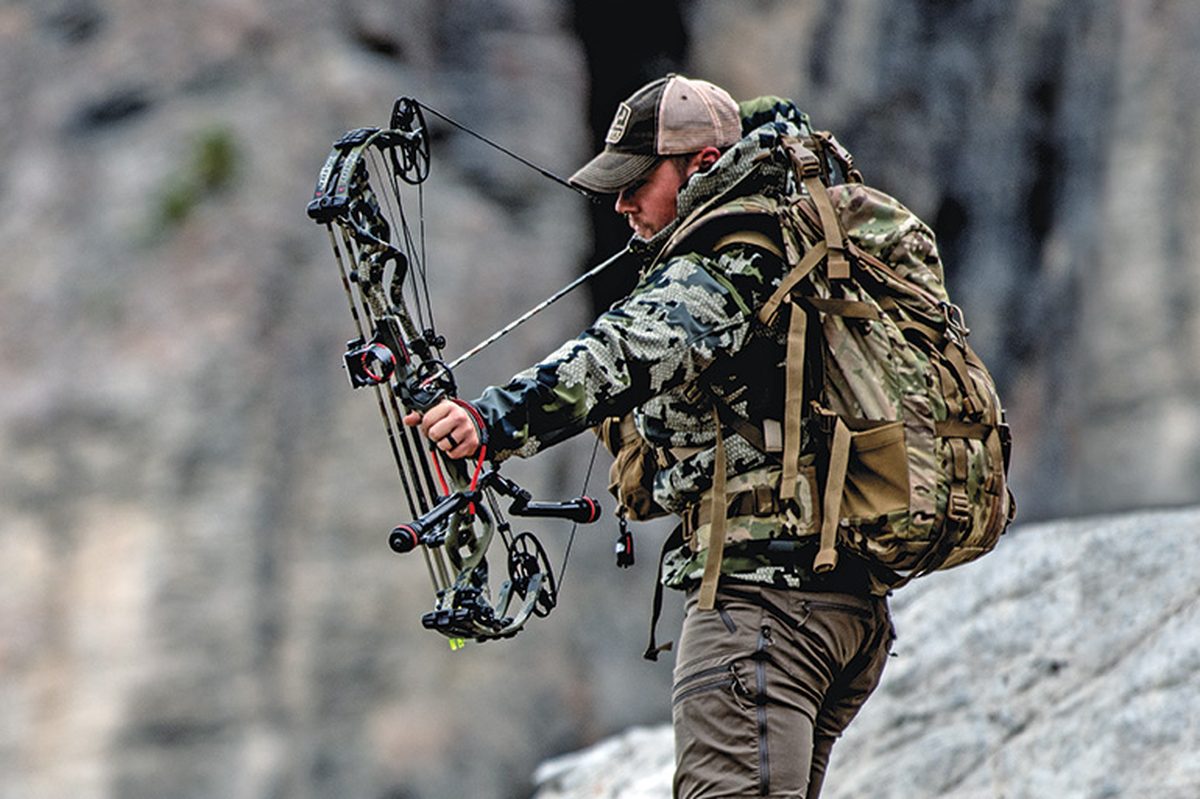
A 6-arrow bow-mounted quiver adds roughly 11 ounces of hardware to your compound, every ounce of which changes how the riser tracks at full draw. A 12-arrow back quiver adds nothing to the bow itself but plenty to your silhouette when you’re sliding through dense timber after a bedded buck. Those two trade-offs explain why bow quiver types remain one of the most argued-about pieces of gear in archery — and why the wrong pick can cost you the shot before the shot.
This guide compares the three main bow quiver types — hip, back, and bow-mounted — alongside the backpack and quick-detach hybrids that have reshaped the conversation over the last decade. The goal isn’t to crown a winner. It’s to help you match the quiver to the kind of shooting you actually do.
What Counts as a Bow Quiver Type
A quiver is anything that holds arrows close enough to grab. The classification matters because where the arrows live changes how fast you can nock the next one, how quiet you’ll be on a stalk, and whether you’ll snag a vane on a branch ten yards from a deer. The three classic categories are hip, back, and bow-mounted. The fourth — pack-mounted — has grown out of western backcountry hunting and now deserves its own seat at the table.
The split isn’t only about location. Capacity, retention strength, draw direction (over the shoulder vs. across the body vs. straight up off the bow), and detach mechanism all change how the quiver behaves under pressure. A flap-style traditional back quiver and a magnetic top-clamp hunting quiver mounted on the same archer behave nothing alike. Treating them as one category is how new bowhunters waste $200.
Before we break the categories apart, this short video from Easton walks through the same trade-offs and shows how a current production quiver actually mounts up:
Bow-Mounted Quivers Dominate Compound Bowhunting for a Reason
Walk a public archery range during deer season and count quivers. The bow-mounted version wins by a margin that’s not even close. The reason is simple: it puts the next arrow within an inch of where your draw hand will end up after the release. No body movement, no leaning, no looking away from the animal.
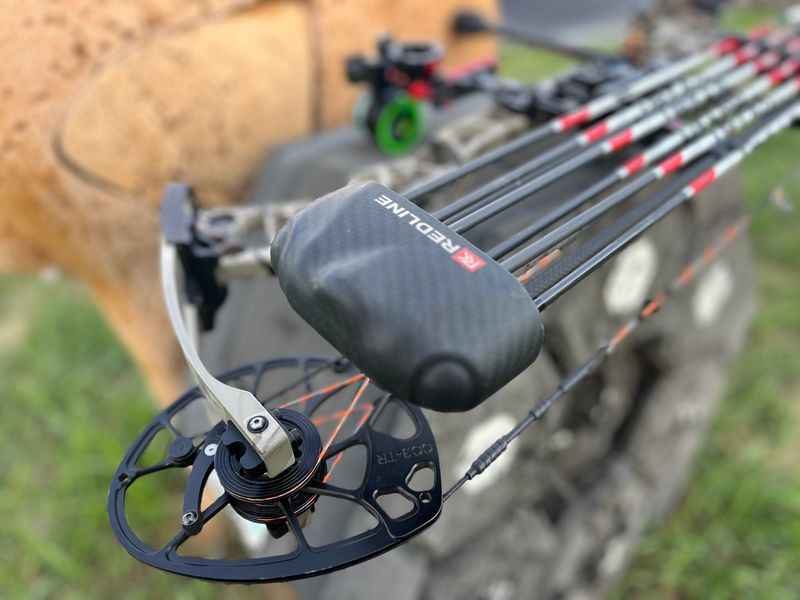
The trade-off is weight at the worst possible location — six to twelve inches above your grip, on the side of the riser. A loaded 6-arrow quiver typically adds 10–14 oz with arrows installed (one carbon shaft averages 0.7 oz with a fixed-blade broadhead, plus the quiver body itself). That mass changes your bow’s torque profile and rotational inertia. Some hunters love the steadiness the mass provides on long holds; others find the cantilevered weight pulls the riser sideways and forces a stabilizer rework. If your bow already balances on a 10-inch front bar with a hunting weight, dropping a full quiver onto the side can undo every adjustment you spent a weekend dialing in.
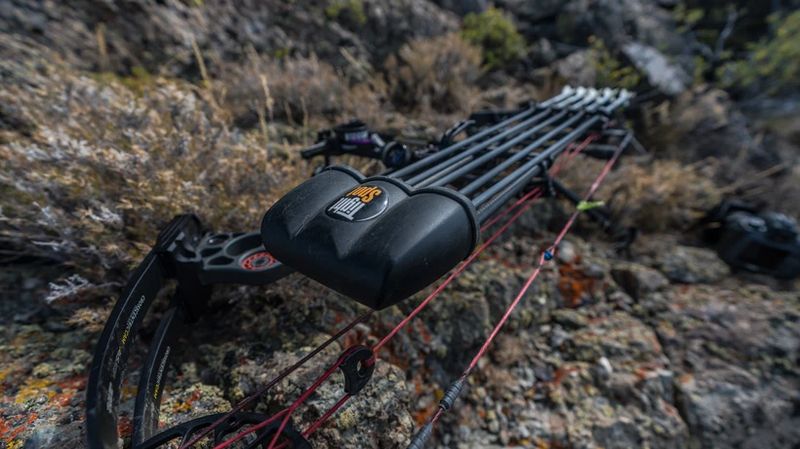
The shift toward two-piece designs — a clamp head and a foot — and rubber arrow grippers that grip the shaft instead of the broadhead has cleaned up most of the old complaints about wobble and rattle. Quivers from TightSpot, Mathews, and Hoyt now lock to the riser with zero detectable slop, which means the bowhunter who used to detach before the shot often leaves it on the whole hunt. If you’re getting set up for your first bowhunting season, this is the category that should soak up most of your accessory budget.
The Hip Quiver Is Why Olympic and 3D Archers Never Look Down
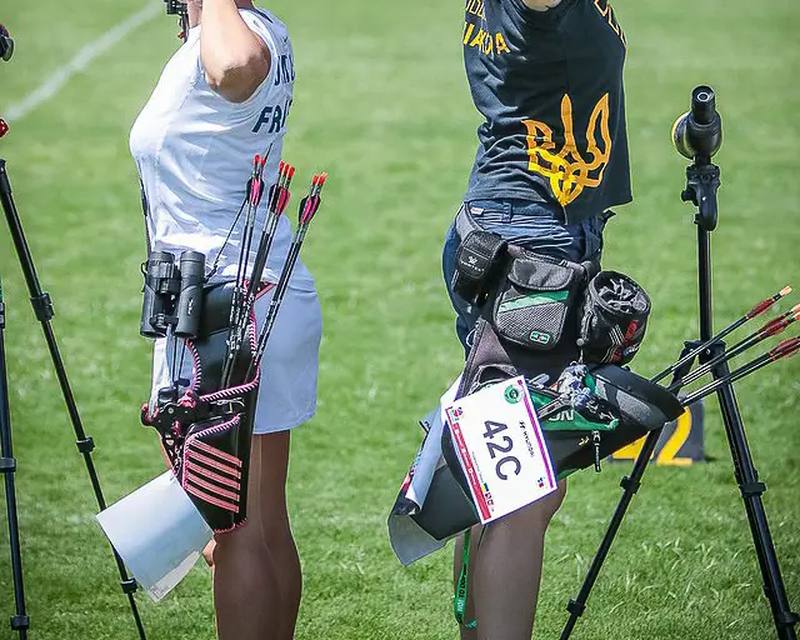
Watch any World Archery recurve final and you’ll see the same setup on every shooter: a hip quiver hanging off the dominant side, three to six arrows facing the same direction, a small pocket for finger tabs and a notepad. The hip quiver wins on the shooting line because it’s stationary, and stationary archers don’t need to manage swing weight at all.
The classic hip quiver mounts on the belt and holds arrows nock-up at a forward angle, which puts the fletching right where the off hand naturally reaches during a draw cycle. A field quiver — the variation popularized by 3D shooters — flips that geometry, angling the arrows back along the leg so they tuck out of the way during walking and don’t tangle with a competitor on a narrow lane. Both styles do the same job; the only real argument is profile.
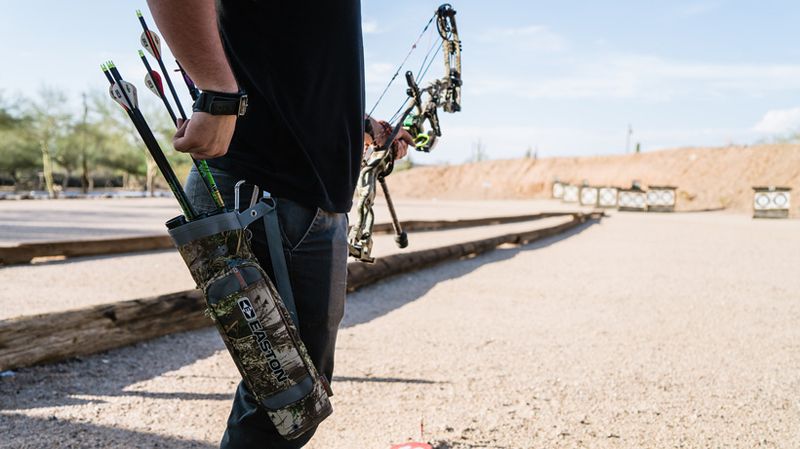
Cost-wise, a hip quiver is the cheapest entry point in the category. A basic belt quiver runs $20–$40; a serious target rig with multiple pockets and a hard arrow tube tops out around $150. Compare that to a top-tier bow-mounted unit at $200+ and the math gets interesting for newer archers shooting both target and 3D rounds. Anyone starting in recurve archery should plan on owning a hip quiver before they buy any other accessory.
The Back Quiver Is a Tradition Argument, Not a Performance One
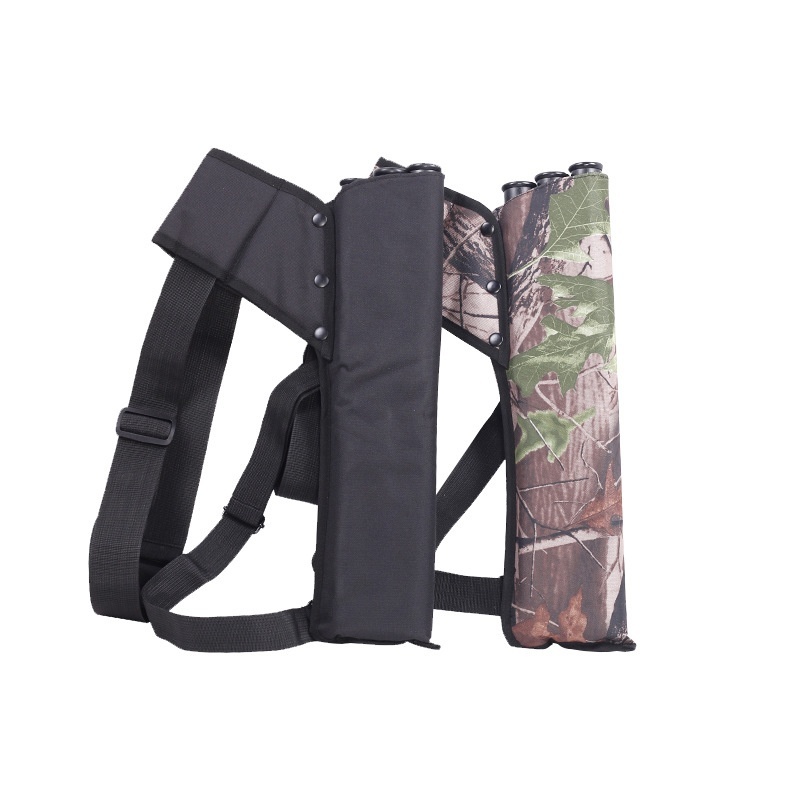
Hollywood put the back quiver in every archer’s hand for the last century. Reality cut it down to a much narrower role. Modern back quivers do two things well: they carry a lot of arrows (12–20 is normal, versus 3–6 on a bow mount), and they fit the romance of traditional archery in a way no plastic clamp ever will. What they don’t do well is move quietly through brush or release an arrow quickly under stalking conditions.
The reach overhead is the issue. To pull an arrow from a classic over-the-shoulder back quiver, the archer raises the dominant hand above shoulder height, finds the nock by feel, and draws the shaft up and forward. On a target field that takes maybe two seconds and looks beautiful. On a stalk with a whitetail at 25 yards, it’s enough motion to lose the shot. Side-slung or low-rider variations trim the reach down but never eliminate it. The truth is, most modern hunters who carry back quivers do so because they shoot traditional gear and the look matters as much as the function — and that’s a fine reason, as long as you’re honest about the trade.
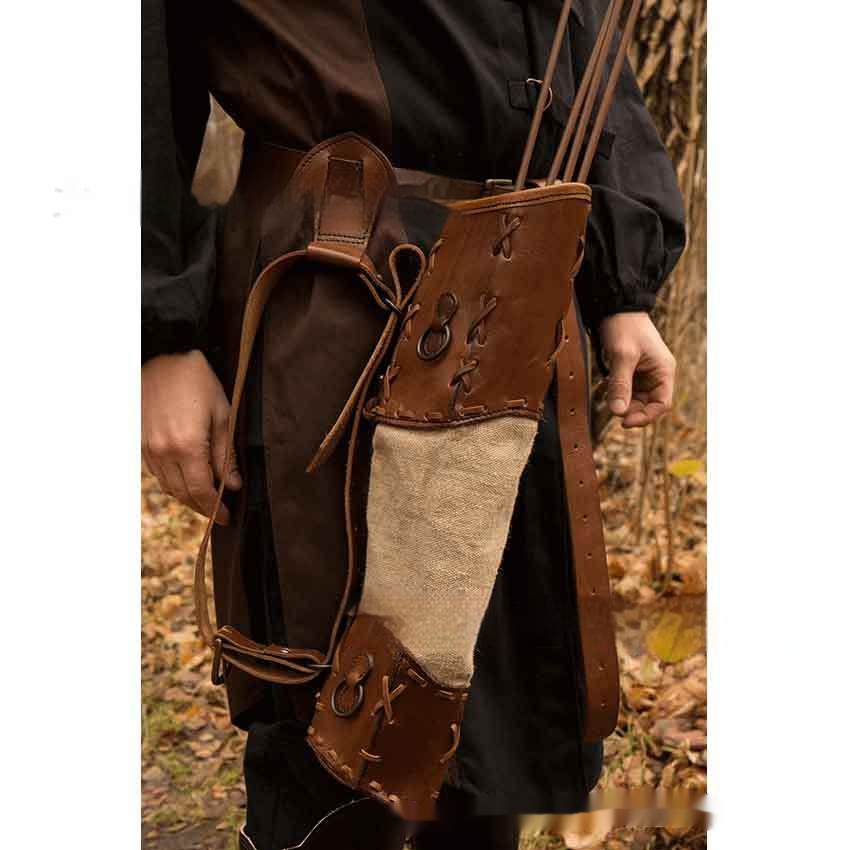
Where the back quiver still earns its place: the longbow or recurve shooter who values silence over speed (no clattering arrows once the quiver is muffled with fleece or leather) and the trekking traditional hunter who needs the capacity for a multi-day camp. If you shoot a self bow or you’ve just worked through a longbow buying guide, the back quiver is a natural pair.
Backpack-Mounted Quivers Are the Western Hunting Answer
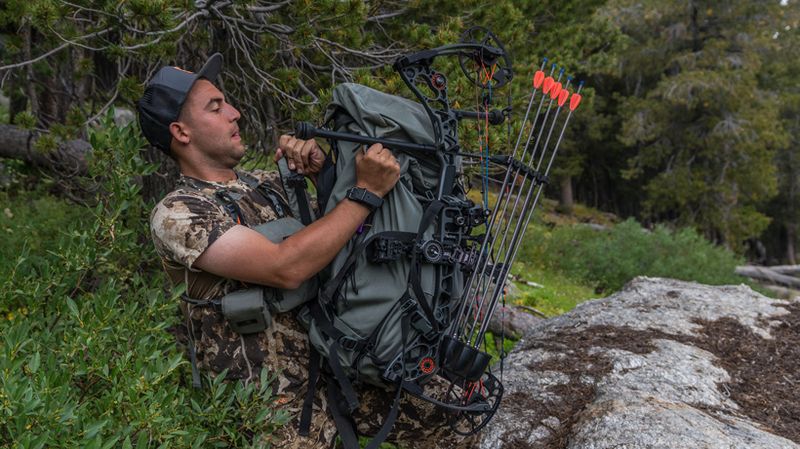
The mountain bowhunting boom of the last decade produced its own quiver category. Spot-and-stalk hunters in elk country found bow-mounted quivers tangled on packs, snagged on krummholz, and threw the bow’s balance off when carried in hand across miles of sidehill. The fix was to mount the quiver on the pack, not the bow.
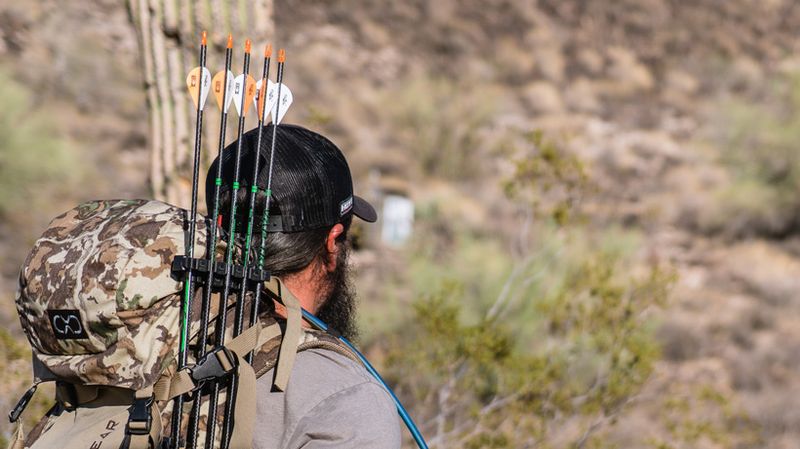
A backpack-mounted quiver moves the weight off the bow entirely, keeps the arrows quiet behind the hunter’s shoulder, and shifts the access motion to a single reach across the back. Stone Glacier, Kifaru, and Exo all build quiver attachments that integrate with their hunting packs. Some bowhunters use a standalone bracket that bolts to MOLLE webbing. The net effect: a clean bow in hand, arrows under control, and zero weight cost added to the shot.
The drawback is honest: the next arrow lives on your back, not your bow. After a missed shot, you’re reaching across your spine while the bull is still standing there. That’s a real cost in a heart-attack moment, and it’s the reason most western hunters carry a bow-mounted quiver on the still-hunt and only use the pack mount during the approach march.
Quick-Detach Systems Changed the Calculus on Bow-Mount
The most consequential development in bow quivers over the last ten years isn’t a new style — it’s a mechanism. Quick-detach mounts let a hunter leave the quiver on the bow during the approach, then pop it off in seconds before the shot. That neutralizes most of the weight argument: hunt with the mass for steadiness on the still-hunt, detach for the precision shot at full draw.
A real-world detach mount adds about 1.5 oz of permanent hardware to the riser and a lever or thumbscrew that releases the quiver body. Current designs hold zero rattle when locked and snap back in place without rechecking alignment. Treestand hunters benefit the most — they can lower the quiver on a haul line and hunt with a balanced bow, then reattach for the walk out at dark. This is the setup most western bowhunters who buy at archery shops actually end up running. It’s not the cheapest path, but it solves the two oldest complaints about bow mounts in one move.
Capacity Numbers That Actually Decide the Shot
Talk about quivers tends to drift toward style. The capacity numbers are what matter once you’re in the field with the wind right and a buck inside 30 yards.
A bow-mounted quiver typically holds 4–7 arrows. A hunting hip quiver holds 4–6, often with a separate pocket for one or two extras. A field or target hip quiver holds 5–12, depending on tube count. A back quiver holds 12–24. A backpack quiver holds 4–8 in the dedicated channels, with extras stashed in the pack itself. For most bowhunters, the right answer is “more than you think.” A typical season uses one to three arrows on game, but you carry extras for misses, for follow-up shots, and for the practice arrow you’ll likely shoot at a stump to check tune mid-hunt. Six in the quiver is a reasonable floor. Twelve is overkill for a day hunt and necessary for a backcountry week.
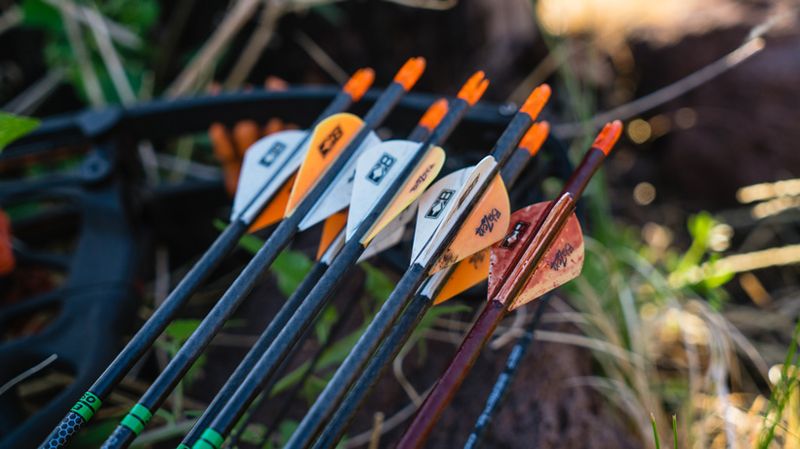
A small detail that matters more than it should: the quiver’s grip pressure on the shaft. Soft rubber inserts let arrows slide in and out cleanly even with bare hands in cold weather. Stiffer foam holds arrows tight in rough country but punishes you when your fingers are numb. Test the grip with the broadhead style you actually shoot before you commit to a model.
Picking the Bow Quiver Type That Matches Your Shooting
The honest answer to “which bow quiver type should I buy” is that most archers end up owning two — one for the range, one for the woods. A hip quiver runs $30–$80 and covers every target session and 3D shoot you’ll attend. A bow-mounted hunting quiver with quick-detach runs $120–$250 and earns its money the first time you take it off for a careful shot at a quiet animal.
The back quiver is the one you buy because you want it. There’s nothing wrong with that — traditional archery is a feel-driven discipline, and the back quiver is part of the feel. Just don’t expect it to outperform a hip or bow-mount for either tournament shooting or modern bowhunting. It won’t.
If you’re a new bowhunter building your first compound setup, start with a 5-arrow bow-mounted quiver and a quick-detach mount. If you’re a recurve archer climbing toward Olympic-style shooting, get a basic hip quiver with at least three tubes and a small pouch. If you’re a longbow shooter who hunts for the experience as much as the harvest, the back quiver is yours. The single biggest predictor of which quiver works for you is being honest about what kind of archer you actually are. Match that, and the rest of the gear takes care of itself.
Sources
- Hip Quivers and Field Quivers — What’s the Difference? (Easton Archery) — manufacturer breakdown of forward vs. rearward arrow geometry.
- Hunting Quivers Collection (Lancaster Archery Supply) — retail catalog of current bow-mount quivers from TightSpot, Mathews, and others.
- The Best Stabilizer Setups for Bowhunting (Bowhunter Magazine) — context on how quiver weight interacts with stabilizer balance.
- Quiver Options for Any Bowhunter (goHUNT) — field perspective on detachable versus fixed bow-mount systems.
Browse archery bows, arrows, and accessories at the Archery Supplier shop →
Shop on Amazon
Quivers on Amazon →
As an Amazon Associate we earn from qualifying purchases.
Shop on eBay
Quivers on eBay →
We may earn a commission when you shop through our eBay links.
