Archery Blog
Parts of a Compound Bow: 12 Essential Parts Explained
Jul
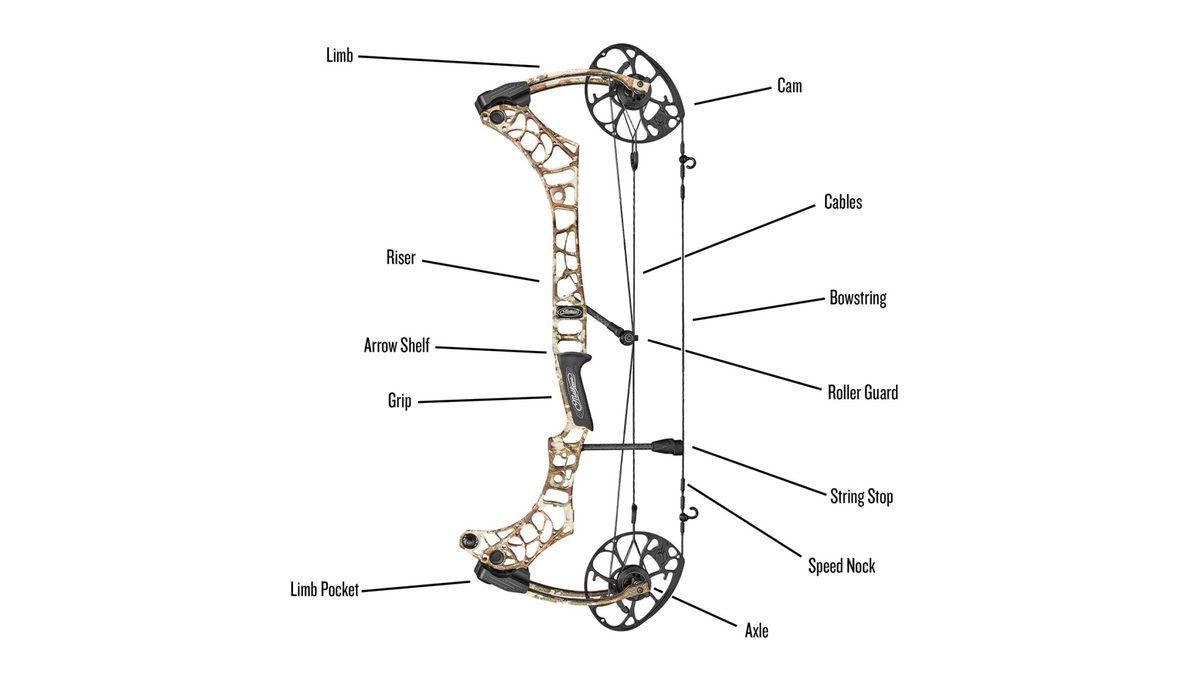
A modern hunting bow has more than 40 individual components once you count every screw and bushing, but you only need to understand about twelve of them to shoot well and keep the bow running. Most archers who struggle at the range aren’t fighting their form — they’re fighting a part they can’t name. The peep is rotated a few degrees off, the rest hasn’t been timed to the cam, the D-loop sits in the wrong spot. Knowing the parts of a compound bow is what separates someone who owns a bow from someone who can actually work on one.
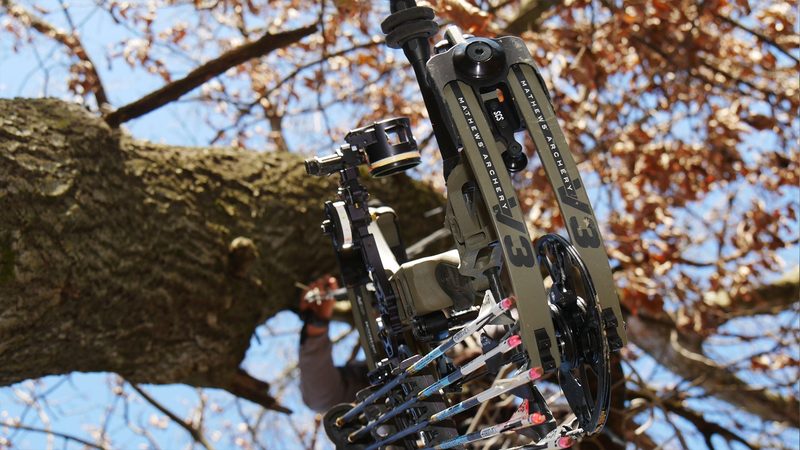
A fully rigged compound bow — riser, limbs, cams, sight, and stabilizer all working as one system.
What Are the Main Parts of a Compound Bow?
Every compound bow breaks down into four structural sections and a handful of bolt-on components. The four that form the skeleton are the riser, the limbs, the cams, and the string-and-cable system. Everything else — sight, rest, peep, stabilizer, D-loop — attaches to that skeleton and can be swapped, tuned, or upgraded without touching the frame. Once you see the bow as a frame plus accessories, the intimidation drops away fast.
Here’s the honest truth most beginners don’t hear: you can shoot a bare bow with nothing but a string and a rest. Every other part exists to make you more consistent, quieter, or faster. Understanding which category a part falls into tells you where to spend money and where to leave things alone.
The Riser: Backbone of the Bow
The riser is the central aluminum or carbon frame you hold, and it’s the mounting point for nearly every accessory — sight, rest, stabilizer, quiver, and grip all bolt to it. A machined 6061 or 7075 aluminum riser is cut away into a web of bridges and cutouts, which is why a modern riser looks like a skeleton: engineers remove every gram of metal that isn’t carrying load, then leave the geometry that resists twist.
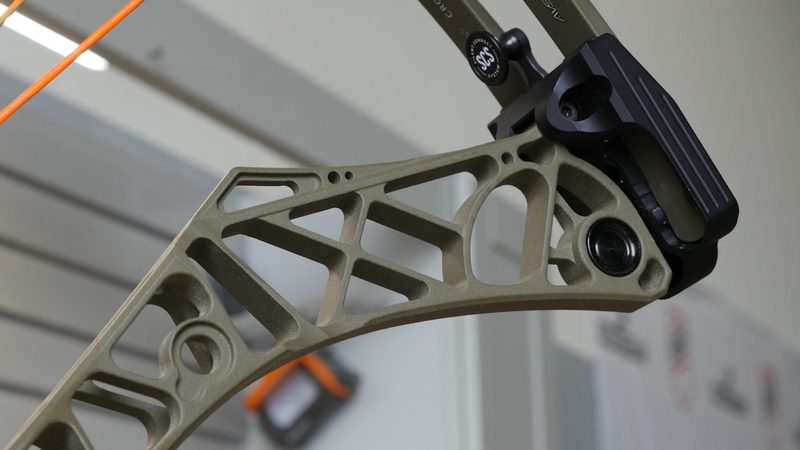
The riser’s machined cutouts remove weight while keeping the frame rigid against torque.
A stiff riser is the single biggest factor in a bow’s forgiveness. When the riser flexes under the shot, your sight pin moves with it and accuracy suffers. This is why carbon risers command a premium — they run lighter than aluminum at the same stiffness, though most hunters shoot aluminum happily for a fraction of the cost.
Limbs and Limb Pockets
The limbs are the flexible fiberglass-and-composite planks that store the energy you load during the draw. On a compound they barely move compared to a recurve, but they carry enormous force — a 70-pound bow loads each limb with hundreds of pounds of stored energy. Most modern bows use a split-limb design, where each “limb” is actually two thinner blades running side by side.
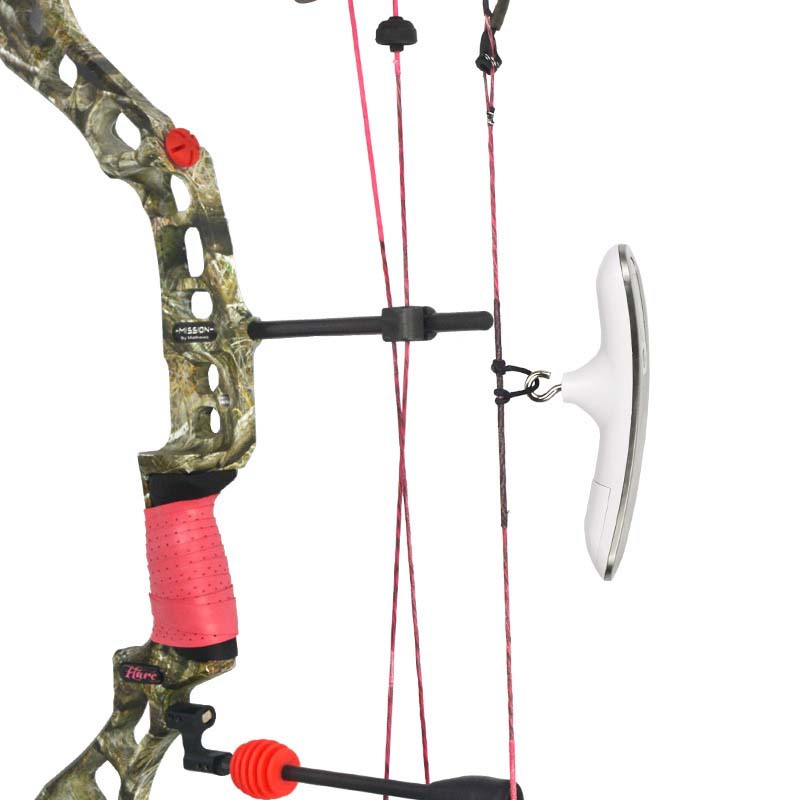
The limb pocket is the machined cradle that clamps the base of each limb to the riser, and the limb bolt threads through it. Backing that bolt out lowers your draw weight; tightening it raises it, usually across a 10-pound range. Never run a limb bolt past its rated turns — bottoming it out or over-extending it is one of the few ways to genuinely damage a bow. If you want to know exactly where your poundage sits, a hand scale settles the argument.
Cams: Where the Power Comes From
The cams are the oval wheels at the tip of each limb, and they are what make a compound a compound. As you draw, the string rolls off the cam’s larger radius and the cables spool onto the smaller radius, which is how the bow lets you hold a fraction of the peak weight at full draw. That “let-off” — usually 75 to 90 percent — is the whole reason you can hold a 70-pound bow steady while you aim.
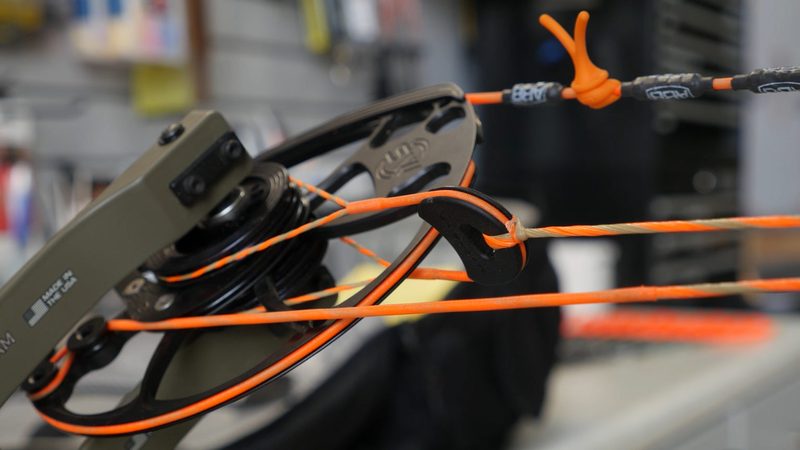
The cam does the heavy lifting — it stores energy on the draw and dumps it into the arrow on release.
Cam systems come in a few flavors: single cam, hybrid cam, and dual (binary) cam. The practical thing to know is cam timing — on a two-cam bow, both cams must roll over at the same instant, or the bow throws erratic tears and loses speed. If your groups suddenly open up for no reason, timing is the first suspect. A pro shop checks it in minutes on a bow press.
Bowstring, Cables, and the Peep Sight
The bowstring is the part you actually draw and release; the cables run from cam to cam and carry the tension that makes the whole system work. Both are woven from modern materials like BCY 452X that barely stretch, because any creep in the string changes your draw length and shifts your point of impact. Strings are consumable — most shooters replace them every couple of years or every few thousand shots.
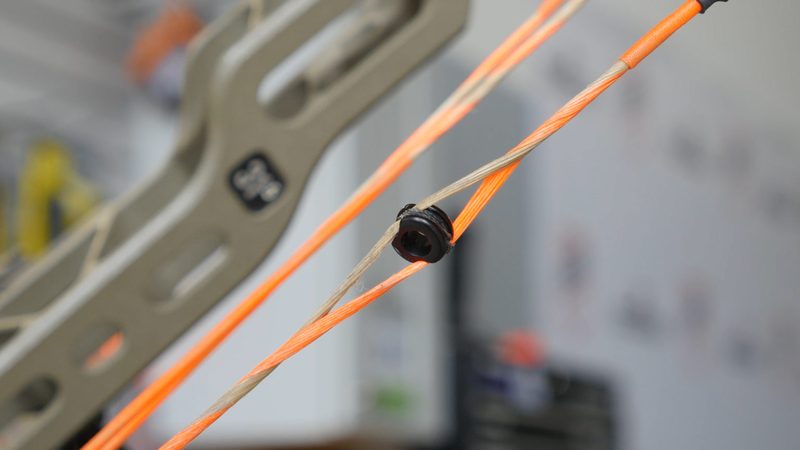
The peep sight is served directly into the bowstring so it lines up with your eye at full draw.
Woven into the string is the peep sight — a small ring you look through to align your eye with the sight housing. It has to rotate to face you squarely at full draw, and getting that rotation right is a common setup headache. The center serving, the tighter-wrapped section in the middle of the string, protects the string where the arrow nocks and where the peep and D-loop attach.
Cable Guard and Cable Slide
Draw a bow and the string wants to travel straight down the center — but the cables are in the way of the arrow’s path. The cable guard, a stiff rod angling off the riser, pulls the cables sideways to clear that path. A cable slide or roller rides along it to reduce friction.
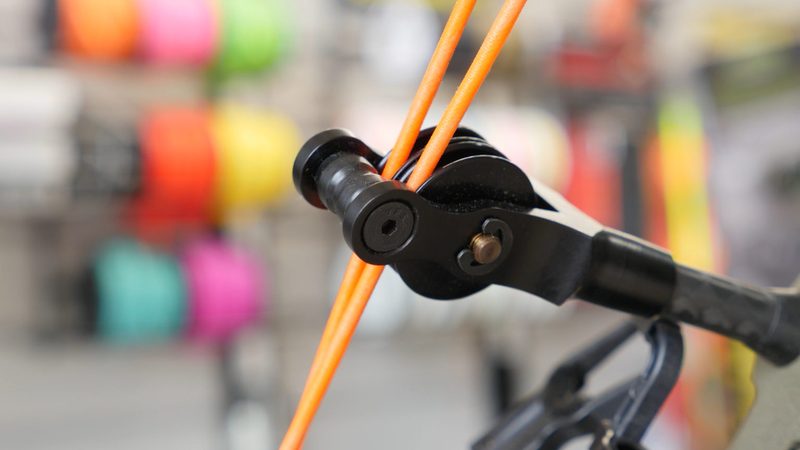
The cable guard sweeps the cables clear of the arrow’s flight path.
That sideways pull creates a small amount of cam lean and hand torque, which manufacturers fight with roller guards and flexible designs. It’s a minor part most archers never touch, but it’s the reason a compound can send an arrow straight through the middle of the riser while the cables sit off to the side.
The Grip
The grip is where your hand meets the bow, and it matters more than its size suggests. A grip that’s too fat encourages you to wrap your fingers and torque the riser at the shot, which walks arrows left and right. The move most coaches teach is a relaxed, open hand that lets the bow sit in the meat of your palm — the grip is a resting point, not a handle to squeeze.
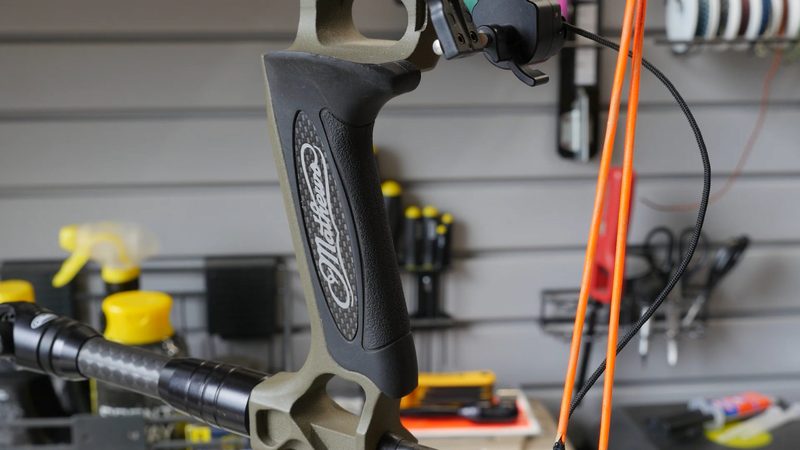
A slim grip lets the bow settle into your palm without inviting hand torque.
Arrow Rest
The arrow rest holds your arrow on the shelf until you release, then gets out of the way so the fletching clears without contact. Two families dominate: the whisker-biscuit style that fully captures the arrow, and the drop-away rest that holds the arrow up during the draw and falls at the shot for total clearance. Drop-aways give the cleanest arrow flight and are what most serious target and hunting shooters run today.
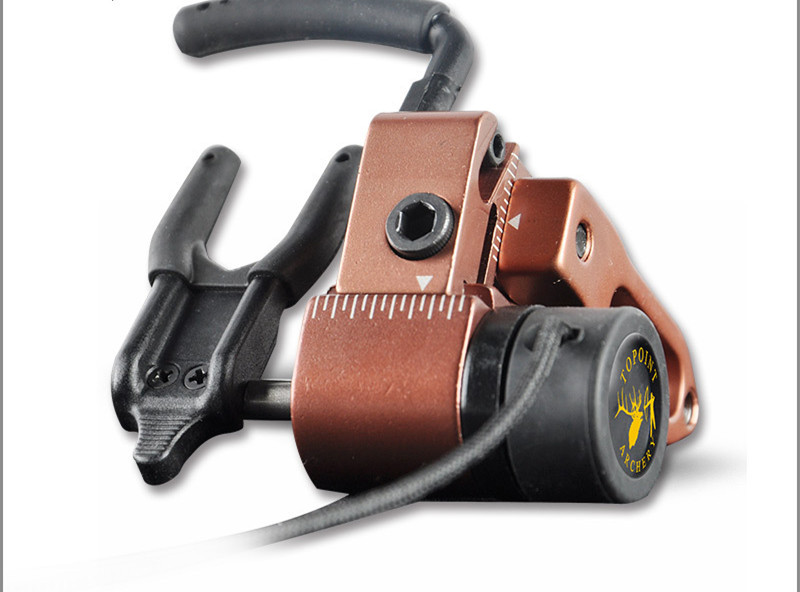
If you’re weighing rest styles against each other, our breakdown of arrow rests compared walks through the trade-offs for hunting versus target work.
Bow Sight and Pins
The bow sight bolts to the riser and gives you an aiming reference — one or more fiber-optic pins set for specific distances, or a single adjustable pin you dial. You look through the peep, center the sight housing, float the correct pin on the target, and release. A multi-pin sight lets you shoot 20, 30, and 40 yards without adjusting; a single-pin keeps the sight picture uncluttered but asks you to dial for each range.
Choosing between the two setups is a real decision, not a coin flip — our guide to single-pin vs multi-pin bow sights covers who each style suits best.
D-Loop, Nocking Point, and Release Aid
The D-loop is a short piece of cord tied onto the bowstring above and below where the arrow nocks. Instead of pulling the string with your fingers, you clip a mechanical release onto the loop, which gives a cleaner, more repeatable draw and release. The nocking point is simply the exact spot on the string where the arrow clicks on — set it wrong and your arrow porpoises up and down in flight.
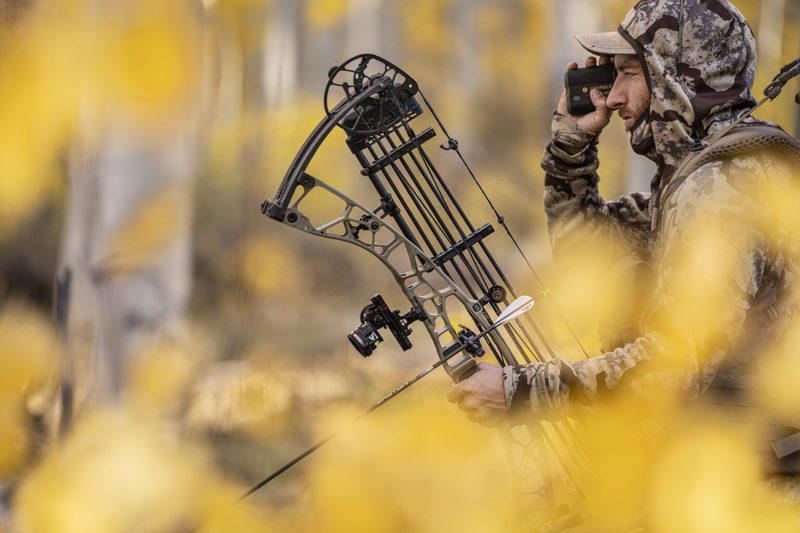
At full draw every part earns its keep — the release clips the D-loop, the peep frames the sight, the cams hold the let-off.
A release aid is the handheld trigger most compound shooters use. Index-finger, thumb-button, and back-tension releases each have a following, but any of them beats fingers for the short, hard string angle a compound produces.
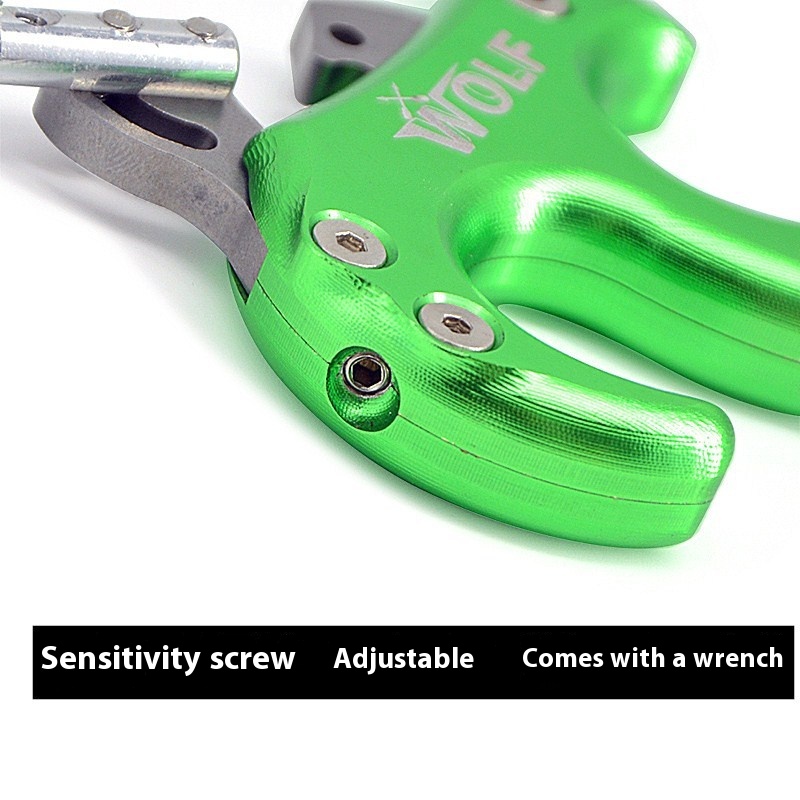
Stabilizer
The stabilizer is the rod that screws into the front of the riser and carries weight out in front of the bow. It does two jobs: it dampens vibration after the shot, and it steadies your aim by adding rotational inertia, so the pin floats slower and calmer on the target. Hunting bows run a short 6- to 10-inch bar; target shooters run long front rods with side bars to balance the rig precisely.
Brace Height and Axle-to-Axle: The Numbers That Describe a Bow
Two measurements sum up how a bow will feel. Brace height is the distance from the string at rest to the grip’s deepest point. A shorter brace height (around 6 inches) makes a bow faster but less forgiving of form errors; a taller brace height (7 inches or more) is slower but easier to shoot well. If you’re new, lean toward the taller number — the brace height explained guide digs into why.
Axle-to-axle length is the distance between the two cam axles. Long axle-to-axle bows (33 inches and up) are steady and target-friendly; short ones (28 to 31 inches) are maneuverable in a treestand or ground blind. Neither is “better” — they’re built for different jobs, which is the whole point of matching a bow to how you’ll actually hunt or shoot.
How the Parts Work Together
Pull the string and the cams rotate, the limbs load, and the cables spool — energy pours into the frame. Hit the wall of let-off and the bow holds most of that energy for you while you settle the pin through the peep. Trip the release, the cams roll over, the limbs snap back, and the string drives the arrow off the rest and out through the center of the riser in a couple hundredths of a second. Every part you just read about plays its role in that sequence. Get one out of tune and you feel it downrange.
That’s also why a compound rewards the archer who understands it. A recurve is forgiving of neglect; a compound demands that the peep, rest, D-loop, and cams all agree with each other. The upside is precision most recurve shooters never touch.
Frequently Asked Questions
What are the four main parts of a compound bow? The four structural parts are the riser (central frame), the limbs (the energy-storing planks), the cams (the wheels at the limb tips), and the string-and-cable system. Everything else bolts to those four.
What is the most important part of a compound bow? The riser drives forgiveness and accuracy because it anchors your sight and rest, but the cams are what define a compound’s power and let-off. In practice, the two work as a pair.
Can I upgrade parts on my compound bow myself? Accessories like the sight, rest, stabilizer, and D-loop are user-serviceable with basic tools. Anything requiring a bow press — string changes, cam work, timing — is worth a trip to a pro shop unless you own a press and know the procedure.
How often do bowstrings need replacing? Most shooters replace strings every one to two years or every 2,000 to 3,000 shots, sooner if you see fraying or served sections coming loose. A worn string shifts your point of impact before it ever breaks.
Where to Go From Here
You now have the vocabulary to read a bow the way a technician does — which means the next time your groups open up or your bow gets loud, you’ll know which part to check instead of guessing. Start by identifying every component on your own bow, then set your draw weight with a scale and confirm your brace height against spec. If you’re still shopping, our compound bow buying guide ties these parts back to what actually matters when you hand over your money. Know the parts, and the rest of archery gets a whole lot simpler.
Sources
- Bowhunting.com — Anatomy of a Compound Bow — component-by-component breakdown of a modern hunting bow.
- Field & Stream — A Guide to Parts of a Compound Bow — overview of riser, cams, limbs, and accessories.
- Academy Sports — Parts of a Compound Bow — beginner reference on cam systems and string components.
