
Archery Blog
Compound Bow Buying Guide: What Actually Matters in 2026
Jun
Buying your first compound bow — or upgrading after a few seasons — is one of the few archery decisions where the wrong call follows you to every shot for years. A poorly fitted bow doesn’t just feel awkward; it quietly teaches bad form, masks your accuracy, and ends up gathering dust in a closet. This compound bow buying guide for 2026 skips the hype reels and walks you through how the machine actually works, what the spec sheet is really telling you, and how to spend your money where it changes your groups.
Start With Fit, Not the Brand on the Riser
The single biggest mistake new buyers make is choosing a bow the way they’d choose a phone — by brand loyalty and online reviews. A compound bow is a fitted tool. Two archers of the same height can need different draw lengths, and a bow that is half an inch off will torque your shoulder, collapse your anchor, and rob you of consistency no matter how premium the cams are.
Before you shortlist anything, get measured. Stand naturally, stretch both arms out to form a T, and have someone measure your wingspan from fingertip to fingertip. Divide that number in inches by 2.5 and you have a strong starting estimate for your draw length. This matters more than any marketing spec because compound bows lock to a specific draw length at full draw — unlike a recurve, you can’t simply pull a little farther.
Adjustable Draw Length Is Your Friend
In 2026, most mid-tier bows offer a wide adjustable draw-length range through rotating modules, often without a bow press. For a first bow this is gold: it lets you fine-tune as your form settles and, if you’re buying for a growing teenager, it grows with them. Avoid any bow that requires new cams to change draw length unless you’re a seasoned shooter who already knows their numbers cold.
Reading the Spec Sheet Without Getting Fooled
Manufacturer spec sheets are designed to flatter. Here is what each number actually means for the bow in your hands, and which ones deserve your attention.
Axle-to-Axle Length
This is the distance between the two cam axles, and it governs how the bow behaves. Longer axle-to-axle bows (33 inches and up) are more stable and forgiving, which is why target archers love them. Shorter bows (28 to 31 inches) are easier to maneuver in a treestand or ground blind. If your primary use is hunting from tight quarters, lean short; if it’s punching paper or building fundamentals, lean long.
Brace Height
Brace height is the gap between the string at rest and the grip’s pivot point. A taller brace height (7 inches or more) is forgiving — the arrow leaves the string sooner, so small form errors matter less. A shorter brace height (6 inches and under) stores more energy and shoots faster, but punishes a sloppy release. New shooters should prioritize a forgiving brace height over raw speed every single time.
Draw Weight and Let-Off
Draw weight is the peak force you pull, and let-off is the percentage of that weight the cams shed once you hit full draw. A bow rated at 70 pounds with 85% let-off holds back at only about 10 pounds, letting you settle your aim without shaking. Resist the urge to buy the heaviest bow you can muscle back once. You should be able to draw it smoothly while seated, without sky-drawing or grunting. Most adult hunters are well served in the 60 to 70 pound range; many bows now adjust down a full 10 to 50 pounds, so you can start light and grow into the weight.
IBO Speed — Take It With Salt
That eye-catching “340 FPS” number is measured under idealized lab conditions: a specific draw length, draw weight, and a feather-light arrow you’d never actually hunt with. Your real-world speed will land well below it. Speed is fun, but it’s the most over-weighted spec in any compound bow buying guide. A forgiving, quiet bow you shoot accurately will fill more tags than a screamer you flinch through.
Setting a Budget That Reflects the Whole Rig
The price on the bare bow is only part of the story. A compound is the engine; the sight, rest, stabilizer, release aid, quiver, and arrows are the rest of the car. Budget for the complete system from day one so you aren’t blindsided.
- Entry tier (under $500 complete): Ready-to-shoot packages aimed at beginners. The bow arrives with a basic sight, rest, and quiver pre-installed. Quality has climbed sharply in 2026 — these are genuinely capable out to reasonable distances.
- Mid tier ($500–$900 bare bow): Smoother draw cycles, better vibration damping, wider adjustability, and quieter shots. This is the sweet spot for a serious first bow you won’t outgrow in a year.
- Flagship tier ($1,000+ bare bow): The marginal gains here are real but small — refined balance, premium cams, and the latest tech. Worth it for committed archers, overkill for someone still learning anchor and release.
If you’re just starting, a ready-to-shoot package removes the guesswork of matching accessories and gets you flinging arrows the same day.
New Versus Used: When a Pre-Owned Bow Makes Sense
A used bow can be a smart way to get more bow for your money, but it carries real risk if you can’t inspect it. Limbs are the part to fear — hairline cracks or delamination can lead to catastrophic failure at full draw. Run a cotton ball along each limb; if it snags, there’s a crack. Check the cams for chips, inspect the string and cables for fraying or fuzzing, and ask how many shots and seasons the bow has seen.
The hidden cost of used is often the string. Strings and cables should be replaced roughly every two to three years even if they look fine, and a fresh set installed at a shop can run a meaningful chunk of what you saved. Factor that in before you celebrate the bargain. For a true beginner with no one to inspect a used bow, buying new — or used from a reputable pro shop with a warranty — is usually worth the premium.
Where You Buy Matters as Much as What You Buy
You can order a bow online and have it on your porch in two days, but a compound bow needs setup: draw length set to you, peep sight installed and aligned, rest timed, and the whole rig paper-tuned. A local pro shop bundles that expertise into the purchase, and the relationship pays off every time you need a tune, a press, or fresh strings.
That said, online buying has matured. Many 2026 packages ship pre-tuned and bow-press-free for basic adjustments, and the savings can be substantial. The honest middle path for a lot of buyers: research and price online, then either pay a shop a small bench fee to set it up, or buy from a shop and let their fitting expertise earn the difference. Either way, never shoot a brand-new compound that hasn’t been checked over and tuned.
The Accessories That Earn Their Place
A bare bow shoots nothing without the supporting cast. A few accessories matter enough to choose deliberately rather than accept whatever a package bundles.
Your release aid is the unsung hero of accuracy. An index-finger (wrist-strap) release is the most beginner-friendly and the one most hunters start with; thumb-button and hinge releases reward those chasing the last ring of precision. Get a release early and learn one until it’s second nature — switching constantly will stall your progress.
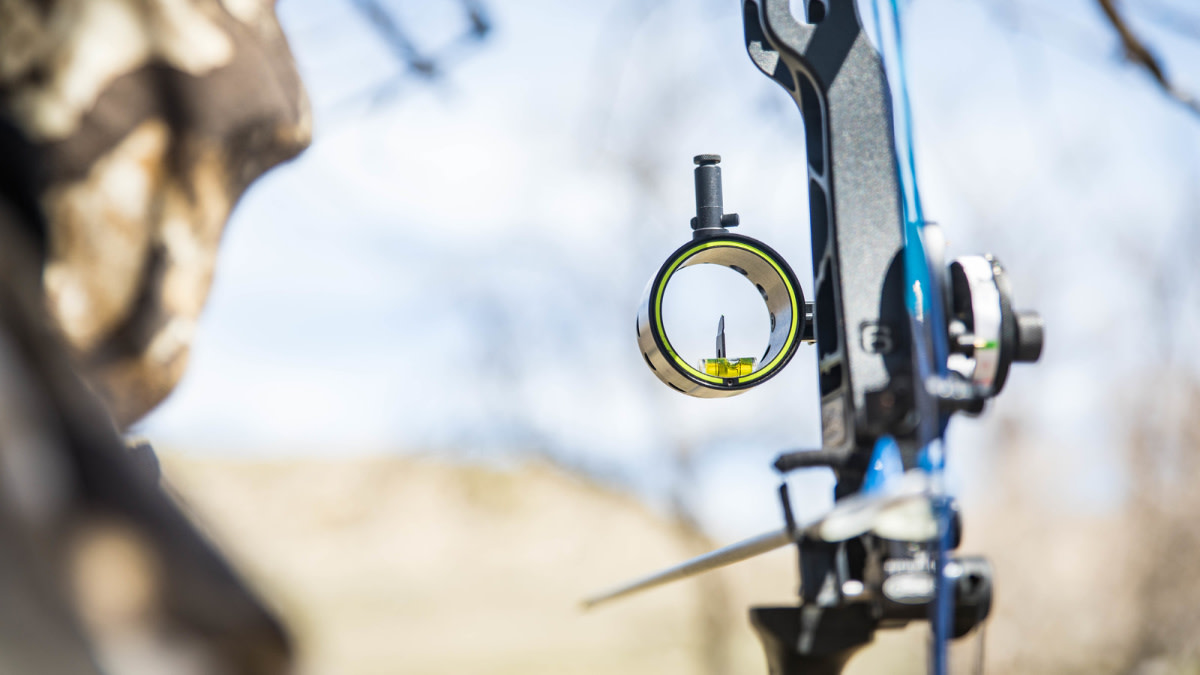
The arrow rest determines how cleanly your arrow launches. Drop-away rests fall out of the path on release for total fletching clearance and are the modern standard; a quality capture-style rest like a full-containment design is simpler and great for hunting where the arrow won’t fall off the rest at the wrong moment. Your sight can be a fixed-pin model (set distances, dead simple) or an adjustable single-pin slider for precise long-range dialing.
Don’t skimp on arrows. They must be spine-matched to your draw weight and length, and the wrong spine will scatter groups no matter how good the bow is. Buy them where you can get spine advice, and buy a dozen so you have spares when you inevitably stack a few.
Shoot Before You Decide
Specs narrow the field, but the draw cycle is felt, not read. Two bows with identical numbers can feel completely different at the wall — one smooth and rolling, the other harsh with a hard back wall. If at all possible, draw and shoot your finalists. Pay attention to how the cams roll over, how quiet the shot is, how the bow sits in your hand after release. The bow that disappears in your hands and makes you forget about the equipment is the one to buy.
If a hands-on test isn’t realistic, lean on the forgiving end of every spec — taller brace height, longer axle-to-axle, adjustable everything, moderate draw weight. You can always grow into a more aggressive setup; you can’t un-buy a bow that fights you.
The Bottom Line for 2026
The best compound bow in 2026 isn’t the fastest, the most expensive, or the one your favorite hunter on YouTube shoots. It’s the one fitted to your draw length, set to a weight you can pull with control, forgiving enough to let your form mature, and tuned by someone who knew what they were doing. Get those four things right and a $450 package will outshoot a $1,200 flagship in the wrong hands every time. Spend your money on fit and setup first, chase marginal speed and flagship cams later, and your groups — not your receipt — will tell you that you bought well.
Sources
Browse archery bows, arrows, and accessories at the Archery Supplier shop →
