
Archery Blog
Single Pin vs Multi-Pin Bow Sights: Which Belongs on Your Compound Bow?
Jun
The sight is the one accessory on a compound bow that turns a good shooter into a consistent one. Yet the moment you start shopping, you run into a fork in the road that quietly shapes how you will aim for years: a single pin that you dial to the exact yardage, or a fixed bank of multiple pins stacked in the housing. Both put an aiming point on the target. How they get you there — and what they ask of you under pressure — could not be more different.
This guide walks through how each style actually works on a compound bow, where each one shines, and how to match the choice to the kind of shooting you do most. By the end you should know which sight belongs on your riser, and why.
What a Bow Sight Is Really Doing
An arrow does not travel in a straight line. The instant it leaves the rest it begins falling, so the further your target sits, the higher you must hold to compensate. A bow sight is simply a reference point that accounts for that drop. When you place a glowing pin on the spot you want to hit and your form is repeatable, the arrow arcs to that point. Every sight, single or multi, is solving the same problem of gravity versus distance.
The difference is bookkeeping. A multi-pin sight pre-loads several aiming points, each one already set for a specific yardage. A single pin sight gives you one point and a dial to physically move the entire housing up or down until that one pin matches the distance in front of you. One stores the answers; the other makes you set them on the fly.
How a Single Pin Sight Works
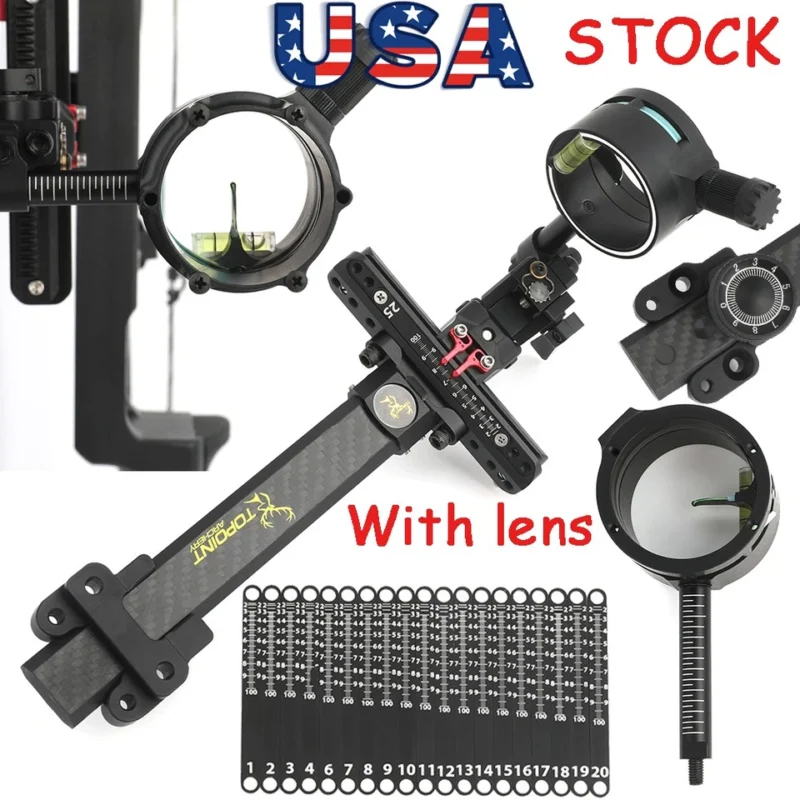
A single pin sight mounts one fiber-optic pin inside the housing and connects it to an adjustment wheel marked with a yardage tape. You range your target — say 42 yards — then rotate the dial until the indicator lines up with 42 on the tape. The pin is now calibrated for that exact distance. You draw, settle the single dot on the spot, and release.
The appeal is a clean sight picture. There is nothing in the housing but one pin and the target. No stack of pins crowding your view, no second-guessing which pin to use, no mental gap-shooting between marks. For target archers shooting known distances and for hunters who have time to range and dial, that uncluttered window is a real accuracy advantage. You are aiming at the exact yardage rather than splitting the difference between two fixed pins.
Single pin sights also tend to be dead-on at any distance the tape covers. Want to shoot 37 yards? Dial 37. There is no in-between guesswork because every yardage gets its own setting. That precision is why so many 3D target shooters live and die by the dial.
The Cost of the Dial
The catch is time and movement. If an animal steps out at an unexpected distance, you have to range it and turn the wheel before you can aim — extra motion at the worst possible moment. And if your first shot misses and the target is now closer or farther, you must re-dial before the follow-up. In a fast-developing hunting scenario, those seconds matter. Single pin shooters manage this by pre-setting the dial to the most likely distance before a target appears, then trusting their form for small variations.
If a clean, single-point aim appeals to you, a quality adjustable sight is the place to start. Look for one with a smooth, lockable dial and a bright pin.
Shop Single Pin Bow Sights on Amazon →
How a Multi-Pin Sight Works
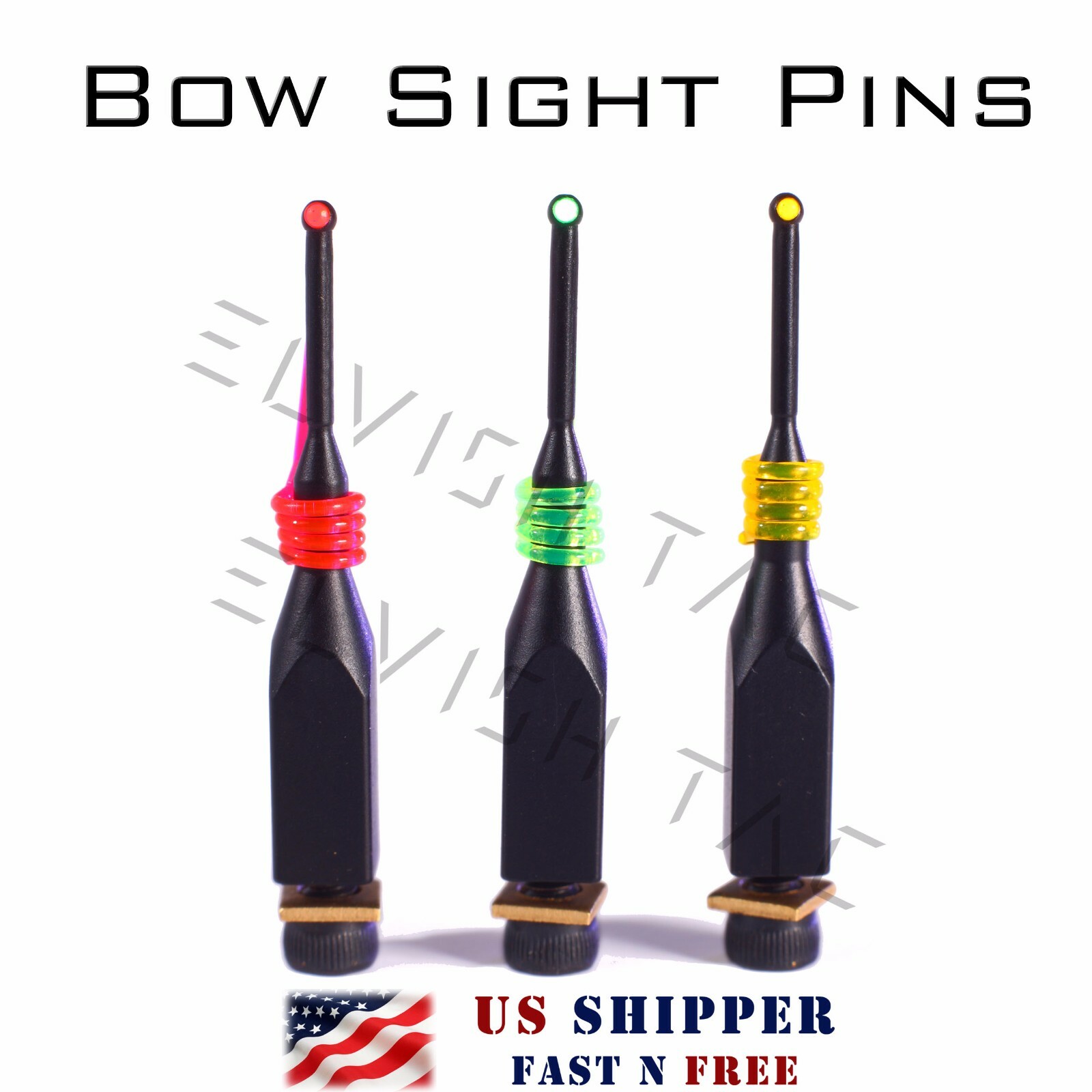
A multi-pin sight fixes several pins in the housing, usually three to five, each sighted in for a set distance. A common hunting setup runs pins at 20, 30, 40, and 50 yards. When a target appears, you do not touch a dial — you simply pick the pin that matches the range and hold. If the animal stands between marks, you float your aim slightly between two pins, a skill that becomes second nature with practice.
The strength here is speed and readiness. There is no mechanical step between seeing the target and aiming. Snap to full draw, choose your pin, settle, release. For bowhunters who get one fleeting chance at a moving or alert animal, that immediacy is exactly why the multi-pin design has been the hunting standard for decades.
It is also forgiving of distance uncertainty. If you misjudge yardage slightly, the gap between your pins still gives you a usable hold. You are never locked to a single calibrated point that punishes a small ranging error.
The Cost of the Stack
More pins mean more clutter in the housing. At longer ranges the lower pins can crowd together and partially cover the target, and in dim light a busy pin stack is harder to read. There is also the risk of grabbing the wrong pin under adrenaline — a 30-yard hold on a 40-yard animal sends the arrow low. Multi-pin shooters drill pin selection until it is automatic, precisely because that mistake is so easy to make when the heart is pounding.
For most hunters wanting a fast, proven setup, a solid multi-pin sight with bright fibers and a dialed-in gang adjustment covers nearly every situation in the field.
Shop Multi-Pin Bow Sights on Amazon →
Matching the Sight to How You Shoot
The honest answer to “which is better” is that it depends entirely on the shooting in front of you. The two designs optimize for different moments, so the right pick follows your dominant use case rather than any universal ranking.
Target and 3D Archery
When you know the distance, or have time to range and dial without rushing, the single pin’s uncluttered window and exact-yardage precision are hard to beat. Spot shooters and 3D competitors usually favor it because every shot can be tuned to the precise number rather than estimated between marks. The clean sight picture also reduces visual fatigue over a long round.
Hunting in Tight Cover
When shots are close and fast — whitetails inside 40 yards, animals that appear and vanish — the multi-pin sight’s instant readiness wins. There is no dial to turn while a deer is quartering away. You pick a pin and shoot. The speed margin is exactly what tags get filled on.
Western and Long-Range Hunting
Spot-and-stalk elk or open-country mule deer often allow time to range and dial, and the distances stretch well past where a fixed pin stack stays clean. Here many hunters lean back toward a single pin, or a hybrid, for the precision a calibrated dial gives at 60 or 70 yards. The shooting tempo is slower, so the dial’s cost shrinks.
The Hybrid Middle Ground
If the trade-off feels frustrating, you are not alone, and the market noticed. Movable multi-pin sights — sometimes called “slider” sights — give you two or three fixed pins for quick close work plus a dial that lets you slide the whole housing for precise long-range shots. You get the snap-shooting readiness of a pin stack inside bow range and the calibrated precision of a dial when distance and time allow.
The compromise is complexity and price. These sights have more moving parts, cost more, and demand that you practice both aiming methods so you do not fumble the transition. For a hunter who chases everything from treestand whitetails to open-country mule deer, though, that versatility can be worth every penny.
Features That Matter More Than the Pin Count
Once you have chosen a style, a few details separate a sight you trust from one you fight. Fiber-optic pin brightness decides whether you can aim in the gray light of dawn and dusk, when most game moves. A bubble level inside the housing tells you the bow is not canted — a tilted bow throws arrows left or right at distance, an error that grows the farther you shoot. Micro-adjustment for windage and elevation lets you sight in precisely instead of nudging and hoping.
Pin diameter is its own quiet decision. A thin .010-inch pin covers less of a small target and suits precise target work; a thicker .019-inch pin is easier to find fast in low light and forgives a busy backdrop. Match the pin to your eyes and your shooting, not to a spec sheet. A rheostat or fiber-protecting hood that controls glow in changing light keeps the pin from washing out at sunrise or blooming into a starburst in bright sun.
Whatever you mount, sight it in carefully and confirm your marks at every distance you intend to shoot. A sight is only as honest as the time you spend dialing it true.
Shop Adjustable Slider Bow Sights on Amazon →
Making the Call
Strip away the marketing and the choice comes down to a single question: in your typical shot, do you have time to dial, or do you need to be ready the instant the target appears? If you shoot known distances, compete, or hunt open country where you can range and settle, the single pin rewards you with a clean window and exact-yardage precision. If your shots are close, fast, and unpredictable, the multi-pin’s instant readiness is the safer bet. And if you genuinely do both, a slider sight bridges the gap at the cost of a little extra money and practice.
There is no universally correct sight — only the one that fits the way you actually draw, hold, and release. Match it to your shooting, sight it in with patience, and the pin will do its job when it counts.
Sources
- USA Archery — governing body resources on equipment and shooting
- Wikipedia: Sight (archery) — overview of bow sight types and function
- Bowhunter Magazine — field-oriented gear and technique coverage
Browse archery bows, arrows, and accessories at the Archery Supplier shop →
