
Archery Blog
Hunting Arrow Weight: 5 Proven Rules for Grains Per Pound
Jul
A 70-pound compound at 5 grains per pound launches a 350-grain arrow near 300 fps — fast, flat, and thrilling on the chronograph. It’s also the fastest way to void your bow’s warranty and rattle a limb loose. Getting hunting arrow weight right isn’t about chasing speed; it’s about matching the payload to the engine so the arrow flies true and punches through bone. Most bowhunters who “shoot what came with the bow” are running an arrow that was never weighed as a finished unit — and that guesswork shows up on the blood trail.
What Grains Per Pound (GPP) Actually Means
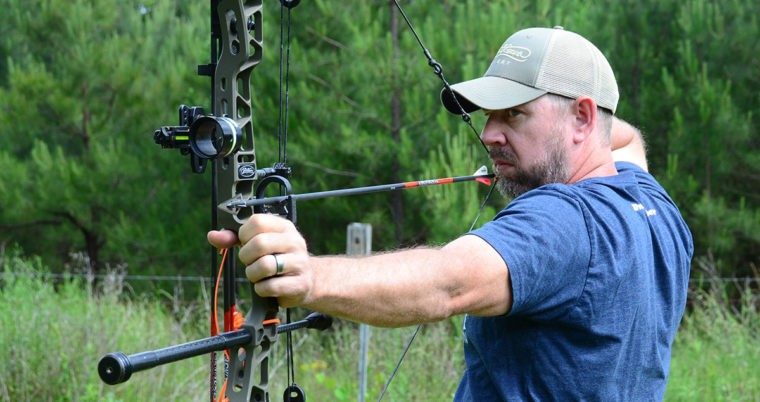
Grains per pound is the number that ties your arrow to your bow. You take the total finished weight of the arrow in grains and divide it by your bow’s actual draw weight in pounds. A 490-grain arrow out of a 70-pound bow is exactly 7 GPP. That single figure tells you more about how the arrow will behave than the shaft’s spine or diameter does on its own.
Why grains? A grain is a tiny unit — there are 7,000 in a pound — which lets arrow builders talk about differences of a few percent that genuinely change downrange performance. The GPP method exists because a 400-grain arrow is heavy for a 45-pound bow and dangerously light for an 80-pound one. Tying weight to draw force gives every archer, from a youth setup to a maxed-out hunting rig, the same repeatable framework. Think of draw weight as the engine and the arrow as the payload: a bigger engine can push a heavier payload efficiently, but every engine has a payload that’s simply too light to load safely.
The 5 Grains-Per-Pound Rules Every Bowhunter Should Know
These five rules turn a fuzzy “how heavy should it be” question into a decision you can make at the workbench. They apply to compound and traditional gear alike, though compound shooters have more room to run heavy without losing much trajectory.
Rule 1 — Never go below 5 GPP. This is the hard floor, and it comes straight from arrow and bow manufacturers, not internet folklore. An arrow under 5 grains per pound doesn’t absorb enough of the bow’s stored energy on release, so that energy slams back into the limbs and cams. The felt result is a loud, harsh shot; the mechanical result is accelerated wear and a voided warranty. Five GPP is the line. Sane hunting setups live well above it.
Rule 2 — 6.5 to 8 GPP is the hunting sweet spot. This band is where the vast majority of successful bowhunters land because it balances a usable trajectory against enough mass to drive penetration. At 7 GPP a 70-pound bow throws a 490-grain arrow around 270–280 fps — flat enough to shoot confidently to 40 yards, heavy enough to blow through a deer’s offside shoulder. If you’re unsure where to start, build to 7 GPP and adjust from there.
Rule 3 — Match GPP to the animal. Weight requirements scale with the size and bone density of your quarry. Whitetail and antelope are comfortably handled at 6.5–7.5 GPP. Elk, moose, and bear ask for 7.5–9 GPP because you may need to break heavy shoulder bone at a quartering angle. This is the same logic that drives choosing the right draw weight for deer hunting — the bigger the animal, the more momentum you want on the string.
Rule 4 — Where the weight sits matters as much as the total. Two arrows can both weigh 490 grains and behave completely differently if one carries its mass up front and the other spreads it evenly. Weight concentrated behind the point raises your front-of-center balance, which stabilizes the arrow in flight and improves penetration. A heavier arrow that’s poorly balanced is just a slow arrow. Total weight and arrow FOC are two dials you tune together, not in isolation.
Rule 5 — When the call is close, go heavier. If you’re torn between two builds, the heavier one almost always serves a hunter better. The speed you give up costs you a little trajectory you can compensate for with a rangefinder and a good sight. The momentum you gain buys penetration you cannot get back once an arrow stalls in bone. Speed is fun on paper. Mass is what recovers animals.
How Much Should a Hunting Arrow Weigh?
The honest answer is a range, not a single magic number, because it depends on your draw weight and your target species. The table below converts the GPP rules into real finished-arrow weights so you can see roughly where your setup should land.
| Draw Weight | Light (5–6.5 GPP) | Hunting Sweet Spot (6.5–8 GPP) | Heavy (8–9+ GPP) |
|---|---|---|---|
| 50 lb | 250–325 gr | 325–400 gr | 400–450+ gr |
| 60 lb | 300–390 gr | 390–480 gr | 480–540+ gr |
| 70 lb | 350–455 gr | 455–560 gr | 560–630+ gr |
For a typical 70-pound whitetail hunter, a finished arrow somewhere between 470 and 520 grains covers almost every situation you’ll face from a treestand. If you chase elk out West with that same bow, nudging toward 550–600 grains is cheap insurance for the one quartering-away shot where you need to reach the far lung.
Where Arrow Weight Actually Comes From
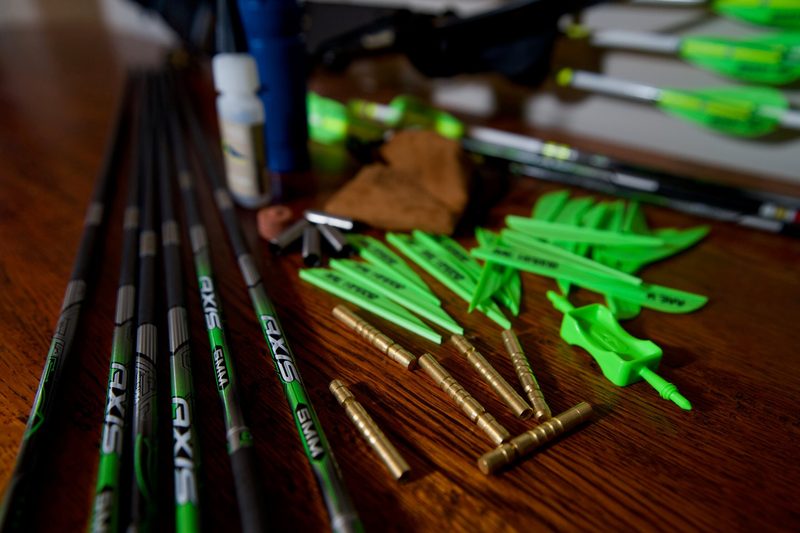
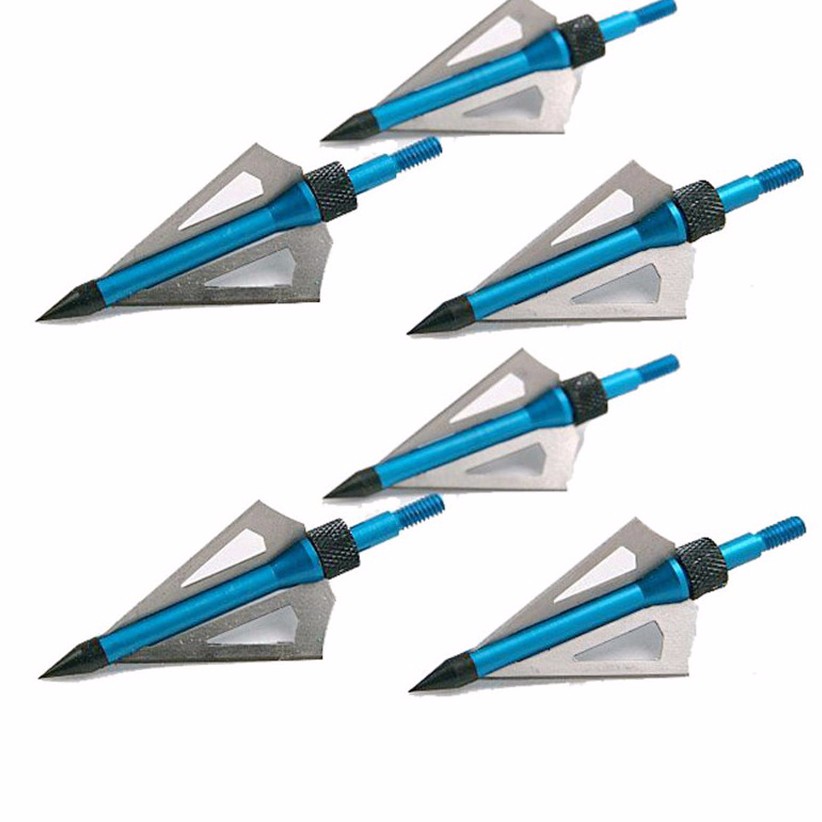
You can’t manage what you don’t measure, and total arrow weight is the sum of five components. The shaft is rated in grains per inch (GPI) — a 6mm hunting shaft might run 8.5 GPI, so a 28-inch shaft contributes about 238 grains before anything else. The point is the biggest lever you control: a standard field point or broadhead is 100 grains, but 125-, 150-, and 200-grain heads are common for hunters who want more up-front mass.
The rest adds up faster than people expect. A brass insert can weigh 20–50 grains versus a few grains for aluminum, the nock is another 6–10 grains, and vanes plus a wrap add roughly 25–40 grains. Swapping a 100-grain head for a 150 and dropping in a brass insert can move a build from 6.5 to 7.5 GPP without touching the shaft — which is exactly how experienced archers fine-tune weight and balance at the same time. Your point weight is also where a lot of your FOC comes from, so choose it deliberately.
How to Calculate and Weigh Your Total Arrow Weight
The math is simple once you have the parts list. Add up the shaft (GPI × length), point, insert, nock, and fletching, then divide by your bow’s draw weight. If your components total 490 grains on a 70-pound bow, you’re at 7 GPP — dead center in the hunting band. But component charts are nominal, and manufacturing tolerances mean your real arrow is often a few grains off the spec sheet.
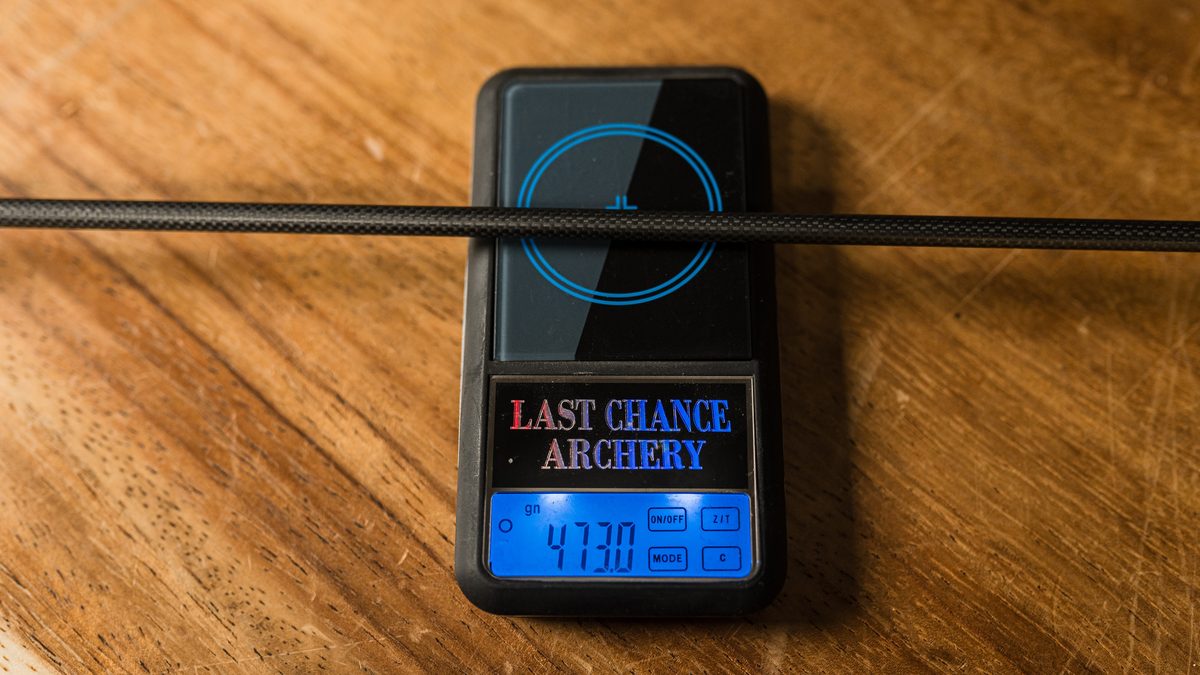
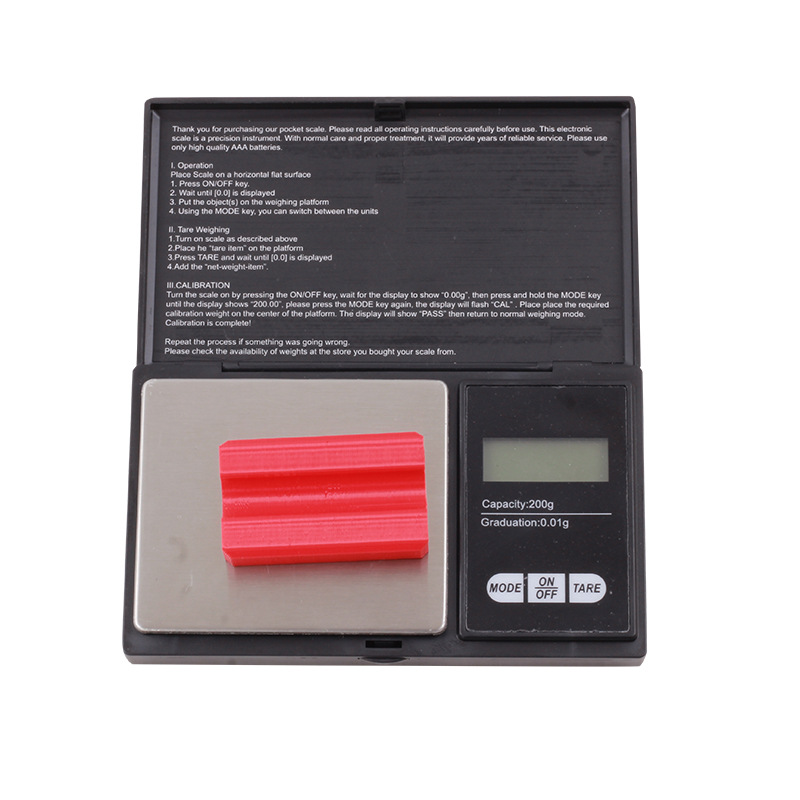
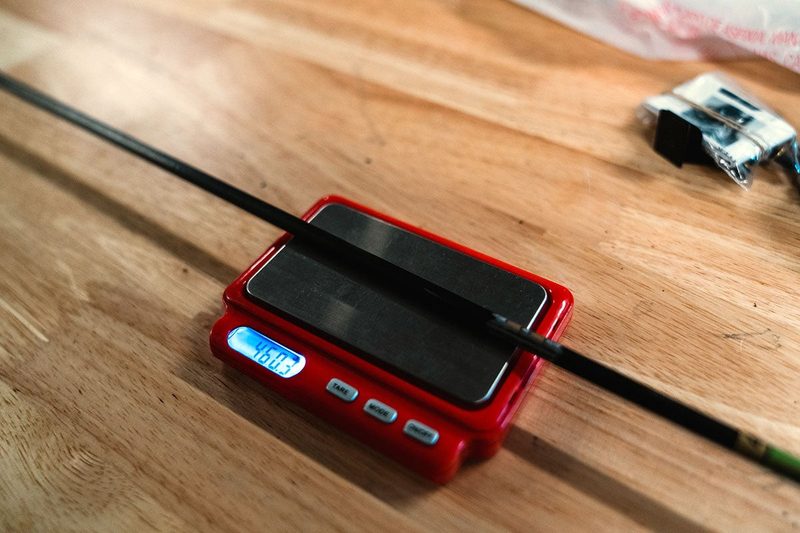
That’s why a grain scale earns its place on the bench. Build one complete arrow, drop it on the scale, and you’ll know your true weight instead of a catalog estimate. Weighing all your hunting arrows also flags any that are off by more than a couple grains — those outliers are the ones that mysteriously fly high or low at 50 yards. A precision scale is the difference between a matched dozen and a bag of “close enough.”
Light vs. Heavy Arrows: Speed, Trajectory, and Penetration
Here’s the tradeoff in one sentence: lighter arrows fly faster and flatter, heavier arrows fly slower but hit harder and quieter. A 350-grain arrow leaving a 70-pound bow at 300 fps has a forgiving trajectory that hides small range-estimation errors — genuinely useful if you can’t range a moving animal. That same lightness gives up penetration and makes the bow louder, which matters when a whitetail can duck the string at 30 yards.
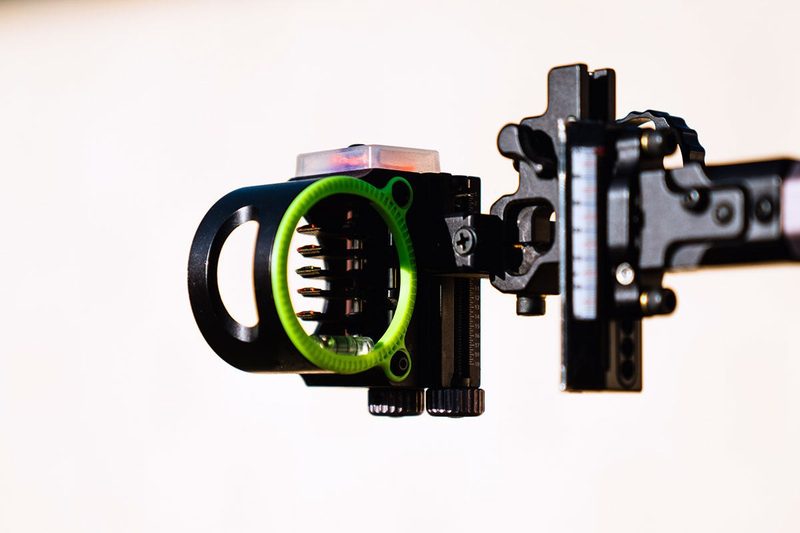
Swing to a 550-grain arrow and everything reverses. You lose maybe 40–50 fps, so your pins stack tighter and a misjudged yard costs you more. In return the shot is quieter, the arrow carries more energy into the animal, and it resists wind drift better on a long shot. The multi-pin sight below is exactly what a heavier, slower arrow leans on — precise range knowledge that lets you pick the right pin instead of relying on a flat trajectory to bail you out.
Does a Heavier Arrow Really Hit Harder?
Yes, and the reason is momentum, not the kinetic-energy number most people quote. Kinetic energy scales with the square of speed, so it flatters light-and-fast arrows on a spec sheet. Momentum scales directly with mass, and momentum is what keeps an arrow moving once it meets resistance — hide, muscle, and bone. Two arrows can carry identical kinetic energy while the heavier one drives noticeably deeper, because it’s harder to stop.
This is the whole argument for a heavier hunting arrow weight when penetration is on the line. A slower, heavier arrow that maintains momentum through the near shoulder and out the far side produces a two-hole wound channel and a short blood trail. A fast, light arrow that stalls inside the chest cavity gives you one hole and a long night. On a broadside deer at 25 yards, either works. On a quartering elk at 45, momentum is the margin.

How to Pick the Right Arrow Weight for Your Setup
Start from the animal and work backward. Decide what you’re hunting, pick a GPP target from the rules above, then multiply by your true draw weight to get a total-weight goal. From there you build to hit that number using shaft GPI, point weight, and insert choice — and you confirm the arrow is properly spined for the finished weight, because a heavy point can weaken a shaft’s effective stiffness. If you’re unsure about spine, our guide to choosing the right arrow spine walks through it.
Then test at distance. Paper-tune and broadhead-tune the finished arrow, and shoot it to your maximum hunting range before you trust it. A build that groups field points at 20 yards but scatters broadheads at 50 isn’t done. Practice shafts that match your hunting arrow’s weight and diameter let you log volume without burning up broadheads or expensive hunting shafts.
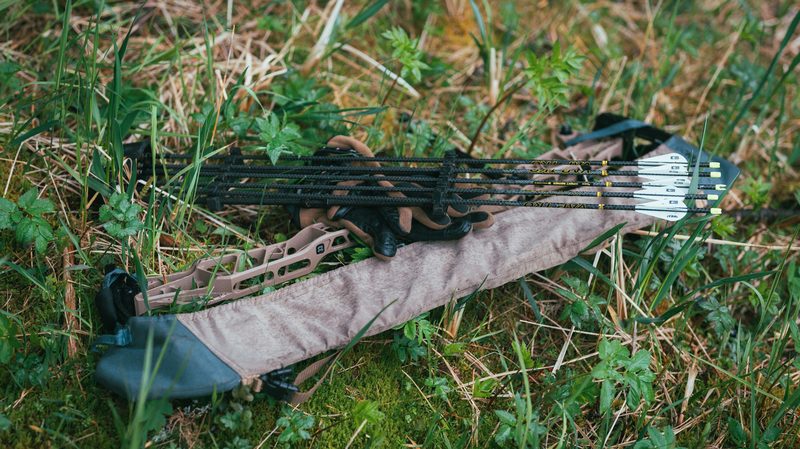
Watch: Dialing In Hunting Arrow Weight for Your Bow
This walkthrough shows how a bowhunter picks a total arrow weight for a specific compound setup, from GPP target to finished build and downrange testing.
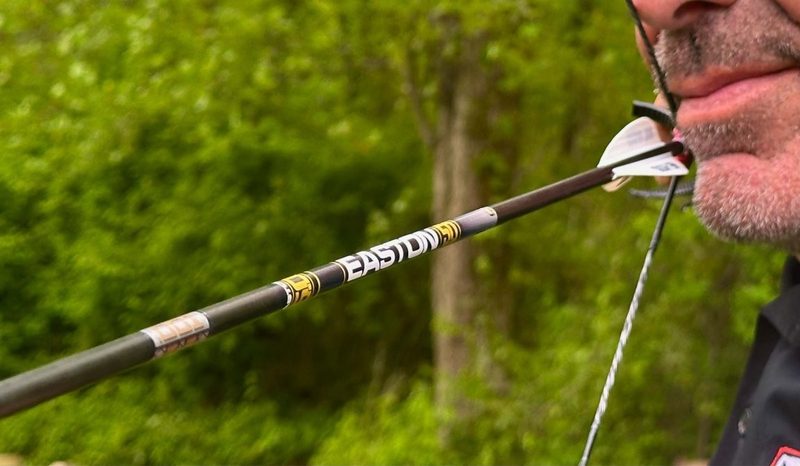
Build It Once, Weigh It Every Time
The archers who recover the most animals aren’t the ones with the fastest bows — they’re the ones who know exactly what their arrow weighs and why. Pick a GPP target for your quarry, build to it, and put the finished arrow on a scale before it ever goes in the quiver. Do that and you stop guessing about the one thing standing between your bow and the animal. When you’re ready to fine-tune the balance side of the equation, read our companion guide on arrow FOC and set up a matched, hunt-ready dozen this season.
Sources
- GOHUNT — Light vs. Heavy Arrows: What Grain Weight Should You Hunt With — GPP ranges for deer and elk.
- National Deer Association — Heavy vs. Light Arrows for Deer Hunting — momentum, penetration, and weight categories.
- Bowhunter — How to Choose the Best Hunting Arrow — grains-per-pound weight classes.
- Easton Archery — Hunting Arrows — shaft GPI specs and hunting arrow construction.
Browse archery bows, arrows, and accessories at the Archery Supplier shop →
