
Archery Blog
Arrow Spine Explained: How to Choose the Right Size (2026)
Jul
A 70-pound compound shooting a 500-spine arrow will throw fliers all day and the shooter will blame everything except the shaft. Spine is the single most misunderstood number in archery, and it’s the one that quietly wrecks more groups than a bad release ever will. Get it right and a mid-priced arrow will out-shoot a premium shaft that’s mismatched to your setup. This guide walks through what spine actually is, how to read a chart without guessing, and how to confirm you nailed it before you trust the arrow on a target or an animal.
What Is Arrow Spine?
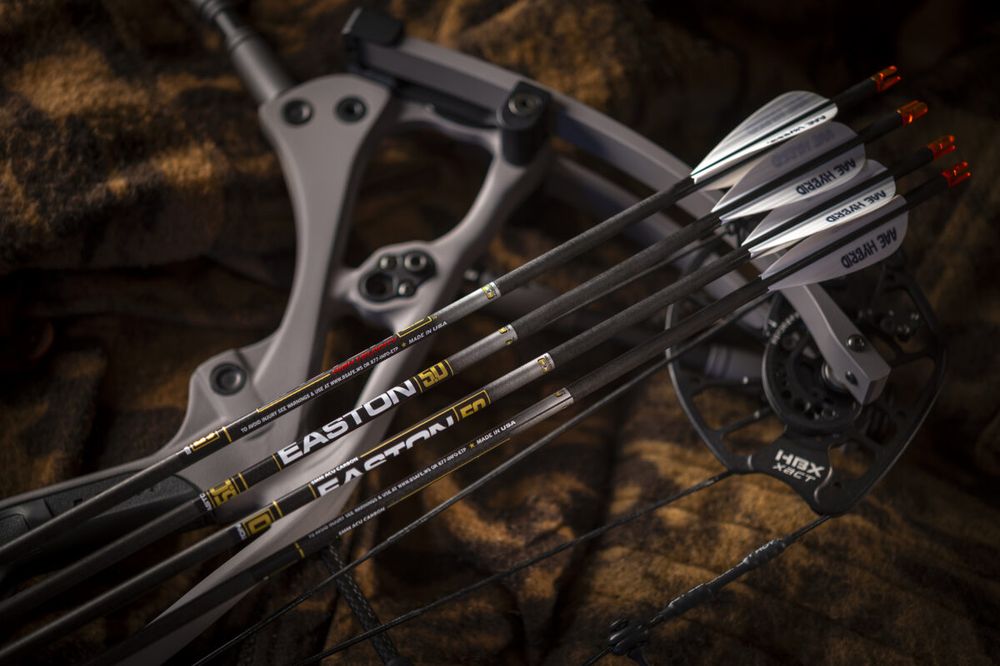
Arrow spine is a measurement of how much an arrow shaft flexes under load. Every arrow bends when it leaves the string — that’s not a defect, it’s physics. The spine number tells you how much it resists that bend. A shaft labeled 340 is stiffer than one labeled 500, and yes, the smaller number being the stiffer arrow trips up almost everyone at first.
There are two kinds of spine, and confusing them is where most people go wrong. Static spine is the lab number printed on the shaft. Dynamic spine is how the arrow actually behaves when your specific bow launches it. The chart gets you close on static spine; dynamic spine is what you fine-tune. Keep both in your head and the rest of this makes sense.
Static Spine vs. Dynamic Spine
Static spine never changes. It’s a fixed property of the shaft, set at the factory. Dynamic spine, on the other hand, shifts every time you change something in the system — a heavier point, a longer shaft, a more aggressive cam. That’s why two archers can buy the same 400-spine arrow and one flies darts while the other can’t group at 30 yards. Same static spine, completely different dynamic spine, because their setups aren’t the same.
The practical takeaway: the number on the box is a starting point, not an answer. Anyone who tells you “just buy 400s for a 60-pound bow” is skipping the four or five variables that decide whether 400 is actually correct for you.
How Arrow Spine Is Measured
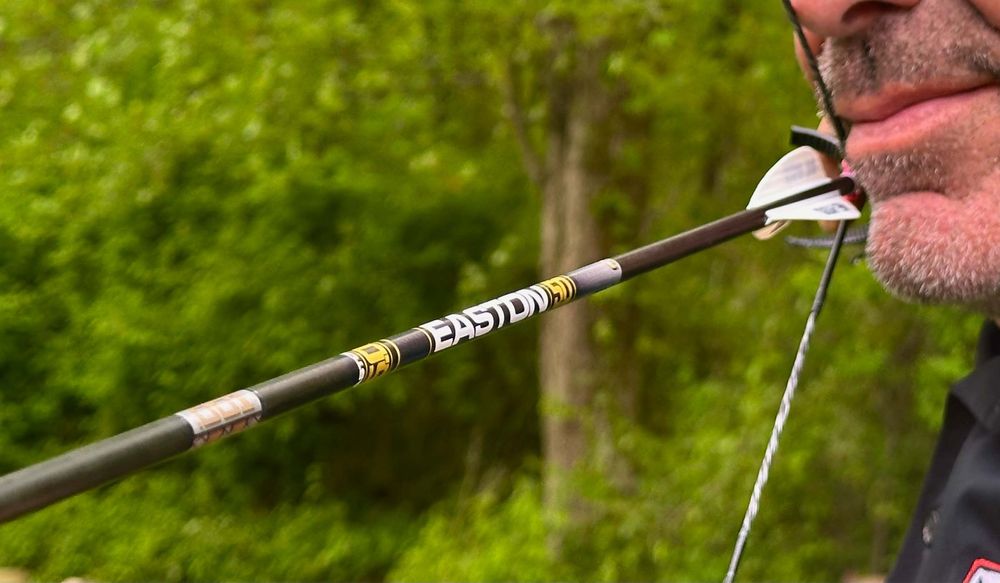
Static spine has a precise definition. The shaft is laid across two supports set 28 inches apart, and a 1.94-pound (880-gram) weight is hung from the center. The distance the shaft sags, measured in thousandths of an inch, is the spine number. A shaft that deflects 0.400 inches is a 400 spine; one that sags only 0.340 inches is a stiffer 340.
This is the ATA/ASTM standard that every reputable manufacturer uses, which is why an Easton 340 and a Victory 340 are genuinely comparable on paper. Traditional wood and some target aluminum arrows use their own systems (wood is often rated in pounds of draw weight), so don’t cross-shop those numbers with carbon.
How to Read an Arrow Spine Chart
A spine chart cross-references two things: your bow’s draw weight and your finished arrow length. Find your measured peak draw weight along one axis, your arrow length along the other, and the box where they meet gives you a recommended spine. It sounds simple, and it is — as long as your inputs are honest.
The most common chart mistake isn’t misreading the grid. It’s feeding it bad numbers. People guess their draw weight instead of putting the bow on a scale, and they use their draw length instead of their actual cut arrow length. Both errors push you toward the wrong column. Measure your real peak weight with a bow scale, and measure the arrow from throat of the nock to the end of the shaft — our guide on how to measure arrow length covers exactly where to start and stop the tape.
One more thing the chart won’t shout at you: it assumes a standard point weight, usually 100 grains. Bump up to a 125- or 150-grain point and you’ve effectively weakened your dynamic spine, which may push you a full spine group stiffer than the chart’s first suggestion.
What Happens If Your Arrow Spine Is Wrong?
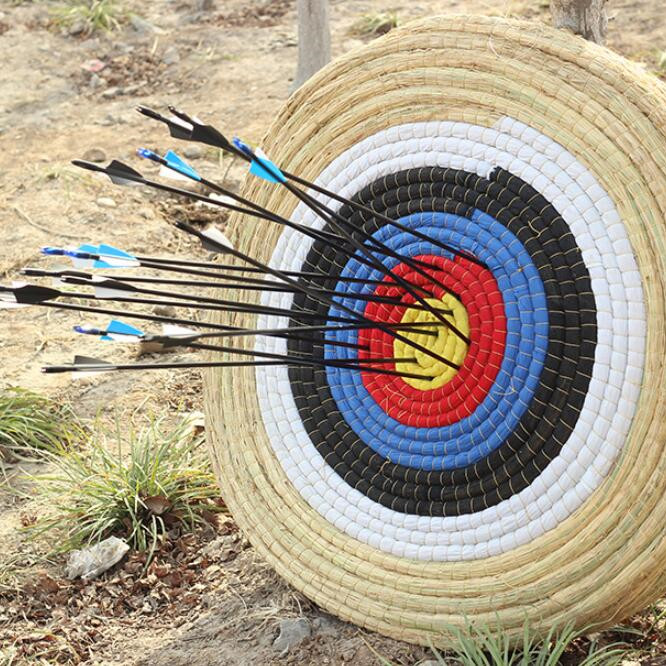
An arrow that’s too weak (under-spined) over-flexes on release and recovers slowly. Out of a right-handed bow it tends to plane left and print erratically, and at worst an badly under-spined shaft can fail on the shot — a real safety issue with modern high-poundage bows. An arrow that’s too stiff won’t flex enough to clear the riser cleanly and usually favors the opposite direction, throwing weak-side groups that never quite settle.
Here’s the part people miss: with a mechanical release and a well-tuned rest, a slightly stiff arrow is far more forgiving than a slightly weak one. If you have to miss the mark, miss it on the stiff side. Fingers shooters and traditional archers care about spine even more, because the string rolls off the fingers and the shaft has to bend around the riser — the classic archer’s paradox — so their spine window is narrower.
Factors That Change Your Dynamic Spine
Five variables move dynamic spine, and knowing them turns spine from a mystery into a dial you control:
- Point weight — heavier points weaken dynamic spine. Every 25 grains up front noticeably softens the shaft.
- Arrow length — longer shafts flex more, acting weaker. Cutting an arrow an inch stiffens it.
- Draw weight — more poundage bends the shaft harder, demanding a stiffer spine.
- Cam aggressiveness — a hard, speed-oriented cam loads the arrow faster and effectively weakens dynamic spine versus a smooth cam at the same weight.
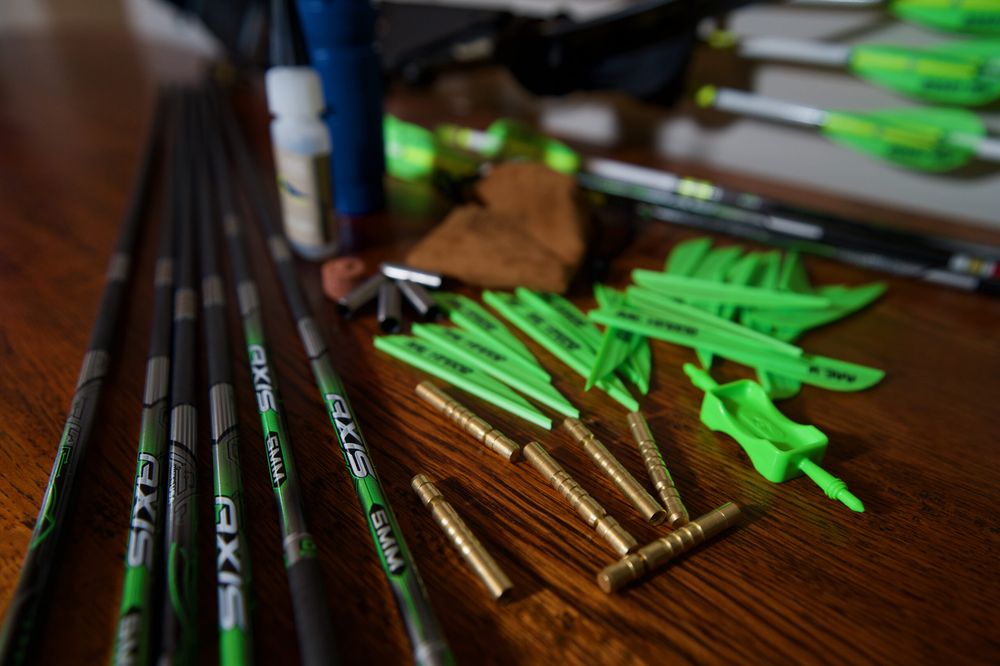
- Insert and nock weight — small, but they add up on a tuned setup, especially with heavy brass inserts for high FOC.
This is why a spine chart is a launch pad, not a verdict. Change any one of these and you’ve changed the answer.
Recurve and Traditional Bows Are a Different Game
Everything above skews toward compound shooters, but recurve and traditional archers live and die by spine even more. Without a rigid rest and a release aid, the arrow bends around the riser on every shot. Too stiff and it slaps the riser and kicks left (for a right-handed shooter); too weak and it whips the other way. Traditional shooters often tune spine by trimming shaft length and swapping point weight one step at a time until the arrow flies clean off the shelf. If you’re shooting a recurve, start a touch weak on the chart and stiffen from there — it’s easier to trim length than to add it back.
How to Confirm Your Spine Is Actually Right
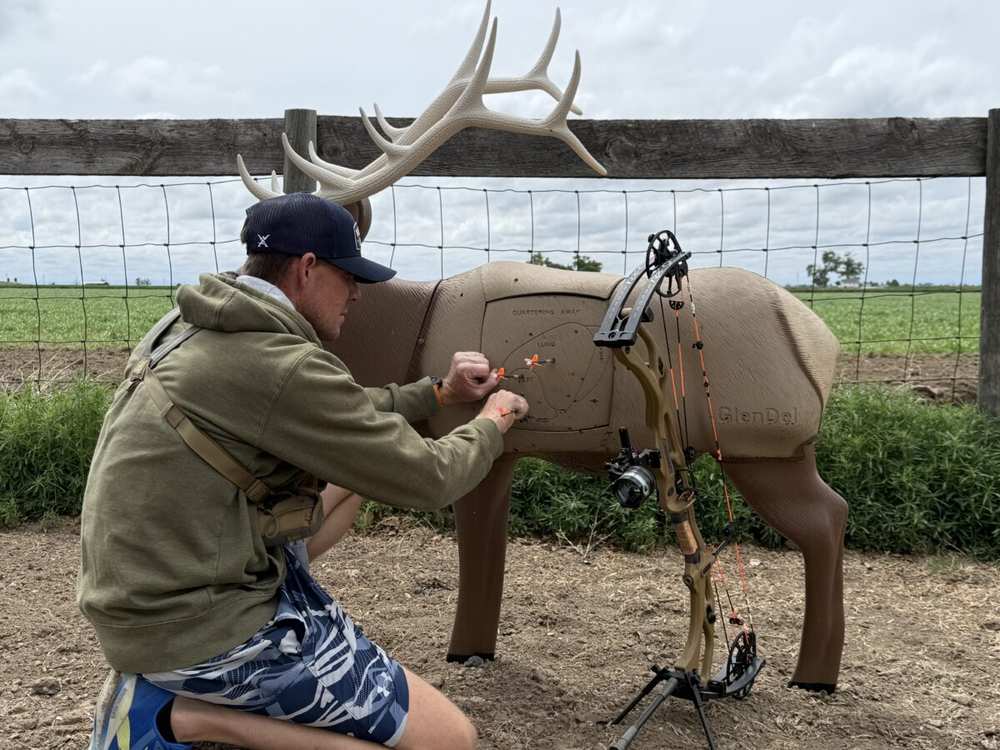
The chart gets you to the right neighborhood. Tuning tells you which house. Two methods settle it. Bare-shaft tuning means shooting an unfletched arrow alongside a fletched one at 15–20 yards; if the bare shaft lands left of the fletched group (right-handed bow), your arrow is reading stiff, and if it lands right, it’s weak. Paper tuning reads the tear the arrow rips through a sheet of paper — a clean bullet hole means the arrow is leaving straight. Our paper tuning guide breaks down what each tear pattern is telling you.
Don’t skip fletching choices in this step either. Vane size and helical affect how fast the arrow steers back to straight, which can mask or magnify a borderline spine — the fletching types and sizes guide is worth a read before you cut a dozen shafts.
Do You Choose Spine by Material?
Spine is spine regardless of what the shaft is made of — a 400 carbon and a 400 aluminum flex the same under the standard test. Where material matters is consistency and durability. Carbon holds its spine shot after shot and shrugs off abuse; quality aluminum is dead-straight and cheap to replace but bends on a hard impact. If you’re weighing the two, our breakdown of carbon vs. aluminum arrows gets into the trade-offs. Whatever you pick, choose the spine off the chart first, then the material second.
Watch: Choosing Arrow Spine Correctly
Pro shooter John Dudley walks through spine selection and why measured inputs beat guesswork — a solid visual companion to the chart method above.
Common Arrow Spine Mistakes
The mistakes cluster into a short, predictable list. People guess draw weight instead of scaling it. They use draw length in place of arrow length. They forget that a heavier broadhead weakens spine, so the target arrow that flew perfectly suddenly won’t group with a 125-grain head up front. And they buy on price or brand hype instead of matching the number to the setup. None of these are hard to avoid — they just require measuring instead of assuming.
Pick the Number, Then Prove It
Spine isn’t the mystical variable it gets made out to be. Measure your real draw weight, measure your finished arrow length, read the chart, and adjust one group stiffer for every 25–50 grains you add to the point. Then shoot a bare shaft and let the target confirm it. Do that once and you’ll never wonder why your groups open up again. Ready to build a set? Start with a spine-matched shaft from the Archery Supplier shop and tune from there.
Sources
- Easton Archery — Making Sense of Arrow Spine — manufacturer explanation of static spine and the deflection test.
- Easton Arrow Selector & Spine Chart — the industry-standard hunting and target arrow selection tool.
- Victory Archery — Choosing the Best Carbon Arrows — on spine, deflection, and matching arrows to a hunting setup.
- Sportsman’s Warehouse — Arrow Spine Charts — compound, recurve, and traditional spine reference charts.
