
Archery Blog
Arrow FOC: 5 Steps to a Perfect Front of Center Setup
Jun
A 100-grain field point and a 200-grain broadhead, shot from the exact same shaft, will hit two different spots at 40 yards. The reason is arrow FOC. It is one of the few tuning numbers you can change with a $6 insert, and it quietly decides how forgiving your arrow is in wind, how deep it drives on impact, and how cleanly it recovers off the rest. Get it wrong and a perfectly spined arrow planes off target. Get it right and a mediocre setup suddenly groups.
What Is Arrow FOC?
Arrow FOC is the share of an arrow’s mass that lives in front of its balance point, expressed as a percentage. An arrow that balances exactly in the middle has 0% FOC; load weight toward the tip and that number goes positive. Because a real arrow carries a point, an insert, and usually a metal collar up front, almost every finished hunting shaft lands somewhere between 7% and 19%.
Think of it like throwing a dart versus throwing an empty straw. The dart flies nose-first and corrects itself because the weight leads. A straw tumbles. Your arrow behaves the same way: more forward weight means the broadhead leads the shaft and the fletching steers from behind, instead of the whole thing wobbling for the first 20 yards.
How Do You Calculate Arrow FOC?
You calculate FOC by finding the arrow’s balance point, comparing it to the true center, and dividing the difference by the total length. The industry-standard AMO formula is FOC% = 100 × (A − L/2) ÷ L. It takes about ninety seconds with a finished arrow and a ruler.
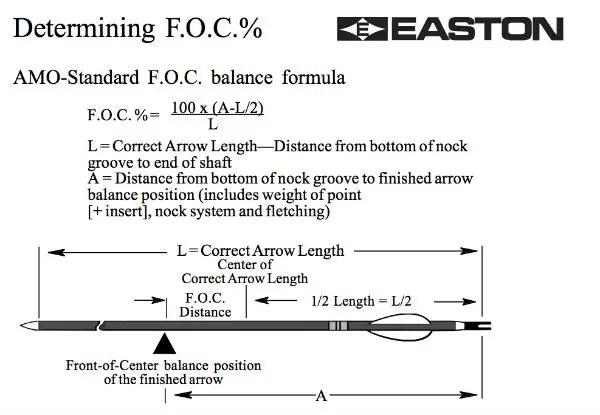
Here is the step-by-step:
- Build the arrow completely — point, insert, fletching, nock, wrap. FOC only means something on a finished shaft.
- Measure overall length (L) in inches from the throat of the nock to the very end of the shaft, not counting the point itself.
- Balance the bare arrow across a thin edge until it sits level. Mark that spot.
- Measure from the nock throat to that balance mark. That distance is A.
- Plug both numbers into the formula.
Worked example: say you have a 29-inch arrow (L = 29) that balances 16.5 inches from the nock (A = 16.5). Half the length is 14.5. So FOC = 100 × (16.5 − 14.5) ÷ 29 = 100 × 2 ÷ 29 = 6.9%. That is on the low side for hunting — add a heavier point and the balance point slides forward, raising the number. This is exactly the math behind every online FOC calculator; the tool just hides the arithmetic.
Accuracy depends on one thing most people rush: the balance point. Resting the arrow on your finger gives a sloppy reading. A narrow edge — the back of a knife, a machinist’s rule stood on its side — gets you within a millimeter, and a millimeter of balance-point error can swing your result by half a percent.
What Is a Good FOC for Hunting Arrows?
For bowhunting, the working range most setups land in is 10–15% FOC, and that is the band Easton recommends for both target and hunting arrows. Below 7% the arrow steers poorly and broadheads start to plane; above 15% you trade some downrange speed and a flatter trajectory for more nose-heavy stability. Where you sit inside that range is a choice, not a rule.
Here is a quick reference for how the numbers break down across disciplines:
| FOC Range | Label | Best For |
|---|---|---|
| 5–9% | Low | Flat-shooting 3D and field, max speed |
| 9–12% | Normal | Target archery, indoor |
| 12–15% | High | Whitetail and general bowhunting |
| 15–19% | Extreme (EFOC) | Elk, hogs, hard-quartering shots |
If you are still picking shafts, settle spine and length first — FOC is the last knob you turn, not the first. Our arrow selection guide walks through that order so you are not fighting two variables at once.
Normal FOC vs High FOC vs Extreme FOC
The split between normal, high, and extreme FOC comes down to how much front weight you are willing to carry and what you give up to get it. Normal FOC (around 10%) flies fast and flat, which is why most factory-spec arrows ship in that zone. High FOC (12–15%) sacrifices a little speed for noticeably better broadhead flight and tighter groups past 40 yards.
Extreme FOC, or EFOC, is the contested end. The concept was popularized by Dr. Ed Ashby, whose two decades of penetration testing argued that arrows above 19% FOC drive deeper through bone and hide. The data is real, but so is the trade-off: pushing past 15% usually means 250–300 grain points, a slower arrow, and a trajectory that drops fast past 50 yards. For a Midwest whitetail hunter shooting inside 30 yards, chasing 25% FOC solves a problem you do not have. For someone stalking elk where shot angles get ugly, the extra forward weight earns its keep.
The honest take: most bowhunters over-index on FOC because it is a number they can chase, when shot placement and a sharp broadhead matter far more. FOC is a tiebreaker, not a magic bullet.
How Do You Increase Arrow FOC?
You raise FOC by adding weight to the front of the arrow or removing it from the back — and adding up front is by far the easier lever. The fastest gains come from a heavier point, a heavier or longer brass insert, or a steel half-out. A jump from a 100-grain point to a 150-grain point on a typical 29-inch shaft moves FOC up roughly 3–4 percentage points on its own.
Here is what each change does, ranked by how much it moves the needle:
- Heavier point or broadhead — the single biggest lever. Every 25 grains up front shifts the balance point forward measurably.
- Brass inserts or weighted collars — adds 20–75 grains right behind the point, where it counts most.
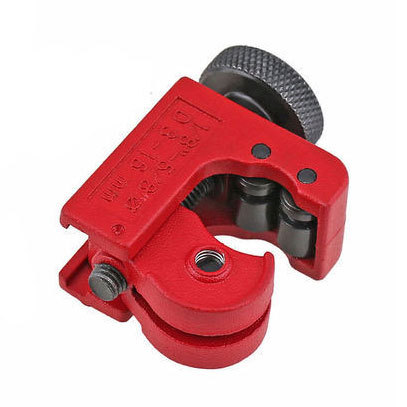
- Shorter shaft — trimming an inch off the front raises FOC because you are removing rear-of-balance length. Cutting also stiffens spine, so retune after.
- Lighter fletching or nocks — small effect, but removing a few rear grains nudges the number up.
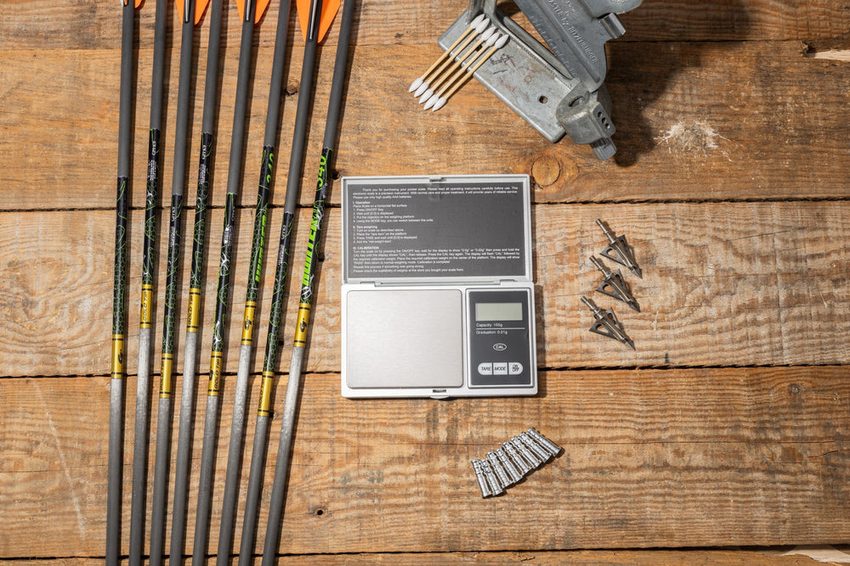
Whatever you change, weigh it. Component grain weights drift from their advertised spec, and a 100-grain point can scale at 97 or 104 grains in the real world. If you are going to cut shafts to chase FOC, do it in small increments — you can always trim more, but you cannot add carbon back. For the full bench process, our custom arrow building walkthrough covers squaring, gluing, and weighing components in order.
Does Arrow FOC Actually Affect Accuracy and Penetration?
Yes, but the effect shows up most at distance and on impact, not at 20 yards on a foam block. More forward weight makes a broadhead-tipped arrow recover faster off the bow and resist wind drift, which is why 3D shooters and western hunters care about it. On a paper target at close range you may never see the difference.
Penetration is where the argument gets loud. Ashby’s testing tied higher FOC to deeper penetration through tissue and bone, and the physics check out: concentrating mass behind the point keeps the arrow driving straight when it meets resistance. But total arrow weight, broadhead sharpness, and a single-bevel edge all contribute as much or more. A 12% FOC arrow with a razor broadhead out-penetrates a 20% FOC arrow with a dull one every time. If you are still choosing between blade styles, our fixed blade vs mechanical broadheads breakdown pairs naturally with this decision.
Watch how a measurement plays out start to finish:
Common FOC Mistakes to Avoid
The most common mistake is chasing a high FOC number while ignoring spine. When you add 50 grains to the point, you effectively weaken the arrow’s dynamic spine, and an arrow that was tuned at 100 grains can fishtail at 150. Every point-weight change is also a tuning change — plan to paper-tune or bare-shaft test afterward.
The second mistake is measuring an unfinished arrow. FOC calculated without the broadhead, insert, and wrap installed is meaningless, because those are the exact components that set the balance point. Measure the arrow you will actually shoot. And do not confuse FOC with total arrow weight — a light arrow and a heavy arrow can share the same FOC while behaving completely differently downrange.
Dialing In Your Own Number
Start by measuring what you already shoot before you change anything — you may already be in the 10–12% range and not know it. From there, decide what the arrow is for: flat and fast for targets, or nose-heavy and deep-driving for big game. Adjust point weight first, re-tune, then re-measure. Two arrows, two purposes, two FOC numbers is a perfectly reasonable place to land. Build a few test shafts, shoot them past 40 yards with the broadhead you will hunt, and let the groups tell you where your bow likes to sit.
Sources
- Easton Archery — What Is F.O.C. and How Does It Affect Arrow Flight? — AMO balance formula and recommended ranges.
- Lancaster Archery Supply — What Is FOC and How Does It Affect My Arrows? — component weights and measuring method.
- N1 Outdoors — High FOC and Why It Matters in Bowhunting — summary of Ed Ashby penetration research.
Browse archery bows, arrows, and accessories at the Archery Supplier shop →
