
Archery Blog
Archery Foot Position: The Foundation Beneath Every Shot
Jun
A 104-year-old man walked up to the shooting line at the largest bow and arrow tournament in the United States — and drew his bow with steady hands. That image says something most archery instructors spend years trying to teach: the sport rewards those who build on solid fundamentals early, and those foundations hold for a lifetime.
Of all the fundamentals in archery, foot position is the one that gets skipped most often. New archers focus on aim, release, and grip — the visible actions — while quietly ignoring the platform everything else stands on.
Why Your Feet Run the Show
Every force your body generates during a shot — draw weight, rotation, follow-through — travels downward and disperses through your feet into the ground. If that base is unstable or misaligned, the instability doesn’t disappear. It travels up the kinetic chain and shows up as fliers, inconsistent groupings, and shoulder fatigue you can’t explain.
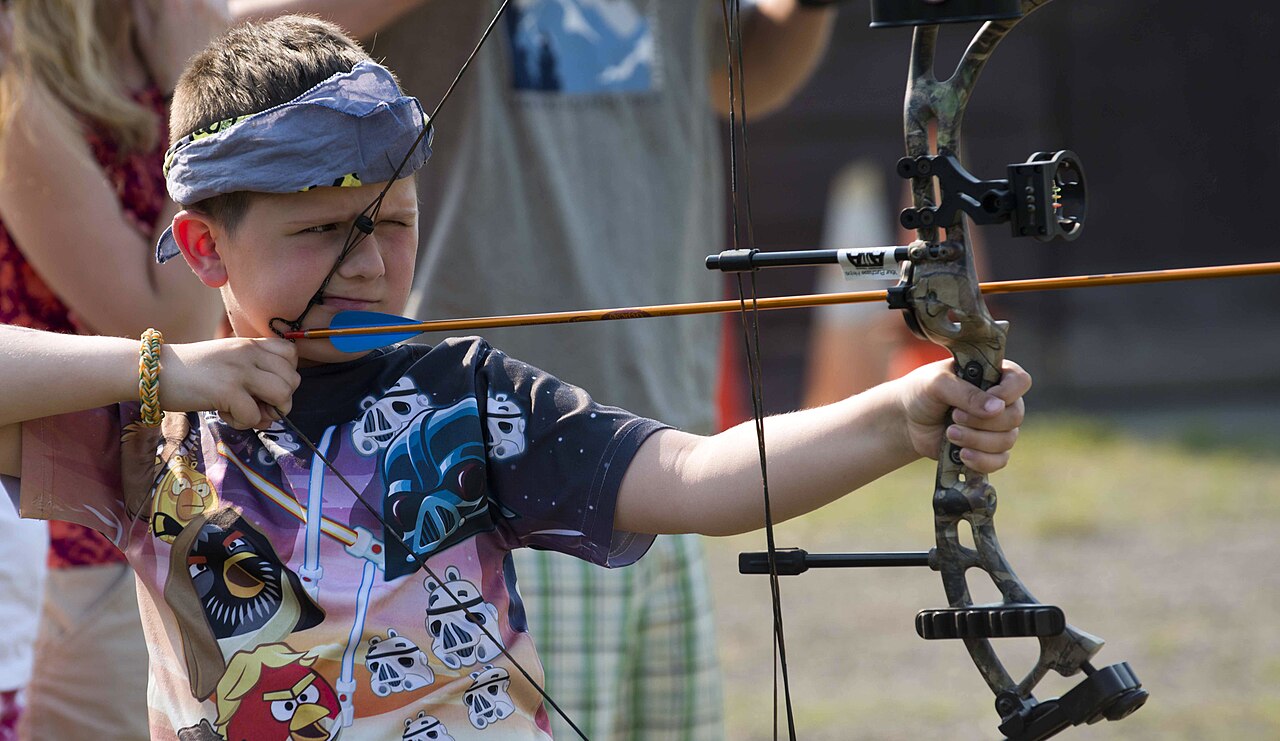
Foot position also dictates your natural point of aim. Stand incorrectly and your body will fight to align with the target on every single shot. Stand correctly and the alignment comes for free — your body lands in roughly the right position without conscious effort.
Square Stance vs. Open Stance: What the Difference Actually Feels Like
A square stance places both feet parallel to the shooting line, shoulder-width apart, with the target directly off your bow shoulder. It’s geometrically clean. Your hips and shoulders naturally square up, and rotating into full draw brings your body into alignment almost automatically. Beginners often find this easier to replicate shot to shot because there are fewer variables — your feet go in the same place every time.
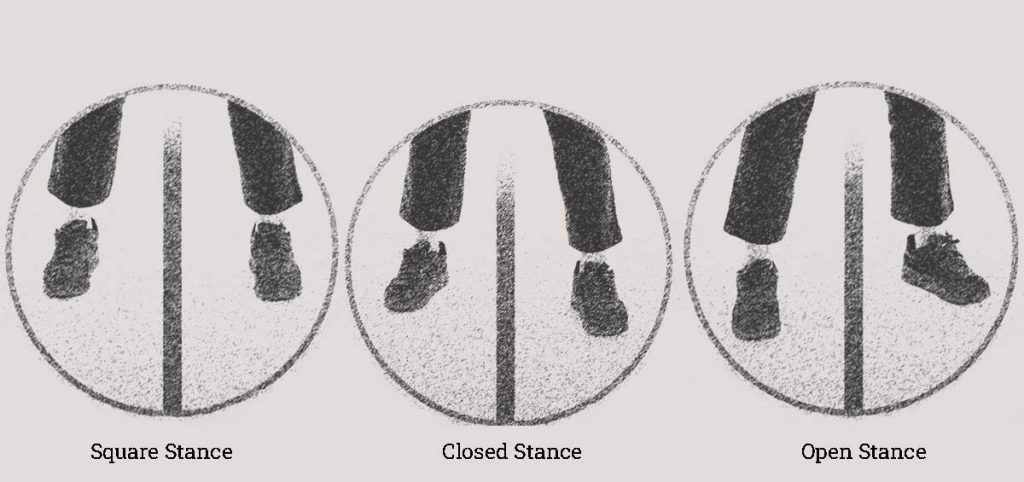
An open stance angles the front foot toward the target (roughly 30–45 degrees off the line), with the rear foot staying closer to parallel. The result is a more open hip position at full draw, which reduces the chance of the bowstring contacting your arm and gives shorter draws a bit more room to work. Many recurve and Olympic archers prefer it once they’ve developed enough body awareness to replicate the angle consistently.
Neither stance is universally superior. The square stance wins on repeatability in the learning phase. The open stance wins on string clearance and hip comfort for many archers at longer draw lengths. The real issue is archers who switch between them shot to shot without realizing it — that’s what creates mystery fliers.
Width, Weight Distribution, and the Ground Contact You’re Ignoring
Foot width is the detail most archers set once and never revisit. The general rule: shoulder-width apart, measured from the center of each foot. Too narrow and you’ll sway under draw weight. Too wide and you’ll lock your hips, limiting rotation and causing torso lean.
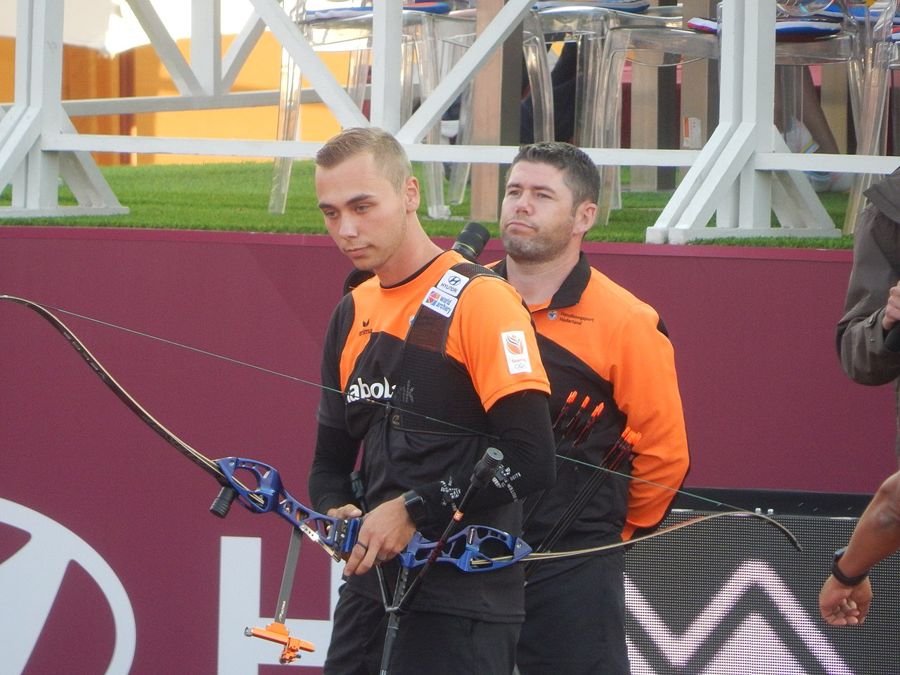
Weight distribution matters more than most coaches emphasize. Equal weight on both feet is the textbook answer, but in practice most experienced archers carry very slightly more weight on the front foot — enough to feel grounded toward the target, not enough to feel like a lean. What you want to eliminate is weight on the heels. Heels-heavy creates a subtle backward lean that pulls your anchor point inconsistently, especially when you’re fatigued.
Pay attention to what your whole foot is doing. Many archers stand on the outer edges of their feet without knowing it. That small rotation closes your hips and forces compensations higher up. Actively press through the ball of the foot and the big toe on every shot until it becomes automatic.
🏹 Shop Archery Stance Mats on Amazon →
Foot Position and the Whole Shot: Where Everything Connects
Once your feet are planted, your natural point of aim (NPOA) is largely set. NPOA is the direction your body aims when you close your eyes, draw, and then open them — before any conscious adjustment. If your NPOA doesn’t point at the target, you’re muscling the shot into alignment on every arrow. That muscle fatigue accumulates, and your groups open up exactly when you’re tired or distracted. Dialing in your stance does more for your scores than most aiming tweaks — it’s the same foundation that makes aiming a recurve bow feel repeatable instead of guessed.
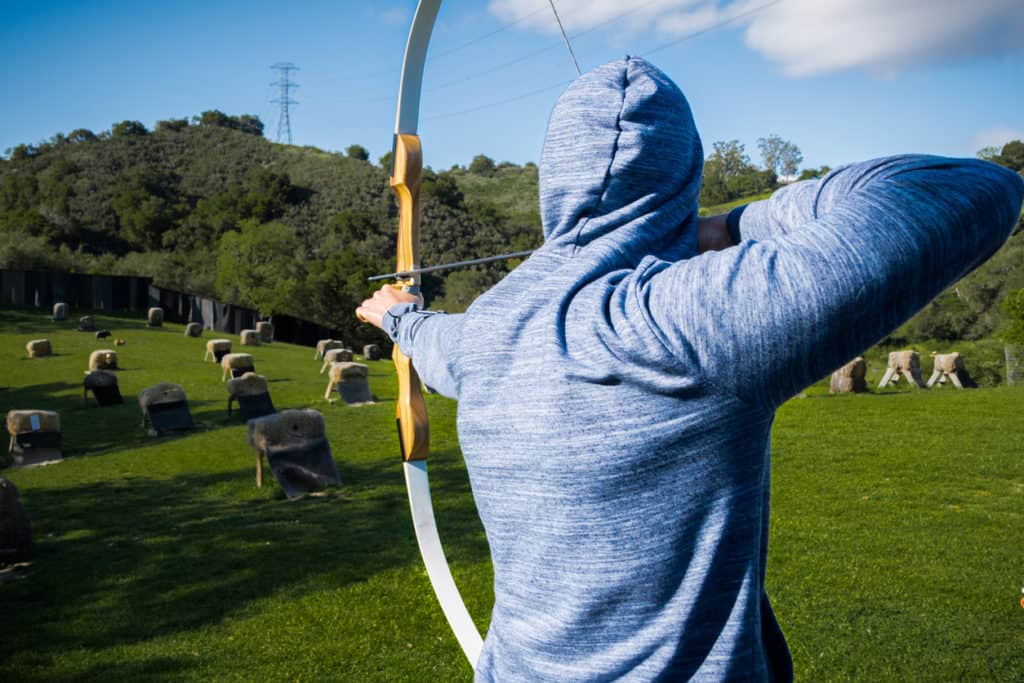
Test your NPOA by drawing with eyes closed, then opening them. If your sight is consistently to the left of the target, rotate your entire foot position slightly clockwise. Don’t move just one foot — move both, keeping the stance geometry intact. Adjust in small increments until opening your eyes puts you dead on without conscious effort.
The Most Common Foot Mistakes and How to Spot Them
Creeping forward between shots. Archers unconsciously lean or step slightly toward the target after releasing. Mark your foot position with tape on a practice mat. If the marks shift forward over a session, your stance is drifting and your distances are getting compressed.
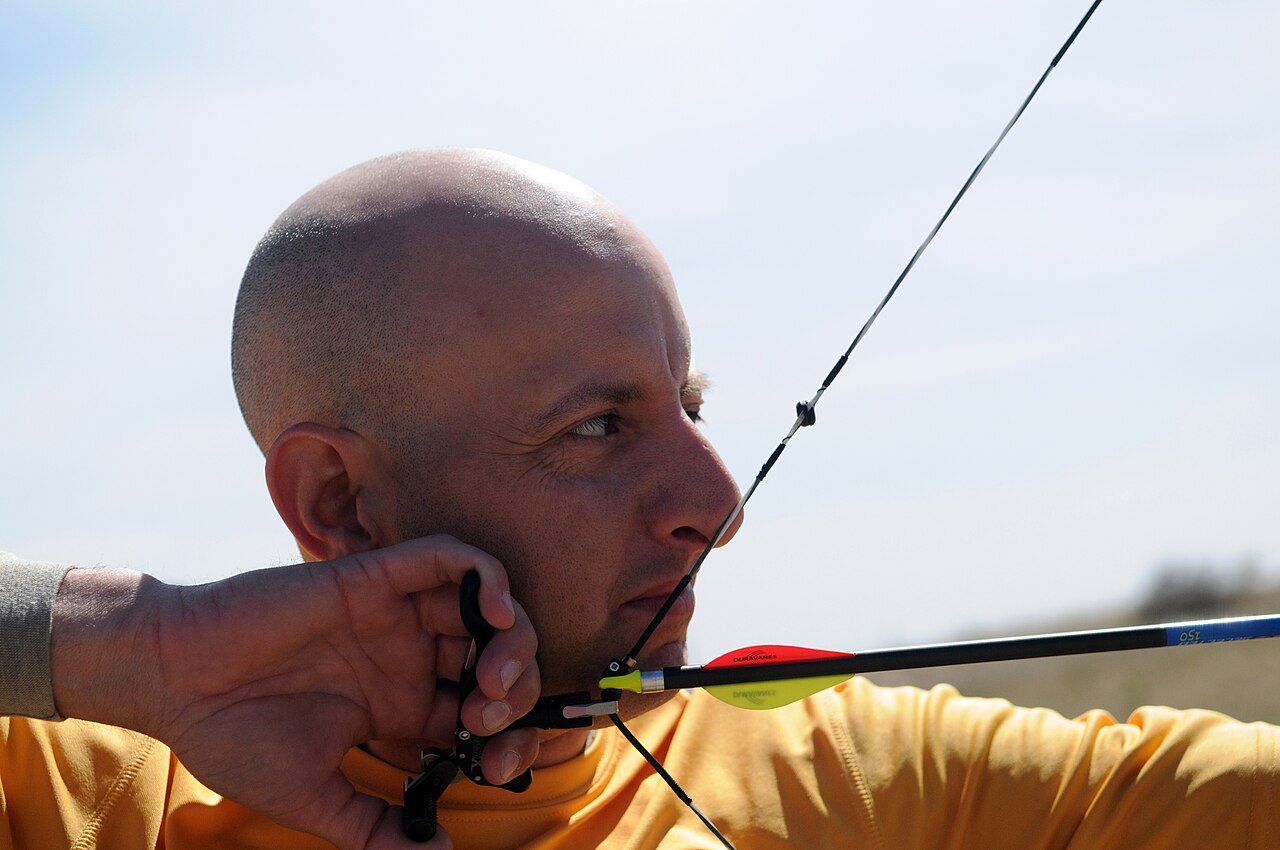
Locking the knees. This isn’t strictly a foot issue, but it starts there — when your feet feel unstable, your instinct is to lock the knees for rigidity. Locked knees make you more sensitive to wind, fatigue, and muscle tremor, not less. Micro-bend at the knee: enough to feel athletic, not enough to look like a squat.
Different position on every end. If you don’t have a consistent pre-shot routine that includes foot setup, you’ll unconsciously vary your stance by several degrees between ends. That variance shows up as unexplained horizontal dispersion — groups that are tight vertically but spread left-right. Video yourself from above during practice and you’ll usually see it immediately.
🏹 Shop Beginner Recurve Bow Sets on Amazon →
Does Foot Position Change for Compound vs. Recurve?
The platform fundamentals don’t change between bow styles — shoulder-width base, balanced weight, soft knees apply whether you shoot a longbow, a recurve, or a compound. What changes is how much margin each bow gives you. A compound’s let-off means you hold less weight at full draw, so a small stance error fatigues you more slowly and is easier to hide. A recurve holds you at peak draw weight the entire time, which punishes a sloppy base much faster — by the third end, a weak stance shows up as a dropping bow arm and scattered arrows.
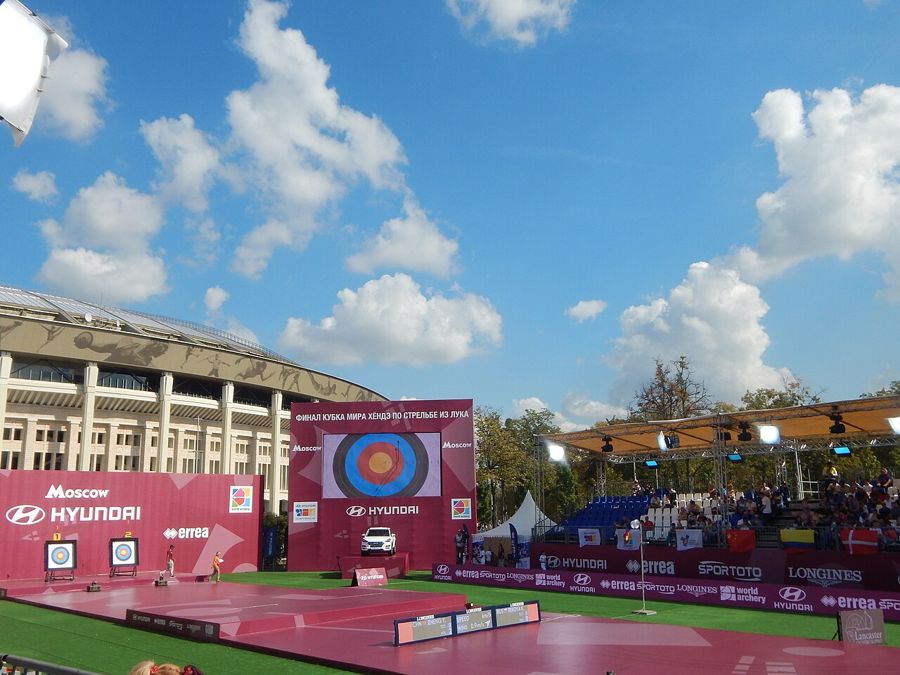
If you shoot both, keep the same foot setup for each and let the bow do its job. The temptation is to widen your stance for a heavier recurve to feel more planted — resist it. Width past shoulder-width locks your hips and steals rotation, which costs you more than the imagined stability buys. If you’re still deciding which bow to learn on, the recurve vs compound breakdown covers how each one rewards or exposes your form.
Three Drills to Lock In Your Foot Position
Reading about stance does almost nothing. Foot position becomes reliable only when it’s automatic, and automatic comes from reps. These three drills build that without burning through arrows or fatigue.
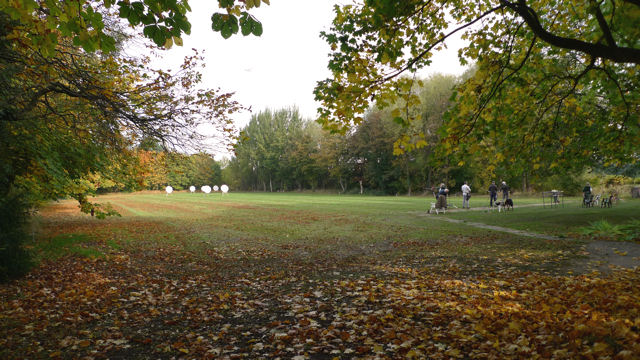
- The tape mark. Lay two strips of tape on the mat where your toes sit on a good shot. For an entire session, reset to those marks before every end. You’ll feel how often your feet want to drift — and you’ll start catching it before the shot instead of after.
- The blind-draw NPOA check. Draw, settle, close your eyes, then open them. Note where the sight sits relative to center. Repeat ten times and adjust your whole foot position — not your arms — until your eyes open onto the target. Five minutes a session retrains your base faster than any aiming gadget.
- The fatigue test. Shoot the last two ends of a long session with extra attention on your feet. Stance breaks down when you’re tired, so that’s exactly when to rehearse it. If your groups hold under fatigue, your foundation is solid.
Building the Habit
The 104-year-old at that tournament didn’t develop his form at 100. He built it across decades of repetition — small correct movements practiced so many times they stopped requiring thought. Foot position is where that compounding starts.
Pick one stance (square is the better starting point for most archers), mark your foot position on a practice mat, and treat every session for the next month as foot-position calibration. You won’t see the improvement in your scores for a few weeks. You’ll see it later — in sessions where you’re tired or distracted — when your groups stay tight because your foundation is solid enough to hold without thinking about it. Once the base is automatic, the rest of your gear and setup choices finally start paying off.
That’s the whole point of fundamentals. They work when you stop working on them.
Sources
- World Archery — Archery 101: Stance — governing body guidance on square, open, and closed stances.
- USA Archery — national governing body resources on beginner form and shooting fundamentals.
- Archery — Wikipedia — overview of shooting technique, stance, and the kinetic chain in the shot.
Browse archery bows, arrows, and accessories at the Archery Supplier shop →
