
Archery Blog
Arrow Spine: Why It Matters for Accuracy
Jul
Two archers with identical bows can shoot the same distance and land in completely different spots — not because of talent, but because one is shooting the wrong arrow spine. Spine is the single most misunderstood number in archery, and it quietly ruins more shots than bad form does. An arrow isn’t a rigid rod; it’s a spring. Get the spring wrong and the bow fights you on every shot.
What Is Arrow Spine?
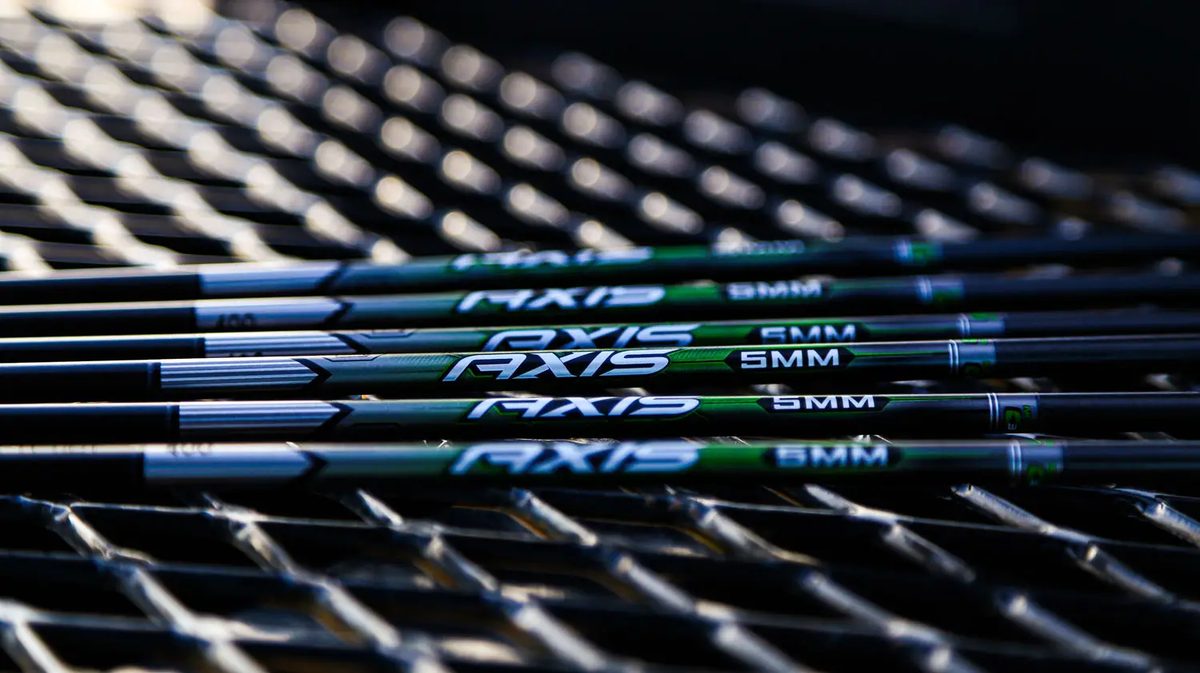
Arrow spine is a measurement of how far a shaft bends under a set load. The standard test hangs an 880-gram weight from the center of a 29-inch shaft supported 28 inches apart, then measures the deflection in thousandths of an inch. A shaft that bends half an inch gets a “500” spine rating. One that bends three tenths of an inch gets a “300.” The counterintuitive part trips up almost every beginner: a lower number means a stiffer arrow. A 300 is far stiffer than a 500.
That number printed on the side of every carbon shaft is called static spine — the stiffness measured on a bench, off the bow. It’s the baseline every manufacturer uses, and it’s why a 400-spine Easton and a 400-spine Gold Tip bend roughly the same amount under that standard weight. But static spine is only half the story, and the half that actually decides where your arrow lands is the part nobody prints on the shaft.
Static Spine vs. Dynamic Spine
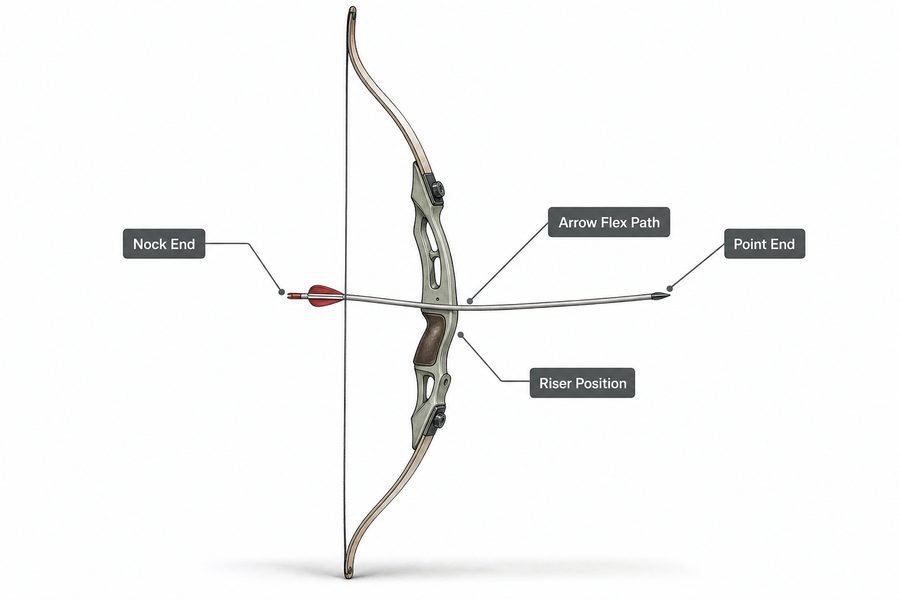
Static spine is what the shaft does sitting on a bench. Dynamic spine is what it does the instant you loose the string — and that’s a different animal. When you release, the string slams into the back of a stationary arrow. The nock end accelerates before the point end does, and the shaft compresses and bends. This is the archer’s paradox: the arrow flexes around the riser, wraps back the other way, and oscillates down range until it settles.
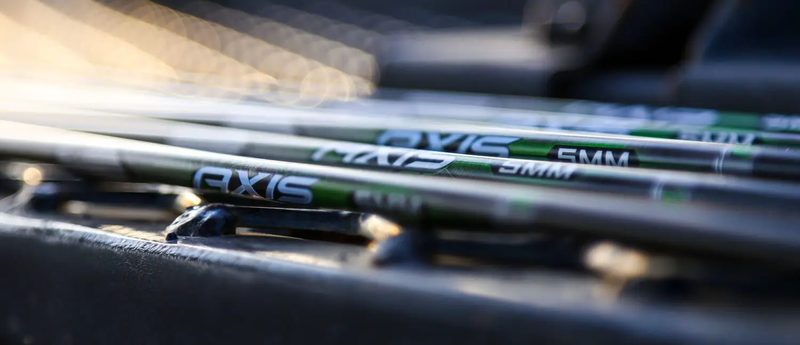
A well-known slow-motion breakdown by SmarterEveryDay shows this better than any diagram — the shaft looks like a wet noodle in flight, yet lands true if the spine is right. Watch it and the whole concept clicks:
Dynamic spine is really static spine plus everything you bolt onto the arrow and everything the bow does to it. A shaft rated 400 on the bench behaves stiffer or weaker depending on how long you cut it, how heavy the point is, and how much energy your bow dumps into it. Two shooters can start with the same static-spine shaft and end up with wildly different dynamic spine — which is exactly why buying arrows by the number alone doesn’t work.
Why Arrow Spine Matters for Accuracy
Here’s the blunt truth: spine matters more than a $200 sight. If the arrow doesn’t recover cleanly off the bow, no amount of aiming fixes it. When spine is matched, the arrow flexes just enough to slip past the riser and then straightens out fast, flying nose-first with the fletching doing its job. When spine is wrong, the oscillation is still fighting itself when the arrow leaves — and it flies at a slight angle, catching air on the fletching and drifting off line.
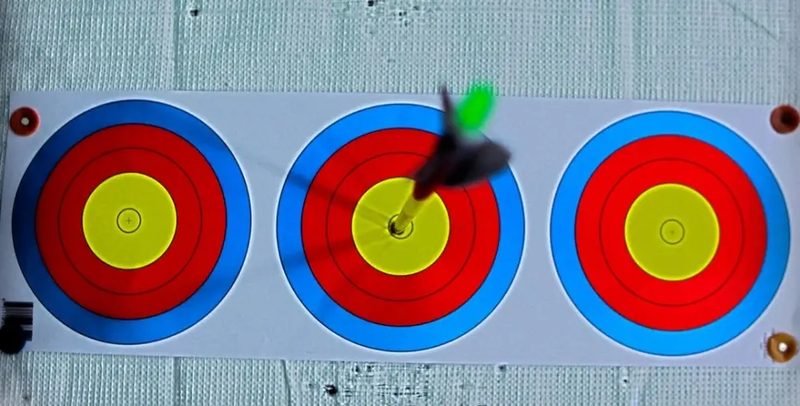
For a right-handed shooter, the pattern is predictable. An arrow that’s too weak (bends too much) tends to plane and hit left. An arrow that’s too stiff (doesn’t bend enough) doesn’t clear the riser cleanly and pushes right. Left-handed shooters see the mirror image. This is the fastest field diagnosis in archery: consistent left or right grouping with good form usually points at spine before it points at you.
The accuracy cost scales with distance. At 10 yards a mismatched arrow might still find the target. At 40 or 60 yards that small launch angle multiplies into a fistful of inches. Target archers chasing tens and bowhunters who need a tight kill zone both live and die by this — which is why matching spine is the first thing any pro shop checks when a customer says their groups fell apart.
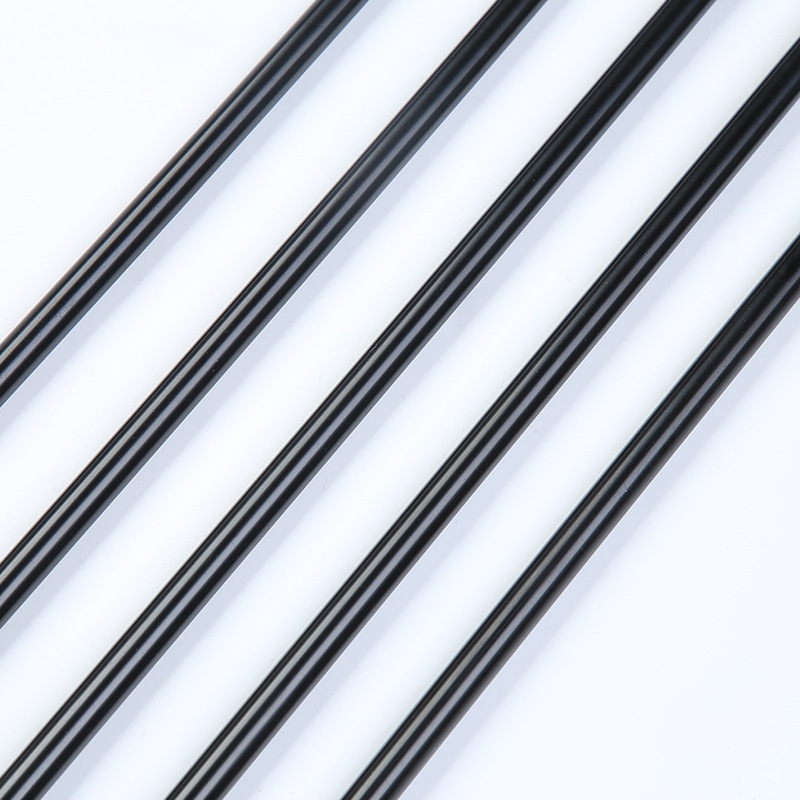
5 Signs Your Arrow Spine Is Wrong
You don’t need a lab to spot a spine problem. The bow tells you, if you know what to listen for.
- Consistent left or right grouping with clean, repeatable form — the classic weak/stiff tell.
- Fletching contact — torn vanes, powder or lipstick marks on the rest, or a slapping sound at release mean the shaft is flexing into the bow.
- Erratic broadhead flight — field points fly fine but broadheads scatter, because the larger surface up front exaggerates any spine mismatch.
- Nock-high or nock-left tears through paper that won’t tune out no matter how you move the rest.
- Loud, harsh shot — a badly mismatched arrow dumps energy into vibration instead of forward motion, and the bow feels dead or noisy.
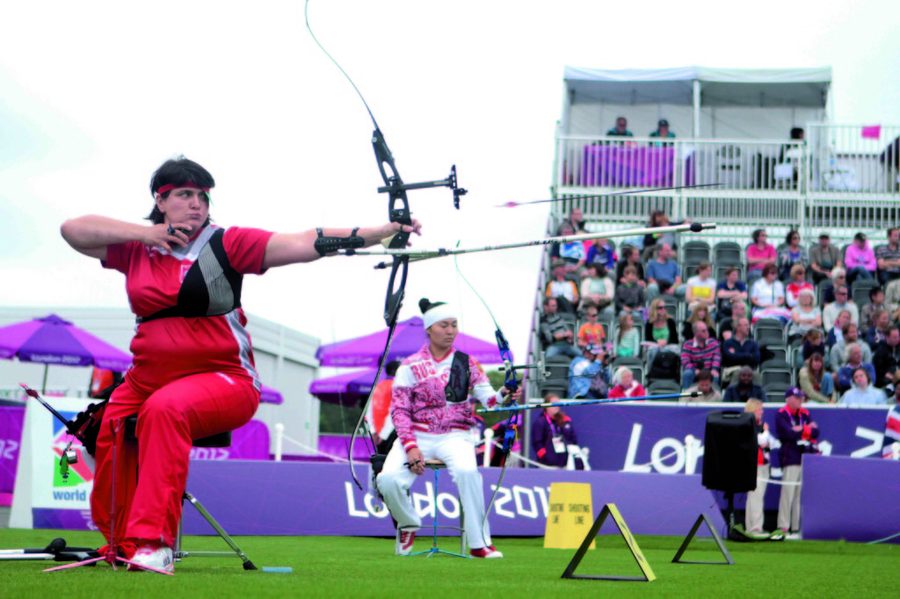
Any one of these on its own can have other causes. Two or three together, and spine is almost always the culprit. The good news is that spine problems are fixable without buying a whole new set of arrows — because most of dynamic spine is in your hands.
What Actually Changes Your Dynamic Spine
Static spine is fixed the moment the shaft is made. Dynamic spine is a dial you can turn. Four factors move it, and knowing them turns “buy new arrows” into “tune what I have.”
Draw weight. More poundage stores more energy and bends the arrow harder on release, making any shaft act weaker. Go up 10 pounds and a shaft that was perfect can suddenly fly weak. This is why matching your draw weight to how you shoot is step one before you ever order arrows.
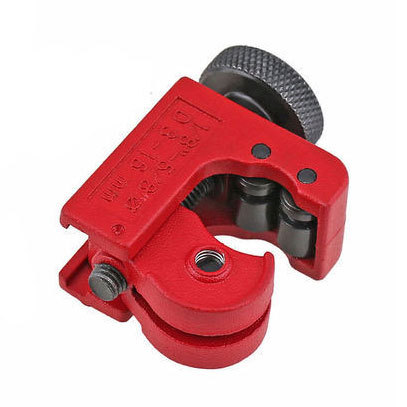
Arrow length. A longer shaft flexes more, acting weaker; a shorter one acts stiffer. Cutting an inch off is the single most effective way to stiffen a dynamic spine without changing anything else — one reason a good arrow saw or cutter earns its keep.
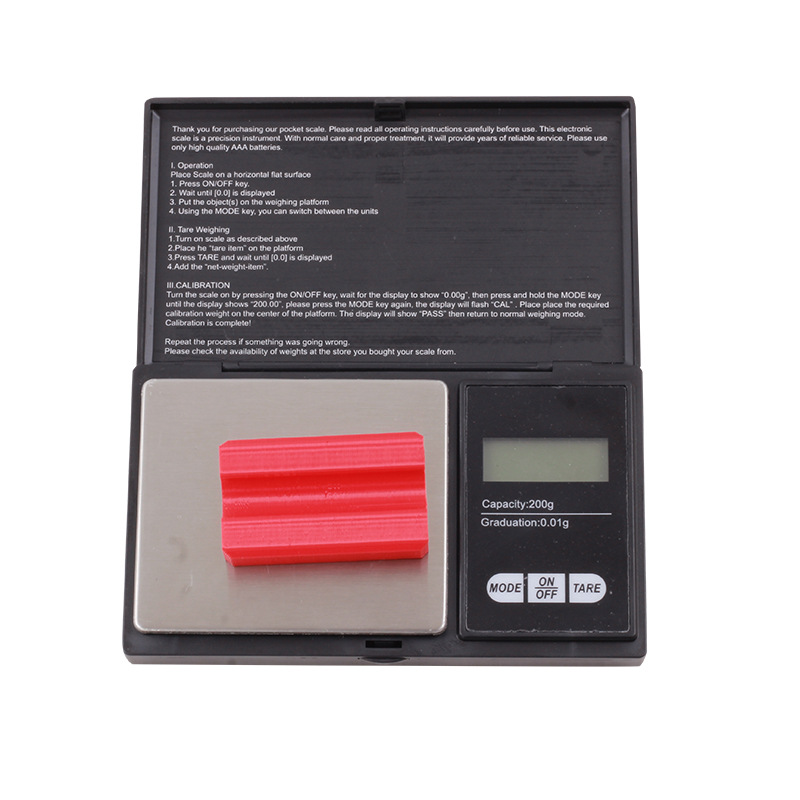
Point weight. Heavier points make the front end lag more on release, bending the shaft harder and weakening dynamic spine. Swapping a 100-grain point for a 125 measurably softens spine — which is why weighing your components on a grain scale matters when you’re dialing in flight and front-of-center balance.
Bow type and cam aggression. A hard-cam compound dumps energy faster than a smooth recurve, so it acts on the arrow more violently and needs a stiffer shaft for the same draw weight. Fingers versus a mechanical release changes it too. This is why a spine that’s perfect on one bow can be wrong on another at the identical poundage.
How to Choose the Right Arrow Spine
Start with a manufacturer chart, then confirm on the bow. Every arrow maker publishes a selection chart that cross-references your draw weight against your arrow length and spits out a recommended spine. That’s your starting shaft, not your final answer. If you want the numbers walked through step by step, our arrow spine chart guide breaks down exactly how to read one, and the complete spine selection guide covers the edge cases the charts skip.
Once you have chart-recommended shafts, prove them with bare shaft tuning — shooting an unfletched arrow next to a fletched one at 15 to 20 yards. If the bare shaft lands with the group, your dynamic spine is right. If it drifts, you adjust length, point weight, or rest position until it comes home. Recurve shooters should also read our notes on choosing arrows for a recurve bow, since finger release adds its own twist to the spine math.
One honest caveat: err slightly stiff if you have to guess. A hair too stiff is far more forgiving than too weak, and it leaves you room to add point weight later without falling off a cliff. Too weak, and you’re stuck.
Does Arrow Spine Matter More for Recurve or Compound?
It matters for both, but it’s less forgiving on a recurve. A compound’s arrow rest often supports the shaft and a mechanical release sends the string straight back, so a compound tolerates a slightly-off spine better. A recurve shot off the fingers relies entirely on the paradox to route the arrow around the riser, so spine has to be right or the arrow smacks the shelf. Traditional shooters have the tightest window of all — no rest, no sight, pure spine-and-flex. If you shoot barebow or trad, spine isn’t optional; it’s the whole game.
The Bottom Line
Before you spend another dollar on sights, stabilizers, or lessons, check the number on your shafts against your setup. Spine is the cheapest accuracy upgrade in archery because most of it is free — cut length, swap a point, drop a couple pounds of draw weight, and a “wrong” arrow becomes a right one. Pull one shaft, weigh your point, measure your cut length, and run a bare-shaft test this week. If your groups have been drifting one direction for months, this is almost certainly why — and it’s a twenty-minute fix, not a new bow.
Sources
- Easton Archery — Making Sense of Arrow Spine — manufacturer explanation of static spine measurement and the 880-gram deflection standard.
- Bow International — The Archer’s Paradox and Modern Bows — how arrow flex routes the shaft around the riser.
- World Archery — Recurve Equipment — governing-body reference on recurve arrows and setup.
