Archery Blog
Draw Weight Selection Guide: Matching Your Bow to How You Shoot
Jul
Ask ten archers what draw weight you should shoot and you will get ten different numbers, most of them too high. Draw weight is the single spec new archers obsess over and experienced archers quietly walk back. Pull too much and your form collapses, your groups open up, and your shoulder pays for it months later. Pull too little and you leave arrow speed, penetration, and long-range stability on the table. This draw weight selection guide is about finding the honest middle — the poundage that matches your discipline, your body, and the arrows you actually intend to shoot, rather than the number that sounds impressive at the range.
What Draw Weight Actually Measures
Draw weight is the peak force, measured in pounds, required to draw a bow to a specified point. For recurve and traditional bows, that force climbs steadily the farther you pull, and the industry convention is to rate it at 28 inches of draw. Every inch you draw beyond or short of 28 shifts the real number by roughly two to three pounds, which is why a bow marked “40#” is only 40 pounds if your draw length happens to be 28 inches. Shorter archers pulling a 40-pound recurve are often holding closer to 36 pounds, and taller archers can be pulling 44 or more.
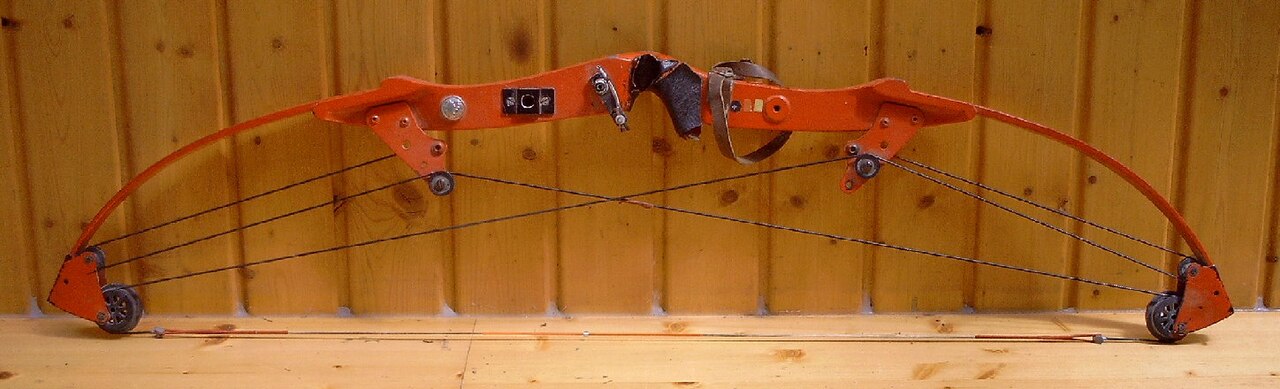
Compound bows behave completely differently because of their cams. The force builds to a peak partway through the draw and then drops off sharply — the let-off — so you hold only a fraction of peak weight at full draw. That distinction changes everything about how you choose a number, and we will come back to it.
Why the Right Draw Weight Matters More Than Beginners Expect
Draw weight is not just a comfort setting. It drives arrow speed, kinetic energy, trajectory, and — indirectly — your accuracy. More poundage flattens your arrow’s flight and buys you penetration, which matters enormously for bowhunters and hardly at all for an indoor target archer standing 18 metres from a foam butt.
But the accuracy cost of overbowing is brutal and often invisible to the archer committing it. When the weight exceeds what your back muscles can control, you start recruiting your shoulder and arm, your draw becomes a heave, your anchor drifts, and your release turns into a flinch. You cannot execute a repeatable shot cycle while fighting the bow. The most common single fix a coach makes to a struggling new archer is simply dropping the poundage — and groups tighten immediately.
Matching Draw Weight to Your Discipline
There is no universal “correct” draw weight, because different archery disciplines ask the bow to do different jobs. Start by deciding what you actually want to do with the bow, then work backward to the poundage that serves it.
Target and Olympic Recurve
Target archers hold at full draw, aim, and execute — sometimes for several seconds per shot across dozens of arrows. Endurance and control matter far more than raw power. Many competitive recurve archers shoot in the mid-30s to low-40s on the fingers, and even elite Olympians rarely exceed the high-40s. The bow only has to send a light arrow 70 metres accurately, not punch through anything. If you are building toward Olympic recurve, err low and let your form-holding stamina, not your ego, set the ceiling.
Compound Target and 3D
Because let-off means you hold only a small percentage of peak weight, compound target archers can run higher peak numbers comfortably — often in the 40 to 60 pound range — while still holding a steady sight picture. For 3D archery, where you judge unmarked distances, a flatter trajectory from a bit more speed forgives ranging errors, so shooters often nudge poundage up slightly compared to a pure indoor setup.
Bowhunting
Hunting is the one discipline where poundage carries legal and ethical weight. Many jurisdictions set a legal minimum draw weight for hunting big game — commonly around 40 pounds for deer-sized animals, higher for elk and larger. The goal is enough kinetic energy for a clean, ethical pass-through. But heavier is not automatically better: a hunter who can smoothly draw 60 pounds from a treestand in freezing weather while a deer stares them down is far deadlier than one straining against 70 pounds they can barely pull sitting down. Choose the weight you can draw slowly, without raising the bow to the sky, in cold muscles.
Shop Adjustable Draw Weight Compound Bows on Amazon →
How Your Body and Draw Length Factor In
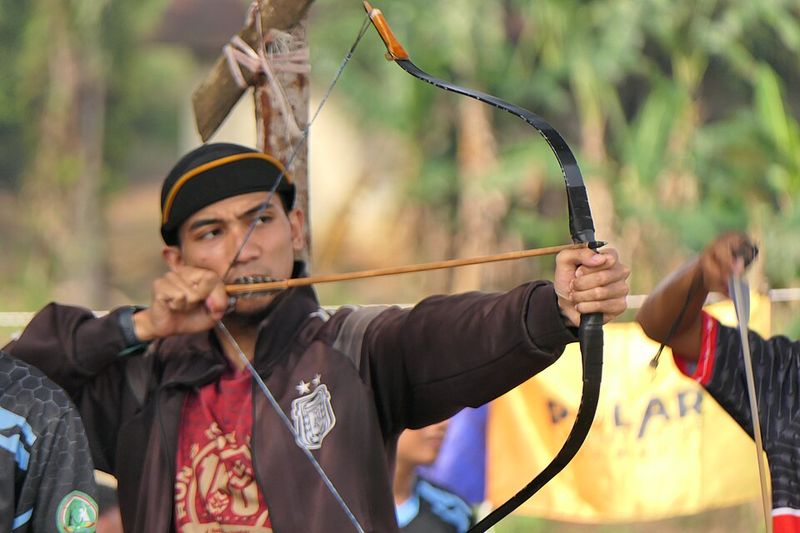
Your frame, your back and shoulder strength, and your draw length all interact with the number on the limb. Two archers can label a bow the same weight and experience it completely differently. A longer draw length stores more energy but also means you pass through and hold at a different point on the force curve, and on a recurve it means you are genuinely pulling more pounds than the 28-inch rating suggests.
Strength matters, but the relevant strength is specific back and rotator-cuff endurance, not how much you bench. Archery uses muscles most people never isolate, which is why even fit newcomers should start lighter than they assume. If you cannot draw the bow smoothly with the bow arm roughly level and the drawing elbow tracking straight back — without hoisting the bow overhead to cheat the weight down — the poundage is too high, full stop.
Compound vs Recurve: The Let-Off Changes the Whole Calculation
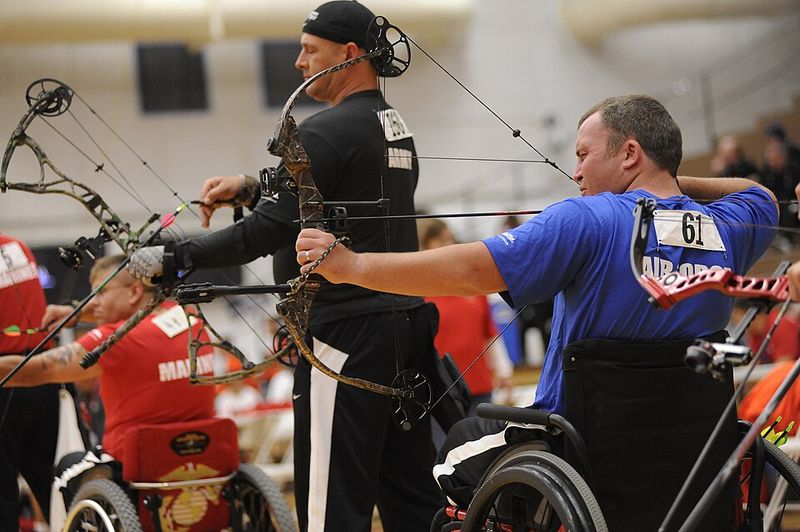
This is where most cross-shopping goes wrong. A compound bow with 80 percent let-off rated at 60 pounds peak means you hold only about 12 pounds at full draw. That is why a compound archer can comfortably run peak weights that would be miserable on a recurve. The peak weight still determines your arrow’s energy and speed, but the holding weight determines how steady you can aim.
On a recurve or traditional bow there is no let-off at all — the weight you hold at full draw is the most you will ever pull, and you are fighting it the entire time you aim. That is the single biggest reason recurve competitive poundages look so much lower than compound numbers. When someone tells you they “shoot 60 pounds,” the honest follow-up is always: on what kind of bow? The experiences are not comparable.
Practically, this means you should never pick a compound peak weight by matching a recurve number, or vice versa. Decide the platform first, then choose within that platform’s norms.
A Simple Field Test for Whether a Weight Fits
Before you commit to a poundage, run the cold-draw test. Without warming up, sit in a chair, keep the bow roughly parallel to the ground, and draw it straight back to anchor using your back. If you have to point the bow at the ceiling and muscle it down, drop the weight. Then hold at full draw for a slow ten-count. If your pin or point starts to shake and wander well before ten, or your breath locks up, the bow is heavier than your control allows for repeatable shooting.
A bow scale — the same handheld tool used to check tiller and set peak weight — lets you verify what your limbs are actually pulling rather than trusting the sticker, which is invaluable on used bows or after adjusting limb bolts.
Shop Archery Bow Weight Scales on Amazon →
Building Up Draw Weight Without Wrecking Your Form
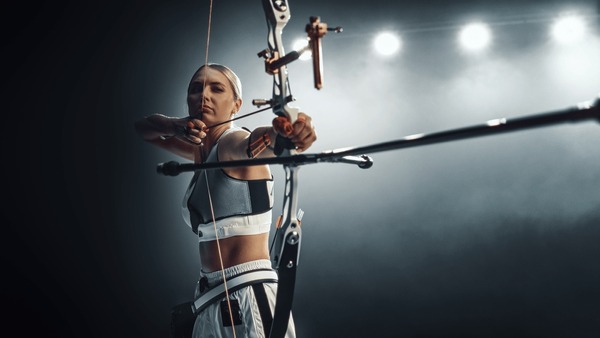
Draw weight is not a fixed trait — it is a moving target you grow into. The smartest path is to start below where you think you belong, groove a clean, repeatable shot cycle, and then add weight gradually once your form is automatic. Recurve archers benefit hugely from a takedown riser here: you can swap to heavier limbs in small increments as your back strength develops, without buying a whole new bow. Many adjustable compound bows offer a wide poundage range on the same limbs, letting you crank up a few pounds at a time.
Add weight in small steps — a couple of pounds at a time on recurve, a few on compound — and only once the current weight feels genuinely easy for a full practice session. Rushing this is how archers develop shoulder impingement and target panic. Progress should be measured in months, not days. There is no prize for pulling more than you can shoot well.
Shop Takedown Recurve Bow Limbs on Amazon →
Draw Weight, Arrow Spine, and Why They Are Inseparable
Changing draw weight is never just a strength decision — it is a tuning decision. Arrow spine, the measure of how much an arrow flexes, must be matched to the force driving it. Raise your draw weight and your current arrows become effectively too weak (under-spined); they flex too much off the shot and fly erratically. Drop your weight and those same arrows become stiff, robbing you of clean flight.
This is why you should settle on a draw weight before investing in a dozen matched arrows, and why any significant poundage change should send you back to a spine chart. Point weight, arrow length, and draw length all feed into the same equation, so treat draw weight as the anchor of your whole arrow setup rather than an isolated dial. Getting this pairing right is the difference between arrows that group and arrows that fishtail no matter how good your release is.
The Mistakes Worth Avoiding
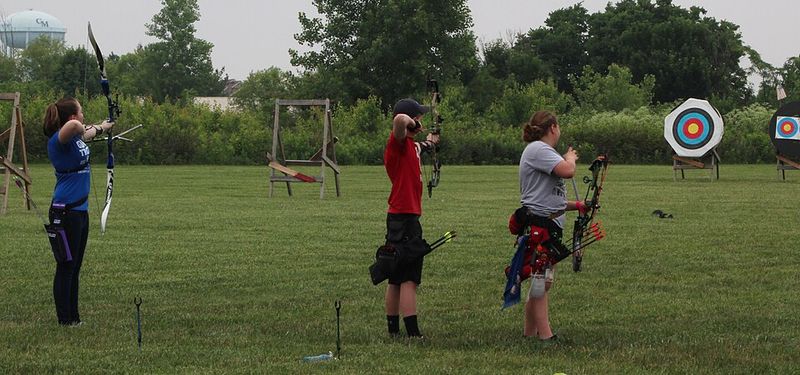
The overwhelming error is overbowing — buying more poundage than you can control because it is easier to shop for a number than to be honest about your current strength. The second is comparing compound and recurve weights as if they mean the same thing. The third is treating draw weight as permanent instead of a value you tune and grow. Choose for the discipline you actually shoot, verify the weight against your own cold-draw control rather than the sticker, and let your form — not your pride — decide when it is time to add pounds. Do that, and the number on your limbs becomes an asset instead of the thing quietly sabotaging every shot.
Sources
- World Archery — equipment and discipline standards
- USA Archery — coaching and beginner resources
- Wikipedia — Draw weight overview
Browse archery bows, arrows, and accessories at the Archery Supplier shop →
