
Archery Blog
Target Panic: 7 Drills That Beat the Trigger Punch
Jun
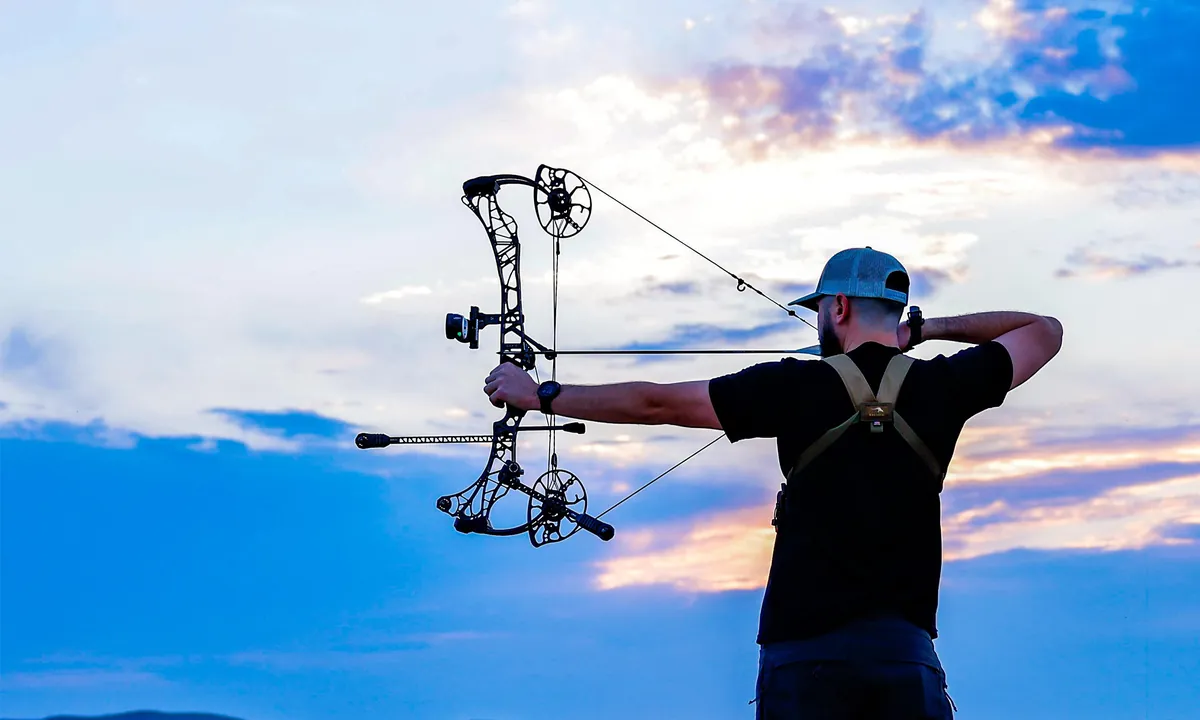
Target panic is what makes a 60-yard archer flinch his pin past the bullseye at 20. The shot fires before the brain says go, the trigger gets punched, and the arrow snaps low-left into the foam. It is the most common reason a confident shooter suddenly cannot hit anything — and the good news is that it is mechanical, predictable, and beatable with seven specific drills. This guide is built for the bowhunter who can hold steady in the backyard but freezes on a buck, and for the target archer whose groups went from dimes to dinner plates.
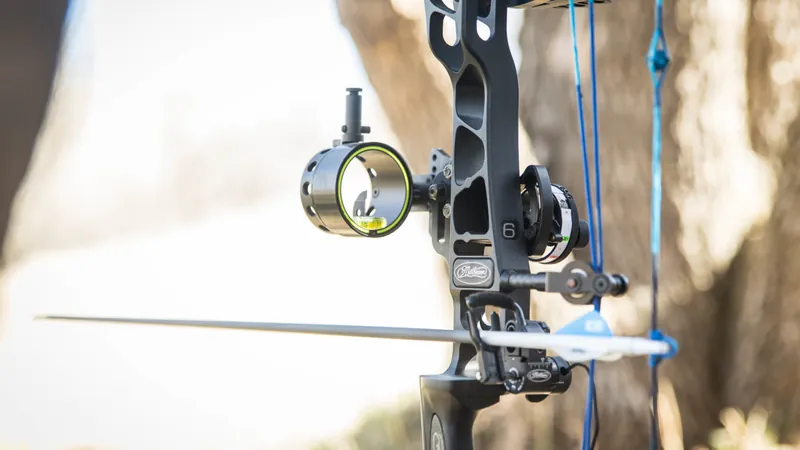
What Target Panic Actually Is (and Isn’t)
Target panic is a conditioned anxiety response that hijacks the conscious aiming process. The archer sees the pin near the spot, the body anticipates the shot, and the release goes off before the aim is finished. It is not bad form. It is not weak nerves. It is a brain that learned the shortcut “pin floats over gold, finger pulls trigger” and now refuses to wait for the slow part of the sequence.
Most archers confuse target panic with simple flinching or buck fever. Flinching is a one-off muscle twitch under pressure. Buck fever is adrenaline overriding fine motor control on game. Target panic shows up on the practice bale at 20 yards with nothing on the line, and that is what makes it diagnostic. If the same low-left miss happens with a 3D buck or a paper plate, the wiring problem is internal.
The 4 Faces of Target Panic
The condition shows up in different shapes, and matching the symptom to the fix is the first real win. Recognize yourself in any of these and the drill list below changes from generic advice to a treatment plan.
- Trigger Punch — the index-finger archer who slaps the release the moment the pin crosses the bullseye. Surface symptom: low-left or low-right tears, depending on hand.
- Freeze Off-Center — the pin will not move onto the spot. It hovers low, or left, or anywhere except the X-ring, and the archer drops the shot rather than fight it.
- Forced Shot — the archer cannot hold long. Inside three seconds at full draw the shot has to go, even if the sight picture is wrong.
- Collapse — the back tension softens at the moment of aim, the bow arm drops, and the arrow flies high or floats sideways.
Most shooters have two of the four, not all of them. A bowhunter with a wrist-strap index release tends to develop the trigger punch. A target archer with a hinge release tends to develop the freeze or the forced shot. The body adapts to whatever release style it has been trained on, and target panic adapts with it.
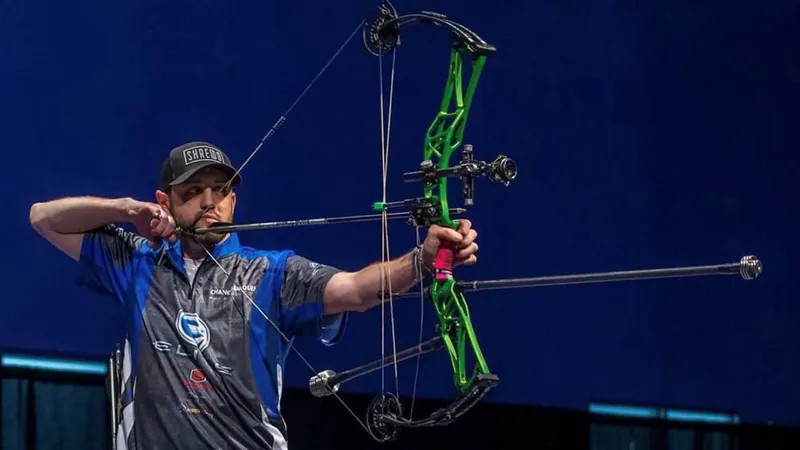
Why It Happens — Brain Wiring, Not Bad Form
Sports psychologists tracking competitive archers have called target panic a Pavlovian conditioning loop. The archer trains thousands of repetitions of “see spot, release,” and the brain compresses that sequence into a single reflex. Once the pattern locks in, the conscious aim becomes the trigger itself. The archer cannot let the pin sit on the gold because sitting on the gold IS the cue to fire.
The fix is not more reps of the same broken loop. The fix is breaking the association and rebuilding it in slow motion. Every drill below works because it forces a gap between aiming and releasing — somewhere the brain stops auto-completing the shot.
Drill 1 — Blank Bale Shooting
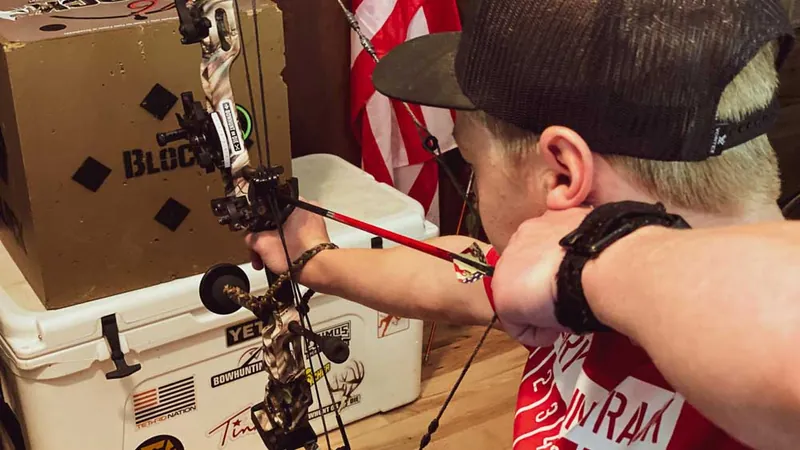
Stand three to five feet from a bag target. Eyes open. Pin nowhere — there is no target. Draw back, settle into your anchor, feel the shot break clean, follow through. Then do it again. Twenty arrows. Every session.
Blank bale shooting separates the shot sequence from the aim. The brain cannot trigger on the bullseye because there is no bullseye. After ten or twenty sessions the archer rebuilds the muscle memory of “draw, anchor, hold, surprise release” without the panic association attached. John Dudley calls this the foundation drill and runs it daily, even in tournament weeks.
Drill 2 — Eyes-Closed Shot Sequence
Add a twist to the blank bale. Same five feet from the target, but at full draw, close your eyes. Feel the release execute. Listen for the impact. The arrow goes nowhere meaningful, and that is the point — the auditory and tactile feedback teach the body what a clean shot feels like without any visual reward involved.
This drill is the fastest single change for an archer stuck in the freeze pattern. With no pin to fight, the back tension finishes the job. Three weeks of eyes-closed reps will rewire most cases. The Last Chance Archery range tracker showed shooters running this drill cut their hold time variance by 40 percent inside a month.
Drill 3 — Hot Hookup Release Routine
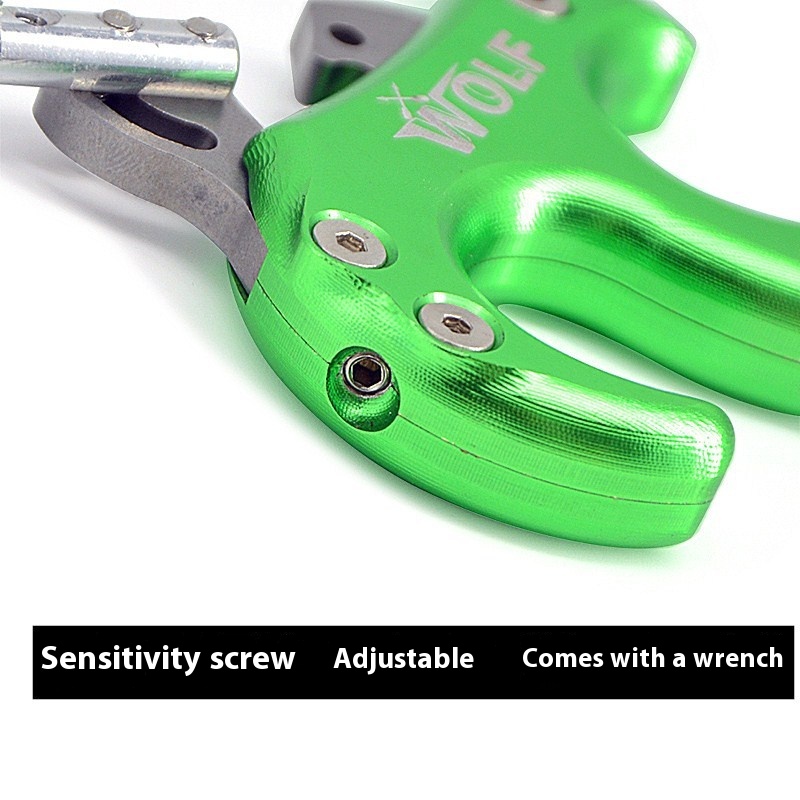
Most trigger-punch archers hook their finger or thumb on the release trigger BEFORE they draw. By the time they hit anchor the brain is already mid-fire sequence. Reverse it. Draw the bow first, anchor first, settle the pin first. Only after the float is steady does the trigger finger curl onto the trigger.
The “hot hookup” tells the brain a new story: hookup means commit, not anticipate. Wasp Archery’s coaches teach this as the single highest-yield change for any wrist-strap index shooter, and they report it works inside ten sessions for shooters who have fought target panic for years.
Drill 4 — Distance Regression
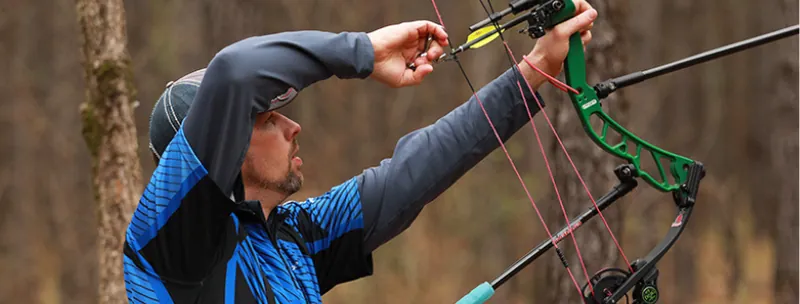
Set a single dot target at five yards. Shoot one arrow. Step back to seven yards. Shoot one arrow. Step back to ten. Stop at the first distance where the panic returns. That is your real range — practice there until it disappears, then add five yards.
Distance regression rebuilds trust in the shot process by removing the failure visual. At five yards every arrow goes in the dot, the brain logs success, and the panic loop loses one rep. Most archers find their breakpoint between 15 and 25 yards. That is the work zone. Backing up to 60 before the brain is ready just stamps the panic deeper into the wiring.

Drill 5 — Switch Your Release Style
If three months of drilling has not moved the needle, the release is the problem. The fix is to break the conditioned trigger response entirely by switching to a release the brain has not been trained to punch.
An index-finger shooter with locked-in target panic switches to a hinge or a back-tension release. The mechanical action changes from “pull trigger” to “rotate the release with continuing back pressure,” and the brain has no shortcut for that motion. Levi Morgan, three-time IBO World Champion, has openly recommended this fix for severe cases — start over with a release the body has never abused. Six to eight weeks on a new release type rebuilds the shot from scratch.
The thumb release sits in the middle and is often a better first step than a full hinge — see our breakdown of thumb release technique for the transition path. For shooters debating finger versus mechanical, our release technique comparison covers the trade-offs.
Drill 6 — The 10-Second Hold
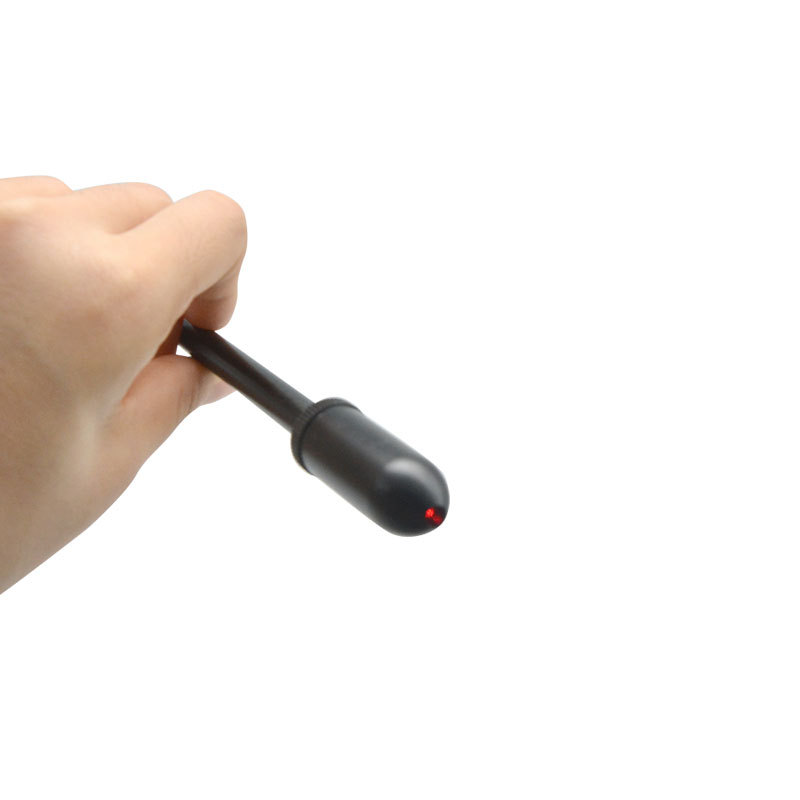
Draw, anchor, float the pin on the target — and refuse to shoot for ten full seconds. Count it out loud the first few sessions. Then let down. Do not shoot at all for the first set of ten draws.
The 10-second hold attacks the forced-shot pattern head-on. The archer learns the bow can sit at full draw without panic firing the shot, and the conditioned three-second deadline starts to break. After two weeks, mix in actual shots that release on second 6 or 7. The brain learns that aim time and shot time are independent variables again.
Drill 7 — Live Shot Tracker Journal
Keep a notebook on the bench. Every session, log: number of shots, number that felt clean, number that felt like panic. Three columns. Do nothing with the data except read it before the next session.
The shot tracker journal works because it converts a vague feeling (“I had a bad day”) into a number trend that the conscious mind can track. The MeatEater team noted that hunters who tracked their shot quality saw measurable improvement inside three weeks, even without changing their drills. The act of measuring forces honest practice — and target panic hates honest practice.
The Anchor Point Audit Most Archers Skip
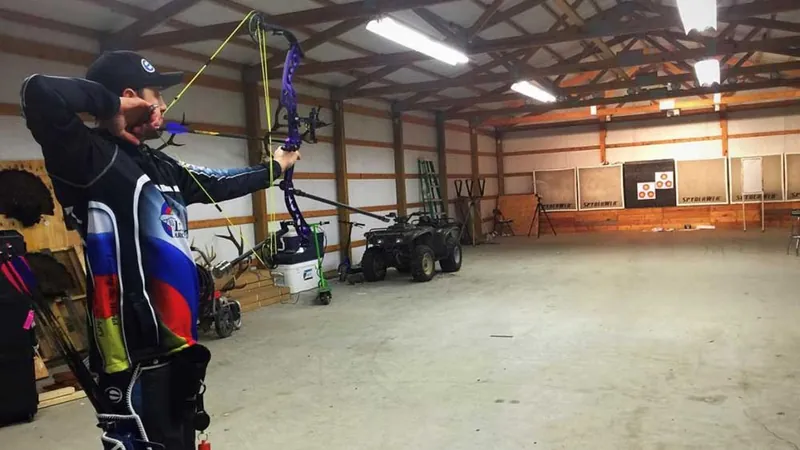
A floating anchor amplifies panic. If the release hand lands in a slightly different spot every draw, the brain has nothing stable to time the shot from, and the panic loop grabs whatever cue it can find. Run an anchor point check before any drill program — finger to the corner of the mouth, kisser button on the lip, peep over the dominant eye — and confirm three contact points every single draw. The bowhunting.com anchor point guide treats this as Day One work, and shooters who skip it never see drills land.
How Long Until Target Panic Goes Away?
For a shooter with mild trigger punch and a clean anchor, three to four weeks of daily blank bale plus the 10-second hold drill is usually enough. For a moderate case — three-to-six months of recurring panic, occasional clean sessions mixed in — eight to twelve weeks of structured drills is the realistic timeline. Severe cases that have lived for years often need the release switch in Drill 5 plus six months of rebuilding before competition shots feel normal again.
The hardest part is the willingness to stop shooting at distance during the rebuild. Bowhunters fight this constantly — they want to be tournament-sharp at 60 yards by August. The truth is that an archer who spends July at five yards beats the same archer at 60 yards every September. Short range builds the wiring that long range demands. Skip the close work, and the panic comes back two weeks after the season opens.
When to Get Professional Help
If the drills do nothing inside six weeks of honest daily work, the diagnosis is wrong. Either the panic has compounded into a deeper sports-anxiety pattern, or there is an equipment fault that is feeding the panic — a wrong-spine arrow that flies erratic at every distance, a draw length that is half an inch off, or a peep that does not align. Run the mental game checklist for pressure situations in parallel with the drills above to catch the cognitive side. A certified Level 3 coach can diagnose both inside one session. USA Archery’s coach lookup is the fastest way to find one.
For tournament archers with rankings on the line, sports psychology referrals through the USOC athlete services network can address the cognitive layer that drills alone do not touch. This is not a weakness call — it is the same support the recurve Olympic team uses. Target panic gets treated like any other performance disorder, and treatment works.
Watch John Dudley Walk Through the Cure
Pro archer John Dudley’s full breakdown of target panic — the four forms, the drills, and the timeline — is the single best video resource on the subject. Twenty minutes here saves a month of guessing.
The One Thing Almost Every Cure Has in Common
Every fix above asks the archer to do less, not more. Less aiming, less distance, less trigger pressure, less expectation of a perfect shot. The panic loop is a habit of trying too hard at the wrong moment. The cure is patience disguised as practice. The archer who can fire twenty arrows at five feet with eyes closed in July is the one putting tags on bone in October — every time.
Sources
- MeatEater — How to Fix Target Panic in 3 Steps — bowhunter-specific drill breakdown and recovery timelines
- Mossy Oak — Curing and Overcoming Target Panic — pro-archer Chance Beaubeouf on the blank bale and full-draw drills
- Nock On Archery — How to Cure Target Panic — John Dudley’s four-form diagnosis and drill sequence
- Wasp Archery — How to Beat Target Panic — hot hookup release routine
- Bowhunting.com — Finding Your Anchor Point — anchor consistency foundation
- North American Bowhunter — Overcome Target Panic — close-distance regression protocol
- USA Archery — certified coach lookup and athlete services referrals
Browse archery bows, arrows, and accessories at the Archery Supplier shop →
