
Archery Blog
Single Pin vs Multi-Pin Bow Sight Durability: Failure Points and Long-Term Care
May
A bow sight that fails 200 yards from the truck or 20 feet up a treestand is not a comparison talking point — it is a hunt ender. Both single pin and multi-pin designs carry distinct weak points that surface on different timelines. Multi-pin sights pack four to seven fiber optic strands into a tight cluster, with every pin a potential failure node. Single pin sights consolidate those failures into one fiber but add a sliding mechanism with gears, indicators, and friction surfaces that wear in ways multi-pin housings never do. Knowing what breaks first on each design tells you what to inspect before opening day and what spares belong in your hunting pack.
Why Bow Sight Durability Belongs in the Comparison
Most single pin vs multi-pin debates focus on speed of acquisition, hunting style fit, or learning curve. Durability gets buried in product reviews instead of side-by-side comparisons. That is a mistake. A multi-pin sight with one broken pin still gets you to 30 yards. A single pin sight with a stripped gear is dead weight until you reach a workbench. The asymmetry of failure consequences matters as much as the asymmetry of features.
Both designs share components — fiber optic strands, machined aluminum housings, glass or polycarbonate lenses, bracket and dovetail mounting systems, and bubble levels. But they distribute stress across those components differently, and the failure modes diverge sharply after the first hundred hours of field use.
Pin and Fiber Optic Failures
The biggest difference between sight architectures lives in the pin assembly itself. Fiber optics are not indestructible, and how each design routes them changes both what fails and how often.
Multi-Pin Fiber Bundling Issues
Multi-pin sights cluster three to seven fibers behind a transparent guard. Each fiber is anchored to a metal pin armature and exposed to UV through a wrap coiled around the housing for light gathering. Common failures: fibers separating at the anchor point, UV degradation dimming the pins over three to five seasons, and physical breakage at the exposed tip where a fiber sticks out into the sight picture. Top pins tend to dim and snap first because they catch the most rubbing during draw and case loading. When one pin goes, the others typically remain bright, so the sight is still functional at reduced range.
Shop Multi-Pin Bow Sights on Amazon →
Single Pin Fiber Vulnerability
Single pin sights consolidate everything onto one fiber, usually .019 or .029 inches in diameter. A single break ends the sight. The fiber bundle is generally longer because slider housings need more wrap room, which means more surface area for snags and UV exposure. The upside is that one fiber is easier to replace than re-bundling multiple strands, and many slider sights ship with replacement fibers in the box. Inspect the fiber along its entire length each pre-season — kinks and frays predict failure within weeks.
Slider Mechanism and Gear Track Wear
This is single pin territory and where the design’s biggest durability liability lives. Slider sights use a worm gear, rack and pinion, or detent system to move the housing up and down along a vertical track. Every component is a wear point. Worm gears can strip if the lock is engaged when you turn the knob. Tracks accumulate grit that grinds against polished surfaces, gradually loosening the fit and introducing play in your yardage stops. Indicator pointers bend if the bow tips over with the slider mid-stroke.
Multi-pin sights have none of this. The housing is fixed. The only moving parts are the individual pin micro-adjustments, which you set once and forget. A multi-pin sight in a dusty pickup bed for a season comes out shooting the same yardage tape. A slider in the same conditions needs cleaning, lubrication, and recalibration.
Sight Housing and Lens Cracks
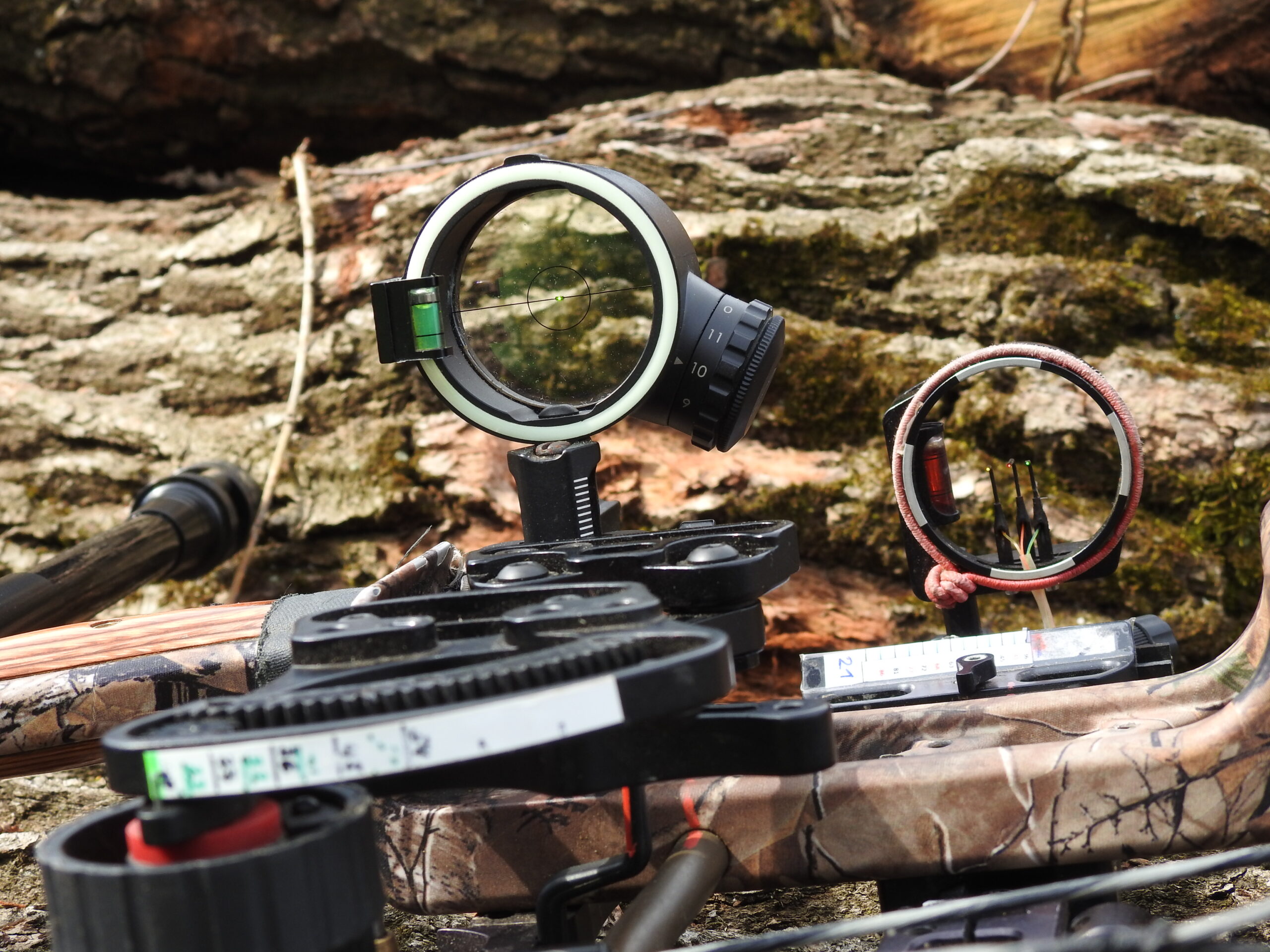
Housing damage hits both designs equally, but the consequences differ. Most modern sight housings are machined 6061 aluminum, which absorbs drops surprisingly well. The lens — usually a thin polycarbonate or glass disc with a level bubble and sometimes a magnification dot — is the weak link. Cracked lenses are common after a fall from a treestand or a tip-over in rocky terrain.
On a multi-pin sight, a cracked lens obscures the sight picture but the pins still work, so you can finish a hunt and replace the lens at home. On a single pin slider, a cracked lens often comes paired with a bent slider arm or knocked-loose yardage tape, because the slider extends the sight body further from the bow and acts as a longer lever in an impact.
Bubble Level and Sight Tape Failures
Bubble level failures are subtle and dangerous. A bubble that has shifted in its housing or developed a partial seal break will read level when the sight is canted, sending arrows wide left or right at distance. Inspect by canting the bow deliberately and watching the bubble travel cleanly through its range.
Single pin sights add another fragile surface: the sight tape. The tape is a thin printed strip showing yardage marks. Heat softens the adhesive and lifts the edges, which causes misalignment between the indicator pointer and the printed numbers. Direct sunlight in a hot vehicle does more damage to tape readability than years of field use.
Bracket, Dovetail, and Mount Bolt Wear
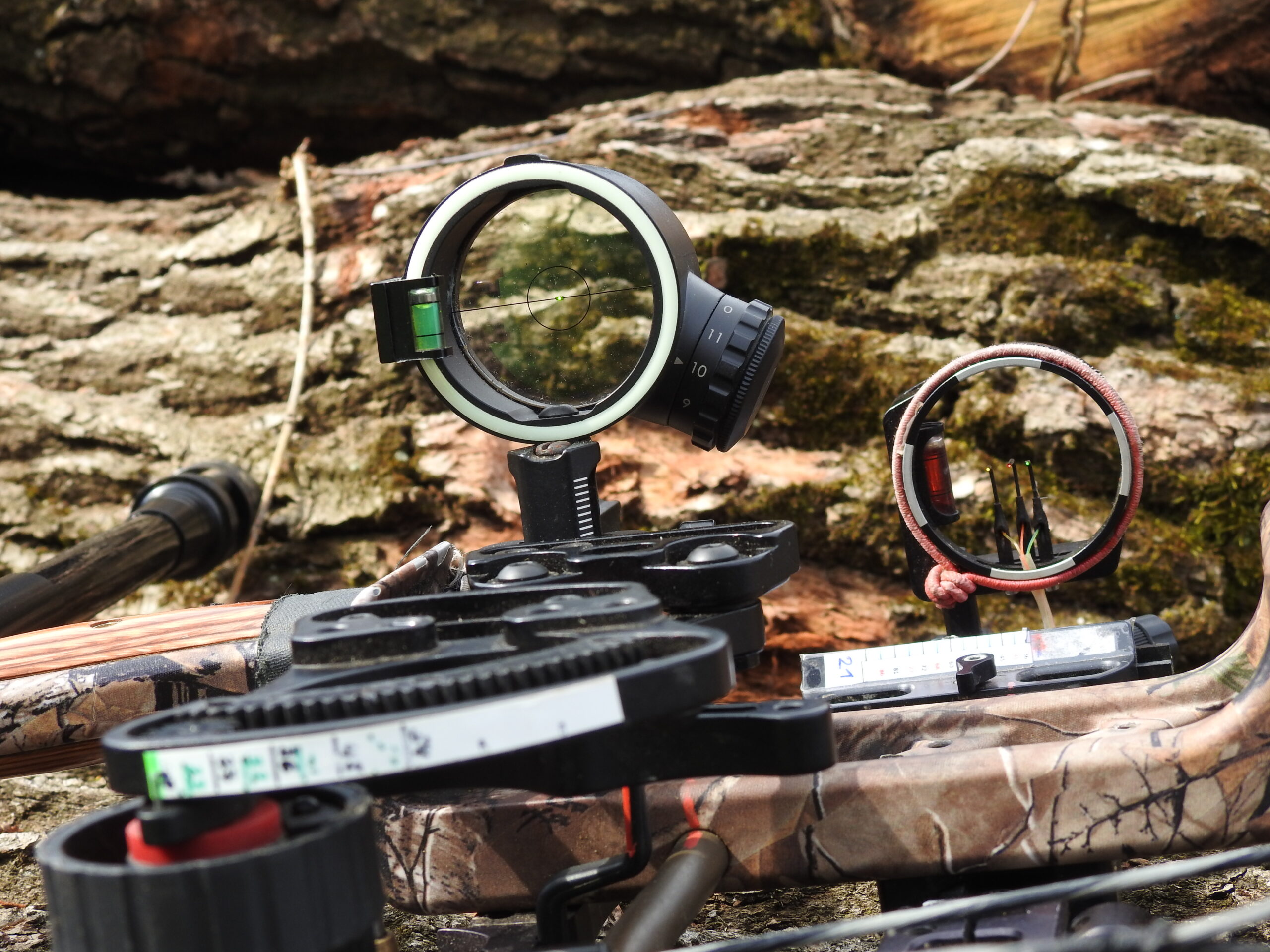
The mounting interface is shared geometry, so failures here apply to both designs. Bracket bolts loosen from vibration. Dovetail clamps wear flat-spots from repeated insertion. Sight extension bars develop hairline cracks at the rear mount hole, especially on aggressive offset designs.
Inspect torque on all sight mounting bolts at least twice a season — pre-season and mid-season after a few hundred shots. Use a torque driver rather than guessing by feel. Most manufacturers specify 35 to 50 inch-pounds for sight mounting hardware. A drop of removable threadlocker on bracket bolts, but never on adjustment screws, prevents most loosening issues.
Field Repair Kit by Sight Type
Different sight designs demand different spares. For multi-pin sights, carry replacement fiber optic in your pin diameter, a small Allen wrench set, a tube of UV-curing fiber adhesive, and a microfiber lens cloth. The most common field repair is a snapped top pin fiber, which a strip of replacement fiber plus thirty seconds of UV cure can fix in the field if the sun is out.
For single pin slider sights, carry replacement fiber, the dedicated Allen wrenches for your gear and yardage screws, a spare sight tape if your manufacturer sells them, and a small bottle of dry lubricant. The slider mechanism is the most likely failure point, so the wrenches that match your slider are non-negotiable. A sticky slider can usually be field-fixed with a wipe-down and a drop of dry lube.
Shop Bow Sight Fiber Replacements on Amazon →
5-Year Maintenance Schedule
Both sight types benefit from scheduled care rather than reactive repair.
- Each shooting session: wipe lens and pins clean, check for visible fiber damage.
- Monthly: verify bubble level against a known-flat reference, check bolt torque on the sight bracket.
- Pre-season: inspect fiber along its entire length, replace if dim or kinked. Recalibrate yardage on slider sights against a known-distance target. Re-tape with fresh sight tape if printing is faded.
- Annually: replace fiber regardless of visible condition on hunting bows. Inspect housing for hairline cracks, particularly around mounting holes.
- Every 3-5 years: replace bubble level housing or the entire sight if a slider mechanism has developed measurable play.
This schedule extends multi-pin life to 8 to 10 hunting seasons and slider life to 5 to 7. Cheaper sights of either type usually fail well before maintenance becomes the limiting factor — frame flex, soft housing, or under-machined gears do them in first.
When Repair Beats Replacement
Knowing the threshold for repair versus replacement saves money on multi-pins and prevents dangerous accuracy loss on sliders.
Repair territory: single broken fiber, loose bracket bolt, dirty slider, lifted sight tape, cracked lens if a replacement lens is available from the manufacturer.

Replace territory: stripped slider gear, bent slider arm, bent bracket extension, cracked housing, bubble level that no longer reads true when canted, fibers degraded to half their original brightness across multiple pins.
A slider with even slight play in the mechanism is unsafe at 60+ yards because the play translates to inches of vertical error. Do not try to live with it.
Sight Type Choice Driven by Durability
If you hunt in conditions that abuse equipment — rough terrain, treestand drops, extreme temperature swings, salt air — a fixed multi-pin sight will outlast a slider by 30 to 50 percent. The lack of moving parts is the difference. Western backcountry hunters in granite, hunters in heavy rain, and bowfishers all tend toward multi-pin for this reason despite paying speed-of-acquisition costs.
If you hunt in conditions that preserve equipment — climate-controlled storage, dry climates, level shooting from blinds or known yardages — a slider sight rewards the investment with single pin clarity that lasts seasons. Whitetail hunters who keep gear indoors and target shooters who clean equipment after every session see slider longevity that matches or exceeds multi-pin sights.

Build Quality Cues Beyond Spec Sheets
Manufacturer specs rarely cite durability. Look for these physical indicators instead: solid aluminum machining on the housing without visible casting marks, sealed bubble levels rather than press-fit, stainless steel adjustment screws rather than coated steel, a fiber wrap fully shielded by the housing rather than exposed at the back, and dovetail mounts that lock cleanly with no rocking motion. These features predict 5+ year reliability better than any marketing claim about brightness or precision.
Premium sights from established manufacturers like Spot Hogg, Black Gold, HHA, Axcel, and CBE consistently score high on these physical markers. Budget sights under 100 dollars almost always cut corners on lens quality, fiber routing, or bubble level seating.
Shop Single Pin Slider Sights on Amazon →
Final Word on the Durability Trade
Single pin and multi-pin sights both reach 10-year lifespans with proper care, but they get there through different paths. Multi-pins age gracefully — fibers dim, but the system remains functional. Sliders fail more dramatically — one stripped gear ends the season. Choose the design that matches your environment and your tolerance for failure, then back the choice with a maintenance schedule that addresses the failure modes you can predict.
Sources
Browse archery bows, arrows, and accessories at the Archery Supplier shop →
