
Archery Blog
Bow Sight Pin Diameter Explained: How .010, .019, and .029 Pins Change the Single vs Multi-Pin Decision
May
Most compound shooters obsess over single pin versus multi-pin and forget the variable that actually decides whether either sight performs: pin diameter. The fiber thickness inside your housing controls how bright the pin glows in the woods, how much of the target it covers at distance, and how quickly your eye can lock onto it under stress. Choose the wrong diameter and even the most expensive sight on the market will frustrate you.
Standard fiber optic pins come in three diameters: .029 inch, .019 inch, and .010 inch. Each one rewards a different shooting style and a different bow sight platform. This guide walks through how each diameter behaves, why it matters more on a multi-pin housing than on a single pin slider, and how to pair the right thickness with the way you actually hunt or compete.
Why Pin Diameter Matters More Than Pin Count
Two archers can buy identical sights, mount them on identical bows, and shoot completely different groups because one chose .019 fibers and the other chose .010 fibers. The reason comes down to two competing demands: the pin must be bright enough to find against a shadowed target at first light, and small enough that it does not blot out the vital zone you are trying to hit.
At twenty yards, a .029 inch pin covers roughly 2.1 inches of the target. A .019 inch pin covers about 1.4 inches. A .010 inch pin covers a hair over three quarters of an inch. Push the distance out to sixty yards and that .029 pin is suddenly hiding more than six inches of vital area. For a whitetail at fifteen yards in a treestand, that does not matter. For a pronghorn at sixty across a sage flat, it absolutely does.
The Three Standard Pin Diameters
.029 Inch — Bright and Bold
The .029 fiber is the largest commonly available diameter and the brightest. More fiber surface area gathers more ambient light, which means the pin lights up faster at dawn and stays visible longer at dusk. New compound shooters and treestand hunters tend to gravitate here because the pin is impossible to lose against a dark background. The trade is precision at distance — past forty yards a .029 pin starts to feel like a beach ball floating over the kill zone.
.019 Inch — The Versatile Middle
If you are unsure which to buy, .019 is the right default. It is bright enough for legal shooting light in most jurisdictions, fine enough that it does not eclipse a deer chest at thirty yards, and accurate enough for casual 3D shoots. Most factory multi-pin sights ship with .019 fibers because the diameter splits the difference between target acquisition speed and aiming precision.
.010 Inch — Precision First
The .010 fiber is the precision choice. Target archers, western hunters who routinely shoot past fifty yards, and 3D competitors lean on it because the pin barely covers the X ring at distance. The downside is light gathering: a .010 pin at first light can disappear against tree bark unless paired with a generous fiber length wrapped around the housing or supplemented with a sight light. This is the diameter that demands you take ambient conditions seriously.
Single Pin Sights and Pin Diameter
On a single pin slider, diameter has fewer downstream consequences because there is only one fiber to look at. You are not trying to differentiate stacked pins or judge gaps between them. That freedom lets single pin shooters lean toward the smaller diameters — .019 or .010 — without losing acquisition speed, since the eye is not hunting through a row of glowing dots.
Western hunters who routinely dial yardage between thirty and seventy yards almost always run .019 or .010. The smaller pin lets the sight tape work as designed; you can settle inside a vital zone at sixty yards and trust the pin is not eating half of it. A precision slider like the Spot Hogg Fast Eddie XL or HHA Optimizer Tetra is built around this idea — fine pin, sharp tape, repeatable elevation knob.
Shop Spot Hogg Fast Eddie XL Single Pin Sights on Amazon →
Multi-Pin Sights and Pin Diameter
This is where diameter starts driving real-world decisions. A five pin housing stacked with .029 fibers gives you a glowing wall of bright dots that is fast to acquire but eats vertical space. By thirty yards your gap between pins is already tight, and at fifty the bottom pin is sitting on a forest of overlapping fiber. Stacking gets confusing under pressure.
Drop the same sight to .019 fibers and the gaps between pins suddenly breathe. You can see the kill zone between pin two and pin three, which matters when you are gap aiming for an in-between yardage. Many serious bowhunters run hybrid configurations: a .019 top pin paired with .010 lower pins. The bright top pin grabs your eye for fast close shots, while the smaller lower pins preserve precision when distance opens up.
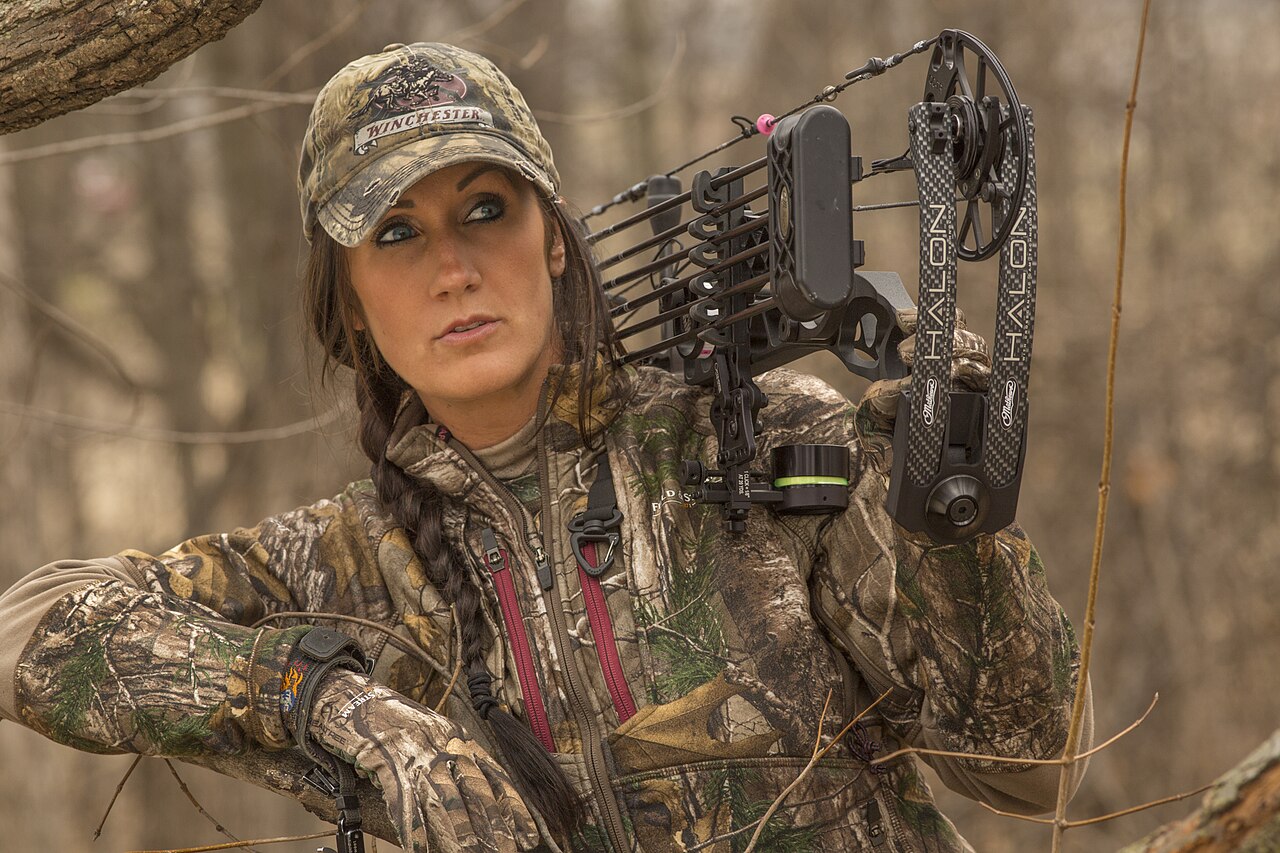
Sights like the Black Gold Ascent Verdict and HHA Tetra Tournament let you specify pin diameter at order. If your sight allows it, mix sizes intentionally rather than defaulting to whatever ships in the box.
Shop Black Gold Ascent Verdict Multi-Pin Sights on Amazon →
Hunting Scenarios — Matching Diameter to Conditions
Treestand Whitetail Inside Forty Yards
Shots come fast, light is often poor, and ranges rarely exceed forty yards. A multi-pin sight with .029 or .019 fibers is the right answer here. Pin coverage is irrelevant at twenty yards — you can blot out the entire kill zone and still drop an arrow through it. What you need is a pin you can find in three seconds when a buck steps into your shooting lane at last light.
Western Spot-and-Stalk and Open Country
Mule deer, antelope, and bull elk often demand shots at forty to seventy yards in bright daylight. A single pin slider with a .019 or .010 fiber dominates this scenario. You range the animal, dial the elevation, and aim with a pin small enough to thread between ribs at sixty. Light gathering is rarely a concern — you are typically shooting in good visibility because you stalked into the position.
3D Archery and Outdoor Target
Scoring rings on a 3D foam buck are tight, and tournaments are shot in daylight. A .010 pin makes the X ring visible around the fiber rather than buried under it. Multi-pin shooters in 3D often run a vertical bar of .010 fibers across the entire housing for consistent precision regardless of the targeted distance.
Light Conditions, Fiber Length, and Hood Design
Pin diameter does not exist in a vacuum. Two .010 pins from different brands can perform very differently because of how much fiber is wrapped around the housing. Long fiber wraps gather more ambient light and feed a brighter pin head. Sights with short fiber stubs near the housing wall will look dim in the same diameter.
Hood design matters too. A wider hood with a contrasting ring helps the eye center small pins faster — particularly useful with .010 fibers that can otherwise feel lost inside the sight picture. If you are shooting low light hunts, look for sights that include rheostat lights or accept aftermarket sight lights so you can boost a small pin without trading away its precision.
Pin Stacking and Vertical Spacing
On any multi-pin sight, the gap between pins shrinks as distance increases because arrow trajectory drops faster the farther it flies. With .029 fibers, the physical pin is thick enough that pin gaps below thirty yards begin to overlap visually. With .019 fibers you keep usable gap aiming through forty yards. With .010 fibers, gap aiming remains practical out past fifty.
If your hunting style relies on holding between pins for in-between yardages — a common technique covered in our Pin Gap Aiming guide — the smaller diameters give you more usable real estate to work with. The hybrid bright top, fine bottom configuration described earlier is built specifically to preserve gap aiming on a multi-pin housing.
Slider and Hybrid Sights — A Special Case
Hybrid slider sights — fixed pins on top with a sliding indicator for longer shots — collapse the diameter decision into a layered question. The fixed pins handle in-zone hunting yardages so they can run brighter .019 fibers. The slider pin handles the precision long shots so it should run a fine .010 fiber. Sights like the Black Gold Ascent Hybrid and HHA Optimizer Lite are designed around exactly that thinking.
Shop HHA Optimizer Lite Single Pin Sliders on Amazon →
How to Choose Your Pin Diameter
Walk through the questions in order and the right diameter usually picks itself.
- What is your maximum realistic shooting distance? Inside 40 yards rewards .019 or .029. Past 50 yards rewards .019 or .010.
- What does your worst case lighting look like? If you regularly shoot the last legal minute of light, lean toward .019 over .010, or pick a sight with a generous fiber wrap.
- Single pin or multi-pin? Single pin is forgiving of small diameters. Multi-pin needs gap-friendly diameters or a hybrid stack.
- What sight platform are you running? Confirm the manufacturer offers your chosen diameter — not every housing supports all three.
- Do you wear glasses or have aging eyes? Bigger pins are easier to focus on. Drop one diameter step larger than the math suggests.
A Practical Recommendation by Use Case
For the eastern whitetail hunter running a five pin sight in the timber, a .019 stack is the safe bet. Bright enough to find at first light, fine enough to hold at the longer end of treestand range, and forgiving when adrenaline scrambles your form.
For the western hunter running a single pin slider, a .019 fiber covers ninety percent of conditions. Move to .010 only if you compete in 3D or routinely shoot past sixty yards in good light.
For the do-it-all archer who hunts whitetails in the fall and shoots 3D in the summer, a hybrid slider with .019 fixed pins and a .010 movable pin gives you both worlds without the compromise.
The Honest Bottom Line
Single pin versus multi-pin is the headline argument, but pin diameter is the silent variable that determines whether either platform actually performs. Pick the diameter that matches your worst case light and your maximum realistic distance, then build the sight platform around it. A multi-pin .019 sight will outshoot a single pin .010 in low light treestand work; a single pin .010 slider will outshoot a multi-pin .029 in open country at sixty. The sight is just the housing — the pins are doing the aiming.
Sources
- Spot Hogg Archery Products — pin diameter options and sight specifications
- Black Gold Sights — Ascent series fiber configuration
- HHA Sports — Optimizer slider platforms and pin sizing
- Archery Trade Association — industry data on bowhunter equipment preferences
Browse archery bows, arrows, and accessories at the Archery Supplier shop →
