
Archery Blog
How to Set Up a Backyard Archery Range: 7 Essential Steps
Jul
A dedicated backyard archery range is the single biggest thing that separates archers who improve from archers who plateau. When practice means walking out your back door instead of driving 40 minutes to a club, you shoot four or five times a week instead of once. The setup itself is simple, but the order you build it in matters — get the safety layer wrong and one stray arrow ends the whole project. This guide walks through space, legality, backstops, targets, and gear so you can shoot at home with confidence.
How Much Space Do You Need for a Backyard Archery Range?
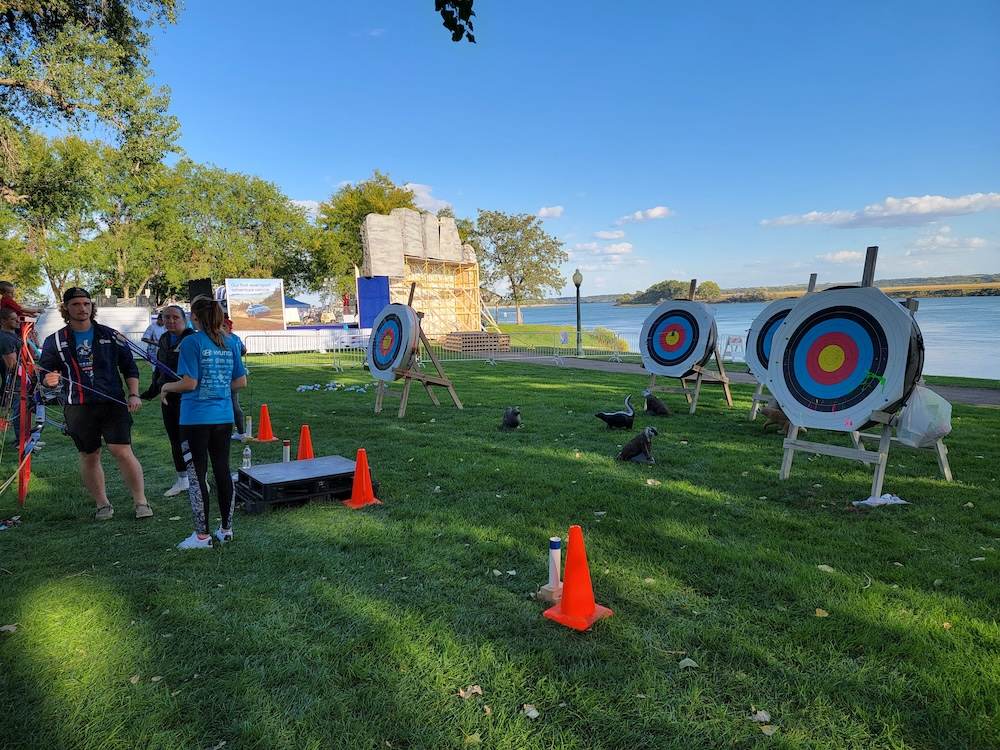
You want a minimum of 20 yards (about 18 meters) of clear shooting distance, though 10 to 15 yards is plenty when you’re starting out. The extra room matters because it lets you stretch your practice distances later without tearing down and rebuilding. Keep the shooting lane roughly 10 feet wide to forgive arrows that drift left or right, and leave a walking buffer of at least 10 yards behind the target for the ones that sail over the top.
Measure honestly. The distance from your shooting line to the target is only part of it — you also need standing room at the line, side clearance, and that generous overshoot zone. A yard that looks big enough at a glance often shrinks once you account for the safety margins.

Is It Legal to Shoot a Bow in Your Backyard?
Before you drive a single stake into the ground, find out whether archery is allowed where you live. Many suburban municipalities regulate the discharge of a bow the same way they regulate firearms, and some ban it outright inside city limits. A five-minute call to your local police non-emergency line or town clerk usually settles it. If you’re in a homeowners association, read the covenants too — HOA rules can be stricter than city code.
The truth is, most people who skip this step aren’t saving time — they’re gambling a fine or a confiscated bow against a phone call they could have made over coffee. Get the answer in writing if you can, and keep it. A neighbor’s complaint carries a lot less weight when you can show you already checked.
Choosing a Safe Location and Shooting Direction
Point your range so arrows travel away from houses, roads, sheds, and any path where a person or pet might wander. The best setups back onto a natural barrier — a dirt hill, a dense treeline, or a solid privacy fence — so a missed shot has somewhere to die. Never shoot toward a property line you can’t see past, and never toward a direction where a rise in the ground could launch a skipping arrow.
Think about the sun, too. Shooting straight into low morning or evening light wrecks your aim and hides the target face. Orienting the lane north–south usually keeps the sun out of your eyes for most of the day. If you can angle the lane so you’re shooting slightly downhill into a bank, even better — gravity works in your favor and the backstop does less work.
The Most Important Part: Your Backstop
The backstop is the layer that catches everything the target misses, and it’s where new archers cut corners they shouldn’t. A proper backstop stops a full-draw arrow cold and stops it every time, even after the target face is chewed up. Archery netting rated for your draw weight is the cleanest option for a small yard — it drapes behind the target and absorbs overshoots without deflecting arrows back at you.
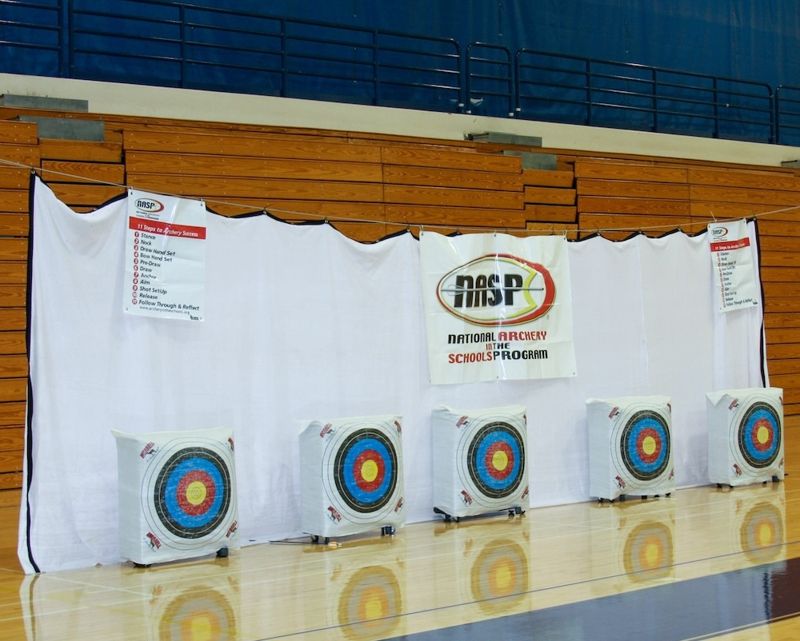
If you’d rather build than buy, stacked hay or straw bales work well as long as you keep them tight and fill the holes arrows punch through them. Roughly a 5-by-5-foot wall of bales, set about a yard behind the target, handles most recurve and beginner compound setups. Horse stall rubber mats hung vertically behind the bales add a second line of defense for higher draw weights.

Picking a Target That Actually Lasts
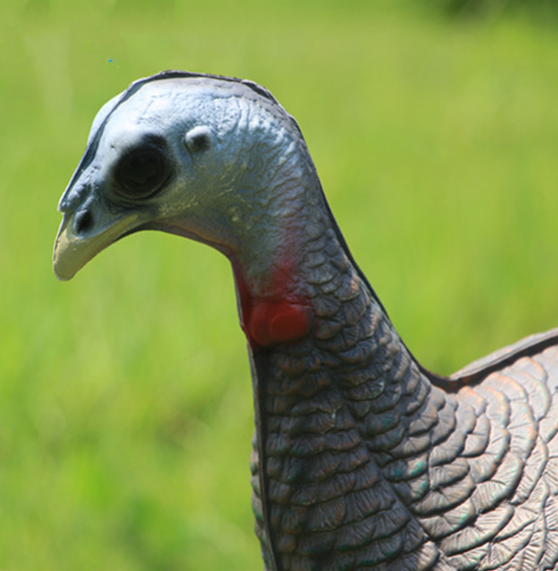
Your target does two jobs: it stops the arrow and it gives you a point to aim at. For a home range, a foam bag target is the most forgiving choice — bags stop arrows across a wide draw-weight range and pull arrows out with two fingers instead of a jerk that bends your shafts. Layered foam block targets last longer and take field points and broadheads, but they cost more and grab arrows harder when they’re new.

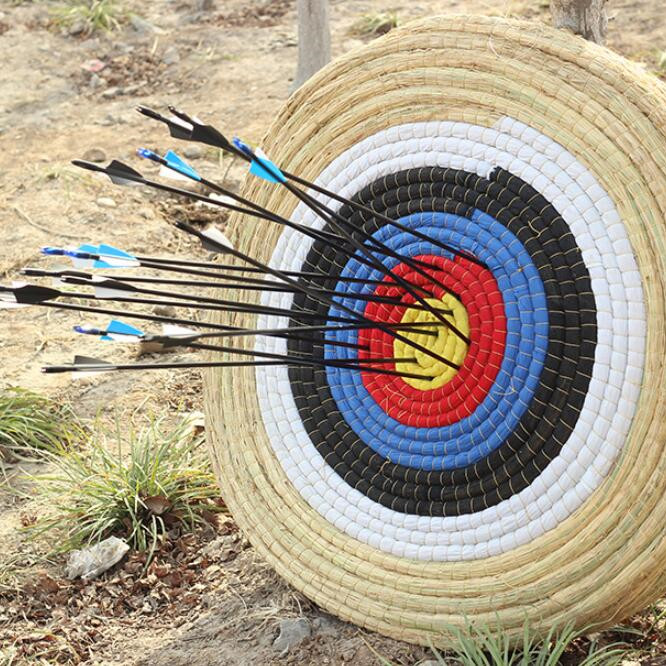
Traditional straw butts, like the ones above, are the oldest answer and still a good one — cheap, arrow-friendly, and easy to re-stuff. Whatever you pick, put it on a stand at chest height rather than leaning it against the fence, and rotate the face so you’re not always drilling the same spot. If you’re weighing materials, our breakdown of EVA foam versus straw targets covers the tradeoffs in detail, and the guide to archery target types lays out every option.
Understanding Target Distances and Scoring
Once the range is safe, distance is your training dial. Start close — 10 yards — and only step back once you’re grouping arrows inside the gold consistently. Moving back too early builds bad habits, because you start compensating for a form problem you can’t see yet. Mark your shooting line with a stake or a paver at 10, 15, and 20 yards so every session starts from the same spot and your progress is measurable.
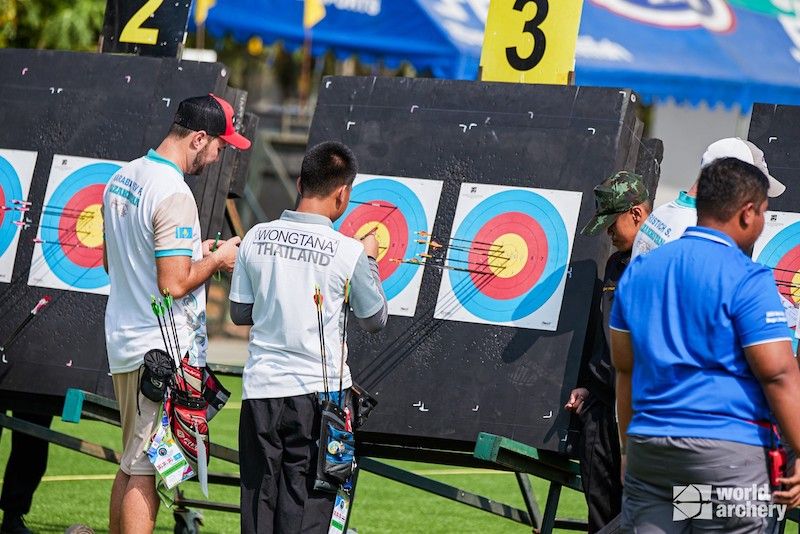
A standard World Archery target face uses ten scoring rings, with the innermost gold 10-ring measuring 12.2 cm on a full 122 cm face. You don’t need to score every session, but keeping a simple total gives you an honest number to beat next time. Chasing a score is a far better motivator than vaguely “practicing,” and it turns a backyard range into real training.
Vary the game so you don’t burn out on one distance. Shoot a round of six arrows for score, then a round where you only care about tightening the group regardless of where it lands, then a few blind-bale shots up close with your eyes closed to feel the shot cycle. That mix builds aim, consistency, and form separately instead of hoping all three improve at once from the same drill.
Arrows and Gear You Need to Get Started
Beyond a bow, target, and backstop, a working range needs a handful of small things. A bow stand holds your bow upright while you walk down to pull arrows — resting a bow in the grass invites a warped limb or a fouled string. A quiver keeps spare arrows at hand, and an arm guard plus finger tab save you from the string slap and sore fingertips that make beginners quit early.
Arrows matter more than most new shooters expect. Cheap, mismatched shafts fly inconsistently and mask whether a bad shot was you or the equipment. Practice arrows matched to your draw length and bow weight remove that variable so you can trust your feedback loop.
Safety Rules That Keep a Backyard Range Fun
A backyard range is only as good as its worst habit. Set a hard rule that no one walks downrange until every bow on the line is grounded, and never nock an arrow while someone is retrieving. Keep kids and pets behind the shooting line, not beside it. Store your bow and arrows locked away from casual access when you’re done — a strung bow leaning by the back door is an accident waiting for a curious visitor.
Coach Eric’s walkthrough below covers the same ground from an experienced range-builder’s angle and is worth the ten minutes before you commit to a layout.
Common Mistakes Beginners Make
The most frequent error is treating the backstop as an afterthought — people buy a target, skip the barrier behind it, and lose an arrow over the fence on day one. The second is standing too far back too soon, which cements poor form. The third is ignoring arrow condition: a cracked carbon shaft can shatter on release and injure your bow hand, so flex-test every arrow before you shoot it.
If your yard genuinely can’t accommodate a safe lane, don’t force it. A cramped, poorly aimed range is worse than none. In that case, the smarter move is to shoot at a supervised club — here’s how to find local archery clubs and ranges near you until you can build the space you want.
Start Shooting This Week
Pick your safe direction today, order or stack a backstop this weekend, and you can be putting arrows into a target by next practice. The range you build in your own yard is the one you’ll actually use — and consistency, not equipment, is what moves your groups tighter. Get the safety layer right, keep a score you’re trying to beat, and let the reps do the rest.
Sources
- Archery 360 — How to Build a DIY Target and Backstop for Your Home Range — backstop materials and safety-buffer guidance from the Archery Trade Association.
- World Archery — Target Archery — official target face dimensions and scoring rings.
- Archery GB — Target Archery — governing-body reference on distances and target formats.
