
Archery Blog
Breathing Techniques for Archery: 5 Methods to Shoot Tighter Groups
Aug
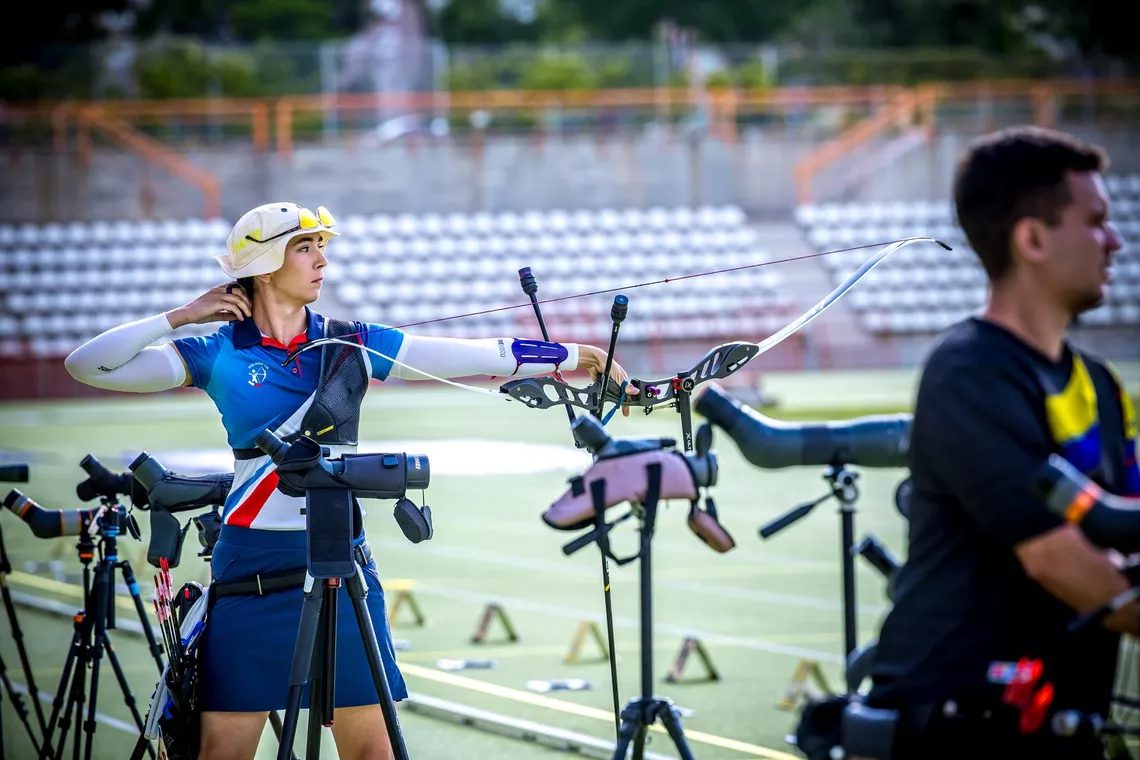
A full breath cycle shifts your ribcage by roughly 3–5 cm. At 20 yards, that translates into a group spread of several inches — which is why two archers with identical form and equipment can produce wildly different results once nerves or fatigue disrupt their breathing pattern. Breath control is not a secondary skill. For most archers shooting in the 7- and 8-ring when they feel they should be in the 10, it is the root cause.
Why Breathing Disrupts Your Shot More Than You Realize
The problem is mechanical before it is mental. When you inhale, your chest expands, your draw shoulder rises slightly, and your bow arm shifts. When you exhale fully, the opposite happens — the chest collapses inward and the bow arm tends to drop. Every shot fired mid-breath is fired from a body that is in motion.
There is also a less obvious issue: the muscles you use to hold at full draw are connected to the same fascial network as your breathing muscles. Chest breathing — shallow, high-up-in-the-ribs breathing — creates tension that radiates into your shoulders and arms. Diaphragmatic breathing, by contrast, keeps the upper chest and shoulder girdle quiet. That distinction matters enormously for anyone using a back-tension release style.
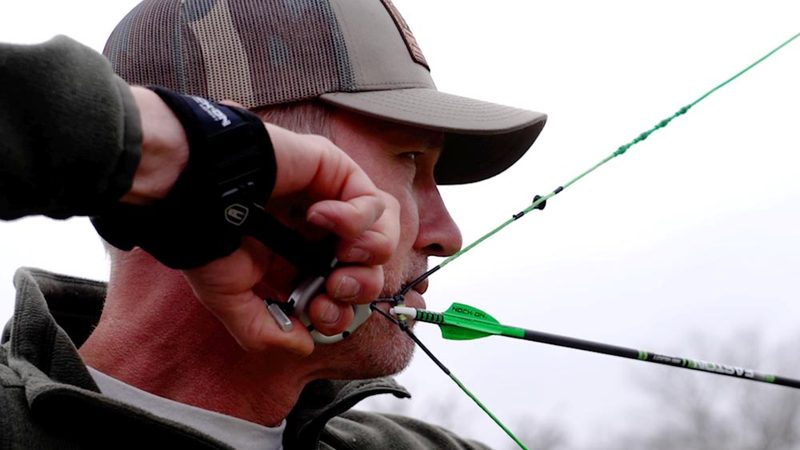
John Dudley, one of the most widely followed compound archers in North America, frames it this way: if you lose sight clarity at full draw, your eyes are telling you that oxygen to the brain is dropping. That is your body’s signal to reset, step down, and start the cycle again. Holding through diminishing vision clarity never produces a quality shot.
The 3-Stage Breath Cycle Every Archer Needs
Before getting into variations, it helps to understand the baseline cycle that nearly every high-level archery program starts from. World Archery coaching resources and USA Archery’s Level 2 curriculum both point to the same three-stage sequence:
- Inhale — Take a slow, full breath through the nose as you raise the bow and begin the draw. The goal is to be fully expanded as you approach anchor.
- Half-exhale — As you settle into anchor, exhale approximately half the air. Allow it to escape naturally — no forced push. This controlled release lowers your heart rate slightly and calms the upper chest.
- Hold and fire — At the halfway point of the exhale, there is a natural pause before your body demands another inhale. This is the respiratory pause. Execute the shot within this window, which typically lasts 2–5 seconds.
The entire sequence from inhale to release should take no more than 8 seconds. Beyond that, oxygen depletion begins to degrade fine motor control and visual acuity — exactly the things you need most at full draw.
5 Breathing Techniques Every Archer Should Try
The 3-stage cycle is the foundation, but it is not the only tool. Different situations call for different approaches, and most experienced archers have 2–3 techniques they rotate through depending on pressure, distance, or whether they are chasing groups or managing target panic.
1. The Half-Exhale Method
The standard — described above. It works because it places your lungs at a consistent midpoint every shot, making your chest wall position repeatable. The half-exhale is the default technique used by most Olympic-level recurve archers and the starting point USA Archery coaches teach at the intermediate level. If you are not currently doing this deliberately, this alone will tighten your groups.
2. Box Breathing for Competition Nerves
Box breathing is not a technique you use at full draw — it is what you do in the waiting line or between ends when your heart rate climbs. The pattern is simple: inhale 4 seconds, hold 4 seconds, exhale 4 seconds, hold 4 seconds. Three cycles of this drops heart rate measurably and shifts the nervous system away from a sympathetic (fight-or-flight) state. It has been used in military and surgical settings for exactly that reason. For archers, it is most valuable in the minute before you step to the line at a major shoot.
3. The Natural Respiratory Pause Technique
Some archers find it more natural to exhale fully and fire in the brief moment before the next inhale begins. This zero-lung-volume approach removes the guesswork of the half-exhale — you are always firing from the same lung state: empty. The drawback is that the pause is shorter (1–2 seconds versus 3–5) and the body is at a slightly more fatigued state. It works well for archers with a fast shot process but tends to break down under pressure when shot timing slows.
4. Diaphragmatic Breathing Under Load
This one takes deliberate practice to build, but it pays off across every other technique. Belly breathing — expanding the abdomen rather than the chest on the inhale — keeps your upper chest and shoulder girdle quiet throughout the shot. If your drawing shoulder rises noticeably when you inhale, you are chest breathing. Put one hand on your belly during blank bale practice: it should move out on the inhale, in on the exhale, while your chest stays relatively still. This feeds directly into your archery form and shot-cycle consistency, since a quiet upper body means your draw shoulder, anchor, and back tension cues all remain in place from breath to breath.
5. The 4-7-8 Reset for Target Panic
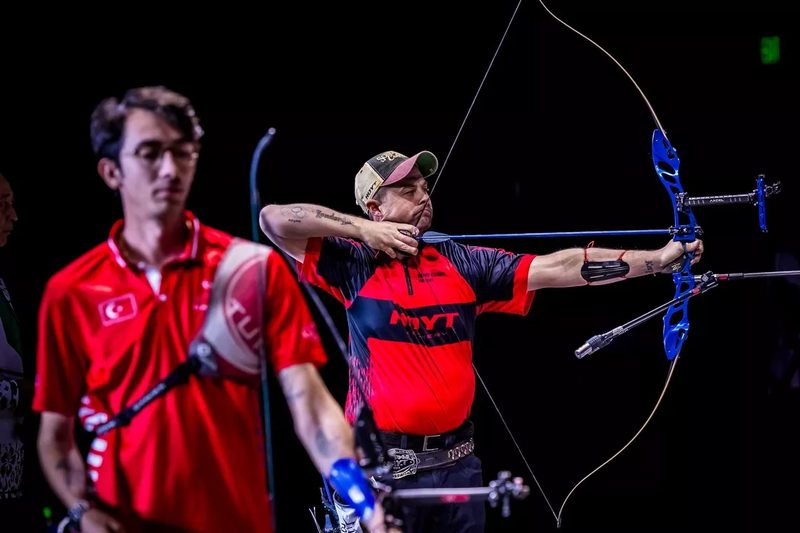
If your shot timing has fragmented — freezing off target, punching the trigger, not being able to settle the pin — the 4-7-8 reset is worth building into your between-shots routine. Inhale 4 counts, hold 7, exhale slowly over 8. This extended exhale activates the parasympathetic nervous system more aggressively than box breathing and is what sports psychologists sometimes call a “pattern interrupt.” It does not fix target panic on its own, but it can break the anxiety spiral that makes it worse during a round. Pair it with blank bale work and the advice in the archery mental focus guide for the most complete approach.
Compound vs Recurve: Where Breathing Actually Differs
Both disciplines benefit from the same foundational breath control, but the equipment changes the execution window in one important way: let-off.
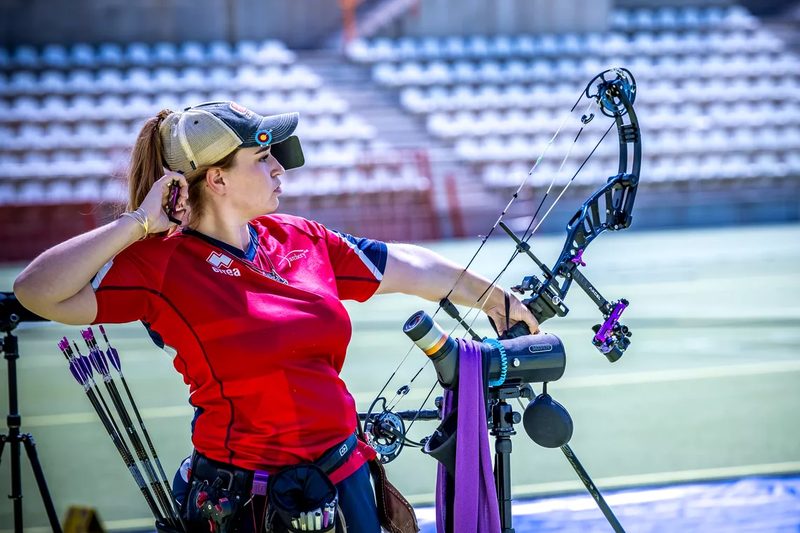
On a recurve, you are holding 100% of the draw weight at full draw. That physical load means your shot window is shorter — most recurve coaches push archers toward a 2–4 second execution time from anchor to release. With that tight a window, there is no room to wander through breathing phases. The half-exhale needs to happen during the draw itself so that you arrive at anchor already in the hold phase, ready to fire immediately.
Compound archers at let-off (typically 70–80%) are holding a fraction of peak draw weight. That lower load allows a more deliberate approach — you can settle into anchor, take a moment to verify your sight picture, and then execute within a slightly longer window. This is why compound technique instruction often emphasizes a more ritualized pre-shot breathing cycle. The extra seconds are available, and using them consistently is what builds shot-to-shot repeatability.
The 7-Second Rule at Full Draw
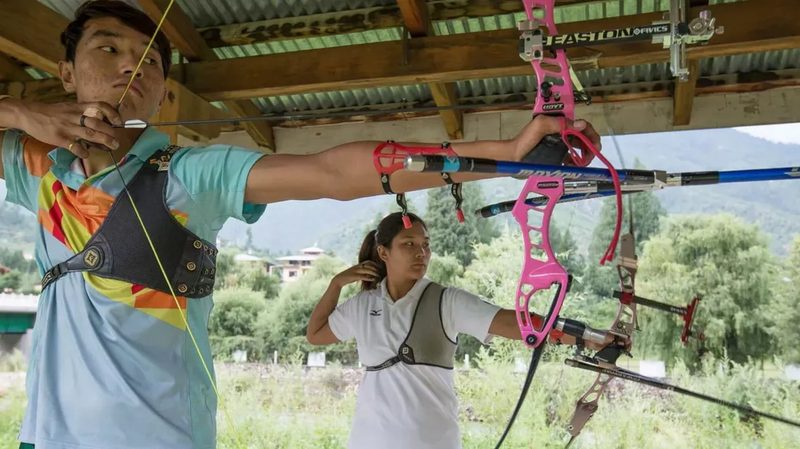
Seven to eight seconds is the outer boundary of how long you should spend at full draw before oxygen depletion begins affecting performance. This is not a vague guideline — it is the point at which research on breath-hold in precision sports consistently shows degradation in fine motor control and visual clarity.
What this means practically: if you draw and cannot execute within 8 seconds, let down. Do not push through. An arrow fired with deteriorating oxygen supply will fly worse than no arrow at all. Elite archers treat a let-down as a normal part of the process, not a failure. Recurve competitor Brady Ellison has talked openly about letting down multiple times in a single end when conditions or shot feel are not right. The willingness to reset is itself a mental skill.
Common Breathing Mistakes That Ruin Groups
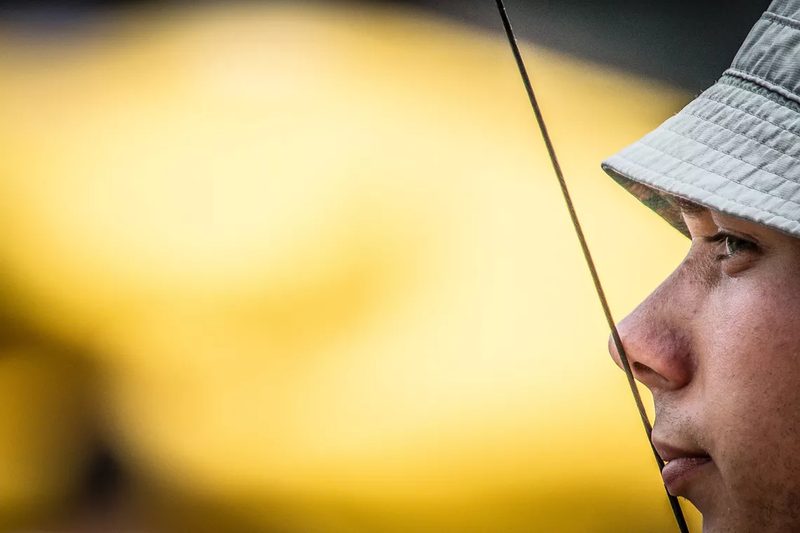
The most common error is holding a full inhale at full draw. It feels like stability — the chest is expanded and rigid — but it is the opposite. Holding a full lung load creates pressure in the chest cavity that transmits directly into the draw shoulder and arms. The result is a subtle but consistent wobble that shows up as vertical stringing in your groups.
A close second is full exhale. Collapsing the lungs before the shot drops the bow arm and torques the shoulder — a problem that shows as low-left shots (for right-handed archers). If your groups are consistently low, check whether you are releasing on empty lungs.
The third mistake is inconsistency: different breath phase on every shot. Some shots fired on an inhale, some on a half-exhale, some on a hold. The body arrives at full draw in a different state each time, and the groups reflect it. Tighten groups first by making breath phase the same on every single arrow — the specific technique matters less than the consistency of it.
How to Build Breathing Into Your Practice
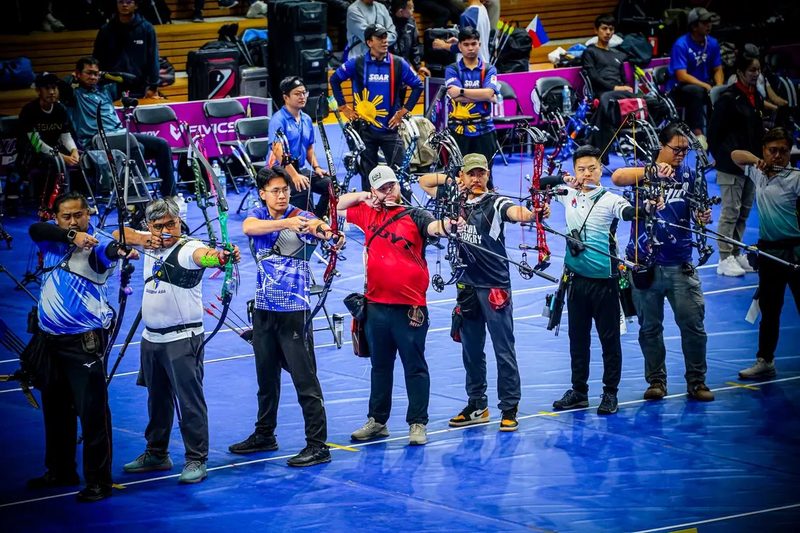
Breathing technique becomes automatic through blank bale work, not through thinking about it during competition. The drill is simple: shoot 20–30 arrows at 3–5 meters with no target. Deliberately execute the same breath cycle on every shot. Say it out loud if needed — “inhale, half-out, hold, fire.” The goal is to run this sequence until it requires no conscious thought, at which point it can survive the distraction of competition.
During normal practice, build a pre-shot routine that explicitly includes a breath cue. Most coaches recommend 2–3 full breaths before raising the bow, then into the shot cycle. The pre-shot breathing is what manages heart rate during a timed round; the shot cycle breathing is what controls stability during execution. They are separate phases, and treating them as separate makes both more reliable.
Pair this with work on your follow-through discipline — because a controlled exhale and a clean follow-through reinforce each other. Archers who tense up post-release usually do so because they broke the breath hold too early.
Shooting Under Pressure
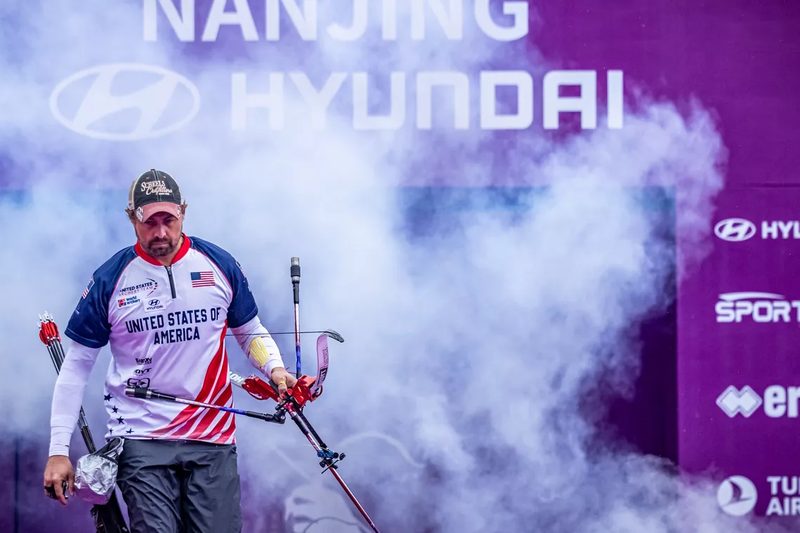
Competition changes breathing in ways that practice alone cannot fully prepare you for. Heart rate goes up, breath rate follows, and the timing that felt natural on the practice range compresses. The fix is not to fight the elevated heart rate but to use box breathing in the waiting area to bring it down before it spirals. Brady Ellison, who has shot under Olympic final pressure more than once, has attributed a significant part of his consistency to deliberate pre-competition breathing routines that begin long before the first arrow is shot.
The archers who struggle most in competition are usually those who have never isolated breathing as a trainable variable. They shoot well in practice — where breathing is relaxed and automatic — then fall apart on a shoot-off where the heart rate climbs. Making breathing part of your explicit practice protocol, rather than letting it happen incidentally, is the single highest-return change most intermediate archers can make before spending money on equipment upgrades.
Sources
- Nock On Archery — Breath Control and the Shot Cycle — John Dudley’s 4-step breathing routine and the 7-8 second rule at full draw
- KSL International Archery — Breathing Cycle — Technical breakdown of the respiratory pause in archery execution
- Archery Coach Blog — Shooting While Breathing — Analysis of different breathing philosophies in competitive archery
- World Archery — Athlete photography and competition reference (worldarchery.sport)
