
Archery Blog
Arrow Shaft Diameter Guide: 4mm, 5mm and 6mm Compared
Sep
The number stamped on an arrow package — 4mm, 5mm, 6mm, 6.5mm — is the shaft’s outside diameter, and it affects more than just how the arrow fits on your rest. Diameter drives wind resistance, penetration physics, component compatibility, and total arrow weight. Get it wrong for your discipline and you’ll leave performance on the table. Get it right and you’ll tune your setup for what you actually do at the range or in the field.
The Four Arrow Diameter Classes Explained
Easton Archery standardized the current metric naming system in 2015, and most of the carbon arrow industry now follows the same framework. There are four recognized classes, each with distinct performance tradeoffs.
Standard (6.5mm): The legacy benchmark. Standard-diameter carbon shafts run about .246″ inside diameter, with ODs typically between .270″ and .300″ depending on wall thickness and spine. They offer the widest selection of inserts, nocks, and broadheads, and they’re the least expensive class per shaft. The Easton Hunter Classic and most entry-level carbon arrows live here.
Reduced (6mm): A modest step down from standard. The 6mm class is Easton-specific in its labeling, but several manufacturers offer shafts in this range. Components are reasonably common, and the crosswind reduction is noticeable compared to 6.5mm at distances beyond 40 yards.
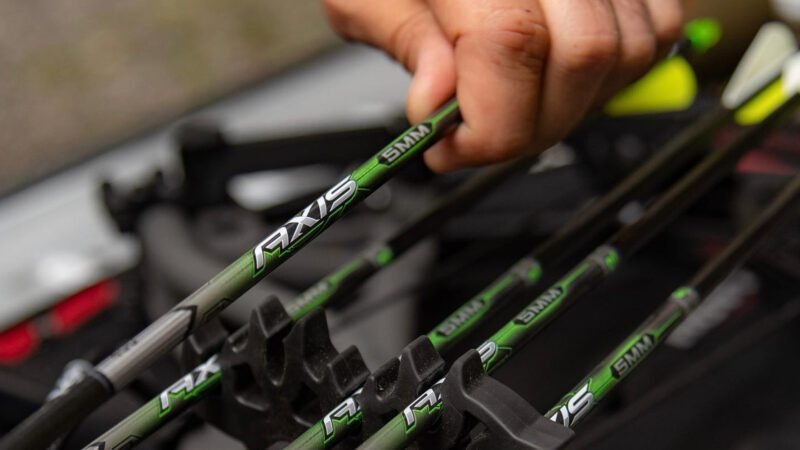
Micro (5mm): The current sweet spot for most serious hunters. The 5mm class runs roughly .204″ ID and is dominated by shafts like the Easton 5mm Axis, Carbon Express Maxima RED SD, and Gold Tip Kinetic Kaos. Standard inserts and nocks often work with 5mm shafts, making the transition from 6.5mm straightforward.
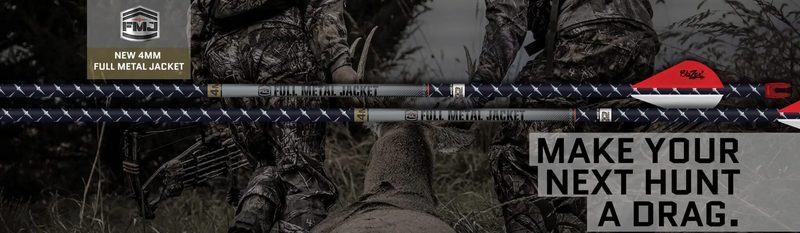
Ultra-Micro (4mm): The performance ceiling. At roughly .166″ ID, these shafts — the Easton 4mm Axis Long Range, 4mm FMJ, Victory VAP Elite, and Black Eagle Focus — have the smallest cross-section of any hunting arrow class. They require Deep Six inserts and specific nock collars, which are not interchangeable with standard components. The performance gains are real, but so is the cost and setup complexity.

Easton’s FMJ series spans multiple diameters — the 6mm and 5mm FMJ are among the most popular hunting configurations.
Arrow Diameter and Wind Drift: The Physics
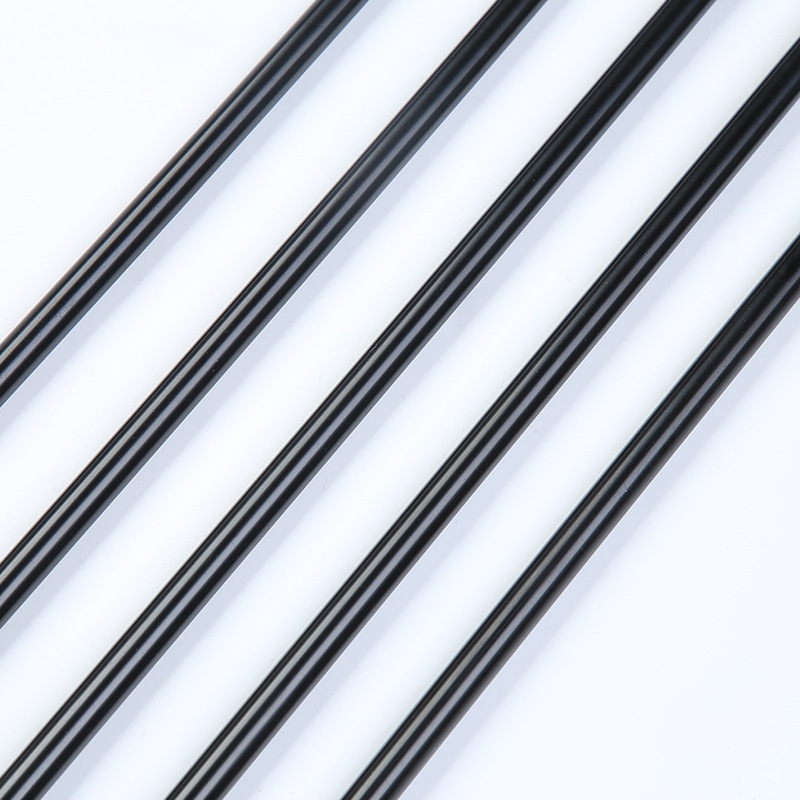
A thinner shaft presents less cross-sectional area to a crosswind, which means less lateral push during flight. The math is simple but the real-world effect is larger than most archers expect.
Stepping from a 6.5mm standard shaft to a 4mm ultra-micro reduces frontal cross-sectional area by approximately 30% — the difference between a circle 6.5mm wide and one 4mm wide is significant in exposed outdoor conditions. A 2025 Precision Cut Archery ballistics study of 68 arrow builds tested at 280 fps, 10 mph crosswind found drift ranging from 1.91″ to 3.60″ at 40 yards depending on arrow configuration — the narrow-shaft, high-FOC builds consistently landed at the low end of that range. At 80 yards, the spread widened to 7.78″–14.90″.
A field test by Iron Will Outfitters found that a 4mm Easton Axis Long Range setup in a real 14.6 mph crosswind drifted “slightly over an inch” at 60 yards. That’s not the difference between a hit and a miss on a broadside whitetail at 30 yards, but it matters significantly at longer ranges or for western hunters shooting 50–80 yards at elk.
Arrow Diameter and Penetration: Does It Actually Help?
The penetration argument for micro-diameter shafts is real, though it’s more nuanced than marketing materials suggest. Smaller diameter means less shaft surface area pushing through tissue and — critically — less bone contact when the arrow deflects off a shoulder blade or rib. A 2025 Born Hunting field test showed the 4mm Axis Long Range driving measurably deeper than a 5mm Axis in comparable foam density testing.
The numbers cited most often in the industry come from test data archived in US Patent 6932728, which showed roughly 22% greater penetration for small-diameter arrows versus standard-diameter in controlled bone and foam testing. That’s a bone-to-shaft contact reduction, not a universal guarantee — on a clean broadside lung shot through soft tissue, the difference is negligible. On a marginal hit that deflects off a shoulder blade, that 22% margin may be what keeps the arrow moving forward instead of stopping short.
The variable that matters more than diameter for penetration is front-of-center (FOC) balance. Victory Archery’s research shows high FOC (19–30%+) improving penetration by 40–60% or more regardless of shaft diameter. Micro-diameter shafts make achieving high FOC easier because the lighter shaft puts more weight percentage toward the front. Pairing a 4mm or 5mm shaft with a 100–200 grain tip system and building FOC above 20% is the combination serious big-game bowhunters chase.
Arrow Diameter for Target Archery: Bigger Is Better Indoors
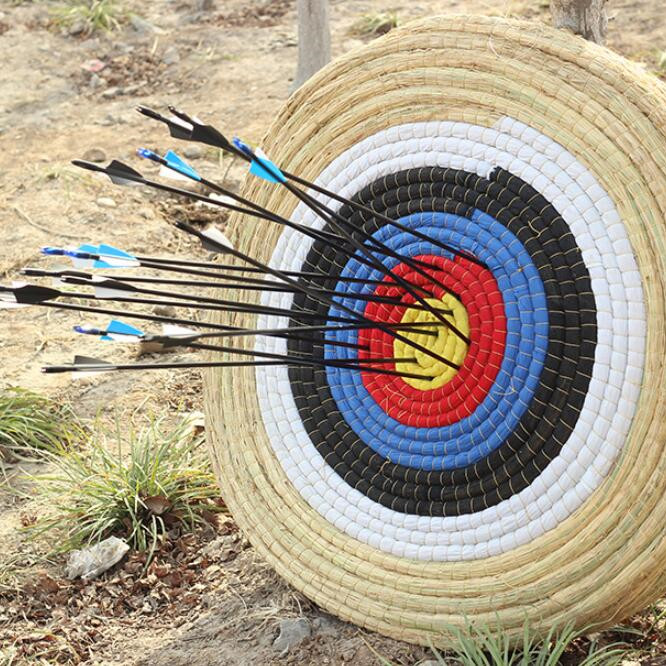
Indoor target archery inverts everything. At 18 or 20 meters with no wind, penetration and crosswind resistance are irrelevant. What matters is that the shaft clips scoring lines more favorably. The NFAA allows outdoor shaft diameters up to .422″ (about 10.7mm) for indoor competition — and compound indoor specialists often run aluminum/carbon hybrid shafts like the Easton X10 or ACE with large outer diameter aluminum sleeves specifically to maximize line-cutting potential.
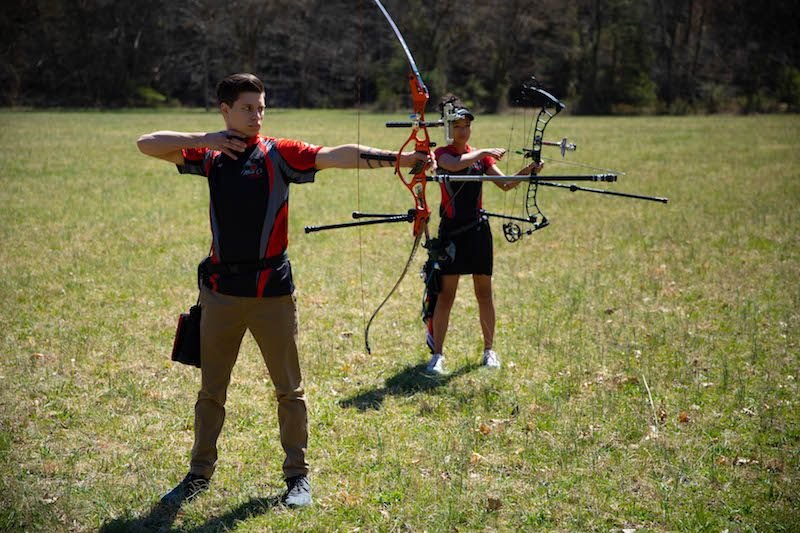
World Archery and USA Archery cap maximum shaft OD at 9.3mm across all outdoor formats. At 70 meters — the Olympic recurve distance — micro-diameter or small-diameter shafts are standard among elite archers for the crosswind advantage. The general rule: shoot the fattest arrow the rules allow indoors, the thinnest you can tune outdoors.
| Diameter Class | OD Range | Best For | Component Availability |
|---|---|---|---|
| Ultra-Micro (4mm) | .234″–.240″ | Long-range hunting, western big game | Limited — Deep Six only |
| Micro (5mm) | .258″–.282″ | Hunting, outdoor target | Good — most standard components |
| Reduced (6mm) | ~.295″ | General purpose, hunting | Good |
| Standard (6.5mm) | .270″–.300″ | Indoor target, beginners | Excellent — widest selection |
Arrow Diameter and Spine: They’re Related, Not the Same
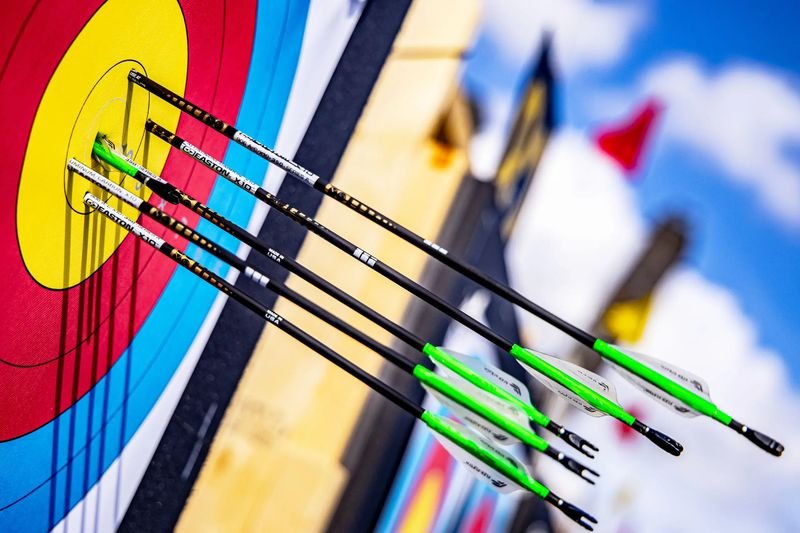
Shaft diameter and spine stiffness are independent variables, but they interact in ways that can limit your choices. Thinner shafts need thicker carbon walls to achieve the same spine stiffness as a larger-diameter shaft — which means a 4mm arrow at 300 spine may actually weigh more per inch than a 6.5mm shaft at the same spine rating. The Easton 4mm FMJ at 340 spine runs 11.0 grains per inch, heavier than the 6.5mm Easton Hunter Classic at comparable spine ratings.
This is the counterintuitive truth about micro-diameter arrows: “smaller” does not mean “lighter.” The shaft wall has to be thicker to compensate for the smaller diameter, and that added wall material carries weight. Archers who switch to 4mm expecting a dramatically lighter arrow often find the opposite. What they get instead is the same or greater weight packed into a narrower cross-section, which is exactly what you want for FOC and penetration — just not for arrow speed.
For more on building a tuned hunting setup from the tip back, see our guide on broadhead vs. field point selection. Arrow rest compatibility is the other critical variable — a containment rest sized for 6.5mm will let a 4mm shaft rattle; confirm your rest’s finger opening against your shaft OD before buying. Our drop-away arrow rest setup guide covers this in detail.
Traditional Archery: Inch Fractions Still Rule
Traditional longbow and barebow archers mostly use wooden shafts, and their sizing still runs in imperial fractions. Port Orford cedar — the most common wood for arrow shafts — comes in 5/16″ (7.9mm) for bows under about 45 lbs, and 11/32″ (8.7mm) for heavier draws. The 11/32″ size is the most common traditional shaft for adult archers, equivalent in OD to a modern 8–9mm range and visibly thicker than carbon hunting arrows.
Fiberglass arrows, used in youth programs and some recreational recurve setups, follow similar sizing. They’re heavier than carbon at the same length and spine, which is a benefit for beginners — more arrow mass means the bow’s energy is absorbed more efficiently and dry-fire risk is reduced if a shaft slips off the rest at full draw.
YouTube: Does Arrow Diameter Matter for Bowhunting?
Which Diameter Should You Choose?
The honest answer depends on what you’re doing and how far into the optimization rabbit hole you want to go.
If you’re new to archery — compound or recurve — start with 6mm or 6.5mm carbon arrows. Components are cheap and available everywhere, spine charts are simple to use, and you’ll shoot plenty of arrows before diameter optimization becomes a meaningful factor in your accuracy.
If you’re hunting whitetail deer from a treestand inside 40 yards in typical woodland conditions, 5mm is the right move for most shooters. The component availability is good, standard inserts work, and you’ll pick up a genuine improvement in crosswind resistance and FOC potential over 6.5mm without the Deep Six complexity of 4mm.
If you’re hunting elk, mule deer, or pronghorn in open country with 40–70 yard shots in variable wind, 4mm is worth the added setup complexity. The Deep Six system has been mature for years now — the inserts are strong, the broadhead selection is growing, and the penetration and wind-drift advantages are measurable at those distances and on that bone structure.
Shooting indoor target competition? Go to the thickest shaft your rules allow. Shooting outdoor target at 60–70 meters? Match the smallest shaft your bow can tune to cleanly. The diameter decision follows directly from what you’re actually doing — once you’re honest about that, the right answer is usually obvious. For your first hunt, see our guide on deer shot placement for bowhunters to put your arrow selection to work.
Sources
- Easton Archery — Simplifying Arrow Diameters for Bowhunting — Manufacturer overview of the 4mm/5mm/6mm/6.5mm diameter system
- Precision Cut Archery 2025 Ballistics Study — 68-build normalized wind drift data at 40 and 80 yards
- Born Hunting — Field Test: Easton Axis 4mm Long Range — Real-world penetration and wind drift comparison of 4mm vs 5mm Axis
- Victory Archery — Micro Diameter vs. Standard — FOC and penetration data comparing diameter classes
- Iron Will Outfitters — Arrow Drag and Wind Drift — Field test data on 4mm Axis Long Range crosswind performance at 60 yards
