Uncategorized
Broadhead vs Field Point: Why They Don’t Hit the Same Spot
Aug
Every bowhunter who has gone through a pre-season tune-up knows what happens: you zero your bow perfectly at 30 yards with field points, clip on a broadhead, and watch the next arrow land three inches to the left. Same bow, same arrow, same hold. Different tip.
This is the broadhead vs field point problem, and it burns more hunters than any single equipment failure. Understanding why it happens — and how to close the gap before season — is one of the most practical things you can do with a practice session.
What Separates a Broadhead From a Field Point
A field point, also called a field tip, is a tapered, cone-shaped tip with no cutting edges. It punches cleanly into foam targets, pulls out without shredding the material, and has a tight aerodynamic profile that stays passive in flight. It doesn’t interact with airflow in any meaningful way, which is exactly what makes it ideal for tuning and form work.
A broadhead is a cutting tip. It carries exposed blades — either permanently fixed or deployed on impact — designed to create a wide wound channel for ethical hunting kills. That blade surface is functional on the animal but aerodynamically active in the air. This is the root cause of every broadhead vs field point accuracy discrepancy you’ll encounter.
Field points and broadheads are built for entirely different jobs. The mistake most beginners make is treating them as interchangeable right up to the day of a hunt.
The Three Types of Broadheads
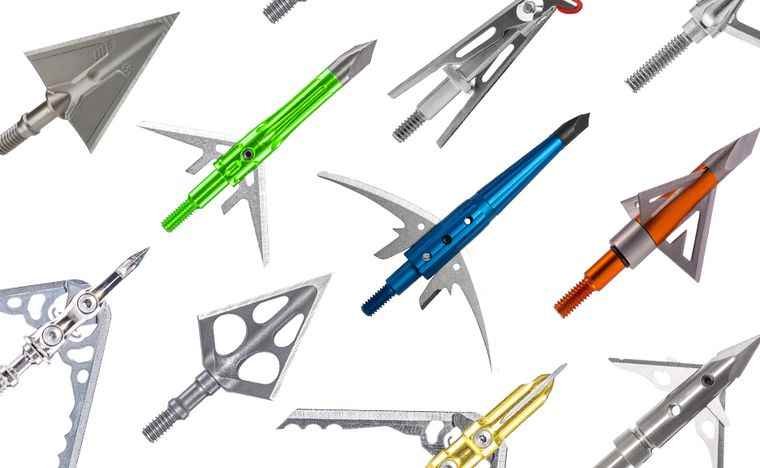
Broadheads aren’t a single category. Three main designs exist on the market, each with its own flight profile, mechanical complexity, and best use case. Choosing the wrong one for your bow setup makes the tuning problem worse than it needs to be.
Fixed Blade Broadheads
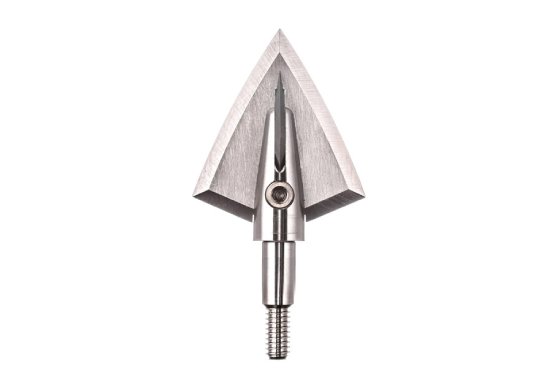
Fixed blade broadheads have permanently exposed blades with no moving parts. Two-blade and three-blade configurations are most common, though four-blade designs exist for hunters who want maximum cutting diameter. Because there are no mechanical components, they work reliably in cold temperatures, after rough pack-outs, and in wet conditions. Penetration depth on fixed blades is typically deeper than mechanicals — a real consideration for elk, moose, or any quartering-away shot where the arrow must travel through significant tissue.
The tradeoff: exposed blades interact with airflow. Any rotational wobble in your arrow — from a tuning issue, a spine mismatch, or an inconsistent release — is amplified by the blade surface. Fixed blades punish sloppy tuning. That’s not a flaw so much as useful diagnostic information. A bow that shoots fixed blades accurately is a well-tuned bow.
Mechanical (Expandable) Broadheads
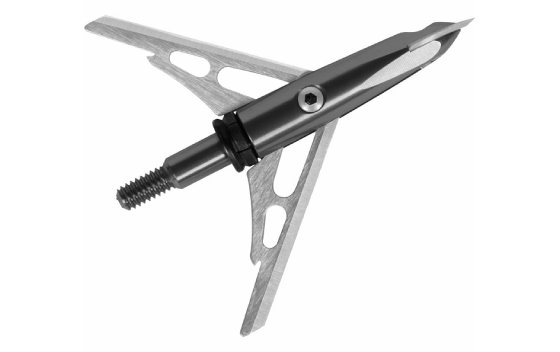
Mechanical broadheads — also called expandables — keep blades retracted during flight and deploy them on impact. Aerodynamically, a closed mechanical looks nearly identical to a field point. This is why expandables are often described as “field point accurate,” and in good conditions with a well-tuned bow, that reputation mostly holds up.
On impact, blade deployment requires kinetic energy from the arrow. At typical compound bow speeds (260–320 fps), this isn’t an issue. Below 240 fps — common with lower-poundage setups or traditional bows — mechanicals can fail to deploy fully. A blade that opens halfway creates an asymmetric wound that may not result in a clean kill. For this reason, mechanical broadheads are almost exclusively a compound bow tool at full hunting draw weights.
Replaceable Blade Broadheads
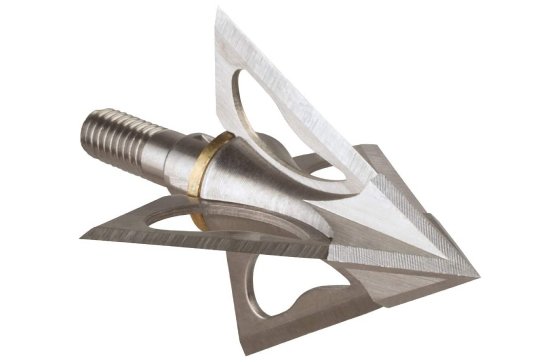
Replaceable blade broadheads are a subtype of the fixed blade category. The ferrule — the metal body that threads onto the arrow insert — is reused, while the blades snap out and are swapped when they dull. After a hunt or a session on a hard foam target, you replace only the blades, not the entire head. Over a full season, this is significantly more cost-effective than resharpening or replacing fixed heads whole. Flight characteristics are identical to standard fixed blades.
Why Broadheads Don’t Hit Where Field Points Do
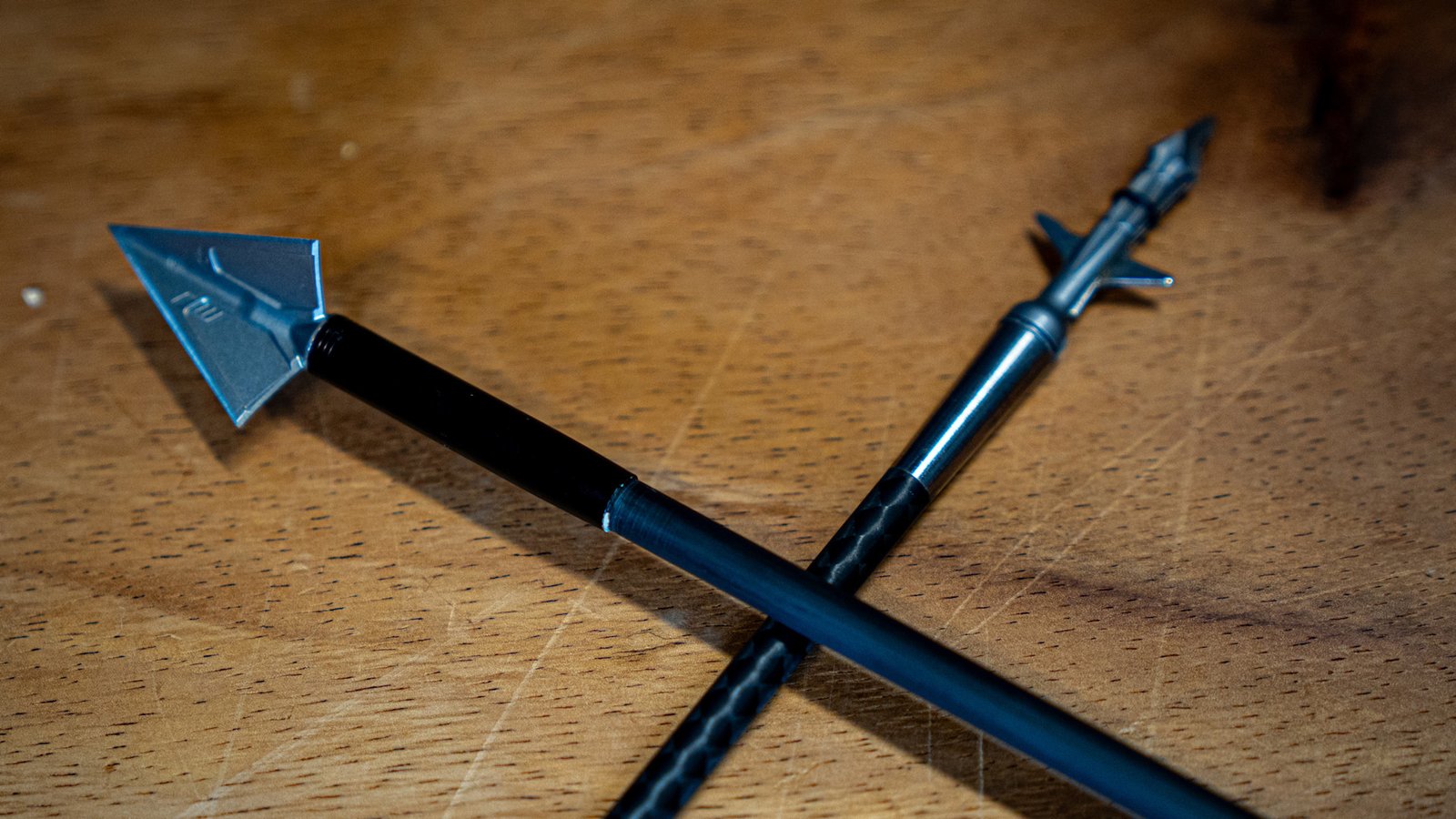
An arrow in flight spins due to the helical vanes that stabilize it. A field point is aerodynamically neutral during that spin — it has no surface area to generate lift or drag. A broadhead blade isn’t. As each blade rotates through the shot plane, it generates a small aerodynamic force. On a perfectly tuned bow with a well-matched spine, those forces balance out. On a bow with any tuning variance, the blades amplify the problem.
The result is called planing — the broadhead acts more like an airfoil than a tip, steering the arrow off its intended path. A fixed blade that planes two inches left at 30 yards will be off by five or six inches at 50 yards. As one archery source puts it directly: only field points fly like field points. Even the most forgiving mechanical will deviate from your practice zero when the arrow spine isn’t dialed in.
This is also why verifying your arrow spine selection before any broadhead testing is not optional. A spine that’s too stiff or too weak for your draw weight and draw length is the most common root cause of broadhead vs field point impact differences that can’t be corrected with a sight adjustment alone.
When to Use Field Points — and Their Hard Limits
Field points are the right choice for all target practice, bow tuning, and competition shooting. Most archery ranges prohibit broadheads outright — the blades destroy foam targets in a single session and the flight variation makes group shooting unpredictable. For any shooting that isn’t a hunt, field points are correct.
The limit is firm: field points don’t belong on a hunting arrow. A bowhunter who zeros only with field points and shows up to a stand on opening day has tested their practice setup — not their hunting setup. These are different configurations, and they produce different points of impact.
Grain weight is where many hunters quietly drift into a problem. Most field points come in 100-grain versions. If your broadheads are 125 grain, you’ve changed your arrow’s FOC (front of center) balance and dynamic spine rating at the same time. The result is a trajectory change that grows with distance — a solid 30-yard zero with 100-grain field points will be low at 40 yards with 125-grain broadheads, even if nothing else changed. Match the grain weight exactly between your practice and hunting setups.
When to Switch to Broadheads (Why Waiting Costs You)
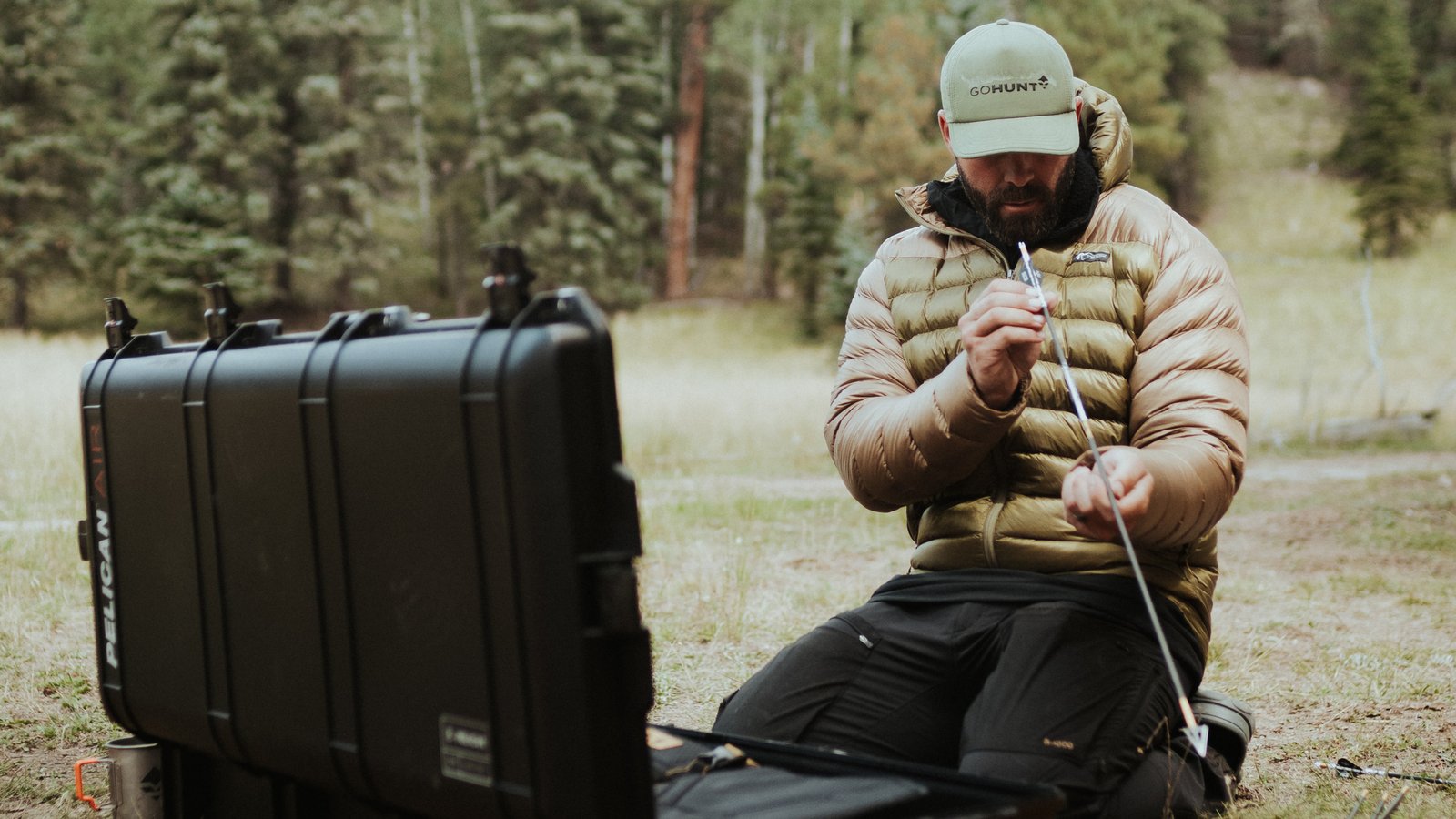
The common mistake: switching to broadheads in the final week before season, shooting a quick group, calling it close enough, and heading out. Four to six weeks before your first hunt is the correct timeline. This gives you enough range sessions to identify the actual point-of-impact shift, adjust your sight or fletching, and build real confidence in how your hunting setup performs.
The diagnostic drill is simple. At 20 yards, shoot three arrows with field points, then three with broadheads. A consistent directional shift — all broadheads hitting the same wrong spot — means the bow is tuned but the broadhead is planing. This is often correctable by adjusting the helical on your fletching or switching from a two-blade to three-blade design, which distributes rotational torque more evenly. An inconsistent shift, with broadheads scattered around the target, means an underlying tuning problem that must be solved before anything else.
If you’re running a drop-away rest, get it fully dialed before attaching a broadhead. A rest that fires inconsistently introduces a variable that makes broadhead tuning nearly impossible to isolate. If that work isn’t done yet, the drop-away rest setup guide walks through the full install and paper tuning process. And regardless of your equipment, how you place the shot matters as much as how the broadhead flies — a well-tuned broadhead on a marginal angle still produces a poor result, which the deer shot placement guide covers in detail.
Choosing a Broadhead That Matches Your Setup
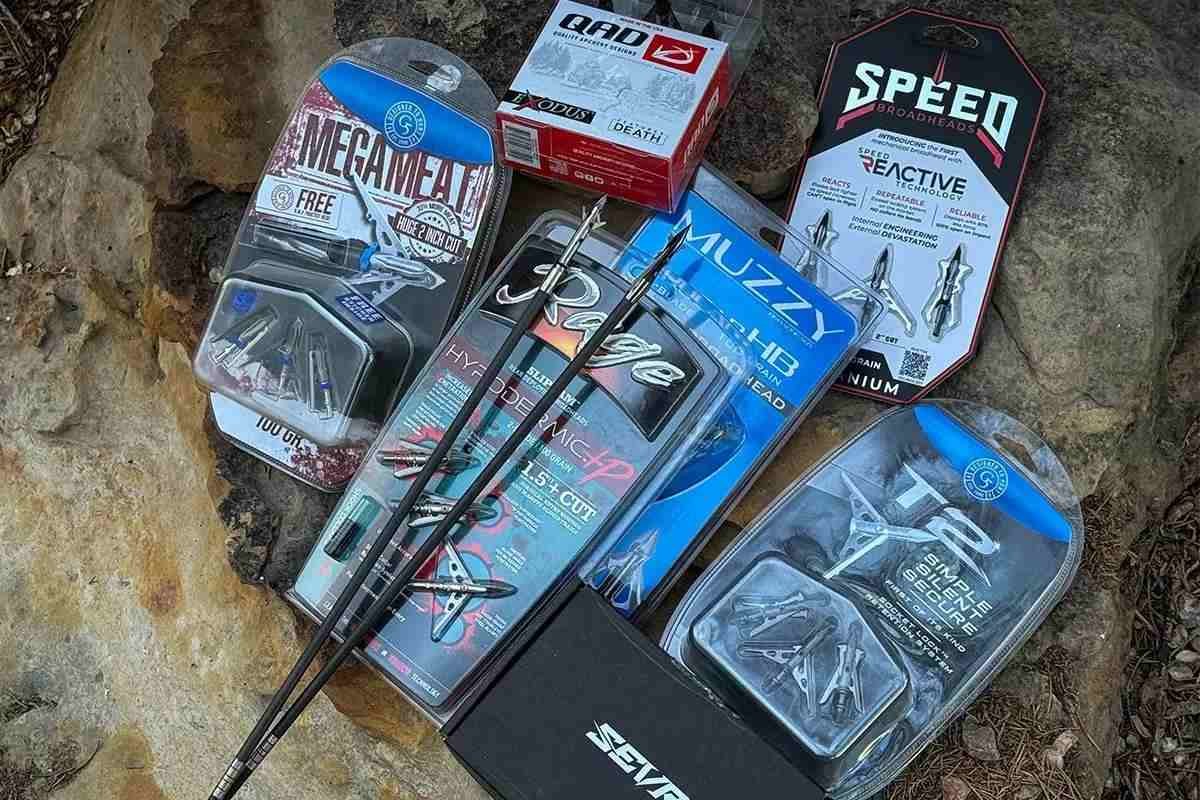
For compound bows at full hunting draw weight (55 lbs and above) shooting 270+ fps, mechanical broadheads are a practical choice. The kinetic energy reliably opens the blades, the flight profile is forgiving of minor tuning issues, and the wound channel from a quality expandable is more than adequate for whitetail deer at standard bowhunting distances under 40 yards.
For recurve bows and longbows, fixed blade broadheads are the correct choice without exception. Traditional setups typically produce 180–220 fps — not enough kinetic energy to guarantee mechanical deployment. A two-blade fixed broadhead with a cut-on-contact tip is the standard for traditional hunters for exactly this reason, and it’s been working for centuries.
Within compound bow hunting, distance is the other factor. Fixed blade broadheads reward precise tuning and deliver deeper penetration at close range (under 30 yards), but their accuracy degrades faster at distance on bows that aren’t perfectly set up. Mechanical broadheads hold more consistent groups at 40–50 yards for the majority of compound shooters who haven’t reached competition-level tuning precision. This isn’t a quality difference — it’s a practical match between what your real-world setup can support and what the broadhead design requires.
The broadhead that works is the one you’ve practiced with, at the distances you’re realistically going to shoot. No marketing claim about mechanical accuracy or fixed blade penetration replaces the data point of watching your hunting arrows group consistently before you walk into the woods.
Sources
- Advanced Hunter — Broadheads vs. Field Points (Pros & Cons) — Flight comparison, tuning context, and distance accuracy breakdown
- Contact Archery — Will Broadheads Fly Like Field Points? — Technical explanation of broadhead planing and point-of-impact differences
- Ranger Expert — 5 Types of Broadheads for Hunting and Target Archery — Fixed, mechanical, replaceable, hybrid, and blunt tip breakdown
