
Archery Blog
Target Panic Archery: 7 Proven Fixes That Actually Work

Sep
Braden Gellenthien—one of the most decorated compound archers in history—has publicly admitted struggling with it. Sara Lopez, world champion and World Cup record holder, fought target panic for nearly two full seasons before defeating it and winning the 2021 World Championships. The problem isn’t rare. It isn’t a sign of weakness. It’s a conditioned response your nervous system developed without asking permission, and it requires a deliberate process to undo.

What Is Target Panic in Archery?
Target panic is not a vision problem or a grip issue. It’s a conditioned response—your nervous system has learned to fire the shot (or freeze) the moment it detects a specific stimulus: the sight picture of a target through your peep.
Chartered psychologist Dr. Jon Rhodes, who works with elite archers, describes it as: “Anxiety [that] emerges from an amalgamation of increased pressure, a sharp decline in skill proficiency, and heightened awareness.” In Korea, where compound archery is treated with the seriousness of professional sport, they call it clicker disease. Braden Gellenthien’s definition is simpler and more useful: “Any kind of angst that prevents you from performing at your best.”
The frustrating reality, as Scott Archery Pro Staff Coordinator Darrin Christenberry puts it: “The best archers in the world have had it, conquered it, got it again, and have to deal with it all the time.”
The 3 Forms Target Panic Takes
Most archers assume target panic only means punching the trigger. There are three distinct presentations, and recognizing which form you have changes how you fix it.
Punching and flinching. The most common form. You activate the trigger the instant—or just before—the pin reaches the intended spot. The shot fires before you decide to shoot. Your scores cluster in a tight pattern that’s consistently off-center because you’re timing the trigger to a sight picture rather than executing a process.
Freezing. The pin will not go to center. You draw, settle into your anchor, and the sight pin hovers left, right, or below the bullseye—and refuses to move there. You know exactly where you want to aim, but your body won’t cooperate. This form is often misdiagnosed as an aiming problem or a bow setup issue.
Lockup. The most debilitating form. You draw to full anchor, the pin settles, and you simply cannot release. No shot goes. Your muscles fatigue, you let down involuntarily, and the same thing repeats. Some archers with lockup cannot complete a full round at all.
7 Target Panic Archery Fixes That Actually Work
1. Blank Bale Shooting
This is the foundational fix, and it works regardless of which form of target panic you have. Set a target at five yards. Remove the face entirely—leave it blank or tape over it with a plain sheet. Draw, anchor, and focus entirely on your back expansion and release execution. Not the target. Not a point to aim at. Just the process.
Do 30 to 50 repetitions before you allow yourself to release a single arrow at a real target face. The goal is to decouple your sight picture from the shot command. Your brain panics when it sees “something to aim at”—because that’s the stimulus that triggers the habit loop. Remove the stimulus, and the loop can’t start.
This works because target panic is Pavlovian conditioning. Stimulus (target face) produces a conditioned response (panic, punch, or freeze). No stimulus, no response. The longer you practice on blank faces before reintroducing the target, the weaker the old conditioning becomes.

2. Switch to a Back Tension Release
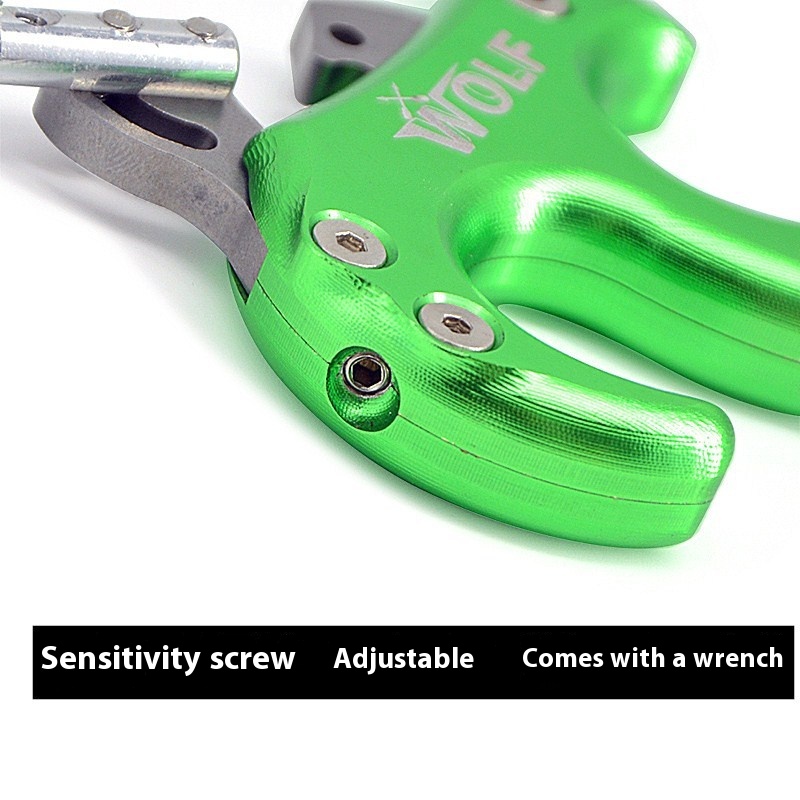
If you’re shooting a wrist-strap or handheld thumb-button release and developing target panic, the mechanism itself may be part of the problem. Both give your trigger finger direct, conscious control over when the shot fires—which trains your brain to time the release to the sight picture. That’s the habit you’re trying to break.
A back-tension (hinge) release removes that option. It fires when your back muscles rotate past a set angle during your draw stroke—you cannot punch it because there’s no trigger to punch. The shot happens as a consequence of your back continuing to expand, not as a decision made at a specific aiming moment. Compound archers on World Cup and World Championship podiums overwhelmingly shoot hinge or resistance-activated releases for exactly this reason.
The transition is uncomfortable. The release fires at unexpected moments during your first sessions—that’s the point, and that’s what makes it effective. Stick with it for 30 to 60 blank bale sessions before evaluating. Read the full technique in our guide to hinge release archery.

3. The Hold-and-Let-Down Drill
Draw to full anchor. Put the pin on the target. Hold it there until your pin starts to drift, then deliberately let down without shooting. Rest 20 to 30 seconds. Repeat 30 to 50 times before you allow yourself to take an actual shot.
This breaks the stimulus-response chain differently from blank bale work. You’re retraining your nervous system to tolerate being at full draw with a live target face in view—without anything happening. Over dozens of repetitions, the urge to rush or flinch diminishes because the expectation of panic no longer gets confirmed.
The trap to avoid: don’t treat this drill as an opportunity to sneak a shot in. The moment you decide “this one I’ll release,” you’ve reinitiated the panic loop. Hold-and-let-down only. Every time, for the full session.

4. Add Distance Back in Systematically
Once blank bale sessions feel calm—no punching reflex, no freezing—reintroduce the target face at five yards, then ten, then fifteen. Do not jump to your normal shooting distance until you can complete a full practice session at the intermediate distance without symptoms.
Most archers skip this phase and return to full distance too quickly. They shoot clean for two or three sessions, then the panic returns—because the conditioning wasn’t fully broken. It was temporarily suppressed at close range, and the old neural pathway reasserted itself under the familiar pressure of full-distance aiming.

5. The One-Arrow Mindset
Target panic feeds on accumulated pressure. After a bad shot, the next arrow carries the weight of the last one—and the one before that. The one-arrow mindset cuts that chain by treating every shot as if it’s the first arrow you’ve touched all day.
Before each arrow, reset fully. Step back from the line if you need to. Take three complete breaths before approaching again—inhale for four counts, exhale for six. Our guide on breathing techniques for archery covers the physiological reason this works: slow exhalation activates the parasympathetic nervous system and counters the fight-or-flight response that target panic exploits.
In practice, this requires active mental effort on every single shot. Most archers abandon it after two rounds. The ones who commit to it for a full training block find that panic episodes drop in frequency and intensity within three to four weeks.
6. Rebuild Your Shot Sequence from Zero
If you don’t have a defined shot sequence, you’re shooting from habit—and your habits include the panic response. A written, numbered shot process externalizes decision-making and gives your conscious brain a checklist to follow instead of anticipating the shot moment.
John Dudley’s method at Nock On Archery breaks the process into discrete, sequential steps: stance, grip, draw, anchor, settle, expand, fire, follow through, evaluate. Each step is a checkpoint. You don’t advance until the current step is complete. The release happens as a consequence of process completion—not as a reaction to a particular sight picture. That’s the key distinction.
Start the process over from step one if anything feels off before the shot. This is what “committing to the shot sequence” means—it’s not just saying the words, it’s genuinely refusing to let the shot go until the process has been followed. For more on the physical foundation, see our guide to back tension in archery.

7. Work with a Certified Coach
The drills above work. They work faster with experienced eyes on your shot. A USA Archery or World Archery certified coach has seen target panic across dozens of students in different forms—they can identify which of the three presentations you’re dealing with, which drill sequence fits your situation, and when you’re genuinely ready to progress rather than just feeling ready.
The stigma around target panic is real. World Archery’s reporting on elite compound archers notes that many avoid discussing it publicly because of the psychological weight it carries. A coach who has dealt with it—personally or with other athletes—creates a lower-stakes environment to work through it. That matters when the condition is partly driven by fear of failure.
How Long Does It Take to Overcome Target Panic?
John Dudley’s documented experience puts the real commitment at six months—not six sessions, not six weeks. Six months of consistent blank bale work, deliberate shot sequencing, and (where applicable) release aid adjustment before the conditioned response is reliably replaced with a new one.
Archers who report faster resolution typically had mild, early-stage panic that hadn’t yet deeply entrenched. For anyone who has been punching or freezing for two or more seasons, expect the longer timeline. The habit took months or years to form. Breaking it takes proportional effort. The six-month number isn’t a worst case—for many archers, it’s accurate.
Does Target Panic Affect Recurve and Traditional Archers?
Yes, though it looks different. Recurve archers develop what’s sometimes called clicker anxiety: an inability to draw past the clicker, or a flinch reflex triggered by hearing it drop. Traditional and barebow archers experience a version called snap-shooting—an inability to hold a deliberate aim long enough to execute the shot cleanly.
Blank bale drilling works across all bow types. Recurve and traditional archers add a useful variation: shoot at three yards with eyes closed, drawing and releasing entirely by feel. This rebuilds body memory of a deliberate, process-driven shot without any visual input at all—the complete removal of the sight-picture stimulus.
Keeping Target Panic from Coming Back
Sara Lopez defeated target panic and won the 2021 World Championships. She has discussed incorporating preventive blank bale sessions into every training block since—not because the panic returned, but because the neural pathway it used doesn’t disappear. Stress, high-stakes competition, or a run of poor form can reactivate it if the preventive work stops.
The practical rule most coaches agree on: include blank bale shooting in at least 10 percent of your total practice volume, permanently. Five minutes at the start of every session costs almost nothing and keeps the conditioned response from re-forming under pressure. For competitive archers, add an extra blank bale block before major events when stakes and anxiety are highest.
Sources
- Archery’s scariest taboo: The mystery of ‘target panic’ — World Archery feature covering Sara Lopez, Braden Gellenthien, and Dr. Jon Rhodes on target panic in elite competition
- When the wheels fall off: Target panic at the World Cup Final — World Archery, compound finals reporting including archer accounts of target panic symptoms
- Overcoming Target Panic: The Six-Month Commitment — Nock On Archery, John Dudley’s methodology and timeline for recovery
- Target Panic Explained — and the Scott Releases That Can Help — Scott Archery, Darrin Christenberry on release mechanics and mental approach
- 5 Steps to Curing Archery Target Panic — N1 Outdoors, field experience and coaching recovery methodology
