Archery Blog
Bowhunting from a Ground Blind: 9 Tips to Fill Your Tag
Aug
A mature buck walked into the food plot at 40 yards, nose down, completely unaware of the black hub blind sitting at the field edge. The hunter inside had placed it three weeks before season opened — not to scout, but to let the deer absorb it into their mental map of the area. By opening morning, that black nylon box was wallpaper. Ground blind bowhunting done right is one of the most consistently productive deer setups that exists. Done wrong, it’s an expensive way to watch deer circle at 80 yards and disappear.
Why Ground Blinds Outperform Tree Stands in Certain Situations
Tree stands have a clear wind-management advantage: your scent disperses above deer nose level. Ground blinds don’t have that luxury, which is why they demand more preparation than most hunters expect. But terrain doesn’t always cooperate with stand hunting. Flat farm ground, open food plots, brush-choked creek bottoms, and public land where permanent stands invite theft — these are all scenarios where a ground blind is not just acceptable but often the only setup that consistently produces opportunities.
The other scenario where blinds win decisively: hunting with youth or new archers. A ground blind lets you coach a first-time hunter from inches away without either of you losing balance or getting cold. According to the National Deer Association’s youth hunting program data, first-year hunters in ground blind setups show markedly higher harvest rates than those placed in ladder stands alone. That margin comes from control, comfort, and the ability to adjust in real time.
Tip 1 — Choose a Ground Blind with Enough Interior Space for Your Draw
Draw length is the variable most first-time ground blind buyers overlook. A compound bow set to 28 inches extends nearly three feet from the grip to your draw-hand elbow at full draw. Add the width of the riser, the length of a drop-away rest, and a stabilizer, and your setup can occupy close to five feet of horizontal space at the shot. Most manufacturers list exterior blind dimensions — what actually matters is interior depth from the back wall to the shooting window.
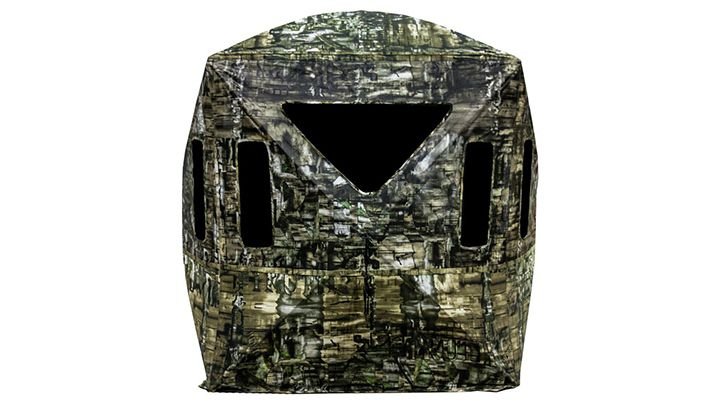
The usable minimum for a compound bow hunter with a 28–30 inch draw: 58 inches wide by 58 inches deep. Smaller and you’re fighting your equipment on every shot attempt. Hub-style blinds — the collapsible umbrella type — deliver more usable interior volume per pound of pack weight than A-frame or box designs. If you’re hunting from a folding chair (which you should be), add 10–12 inches of vertical clearance above your seated eye level so limb tips don’t catch the ceiling at full draw.
Setting up your ground blind early gives deer time to accept it as part of the landscape.
Tip 2 — Set Up Your Blind at Least 2 Weeks Before Opening Day
The 14-day rule isn’t arbitrary. Mature bucks in pressured hunting areas require a minimum of 7–14 days to resume normal movement patterns around a new structure in their core territory. On public land where deer see human sign constantly, that acclimation window stretches even further. The mature deer most hunters target doesn’t become comfortable overnight — he circles at a distance, checks the new object from downwind multiple times, and may avoid the entire approach for two full weeks before deciding it isn’t a threat.
Set up the morning of your hunt on public land and you’ll see does and young bucks at most. Get your blind positioned early, tie natural debris to the exterior from day one, and let the woods reclaim the smell of the nylon and the steel frame. The blind that smells like fresh factory packaging is a neon sign in a world that communicates entirely in scent. Our guide on bowhunting public land tactics covers pre-season scouting strategies that identify the best blind placement locations before you commit.
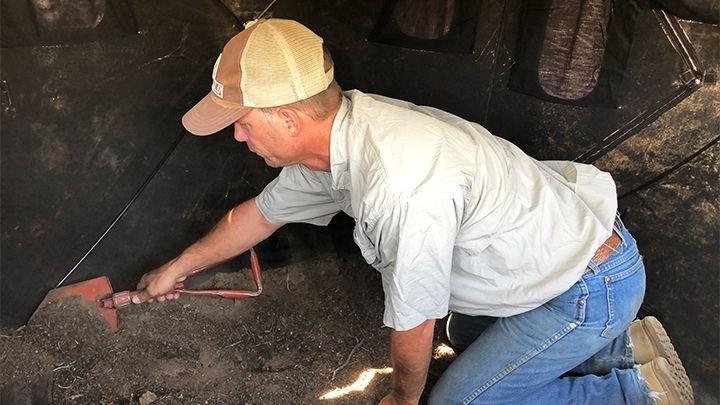
Properly staking a blind with guy lines keeps it stable during wind and prevents noise that spooks deer.
Tip 3 — Cut Your Shooting Windows Correctly
Factory shooting windows on commercial blinds are almost universally too large. Wide windows let ambient light in, and when you’re sitting inside a dark blind, incoming light from a large opening silhouettes you against the dark interior background. From outside, a deer looking toward a large window can see motion and shape inside — the opposite of what you’re trying to achieve.
The correct approach: cut each window only as wide as your bow needs to clear at that particular shooting angle. For a right-handed shooter taking a quartering-away shot at 11 o’clock, that’s roughly 18 inches horizontal by 12 inches vertical, positioned so the bottom edge of the window clears your arrow’s flight path at full draw. The mesh backing stays attached — cut only the fabric panel, leave the mesh to prevent fraying and maintain visual obstruction. A standard compound bow setup: one window front-center, one at 45 degrees left, one at 45 degrees right. That covers the realistic approach angles without turning your blind into a wind sail.
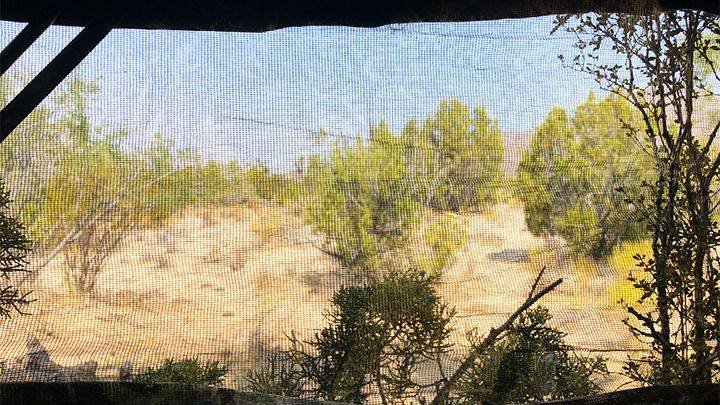
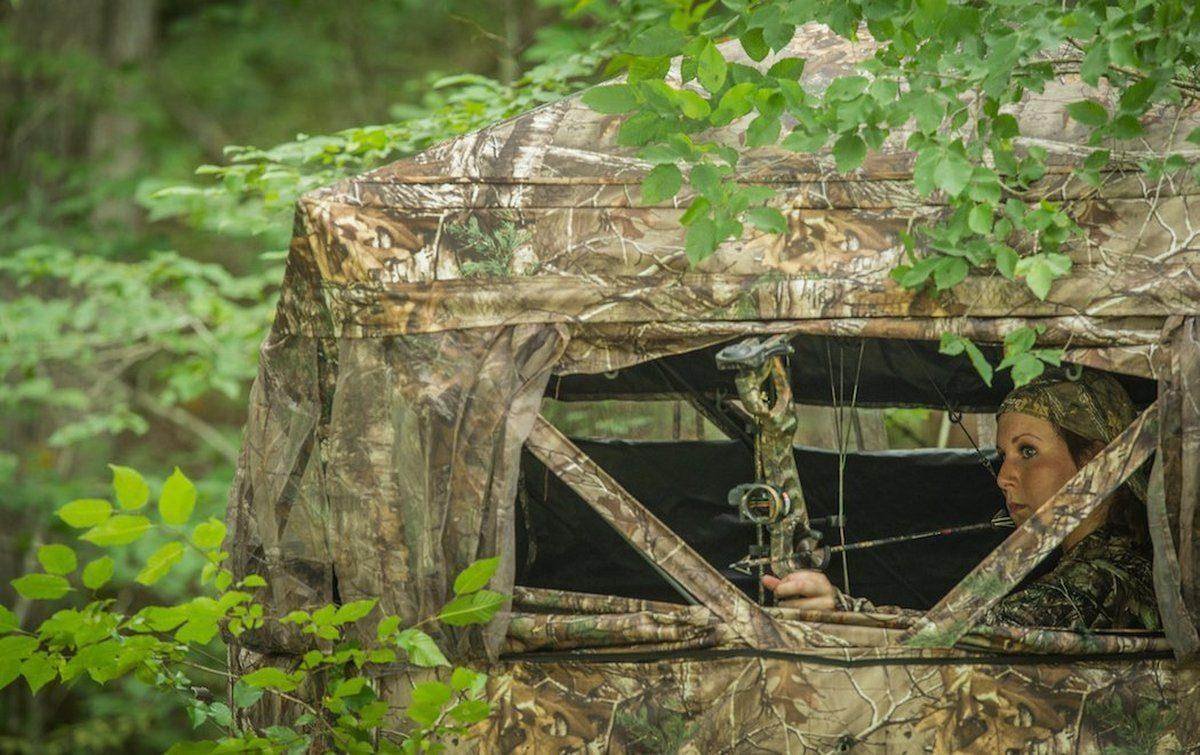
The interior view from a properly set-up ground blind: shooting window positioned low to keep the hunter shadowed.
Tip 4 — Dress Head-to-Toe in Black Inside the Blind
Camo is for the outdoors. Inside a dark ground blind, camo patterns provide no concealment benefit whatsoever — but light colors create exactly the visibility problem you’re trying to solve. Tan, brown, and grey camo stand out against the dark interior of a hub blind when light enters through shooting windows. Deer looking toward an open window from 20 yards can pick out motion and shape in light tones against a dark background.
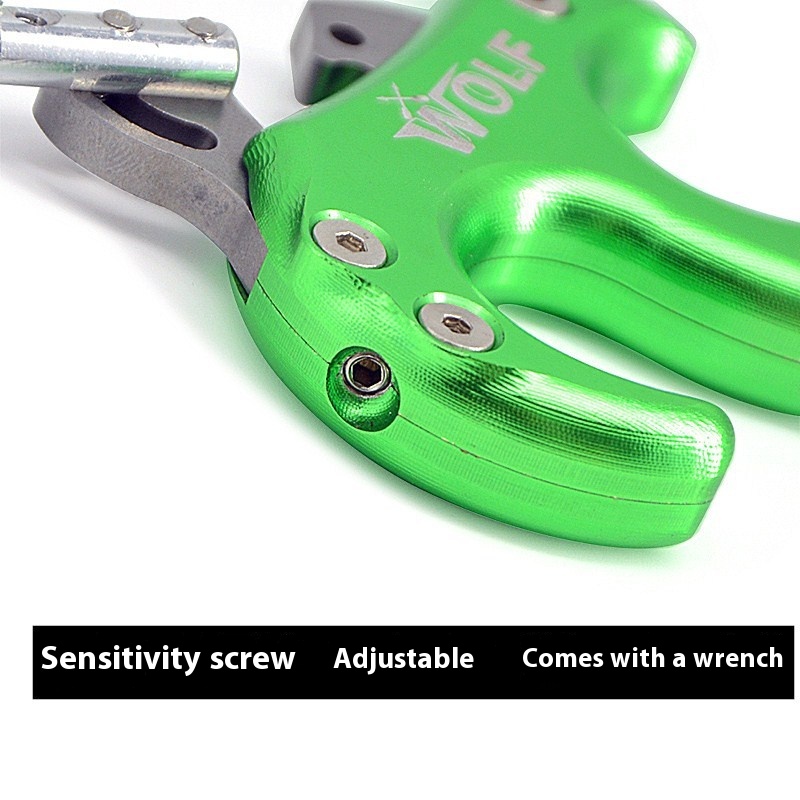
Black clothing — not navy, not dark camo, actual black — absorbs the ambient light inside the blind and makes you functionally invisible from a deer’s line of sight. This extends to your equipment. Chrome on a mechanical release or a shiny stabilizer catches light and creates a flash that has busted more ground blind sets than scent and noise combined. Wrap trigger mechanisms in hockey tape or replace with matte-finish versions. It costs nothing to kill the glint. It costs everything to ignore it.
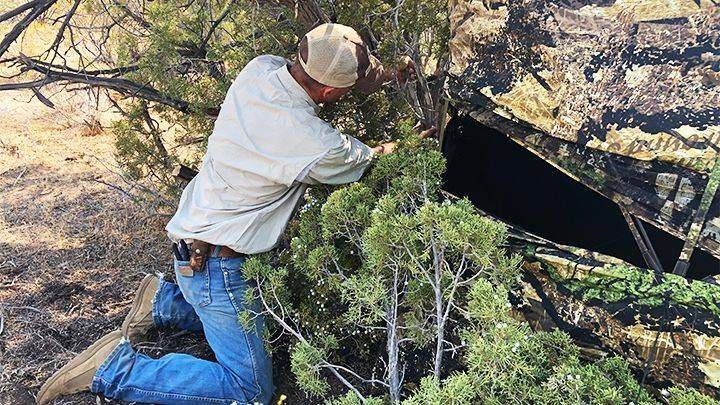
Attaching natural brush to the blind exterior on setup day starts the scent-integration process immediately.
Tip 5 — Control Scent Like Your Hunt Depends on It
Scent control is where ground blind bowhunting separates hunters who fill tags from hunters who wonder why deer vanish as soon as they set up. At ground level, your scent plume stays low, spreads wide, and reaches deer faster than it would from 20 feet up a tree. Published research from the University of Georgia’s Warnell School of Forestry found that white-tailed deer can detect human odor at concentrations as low as one part per trillion under favorable conditions. You can’t eliminate your scent — you can manage it aggressively enough that wind carries it away before deer reach shooting distance.
Three practices that actually move the needle: spray down completely before every entry (clothes, boots, hands, all equipment you touched); hunt crosswind or downwind of your expected deer movement direction; use a carbon-lined base layer or ozone generator inside the blind during long sits to cut residual odor from exhaled breath. The third one matters most on afternoon sits when deer work toward you into a thermals shift. Get wind direction right on a morning sit and you have a margin for error. On evenings, margin disappears.
Tip 6 — Practice Drawing in the Actual Blind Setup Before Season
This is the most commonly skipped preparation step, and it directly causes more ground blind misses than any other factor. Drawing a compound bow from a 16-inch-high folding chair through a cut window at a deer 25 yards away is nothing like drawing at a 3D target on an open range. The elbow catches the back wall. The fletching clips the window frame. The bubble level is at a strange angle because you’re leaning left to see the target through an off-center opening.
Practice in your exact hunting configuration: the chair height you’ll use, the window you cut, the shot angle to a target at 15–30 yards. Do this in pre-dawn light if you hunt morning sits. The 30 minutes you spend on this drill in your backyard is worth more than three seasons of hoping things work out when a deer materializes in November. If your arrow rest contacts the blind wall during the draw stroke, you need either a wider blind or a shorter stabilizer — and you need to find that out now, not when it matters.
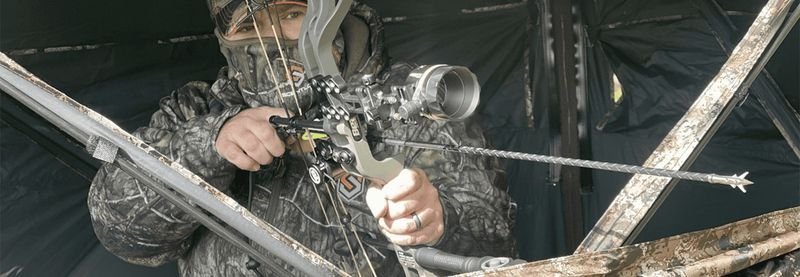
Practicing the actual draw stroke from a chair through a cut window is non-negotiable preparation.
Tip 7 — Use a Quality Mechanical Release and Drop-Away Arrow Rest
Two pieces of equipment solve two failure modes specific to ground blind shooting. First: a quality wrist-strap or back-tension release eliminates noise at the draw. Inside a confined blind where every mechanical sound transmits through the fabric, a smooth trigger with no click or mechanical rattle keeps deer settled through the draw. Caliper releases with worn pivot pins produce exactly the kind of faint sound that flares a deer before you complete the draw cycle at 20 yards.
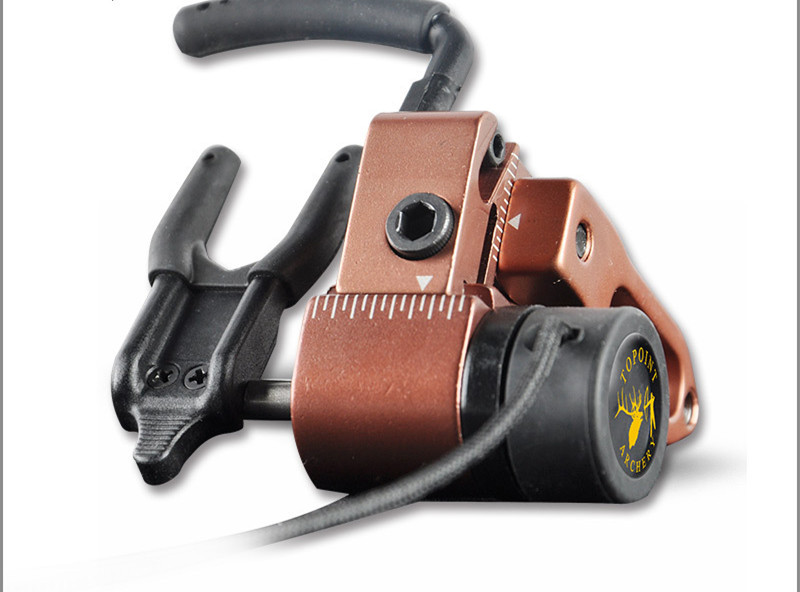
Second: a drop-away arrow rest eliminates the fletching contact problem specific to blind shooting. When you rotate your bow to fit through a window cut on an angle, a full-capture rest can grip your arrow against the housing — and as the bow comes to full draw, the fletching contacts the rest and deflects the shot. A drop-away clears completely the instant you execute, eliminating contact noise and flight deflection. That’s why it’s the standard rest choice for serious ground blind hunters.
Tip 8 — Know Your Shot Angles Before the Deer Arrives
The geometry of shot angles changes in a blind. A quartering-away presentation is the best shot from ground level for two reasons: the deer is moving away from you (minimizing the chance it detects your draw), and the angle through the chest cavity forgives a slightly off hit far better than any facing shot. You drive through the near lung, catch the far lung on exit, and the arrow exits high on the off shoulder. Quartering-away from a blind, with the deer unaware at 20 yards, is about as high-probability as bowhunting gets.
Broadside is workable but time-constrained — deer present it briefly as they move through. The shot to avoid inside a blind is facing-toward: the deer looking directly at you through the window with its chest presenting as a narrow, compressed target. At 15 yards this puts your broadhead into a six-inch kill zone while you’re simultaneously trying to stay invisible and execute a draw. It’s a low-percentage shot even under ideal conditions. See our complete deer shot placement guide for a full breakdown of entry points, angles, and expected blood trails from each position.
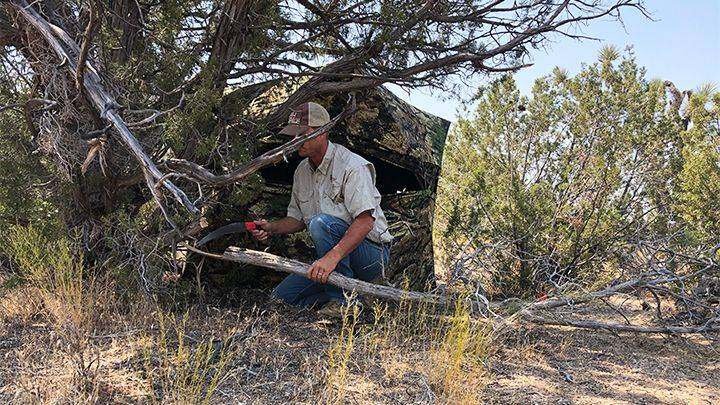
Clear shooting lanes from multiple window angles before season opens — don’t cut them the morning of your hunt.
Tip 9 — Position Your Chair for Shot Execution, Not Comfort
Chair height controls everything in a ground blind setup. Sit too high and your silhouette fills the shooting window. Sit too low and you can’t rotate your body cleanly to execute a shot without bracing your arm against the blind wall at full draw. The target position: seated with your eyes at the lower third of the shooting window frame, leaving headroom above while keeping the shooting lane visible without leaning.
For most adult hunters in a standard hub blind, 16–18 inches of seat height works. The second detail almost everyone ignores: what your stool sits on. Dry leaves under aluminum stool legs create a crackling sound that carries clearly through blind fabric at a frequency deer hear easily. A small square of rubber mat or a strip of artificial turf under the stool legs eliminates this entirely. It weighs 12 ounces, packs flat, and has saved more sits from spooked deer than any other $15 purchase in a ground blind kit.
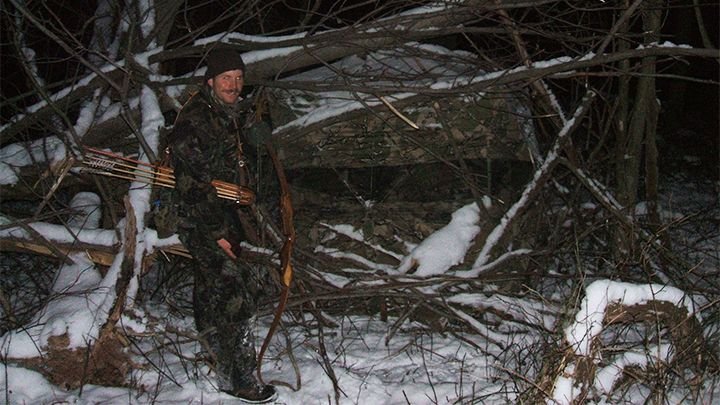
Late-season ground blind hunting becomes a mobility advantage — move your setup to where deer actually are in winter.
Ground Blind vs Tree Stand: The Right Tool for the Situation
Ground blinds and tree stands aren’t competing strategies — they’re purpose-built tools for different terrain and conditions. Tree stands win where elevated timber gives you wind advantage, where shooting lanes open in multiple directions from height, and where you’re hunting a stand site you’ve learned over multiple seasons. Ground blinds win at field edges and food plots, in flat terrain where suitable trees don’t exist, during bad weather where sitting 20 feet up is dangerous, and any time you need to reposition mid-season without leaving permanent sign.
The blind’s real edge over a fixed stand is redeployment speed. A hub blind you can collapse and carry in 15 minutes can be placed on a new food source on November 10th when deer patterns shift after firearms pressure opens. A permanent stand in the wrong location on November 10th is a missed season. For a complete breakdown of how to maximize either approach, see our tree stand setup guide.
Ground blind bowhunting rewards methodical preparation over reaction speed. The two weeks you wait after setup, the backyard draw practice, the black clothing, the crosswind position — none of it shows up in a single dramatic moment. All of it contributes to the shot when a mature buck is standing at 22 yards and you need a clean, quiet draw through a properly cut window. Get the preparation right, and the shot takes care of itself.
Sources
- National Deer Association — whitetail behavior research and youth hunting program data
- University of Georgia Warnell School of Forestry — white-tailed deer olfactory sensitivity research
- Bowhunter Magazine — Ground Blind Success: 28 Tips for Bowhunters
- Realtree — 8 Tips for Bowhunting Deer from a Ground Blind
