
Archery Blog
Compound Bow Stabilizer Setup: Weight, Length, and How to Tune It
Jul
A compound bow stabilizer looks deceptively simple at the shop — a carbon or aluminum rod with some weight at the end. But what it actually does involves torque physics, moment of inertia, and vibration control all working simultaneously. Understanding those mechanics changes how you choose one, how you configure it, and why two archers running the same bow at the same budget can end up with dramatically different setups.
Once you have a stabilizer (or are deciding which one to buy), the real work is figuring out how long, how heavy, whether to run a back bar, and how to dial in the angles. This guide covers all of that — from the physics of why stabilizers work, to practical tuning steps that apply whether you’re shooting 18-meter indoor targets or compound hunting from a treestand.
Why Your Bow Moves When You Don’t Want It To
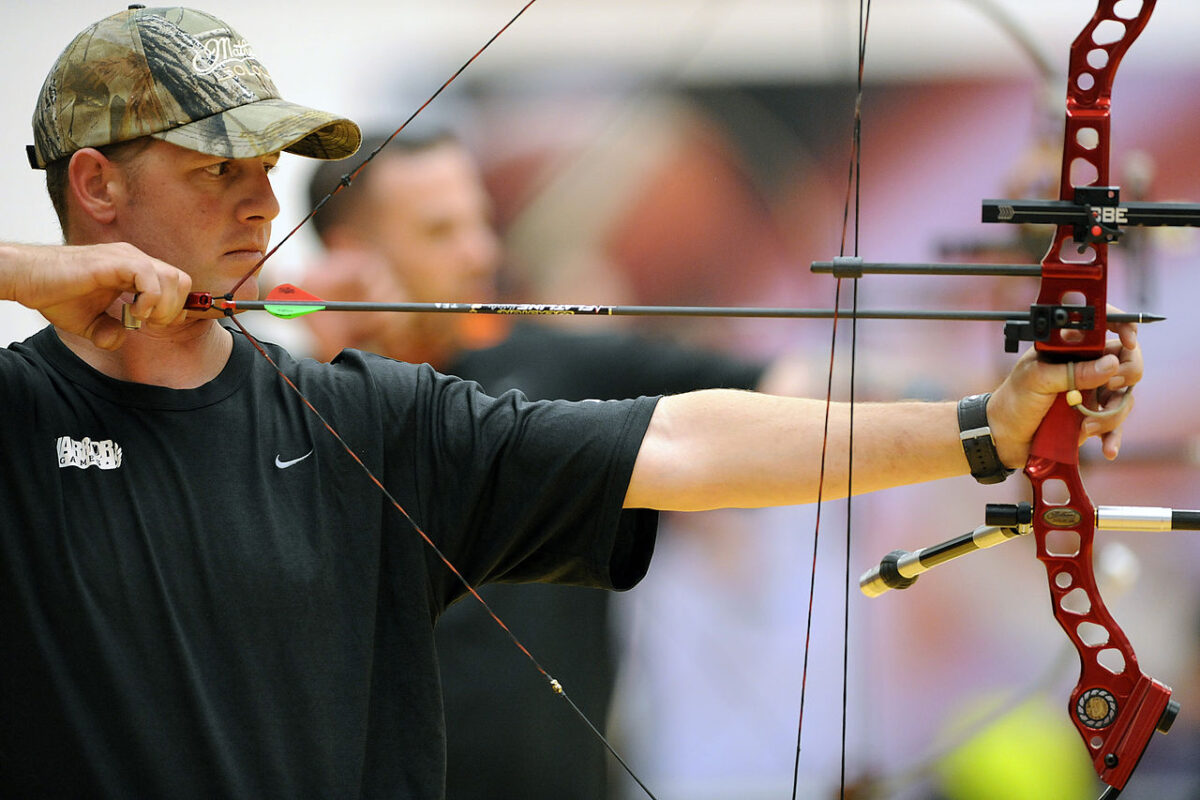
Your grip hand is the only physical connection between you and the bow at full draw. Every micro-movement — heartbeat, muscle twitch, slight breath — transfers through that grip directly to the riser. At the moment of release, as the string launches the arrow forward, the bow generates a reactive force that wants to tip the riser in multiple directions simultaneously. This combination of rotational torque and high-frequency vibration is what sends arrows wide before they even clear the rest.
Stabilizers resist these unwanted movements through two distinct mechanisms. First, by adding mass away from the riser, they increase the bow’s moment of inertia — its rotational resistance to angular acceleration. A heavier, longer-levered system is harder to rotate, which means the same micro-movement produces less angular deviation at the moment of the shot. This is exactly why competitive target archers run dramatically heavier stabilizer systems than hunters: they’re optimizing for the smallest possible movement window during the hold.
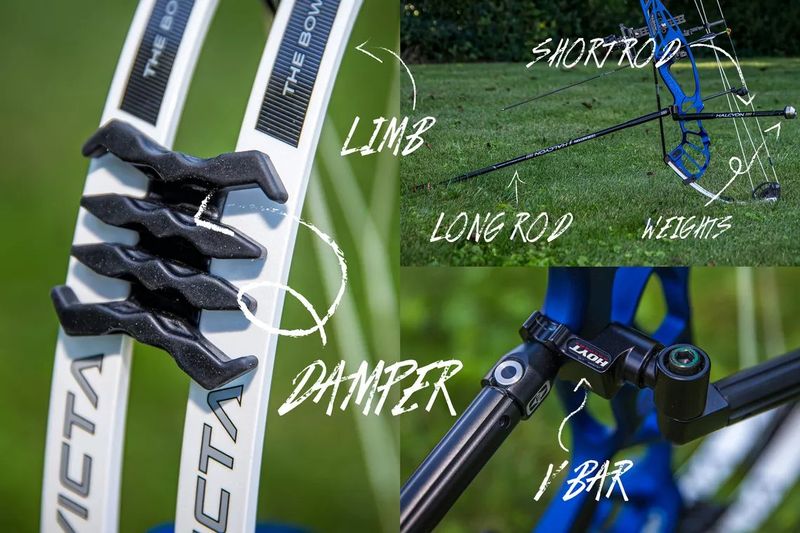
Second, the rod material and dampening components absorb high-frequency vibration traveling through the riser at release. That vibration isn’t just noise — it creates a brief window of instability that affects where your arrow exits the rest. Stiffer carbon rods dampen this vibration better than aluminum at comparable diameters, and rubber inserts at the riser mount or end cap handle what the rod doesn’t fully absorb.
It’s worth separating these two effects because they respond to different solutions. Moment of inertia problems require mass at a distance — weight far from the riser pivot point. Vibration problems require dampening material — rubber, polymer, or a compliant carbon construction. Most stabilizer setups address both at once, but when you’re diagnosing a specific issue, knowing which mechanism is at work points you toward the right fix.
Front Bar, Back Bar, and How the System Works Together
Most serious compound archers run a two-piece stabilizer system: a front bar extending forward from the riser and a back bar (or side bar) extending rearward and to the opposite side. Understanding why reveals a lot about how setup decisions actually get made.
The front bar’s primary job is adding forward mass. This shifts the bow’s center of gravity forward and downward, giving it a natural tendency to tip toward the target rather than drift laterally. That forward lean is intentional — it makes the bow riser-stable rather than grip-reactive, and small lateral movements during the hold don’t translate into left-right arrow deviation.
The back bar operates as a counterbalance. Without it, a heavy front bar would make the bow so front-heavy that holding it through a long session becomes genuinely fatiguing. The side bar pushes weight rearward and to the opposite side of the bow hand, correcting for the natural tilt that comes from holding a bow off one side of your body. In competitive target archery, you’ll often see archers running a V-bar — a forked mount with two independent rods, each angled separately to achieve balance in multiple planes at once.
🏑 Shop Compound Bow Front Stabilizers on Amazon →
When You Run Just a Front Bar
In bowhunting setups, a single front bar is common. Side bars add bulk that catches branches, and hunting scenarios involve shorter sessions with less need for extended balance refinement. A 6–8 inch front bar is the most popular hunting configuration. It won’t match the balance quality of a full competition system, but it meaningfully reduces post-shot bow jump and muffles the overall shot report — both valuable when hunting in close quarters where noise and sudden movement matter.
Choosing Length and Weight
The relationship between rod length and end weight is where most beginners get confused. Longer rods amplify the effect of any given weight because moment of inertia scales with the square of the distance from the pivot point. Adding a few inches of rod length produces a larger stability gain than the physical measurement suggests, which is why competitive archers chase extra inches on their front bars rather than simply piling on more weight discs.
Front Bar Length
For indoor target archery at 18 meters, competitive archers typically run 26–30 inch front bars. Outdoor field courses and 3D archery fall in the middle, usually 20–24 inches. Hunters stay in the 6–10 inch range for maneuverability. If you’re just starting out, a 27–28 inch bar is a solid baseline that covers practice sessions and club target days without going to competition extremes. You can shorten a bar later — you can’t add length — so err longer to start and cut back only if you have a clear reason.
Weight Selection
There’s no universal correct answer for total stabilizer weight. The right amount is whatever lets you hold the bow on target through your full shot cycle without excessive muscle fatigue. A bow that’s too lightly stabilized drifts constantly and is hard to aim consistently. A bow that’s overweighted strains the bow arm during the hold, and aim deteriorates over a long session. Most compound archers running a front-and-back system land between 8–14 ounces total across both bars combined, though top-level target competitors often run far more.
🏑 Shop Archery Stabilizer Weight Kits on Amazon →
Target Archery vs. Bowhunting: Two Different Goals
The gap between a competition target stabilizer setup and a hunting configuration isn’t just about length — it reflects fundamentally different priorities for what the bow needs to do.
Target Archery Configuration
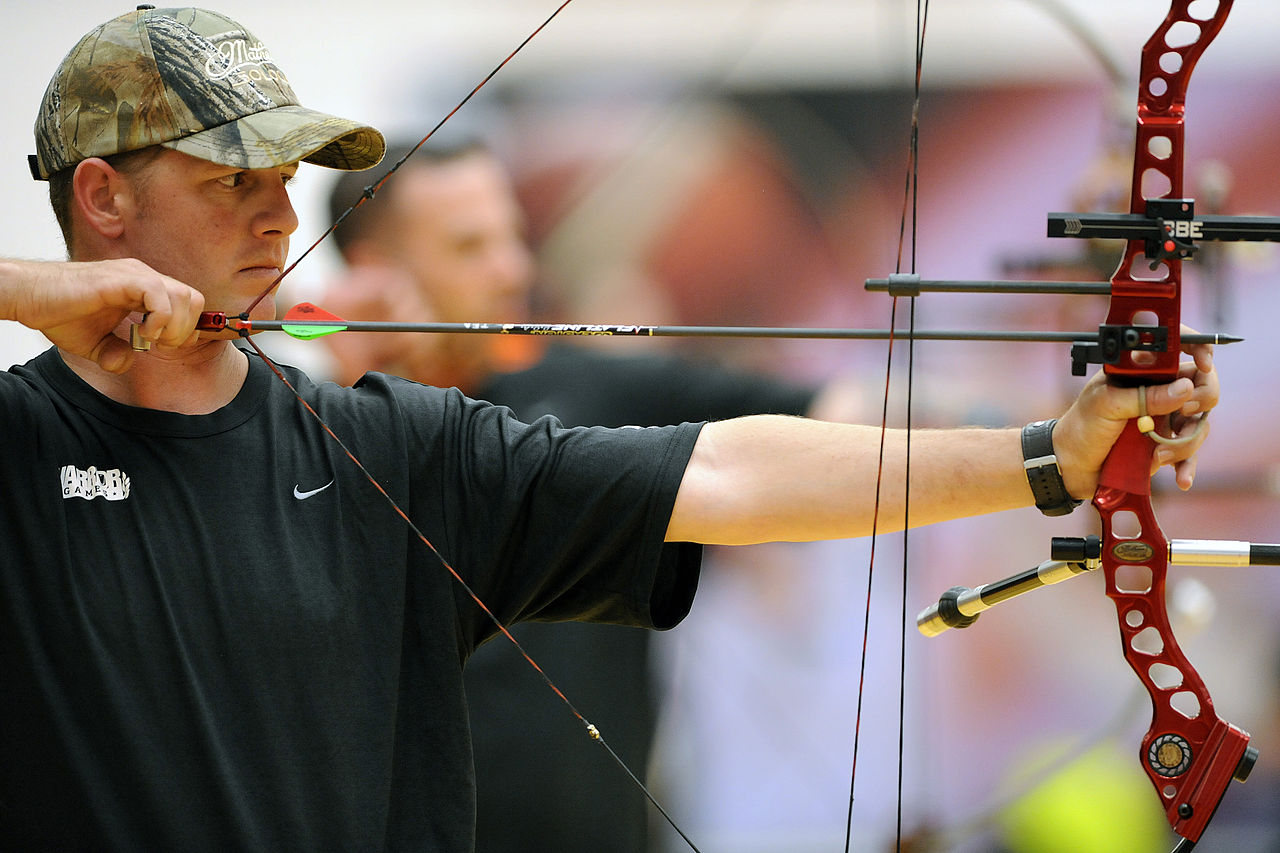
Competitive target archers prioritize repeatability above everything. A long front bar (28–30+ inches) with substantial end weight, paired with a V-bar system at the rear, keeps the bow nearly stationary between shots. The added weight that would be a liability in the field is an asset when shooting from a static platform at a marked distance over a full round. Top-level compound target archers often run well over 30 ounces of total stabilizer weight. Their setups look almost industrial compared to what a deer hunter carries into the woods.
Bowhunting Configuration
A hunting configuration inverts those priorities. Minimize bulk while retaining vibration dampening and noise reduction. Shorter bars, lighter weights, and rubber-heavy dampening keep the bow manageable in a treestand or ground blind. Some hunters skip the side bar entirely and rely on a single short front bar, accepting reduced balance quality in exchange for a package that fits through brush without hanging up on branches during a slow draw. On a hunting rig, rubber dampeners at the riser mount often do more noise-reduction work than the bar length itself.
🏑 Shop Compound Bow Side Bar Stabilizers on Amazon →
Tuning What You Have Before Buying More
Once bars and weights are mounted, refinement starts with observation. Begin by shooting without the side bar and watching where the bow tips immediately after the shot. Does it fall straight forward, to the left, or to the right? The direction of that post-shot movement tells you where to apply counterweight. Mount the side bar and adjust its angle until the bow’s fall is straight toward the target — directly forward or slightly downward, not sideways in either direction.
Weight positioning matters as much as total weight. Most stabilizer bars use removable weight discs in small increments. Moving weight further out on the rod amplifies the stabilizing effect; moving it inward reduces the effect without changing your mounted total. If your bow feels stable side-to-side but too front-heavy, slide some weight inward on the front bar first. Small adjustments — half an ounce, a few degrees of side bar angle — produce noticeable differences at full draw.
One mistake worth avoiding: trying to fix a grip torque problem with stabilizer weight. If you’re twisting the bow with your grip hand at release, no amount of stabilizer mass corrects it — the torque is introduced at the riser and travels through the whole system. Before adding equipment, film your shot from above or have a coach observe your release hand. Stabilizers control movement in a well-executed shot; they don’t override fundamental grip errors.
Dampeners, Rod Material, and Where to Spend
Carbon rods transmit less vibration than aluminum at the same diameter, which is why carbon is the default for any serious setup. Rubber bushings at the riser mount and end cap handle remaining high-frequency vibration. If your bow has notable hand shock or excessive post-shot noise, adding a rubber dampener module to your current rod is a cheap first step before replacing anything more expensive.
Budget carbon stabilizers perform surprisingly well relative to their price. The diminishing returns on stabilizer spending kick in faster than with most other archery gear purchases. A solid mid-tier carbon bar outperforms a premium aluminum one at the same length and weight configuration. The gap between mid-tier and top-tier carbon in matching specs is modest — spend your upgrade budget first on getting lengths and weights right, then on rod quality only if you’re still chasing marginal gains after that.
Sources
