
Archery Blog
Europe’s Youth Stars Shine in Rome | Archery Weekly Jul 20–26
Jul
Three hundred and seventy-seven archers descended on Rome this past week for the biggest international youth competition since the pandemic recovery era. That alone made the period from July 20 to 26 one of the more loaded weeks in archery’s 2026 calendar. But the competitions, controversies, and gear drops kept stacking up well beyond Rome. Here is what mattered and why.
Europe’s Biggest Youth Stage Just Wrapped in Rome
The 2026 European Youth Archery Championships finished its final individual matches at Stadio Nando Martellini on July 25, closing out six days of competition that drew archers from 40 nations. Qualification rounds started July 21 at the Roma Capitol Camping Village before shifting to the stadium for team finals July 24 and individual medal matches July 25.
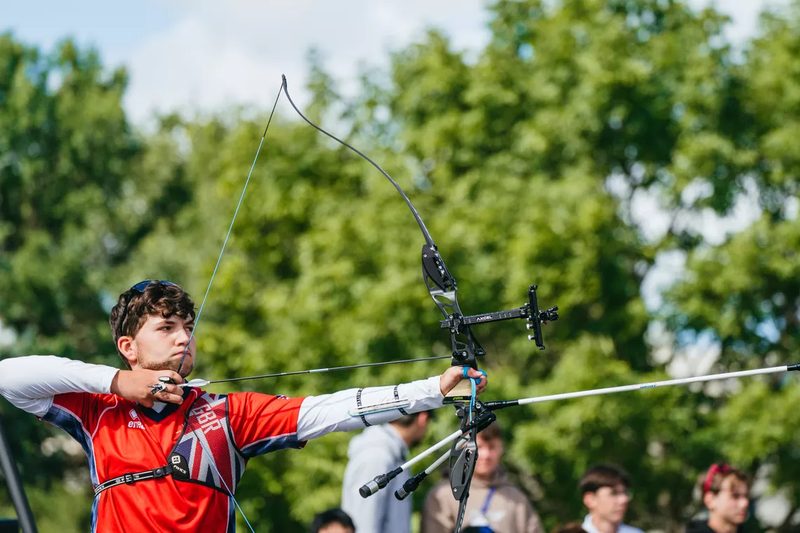
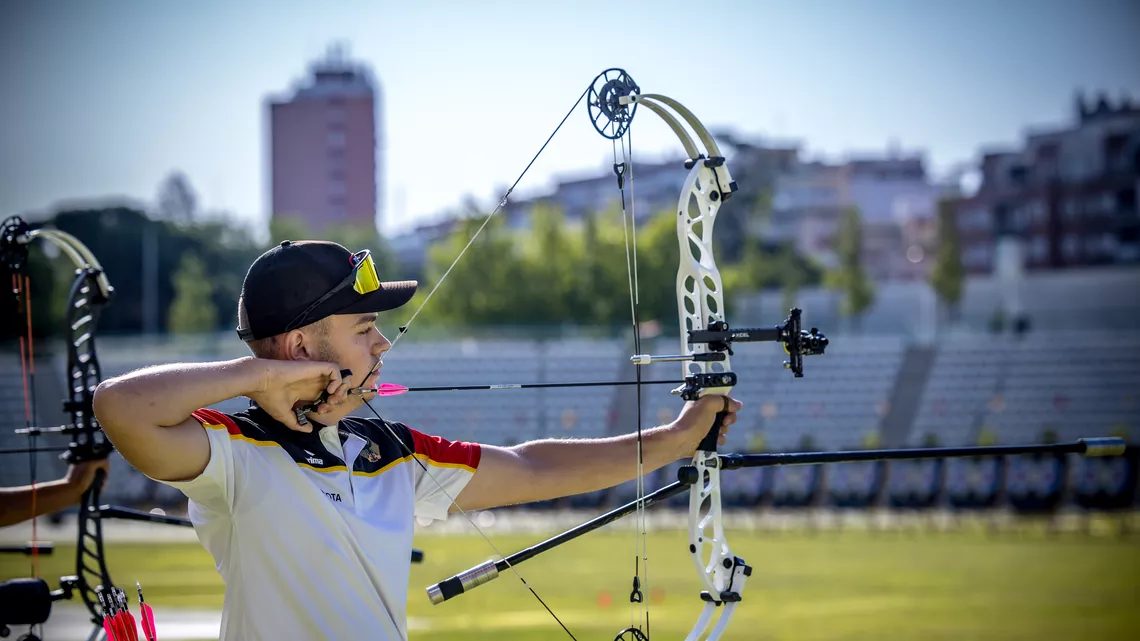
Two archers generated the most pre-competition attention. Simon Moritz of Germany arrived as the defending Under-18 World Champion and had just collected two bronze medals at Madrid 2026 in July, proof he was shooting at the highest level heading into Rome. Alex Sillitoe Price of Great Britain carried different momentum: the recurve Under-18 man won individual gold at the Winnipeg 2025 World Youth Championships, making him one of only a handful of British archers to hold a major youth world title in the discipline.
The compound Under-21 and recurve Under-18 men’s categories drew the sharpest watching. European youth championships have consistently produced athletes who make senior World Cup finals within eighteen months of competing at this level, so the Rome results carry weight beyond the medals themselves. Full results, scores, and bracket replays are available at worldarchery.sport.
If Rome follows recent form, Germany, France, and Turkey will feature heavily across multiple divisions, while Great Britain and Italy—competing on home ground with real crowd advantage at the Stadio—typically push into the later rounds in recurve. For those tracking the 2028 Olympic pipeline, this is the list worth paying attention to.
Cara Kelly Wins the 2026 IBO Women’s Triple Crown
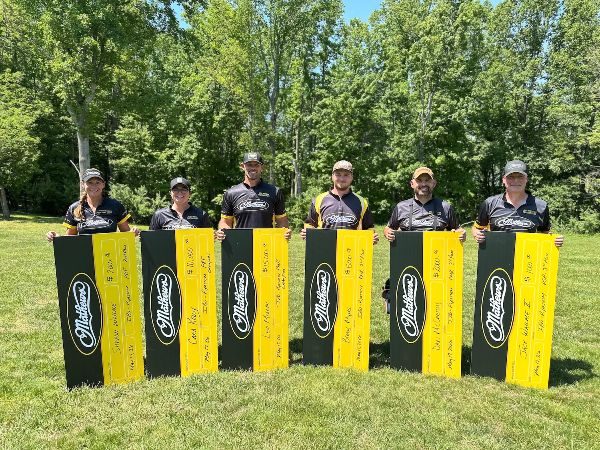
Three legs. Three states. One dominant season. Cara Kelly of Team Mathews was crowned the 2026 IBO Women’s Triple Crown Champion after the final leg in Nelsonville, Ohio, completing a series that ran through Pipestem, West Virginia, Franklin, Pennsylvania, and Hocking Parkway in Ohio.
Kelly opened the series with a first-place finish at Pipestem, slipped to third at Franklin—where Sharon Wallace and Emily McCarthy finished ahead of her—and then held her cumulative points lead through the final event even as Team Shooters swept the Nelsonville women’s podium. The championship is decided across all three legs combined, not by a single event, which is exactly the kind of consistency Kelly demonstrated from April through July.
Mathews Pro Staff Manager Derek Phillips noted the achievement directly: “Winning the Women’s Triple Crown Championship with Cara Kelly and sweeping the podium in the final Women’s event is rewarding to see that dedication pay off.” Team Mathews also took three pro class wins at the Metropolis ASA leg earlier this season, making 2026 arguably the organisation’s strongest 3D competition year to date.
For recreational compound shooters watching the IBO circuit, the takeaway is less about the trophy and more about shot discipline under repetition. Kelly’s consistency across three separate venues over multiple months is what 3D archery actually rewards, and it mirrors the kind of practice structure that separates club shooters who plateau from those who keep improving.
Alaska’s Tech Battle Is Drawing Lines in the Bowhunting Community

The Pope and Young Club published a formal call to action against two proposals currently before the Alaska Board of Game that would expand permitted equipment in archery-only hunting seasons. Proposal 2 would allow verifiers, clarifiers, and non-electronic scopes. Proposal 3 goes further, authorising electronic scopes, electronic sights that do not project light externally, and electronic range-finding bow sights.
Justin Spring, Pope and Young’s Executive Director, put the position plainly: “As more technology is introduced and allowed during archery seasons, success rates increase, which ultimately decreases hunting opportunities.” The Alaskan Bowhunters Association and Professional Bowhunters Society are on the other side of this, supporting both proposals.
This debate is not new, but Alaska is a meaningful test case. Archery seasons in that state already operate under some of the most closely managed wildlife objectives in North America. If electronic range-finding bow sights clear the regulatory bar there, expect the argument to reach state wildlife boards across the Lower 48 within a few years.
The honest answer is that this debate will not resolve neatly. Technology improves shot placement, which improves ethical kill rates. But if success rates climb too fast, pressure on archery-only season dates and zone access will follow. Those are legitimate trade-offs that reasonable bowhunters can disagree on. What matters is that hunters engage with their state boards instead of assuming these decisions get made somewhere else. If you hunt with a bow, this one is worth watching closely.
The 2026 Hunting Season Bows: Speed, Feel, and Real-World Trade-offs
The flagship compound releases for 2026 are settled and shooting now. If you are buying before October, these are the four models that have separated themselves from the field.
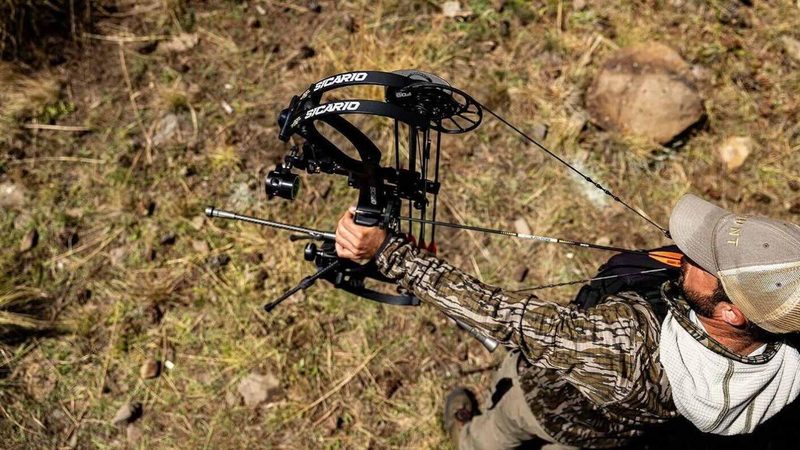
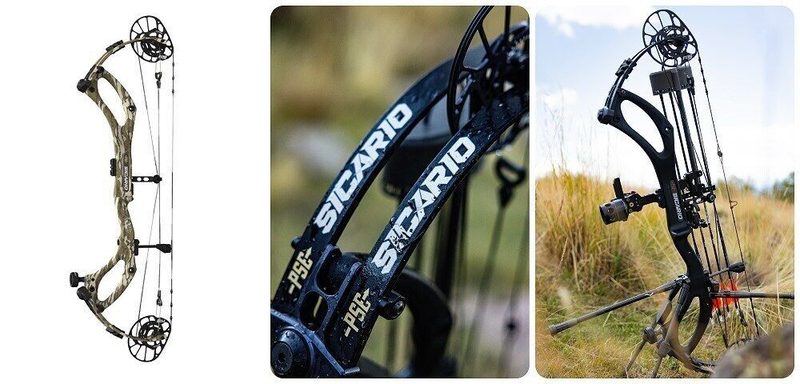
PSE Sicario Carbon FDS — At 357 fps IBO, it is the fastest hunting compound released for 2026. The 33-inch axle-to-axle frame keeps it manageable in a ground blind or saddle, and 3.9 pounds is light for a carbon-riser bow in this speed class. The 5.25-inch brace height is short, meaning draw technique matters more than it does on a forgiving setup. If you can execute a clean shot under pressure, the Sicario delivers flat trajectories that genuinely tighten pin gaps at distance. If you rush your release, the brace height will punish that more than the Bowtech or Mathews would.
The video below from Podium Archer runs every major 2026 flagship head-to-head, which gives a useful independent comparison of how the Sicario sits against the competition.
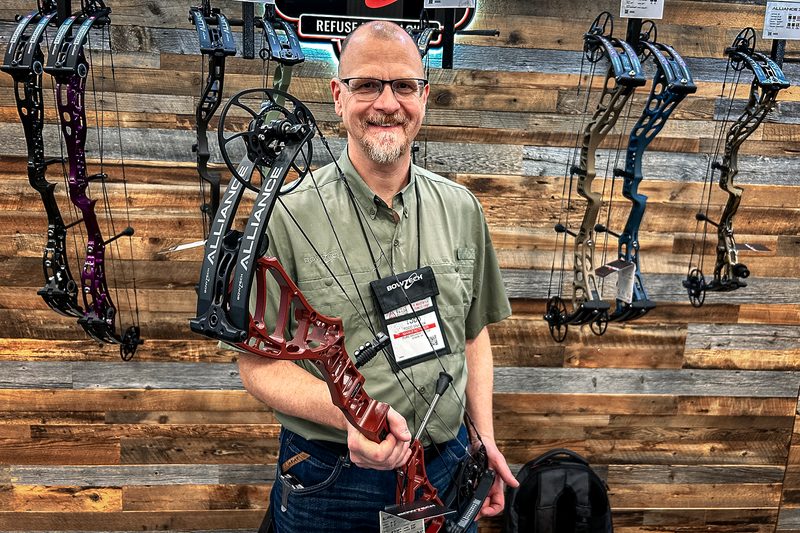
Bowtech Alliance — The ATA Best New Bow award for 2026 landed on the Alliance, and the judges were not wrong. The DeadLock cam system with laser-etched reference marks makes tuning repeatable in a way that most hunting bows are not. At 338 fps and a 30.5-inch axle-to-axle, it gives up a little speed to the Sicario but handles better in tight quarters and is significantly more forgiving. MSRP is $1,499.99 in seven finish options.
Mathews ARC 30 — 348 fps with the new SWX-2 cam and perimeter weight technology that Mathews says reduces recoil. The 6-inch brace height makes it the most forgiving of the three speed options here. For hunters who shoot a wide range of distances and want a bow that punishes mistakes less aggressively, the ARC 30 is the rational pick. Hoyt Carbon RX-10 rounds out the class at 342 fps with carbon construction and the XTS tuning system, which resolves cam alignment without a bow press — a meaningful feature for hunters who tune and re-tune between seasons.
None of these four bows is a wrong choice at the current price points. The real question is what your weakest shot looks like, because that determines whether a 5.25-inch brace height is an asset or a liability for your setup.
Tethrd Phantom XP: The Best Phantom Yet Drops This Month
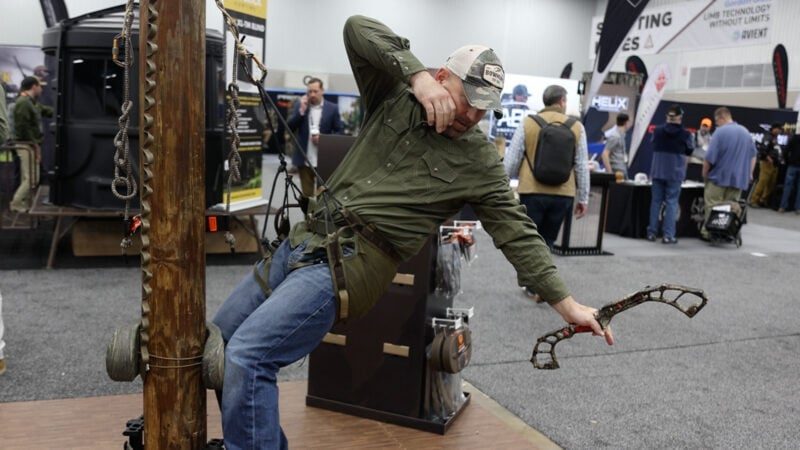
Tethrd built the original Phantom in 2019 and it became the best-selling hunting saddle of all time. The 2026 Phantom XP arriving late July is a deliberate remix of their three best-selling designs: it takes the expandable panel from the Ultralock, the Lay-flat loops and Quad Lock bridge system from the Carnivore 2P, and fits all of it into the low-profile build of the classic Phantom.
The panel expansion adds 3.5 inches of material, held in place by a patent-pending Lace Lock Tensioner — a friction-based bungee that adjusts without tools. Regular version weighs 29 ounces. XL is 32 ounces. Retail price is $274.
The saddle hunting market has grown fast enough that Tethrd faces more real competition now than they did when the original Phantom launched. The Phantom XP reads as a direct response: consolidating features that previously required buying across two product lines into a single saddle. For hunters already in the Tethrd ecosystem, the appeal is obvious. For those shopping without brand loyalty, the combination of the Ultralock’s expandability with the Carnivore’s bridge system in the Phantom’s weight class is a strong argument to look at this one first. Pair it with an arm guard and a reliable release and you have a complete saddle hunting setup ready for October.
Looking Ahead: July 30–August 3
The ASA Pro/Am circuit heads to Cullman, Alabama from July 30 through August 1 for the Bernard Abbey Classic, the sixth stop on the 2026 3D season. After Team Mathews’ Metropolis performance, expect both Mathews and Bowtech teams to be pushing hard in the Men’s Known and Open Pro divisions. Results will surface on asaarchery.com through the weekend.
Further out, the 2026 Asian Games archery competition runs September 26–October 3 in Aichi, Japan. India has confirmed Jyothi Surekha Vennam and Dhiraj Bommadevara in a 12-member compound and recurve squad that should challenge Korea and Chinese Taipei across multiple events. The World Cup Final lands in Saltillo, Mexico in September before the domestic bowhunting community turns its attention almost entirely to opener dates.
The 2026 hunting season is close enough now that bow decisions need to be made. Whether you are running a new setup or tuning last year’s rig, getting consistent reps in at distance before late September is the only thing that matters.
Sources
- Rome 2026 European Youth Championships — World Archery official competition page
- 2026 European Youth Championships Open in Rome — World Archery Europe
- Team Mathews Crowns 2026 Women’s Triple Crown Champion — The Outdoor Wire
- Preserve the Primitive Hunt: The Threat to Bowhunting — Pope and Young Club
- 2026 PSE Sicario Carbon Bow Review — Archery Business
- Bowtech Alliance + Alliance 33: New 2026 Flagship Hunting Bows — Hook & Barrel
- New Saddles & Platforms for 2026 — Bowhunting.com
