
Archery Blog
Archery Arm Guard Guide: 5 Types and How to Pick the Right One
Jul
String slap is the most common injury new archers report, and it’s almost entirely preventable with a $20 piece of nylon or leather strapped to your forearm. The bruising looks dramatic — a red welt along the inner arm that can darken into a proper bruise and ache for days — but the fix is straightforward once you understand what’s actually happening at the moment of release.
Why the Bowstring Hits Your Arm
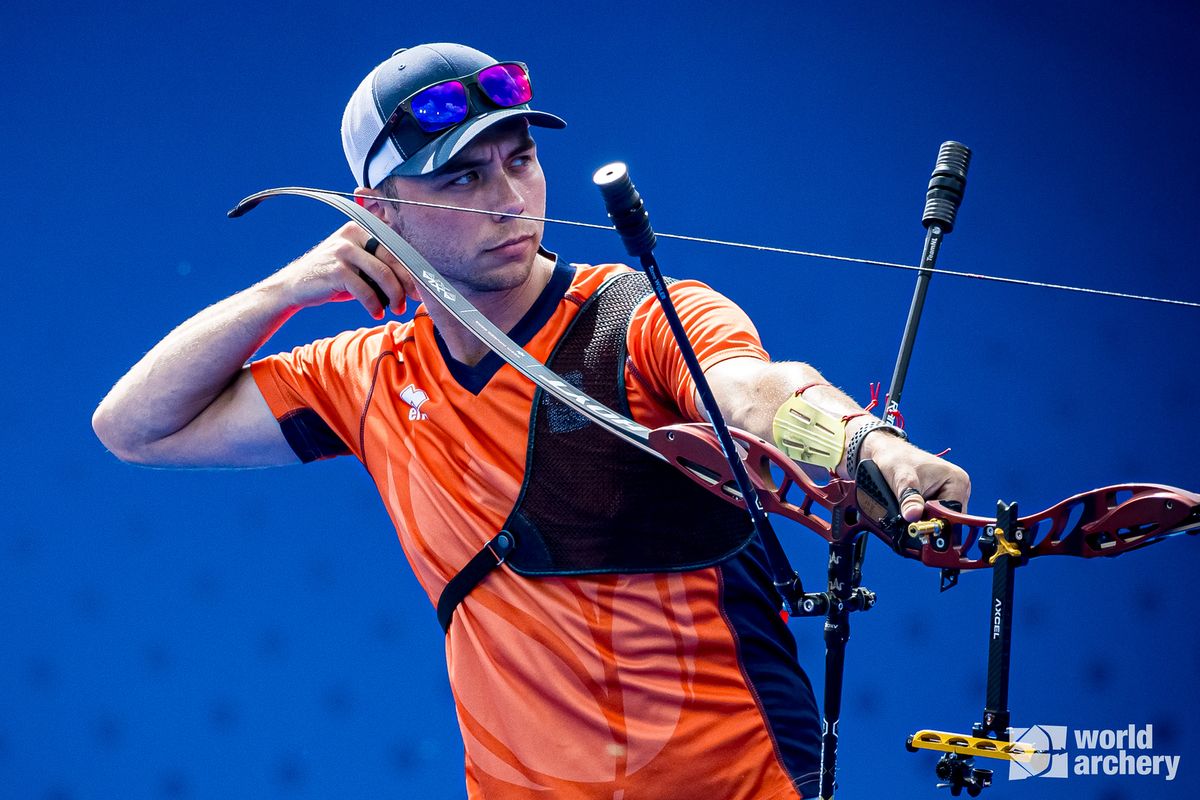
At full draw, the bowstring runs in a straight path from nocking point to your anchor. The moment you release, the string snaps forward along that path — and if your bow arm’s forearm is rotated even slightly inward, it sits directly in the string’s way. The string clips the inner forearm on its return, producing the characteristic sting and welt.
A few specific factors make it worse: an elbow that rotates inward instead of down and outward, a draw length that’s too long pushing the bow arm back into the string plane, or a bent elbow from gripping the riser too tightly. Loose clothing makes it worse still — fabric catches the string mid-flight and deflects the shot before the broadhead even clears the riser.
The arm guard addresses both issues. The rigid or semi-rigid panel blocks string contact, and its profile keeps sleeve fabric flat against the arm so nothing can interfere with the shot.
5 Types of Archery Arm Guards
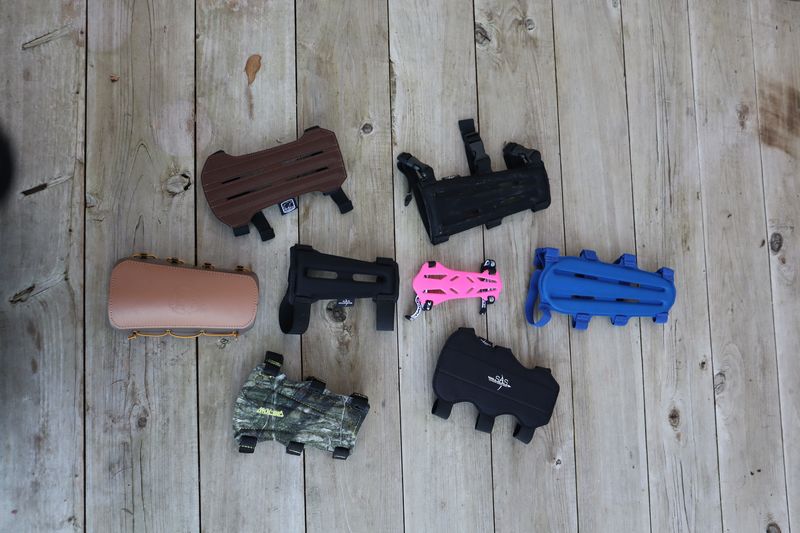
Walk into any archery shop and you’ll see arm guards in five distinct styles. They differ in material, coverage length, and weight — and the right one depends on how you shoot.
Leather bracers are the oldest design and still popular with traditional archers. A well-made leather guard molds to your arm over time, offers excellent protection, and has a lifespan measured in decades if you condition it. The trade-off is weight and heat retention — on a warm summer day at an outdoor range, a leather bracer on your forearm can get uncomfortable after a few dozen ends.
Ballistic nylon and CORDURA guards are the workhorse of the category. At 7–7.5 inches long with two or three velcro straps, they cover the strike zone completely, breathe better than leather, and wash easily. This is what most recreational and competitive recurve archers reach for. SAS and Bear Archery both make reliable nylon models in the $15–25 range.
EVA foam and molded plastic guards — typified by brands like Legend’s XT and Beiter’s polycarbonate option — offer a lightweight, close-fit alternative. Thermally molded EVA follows the arm’s contour, and polycarbonate guards can be almost paper-thin while still deflecting the string reliably. These are popular with competitive recurve archers who prioritize low profile over maximum coverage.
Short wrist-style guards run only 3–4 inches and sit just above the wrist. They’re aimed at compound shooters who experience occasional string contact in that narrow zone. If you shoot compound with good form and a longer axle-to-axle setup, you may find this minimal coverage all you need.
Full-arm bracers run 9–10 inches from near the wrist to just below the elbow. Traditional longbow and barebow recurve archers favor these because the string path on a longer bow can contact higher on the arm. If you shoot a 68-inch or 70-inch traditional recurve without a sight, a full bracer makes sense.
Recurve vs Compound: Who Actually Needs an Arm Guard?
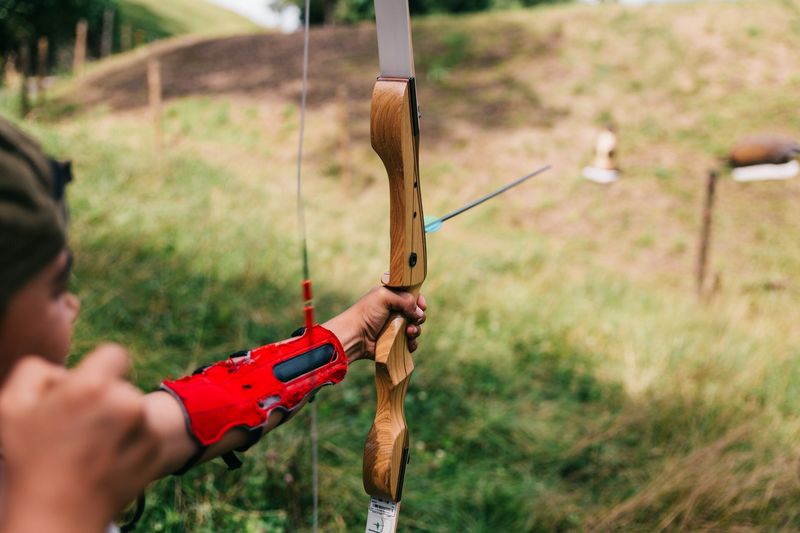
Ask this question at any club and you’ll get different answers depending on who you’re talking to. Here’s the honest breakdown.
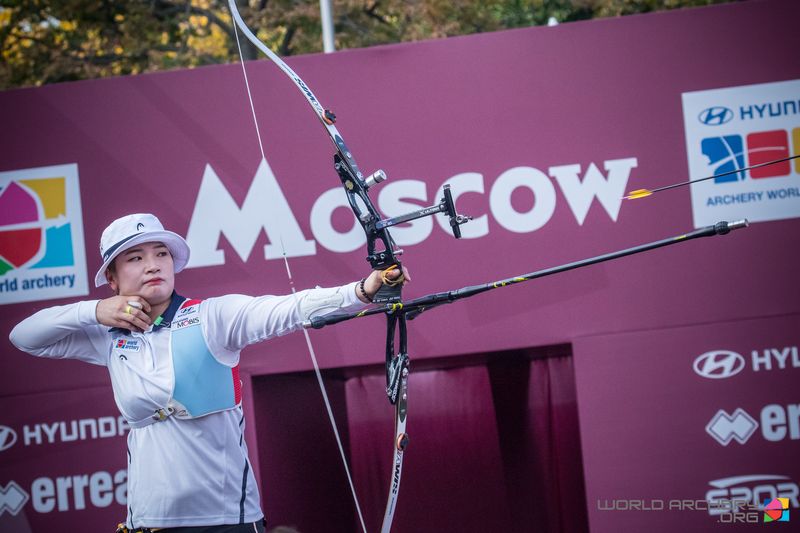
Recurve archers — almost universally, yes. The string on a recurve travels close to the bow arm’s path, and even experienced recurve shooters with excellent form wear bracers because the margin for error is small. You’ll see every athlete at the World Archery World Cup and Olympics with a guard strapped on. It’s not a beginner’s crutch; it’s standard equipment for the discipline.
Compound archers have more latitude. A compound’s cam system rolls the string back after the shot, and on many setups the string path stays well away from the bow arm, especially if the axle-to-axle length is 32 inches or longer. Compound hunters and target archers with consistent form and a relaxed bow grip often shoot without any arm protection at all. That said, beginners on compound still get slapped — usually because they’re gripping the riser too hard, which rolls the elbow inward. A short wrist guard while learning costs you nothing and saves you the welt.
Traditional archers on longbow or barebow recurve: wear the full bracer, no question. The longer limb tips and string path on a 64-inch longbow make contact with the inner arm a near-certainty on anything but a perfectly consistent form.
Sizing Your Archery Arm Guard
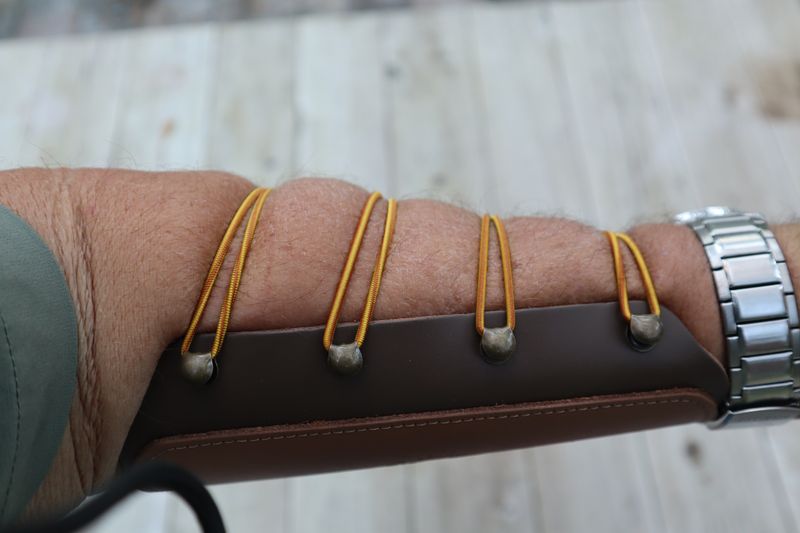
Most manufacturers size arm guards by forearm circumference and guard length. To measure, flex your forearm slightly and wrap a soft tape measure around the widest part — typically 2 to 3 inches below the elbow. Match that number to the brand’s size chart.
A few practical notes on fit: the guard should sit on the inner forearm, not the outer. It runs from 1 inch above the wrist to 2 inches below the elbow, covering the entire zone where string contact can occur. If the guard slides during your draw, it’s either too large or the straps aren’t snug enough — a loose guard is nearly useless and can snag on the string rather than deflecting it.
For youth archers, a 5.75-inch EVA foam guard at a size small is usually the right starting point. Forearms grow fast, so check the fit every few months.
How to Put On an Archery Arm Guard
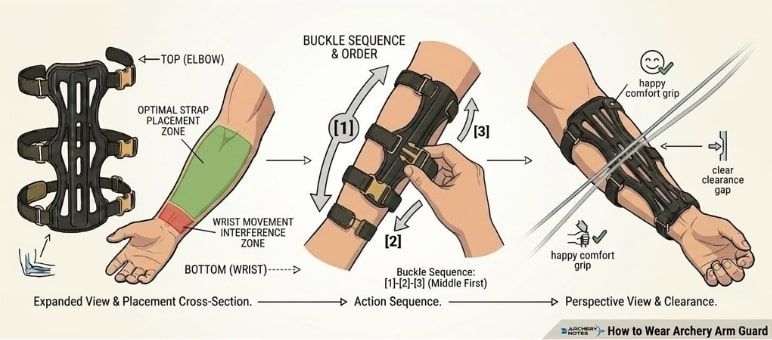
The order you fasten the straps matters more than most archers realize. A guard that’s attached in the wrong sequence will gap or twist, leaving part of the strike zone exposed.
Position the guard on the inner surface of your bow arm — left arm for right-handed archers, right arm for left-handed — with the wider end toward the elbow and the narrower end just above the wrist. Then fasten the middle strap first, securing the panel flat against the skin before you pull anything tight. Next, fasten the wrist strap, pulling snug but leaving room for two fingers between guard and arm. Finally fasten the elbow strap. This sequence prevents the guard from bunching in the middle, which is the most common fitting error.
Execute five or six slow, deliberate practice draws after you’ve put it on. Any shifting, creeping, or bunching means a strap needs adjusting before you start shooting for score. The guard should feel secure but not cut off circulation — if your fingers tingle after a few minutes, loosen the wrist strap one notch.
A quick note on which arm: the guard goes on your bow arm, not your drawing arm. This confuses new archers more often than you’d expect.
When the Guard Isn’t Enough — or Isn’t the Problem
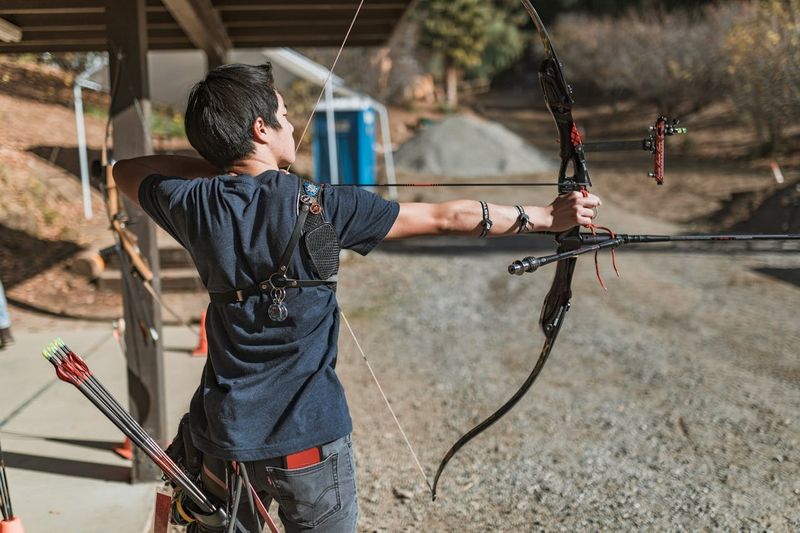
An arm guard is a safety net, not a substitute for form. If you’re hitting the guard on every single shot — not just occasionally — something structural is wrong with how you’re standing or holding the bow.
The most common cause is a clenched grip. Squeezing the riser rotates the elbow inward and drops it directly into the string path. The fix is to let the riser rest against the thumb pad of your hand with the remaining fingers relaxed — a grip that feels uncomfortably loose at first but solves string contact in most cases. Full shot-cycle form guidance is covered here if you want to work through the whole sequence.
Draw length that’s too long also causes consistent contact. When your draw is set long, the bow arm is pushed back into the string plane at full draw. If you’ve checked your elbow rotation and grip and still get consistent hits, have your draw weight and length verified by a qualified pro shop technician.
The arm guard can also mask a string deflection problem. If loose clothing is catching the string and throwing shots left or right, you might think it’s a form issue when it’s actually a sleeve problem. Roll your sleeves up or wear a close-fitting top on the range — a properly fitted arm guard keeps everything flat once the sleeve is clear.
For beginners just setting up a home range, pairing a good arm guard with a backstop net makes the learning environment much safer — fewer missed arrows bouncing back means you focus on form instead of chasing equipment.
Picking the Right Guard for Where You Are in the Sport
If you’re just starting out, a $15–20 ballistic nylon guard with two or three velcro straps is the right call. Spend the extra money on arrows and range time instead. As your form solidifies and you understand where your arm sits during the shot, you can decide whether to upgrade to a molded EVA guard for a lower profile, or stick with the nylon one that’s been working fine.
Experienced recurve archers often settle on a specific brand after trying two or three. Beiter and Legend are the most commonly cited in competitive circles — not because they’re flashier, but because they consistently stay in place over hundreds of ends per session. For traditional archery, a hand-stitched leather bracer from a small maker lasts long enough to become a piece of kit you pass along eventually.
Whatever you choose, the guard is one of the cheaper, more straightforward pieces of equipment in the sport. Getting the fit right takes five minutes. After that, you stop thinking about it entirely — which is exactly how it’s supposed to work. If you’re still thinking about the guard mid-shot, it’s either loose or in the wrong place. Fix the fit, and then get back to avoiding the other beginner mistakes that actually cost you points.
Sources
- World Archery — Recurve Equipment Guide — Official equipment specifications and accessory standards for recurve archery competition
- 60X Custom Strings — How to Prevent Bow String Slap — Explanation of string slap causes, arm guard use, and form corrections
- Legend Archery — Archery Arm Guard: Types, Fit & How It Works — Material comparisons and sizing guidance for modern arm guards
- Ascham Oaks Archery — Top 5 Best Archery Arm Guards — Independent review of arm guard options across material categories
