
Archery Blog
Helical vs Straight Fletching: 5 Truths Bowhunters Trust
Jun
Helical fletching spins your arrow faster, stabilizes fixed broadheads better, and costs you maybe 3-5 feet per second of arrow speed. Straight fletching is quieter and faster but leaves heavy fixed blades wobbling in flight. For 90% of bowhunters, that trade is a no-brainer — and the math gets clearer once you understand what those orange or green vanes are actually doing at 270 feet per second.
This guide breaks down the helical vs straight fletching debate with five bowhunter-tested truths, the famous 3-degree rule from Bohning’s testing program, and the four-question decision flow that tells you exactly which setup belongs on your arrows this season.
Helical vs Straight Fletching at a Glance
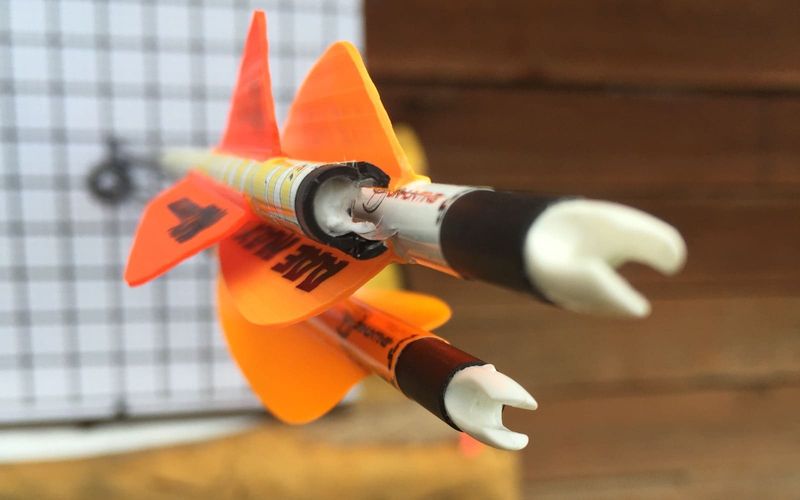
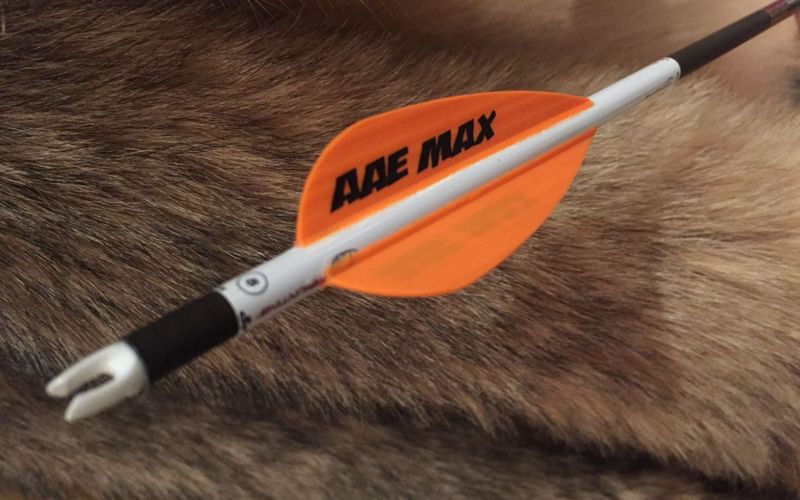
The fastest way to settle the helical vs straight fletching argument is to look at what each one is engineered to do. Helical vanes are mounted to the shaft at a curve, so the air catches them like a propeller — the arrow spins as it flies. Straight vanes sit perfectly parallel to the shaft and only stabilize through drag, not rotation. Offset vanes split the difference: angled but flat.
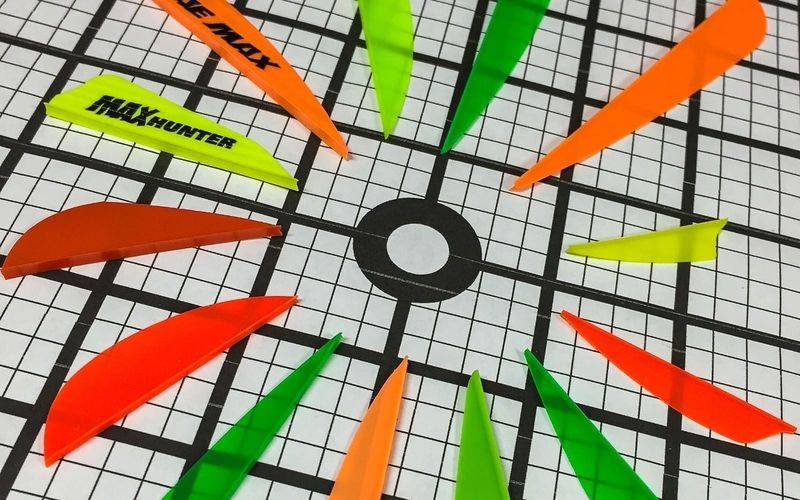
According to Bohning Archery’s internal testing — months of work and thousands of arrows under Rick Mowery, now of the Pope and Young Club — helical vanes deliver the tightest groups with broadheads at every distance under 50 yards. Straight vanes won on speed and noise, but lost decisively on accuracy with fixed heads. That’s the headline. The rest is detail.
What Helical Fletching Actually Does to an Arrow
An arrow with true helical vanes spins at more than twice the rotation rate of one with straight fletching, according to spin-rate measurements published by ezfletch. That rotation does two things. First, it averages out any imbalance in the arrow itself — a slightly off-center insert, a bent shaft, an unevenly tipped broadhead. Spin distributes those weight quirks evenly around the flight path instead of letting them deflect the arrow in one direction.
Second, spin stabilizes the broadhead. A fixed-blade broadhead is a wing. Two or three sharpened steel blades planted at the front of a 400-grain shaft will catch every gust of wind and every airflow asymmetry. Without spin, that planing effect drags the arrow off line. With spin, the blades cut a steady spiral through the air and the arrow tracks straight. This is why your field points group fine but your broadheads scatter when you switch to straight vanes.
Straight Fletching: When It Still Earns Its Keep
Target archers shooting field points at 70 meters use straight or barely-offset fletching for a reason. At those distances, every foot per second matters, and the rotational drag of a helical setup compounds over the full flight. A 3-degree helical can cost 4-6 fps off your bow’s IBO rating. For an outdoor competitor chasing a 10-ring at extreme range, that’s measurable.
Straight vanes also fly quieter. The spinning surface of a helical vane creates a faint hum that hunters in pressured deer country sometimes hear from their own arrows. The difference is small, but it exists.
If you’re shooting mechanicals at 30 yards, or punching paper on an indoor range, or stacking arrows in a 3D league with field points, straight fletching is a defensible choice. For everyone else — meaning the bowhunter pushing fixed blades through a whitetail’s vitals — the calculus changes.
The 3-Degree Helical Rule
After thousands of test shots, Mowery’s Bohning team landed on 3 degrees of helical as the sweet spot for hunting arrows. Below 2 degrees, you don’t get enough spin to overcome broadhead planing. Above 4 degrees, you start losing measurable arrow speed, and at 50+ yards the over-stabilized arrow can develop what archers call the parachute effect — the back end slows faster than the front and the trajectory dives.
Three degrees is enough rotation to lock down a fixed-blade broadhead inside 50 yards without bleeding speed. It’s the default that Easton chose when they launched the Sonic 6.0 — the first major factory-fletched helical hunting arrow on the market.
If you’re hand-fletching, set your jig to 3 degrees and stop second-guessing it. The diminishing returns above that number aren’t worth the speed loss for the average hunting shot inside 40 yards.
Fixed Broadheads Demand Helical. Mechanicals Don’t.
This is the single most important distinction in the entire fletching debate, and most archers miss it. Fixed-blade broadheads (Slick Trick, Iron Will, Day Six, Magnus) have exposed cutting surfaces from the moment you nock the arrow. Those blades produce lift, drag, and torque in flight. Without rotation, the asymmetric forces deflect the arrow off line by inches at 30 yards — and feet at 50.
Mechanical broadheads (Rage, Sevr, Grim Reaper) keep their blades folded against the ferrule until impact. In flight, a mechanical behaves almost identically to a field point. Straight or lightly offset vanes group them just fine. This is why some hunters who run mechanicals report no difference between fletching styles — they’re testing the wrong scenario for helical’s strengths.
For a deeper breakdown of how blade style affects your tuning, read our guide on mechanical vs fixed broadheads before you commit. Once you know which blade you’re shooting, the fletching choice follows automatically.
The Speed Penalty Is Smaller Than You Think
The biggest myth in this debate is that helical fletching tanks your arrow speed. The real number, measured on a chronograph with 3-degree helical vanes against straight, is typically 3-5 fps loss on a 280 fps setup. That’s roughly a 1.5% reduction. At 30 yards, that’s about half an inch of additional drop. At 60 yards, it’s around 2 inches.
Compare that to the broadhead deflection without spin: at 30 yards, a planing fixed broadhead can land 4-6 inches off your field point group. The fletching choice doesn’t add up to half an inch of drop versus six inches of horizontal flyer. Speed loss is real, but on a hunter’s terms it’s noise.
The one place speed actually matters is shot timing on quartering animals — and at typical bowhunting ranges (15-40 yards) the flight time difference between straight and 3-degree helical is about 4 milliseconds. A deer doesn’t react to that.
Right Helical vs Left Helical: Does Direction Matter?
Almost not at all. Right-handed shooters often run right helical and left-handed shooters run left, on the theory that the spin direction matches the bow’s natural release torque. In practice, the difference is rounding-error small for most setups.
The one situation where direction matters: arrow rest clearance. A right helical vane can drag slightly differently across a launcher-style rest than a left helical, and on a marginally tuned bow that can show up as vertical fletching contact. If you’re switching directions on the same bow, paper-tune again after the swap.
For broadhead spin tests on a spinner: most modern broadheads index off the shaft, not the fletching, so a right or left helical will both let the head finish square. Pick a direction, fletch a dozen arrows the same way, and move on.
How to Pick the Right Fletching in 90 Seconds
Four questions get you to the right answer. Be honest with yourself.
- Are you hunting with fixed-blade broadheads? If yes → 3-degree helical. Done.
- Are you hunting with mechanicals only, and never planning to switch? If yes → offset or straight is fine, but helical doesn’t hurt you.
- Are you a target archer chasing maximum speed past 60 yards? Straight or 1-degree offset.
- Are you a beginner still learning bow tuning and form? 3-degree helical. It hides minor flaws in your release and gives you cleaner groups while you learn.
The most common scenario — a bowhunter who shoots 3D in the off-season and chases whitetails with fixed heads in the fall — lands squarely on helical. The setup that works for the broadhead also works for the field point. The reverse isn’t true.
Common Mistakes When Switching Fletching
Switching from straight to helical isn’t free, and there’s a checklist that experienced fletchers run through every time. Skip any of these and your “upgrade” will shoot worse than your old setup.
The first mistake is fletching contact. A helical vane sticks further off the shaft than a straight one does in the same orientation. If your rest, your cables, or your riser shelf were just barely clearing your old vanes, the new ones will hit. Powder-test by spraying foot powder or athlete’s foot spray on the back of the arrow, shoot through a paper tuner, and look for streaks. Adjust rest position or vane orientation until it’s clean.
The second mistake is paper tuning before the new fletching has cured. Most fletching glues need at least 12 hours to reach full bond strength. A vane that pops loose mid-tuning session will skew your nock-tuning numbers and you’ll chase a phantom problem for an hour.
The third mistake is failing to re-tune broadheads. Fletching changes airflow at the back of the arrow, which can shift the impact point of a fixed blade by an inch or two at 30 yards. Always run a fresh round of broadhead tuning after any fletching change. Don’t trust last season’s tune.
The fourth mistake — and the most expensive — is changing arrow spine and fletching in the same session. If something goes wrong, you have no idea which variable broke your group. Change one thing at a time. Reference the arrow spine chart for spine first, settle that, then dial in your fletching choice on top.
Watch the Helical vs Straight Test on the Range
If you want to see the difference at distance with real arrows, this side-by-side range test from TripleRwoods Outdoors compares right helical, left helical, and straight fletch at multiple ranges:
Final Verdict: Helical Wins for 90% of Bowhunters
If you hunt with fixed-blade broadheads — and roughly two-thirds of North American bowhunters do, according to Field & Stream’s fletching guide — the answer is 3-degree helical. The accuracy gain is decisive, the speed cost is trivial, and the noise difference doesn’t matter inside 40 yards.
If you run mechanicals exclusively, offset vanes give you most of the stabilization benefit with less speed loss. Pure straight fletching is a target archer’s tool, not a hunter’s. And whatever you choose, fletch a dozen identical arrows, paper-tune fresh, and shoot the same setup all season. Mixing fletching styles in the same quiver is how you build a guessing game when an animal steps out at 35 yards.
Once your fletching is dialed, the next lever for accuracy is arrow weight distribution. Pair your helical setup with proper arrow FOC tuning and your broadhead groups will tighten another step.
Sources
- Outdoor Life — The Bowhunting Pioneers Were Right: Helical Fletching Is Most Accurate — Rick Mowery’s Bohning Archery testing program and the 3-degree helical conclusion.
- Western Hunter — Arrow Fletching and its Effects on Flight — Vane orientation, helical degrees, and the parachute effect at distance.
- American Hunter — First Look: Easton Sonic Helical-Fletched Arrows — Factory helical fletching on the Sonic 6.0 hunting arrow.
- Exodus Outdoor Gear — Differences Between Helical or Offset Vanes — Vane angle ranges and broadhead pairing guidance.
- EzFletch — Why True Helical — Spin-rate comparison data and broadhead stabilization mechanics.
- Field & Stream — Choosing the Right Fletching for Perfect Arrow Flight — Field hunter fletching survey and broadhead category breakdown.
Browse archery bows, arrows, and accessories at the Archery Supplier shop →
