Archery Blog
Arrow Spine Chart: 7 Steps to Pick the Right Arrow

Jun
An arrow spine chart is a manufacturer’s lookup table that matches your bow’s draw weight, arrow length, and point weight to the correct shaft stiffness. Read it wrong and your arrows fishtail off the rest, tear oval-shaped holes through paper, and slap broadheads sideways at 30 yards. Read it right and your bare shafts will fly with your fletched ones — which is the whole point. The chart isn’t a suggestion. It’s the difference between a tuned bow and an expensive paperweight.
Arrow spine is measured by hanging an 880-gram weight from the center of a 29-inch shaft supported 28 inches apart and recording how far the shaft deflects in thousandths of an inch. A 500-spine arrow deflects 0.500″, a 300-spine arrow deflects 0.300″. Lower number, stiffer shaft. That’s the only number a spine chart uses, and every reputable shaft maker — Easton, Gold Tip, Victory, Black Eagle, Carbon Express — publishes one for their lineup.
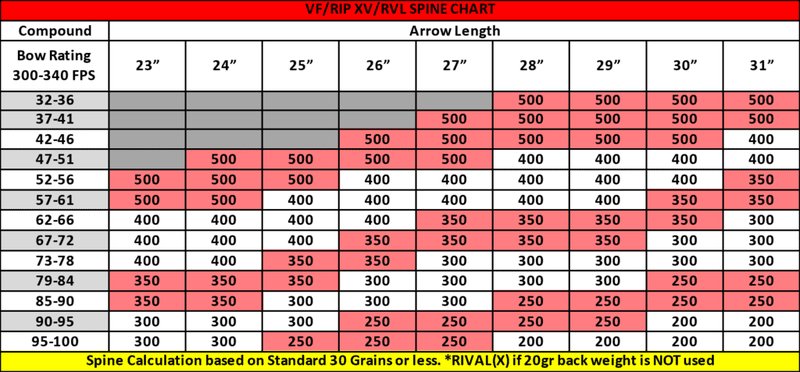
What an Arrow Spine Chart Actually Tells You
The chart is a two-axis grid. One axis is your bow’s holding weight at full draw. The other is the finished arrow length measured from the throat of the nock to the back of the point insert. Where those two lines cross, you get a spine recommendation — sometimes a single number, sometimes a range like 340–400 depending on how the manufacturer handles tip weight assumptions. That intersection is your starting point, not your final answer.
What the chart does not tell you is whether your bow is paper-tearing clean already, whether your release timing is sloppy, or whether your 100-grain field point matches the 125-grain broadhead you actually plan to hunt with. Charts assume a standard 100- or 125-grain tip and a clean release. Anything outside that assumption shifts your real-world spine requirement up or down a group.
How to Read an Arrow Spine Chart in 7 Steps
The process is the same for every chart, every brand. Get these seven inputs nailed before you look at a single shaft:
- Confirm your bow’s actual holding weight on a digital bow scale. Not what the sticker says. Compounds vary 2–4 pounds from spec.
- Measure your true draw length using the wingspan-divided-by-2.5 method, then verify with a draw-check arrow at your shop.
- Add 1 to 1.5 inches to your draw length to get a safe minimum arrow length. Most bowhunters cut at draw length + 1″.
- Decide on your point weight. 100 grains is the field-point default; bowhunters often run 125 or even 150 grains up front for higher FOC.
- Find the chart for your shaft model — not a generic chart. Easton FMJ, Gold Tip Hunter, and Victory VAP all use different deflection assumptions.
- Read the intersection of holding weight and arrow length, then adjust one spine group stiffer for every 25 grains of tip weight over 100.
- Buy 3 to 6 shafts in the recommended spine and test them before you order a full dozen. Don’t trust a chart over a paper tear.
Arrow Spine Chart for Compound Bows
Compounds release energy faster than recurves and use a mechanical release aid, so the shaft has to be stiffer at the same draw weight. A 70-pound compound shooting a 28-inch arrow with a 100-grain tip generally lands on a 340 spine. Drop the draw weight to 60 pounds and most shooters move to a 400. Push it to 80 pounds for a heavy hunting setup and you’re into 300-spine territory.
Here’s a simplified compound bow spine reference for a standard 28-inch arrow with a 100-grain tip:
- 40–50 lb draw: 500 spine
- 50–60 lb draw: 400 spine
- 60–70 lb draw: 340 spine
- 70–80 lb draw: 300 spine
- 80+ lb draw: 250 or 200 spine
Treat that as a sanity check, not a substitute for the manufacturer chart. If you draw 29″ or 30″ instead of 28″, you’ll almost always need to move one group stiffer. The longer the lever, the more it bends.
Arrow Spine Chart for Recurve and Traditional Bows
Recurve shooters get cut a little slack on stiffness because finger release adds the archer’s paradox — the arrow flexes around the riser rather than firing straight off a center-shot rest. That means recurves need a weaker spine at the same draw weight than compounds do, not stiffer. A 40-pound recurve at 28 inches generally lives in the 700–800 spine range. A 50-pound traditional longbow with 125-grain field points often runs a 500 or 600.
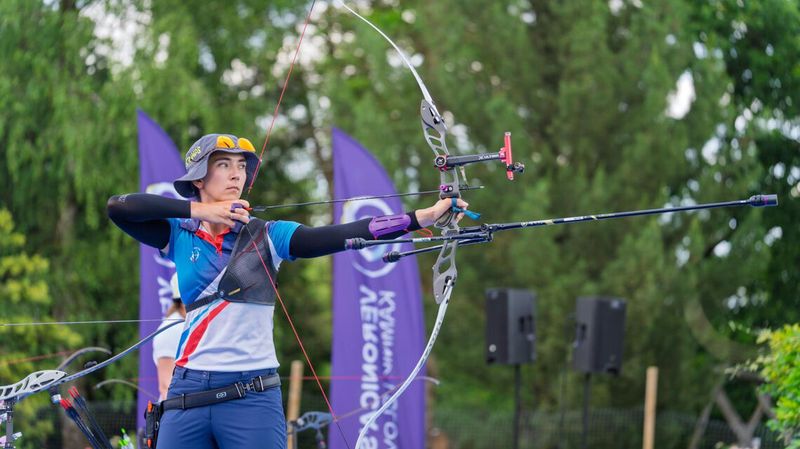
Traditional charts get more involved because you’re factoring in bow geometry — center-cut vs. cut past center, tab thickness, brace height — none of which a compound shooter ever thinks about. Rose City Archery and 3Rivers Archery both publish detailed traditional spine charts that account for these variables. Their charts are worth more than a phone-screen guess.
The Four Variables That Move Your Spine
A spine chart gives you a baseline. Four real-world variables push you off it. Knowing which way each one bends the answer is what separates an archer who tunes their own bow from one who keeps blaming their groups on the wind.
Draw weight. Every 10 pounds you add at the riser stiffens the spine requirement by roughly one group. Up the draw, drop the spine number.
Arrow length. Shorter shafts behave stiffer. Cut an inch off a 350-spine arrow and you’ve effectively moved a group toward 340. Easton’s published data shows about 5 pounds of effective draw weight change per inch of arrow length.
Point weight. Heavier tips weaken the dynamic spine because they pull the front of the shaft harder during launch. Add 25 grains up front and move one group stiffer. Iron Will and other premium broadhead makers spell this out in their setup recommendations.
Cam aggression and IBO speed. A 340 fps compound launches the shaft harder than a 315 fps compound at the same poundage. Speed bows demand stiffer arrows. Most manufacturer charts now ask for your IBO rating before they spit out a spine.
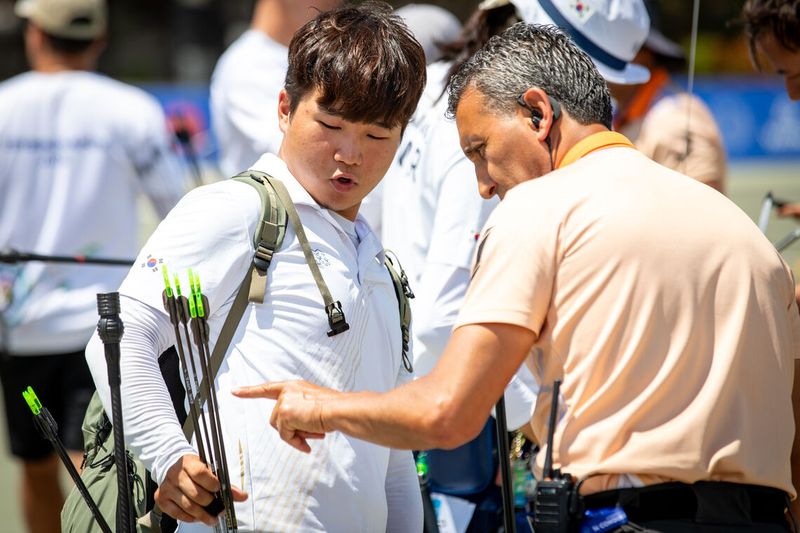
Static Spine vs Dynamic Spine: Why It Matters
Static spine is what the chart prints — the lab measurement of how far a 29″ shaft deflects under an 880-gram weight. Dynamic spine is what the arrow actually does when your bow releases all of that stored energy through it in a fraction of a second. They’re related, but they’re not the same.
Dynamic spine changes every time you swap a 100-grain point for a 125, every time you add a heavier insert, every time you change your bow’s draw weight. Two arrows with the same printed 340 spine will behave differently on different bows. The chart gets you in the ballpark. Paper tuning, broadhead tuning, and bare-shaft testing tell you whether the arrow has actually arrived.
This is the gap most new bowhunters miss. They buy a dozen arrows off the chart, never tune them, and then wonder why their broadheads kick left at 40 yards while field points hit dead center. The chart only handles the static side of the equation.
How to Confirm Your Spine on the Range
Three tests verify whether your chart pick was right. Run them in order before you commit to a full dozen arrows.
Paper tuning. Shoot through a frame of butcher paper at 6 feet. A clean bullet hole — point of entry matching the tear width — means dynamic spine is matched to your setup. A high tear means nock-point adjustment; a left tear (for a right-handed shooter) usually means the arrow is too stiff; a right tear usually means too weak. Outdoor Life’s tuning breakdown explains the reading order.
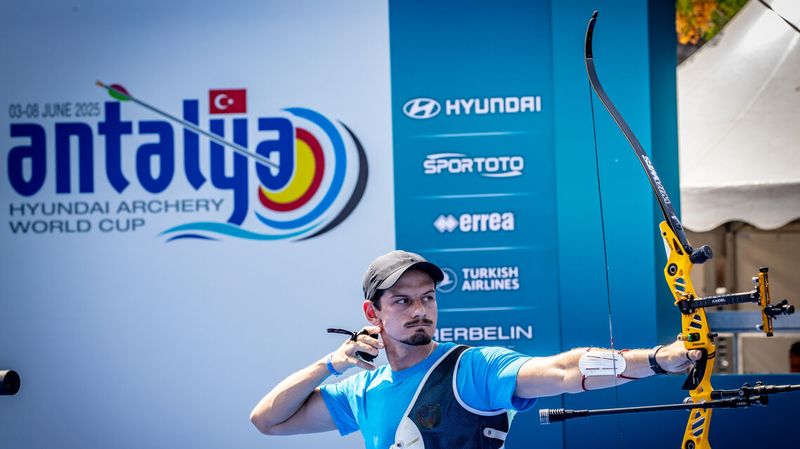
Bare shaft testing. Shoot two unfletched arrows alongside three fletched arrows at 20 yards. If the bare shafts impact within 2–3 inches of the fletched group, your spine is right. Bare shafts hitting far left or right of fletched indicate a spine mismatch that the fletching is masking. Properly sighting in your compound bow only works once your arrows fly true at this level.
Broadhead vs field point comparison. At 30 and 40 yards, fixed-blade broadheads should hit within 4 inches of your field-point group. If they’re scattered, the spine isn’t matched to the heavier dynamic load of the broadhead. Most hunters discover spine mismatches the week before season opener — don’t be that guy.
Common Spine Mistakes and What They Do to Your Group
The truth is, most “I can’t tune my bow” complaints on archery forums are actually spine problems pretending to be something else. The most common ones look like this:
Buying off draw weight alone. A 60-pound compound at 32″ of arrow length needs a different spine than the same bow at 27″. Length matters as much as weight, and short-draw archers get this wrong constantly.
Ignoring point weight. Switching from a 100-grain field point to a 125-grain broadhead drops your effective spine by 25 grains worth of dynamic load. That’s enough to push a borderline arrow over the edge.
Trusting one chart for all shaft models. Easton’s chart for a Carbon Aftermath isn’t the same as their chart for an FMJ. The deflection physics are different. Look up the chart that matches your specific shaft.
Skipping the verification. Charts are a starting point. Paper tuning, bare shaft, and broadhead comparison are the only way to know the chart was right.
When to Move Up or Down a Spine Group
Once you’ve shot the chart pick and run the three verification tests, you’ll know whether to stay put or shift one group either way. Move stiffer (lower spine number) if you tear paper left as a right-handed shooter, if your bare shafts impact left of your fletched group, or if you’ve added a heavier broadhead. Move weaker (higher spine number) if you tear paper right, if your bare shafts impact right of your fletched group, or if you’ve shortened the arrow significantly.
Don’t jump two spine groups. The cumulative effect of one spine change plus a point-weight adjustment is usually enough. If a single-group shift doesn’t fix the tear, the issue is rest position, nock height, or cam timing — not spine.
Watch John Dudley’s explanation of choosing arrow spine for compound bows for a working archer’s walkthrough that mirrors what the charts only hint at:
Once you’ve nailed spine, the next step is matching arrow build to bow setup across point weight, FOC, and fletching. Anyone still gun-shy about getting their draw length nailed should fix that first — half the spine problems on this site’s QA inbox trace back to bad draw-length numbers.
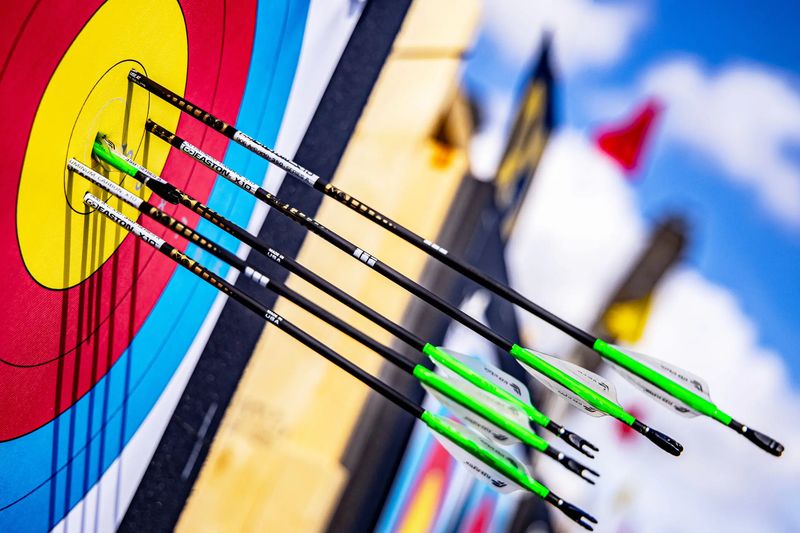
The simplest test of whether your arrow spine is right: shoot a five-arrow group at 20 yards. If three arrows kiss the dot and two flutter wide, the chart pick is fighting your dynamic spine. If all five group tight, the chart was right and the tuning held. Spine charts make the second outcome possible — they don’t guarantee it.
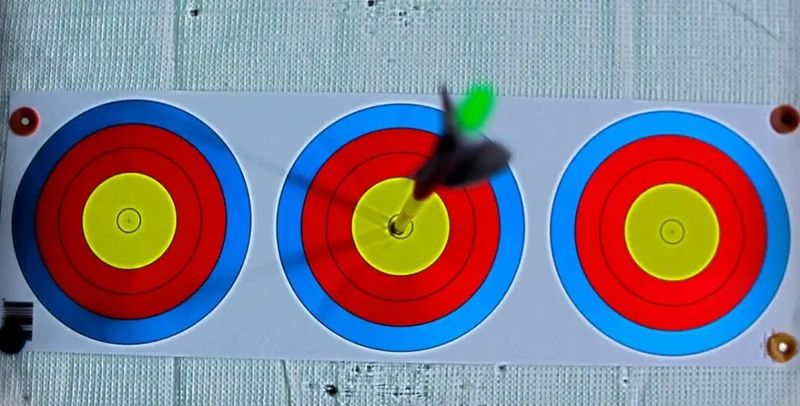
The shooters who hit consistent clusters at 40 and 60 yards aren’t lucky. They’ve matched spine, point weight, and arrow length down to the grain — then verified it through paper, bare shaft, and broadhead. The chart is step one. The bow does the talking from there.
Sources
- Easton Archery — Target & Hunting Arrow Selector — official spine selection tool with draw-weight and length inputs
- Easton Archery — Making Sense of Arrow Spine — manufacturer technical primer on static vs dynamic spine
- Gold Tip Arrow Spine Selector — interactive spine chart for hunting and target shafts
- Victory Archery Arrow Guide — spine charts for compound and recurve setups
- Ashby Bowhunting Foundation — Spine Calculator — Ed Ashby’s research-backed calculator with FOC and point-weight inputs
- World Archery — international federation, tournament photos used in this article
- Iron Will Outfitters — Arrow Setup Recommendations — broadhead manufacturer’s matched-spine guidance
