
Archery Blog
How to Shoot a Bow from a Treestand: 7 Form Fixes
Jun
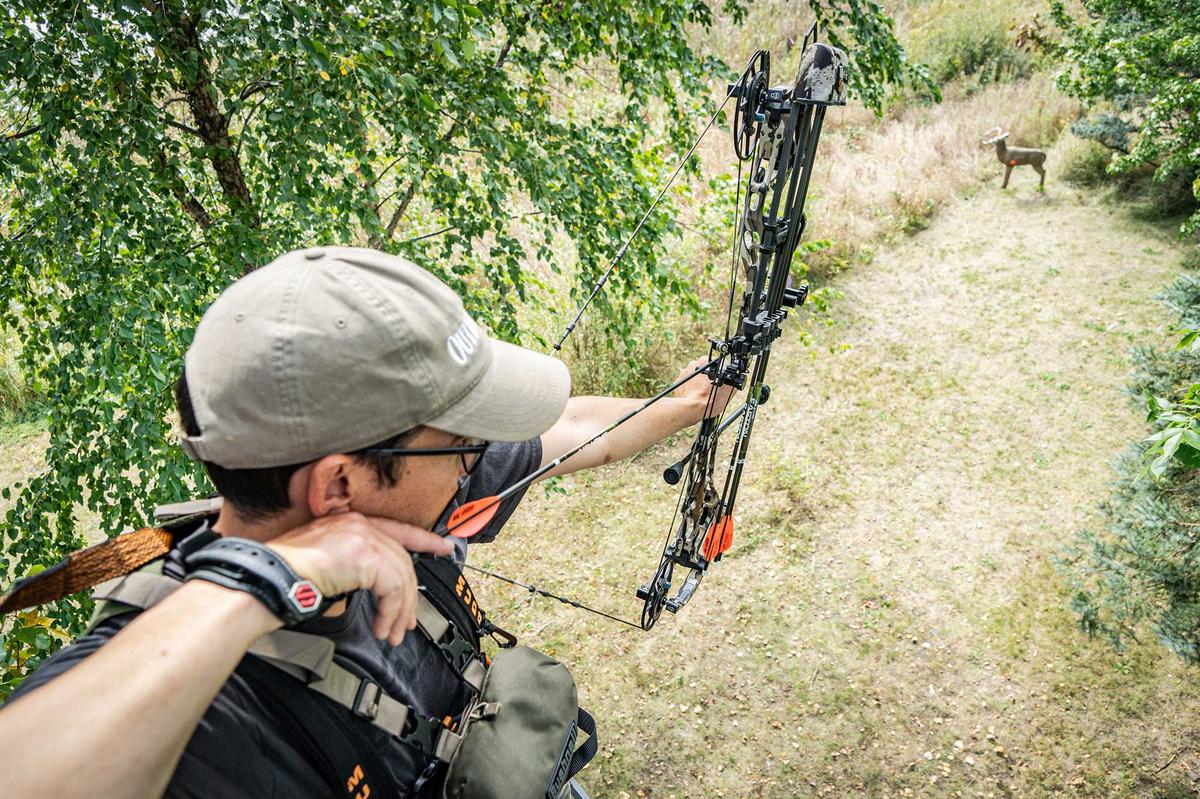
The most common bowhunting miss isn’t a flinch or a windage error — it’s the high-shoulder shot from a treestand 18 feet up. Learning how to shoot a bow from a treestand isn’t about a new piece of gear. It’s about retraining the upper body to pivot at the waist instead of dipping the bow arm, and putting in real reps from elevation before opening day. Get that one fix right and your kill-shot percentage from a stand jumps overnight.
This guide walks through the seven specific form, practice, and shot-placement adjustments that turn an average ground shooter into a deadly treestand archer — the kind of bowhunter who closes the season early because the freezer is already full.
Why Bowhunters Miss When Shooting from a Treestand
The miss almost always goes high and over the back. That isn’t bad aiming — it’s an alignment break the shooter never feels because gravity hides it. When you tip your bow arm down toward an animal below the stand, your peep and sight pin still line up, but your spine no longer matches the form you grooved on flat range. The arrow leaves the bow climbing relative to your skeleton, and the result is daylight over the deer’s spine.
MeatEater’s Tony Peterson points out that steeper shot angles tighten the margin for error and that most bowhunters never log enough elevated reps to keep form sharp under pressure.1 A hunter who can hold a four-inch group at 30 yards on flat ground will routinely spray six to ten inches at the same distance from a stand because they’re practicing the wrong skill. The fix isn’t a softer release or a new sight — it’s understanding what changes when the floor drops out from under your bow arm.
Bend at the Waist, Don’t Drop Your Bow Arm
This is the single most important fix in treestand archery, and it’s the one rule almost every miss violates. The cue is simple: draw flat, then pivot the entire upper body forward at the hips as one rigid unit. Bow arm, draw arm, shoulders, and head all rotate together. Nothing collapses, nothing tips independently.
The Mossy Oak guide on treestand aim puts it bluntly — bow to the target.2 Imagine bowing from the waist to greet someone seated on the ground. That’s the motion. If you instead drop your bow arm to find the deer, your back tension releases, your shoulder rolls forward, and your peep climbs above your eye line. The pin still looks right, but the form is already broken.
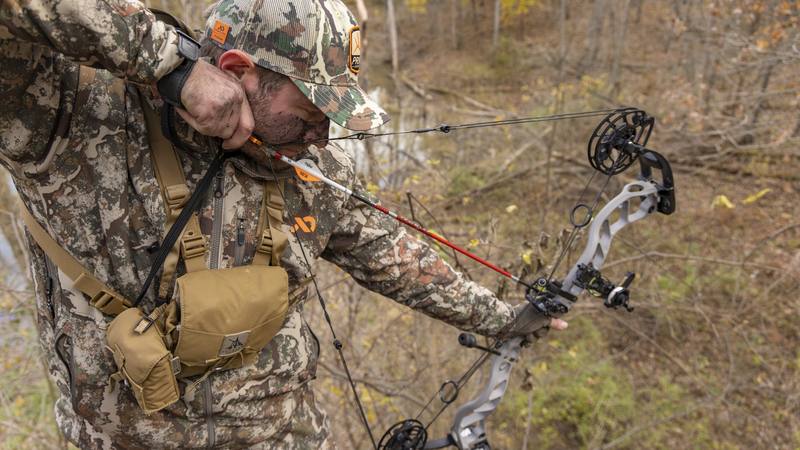
A quick dry-fire test in the backyard proves this. Stand on a porch step or low ladder, draw, and have someone film you from the side. If your bow arm dips faster than your shoulders rotate, you’re shooting two different bows: one on flat ground and one in the tree.
Practice from an Elevated Platform Before Opening Day
You cannot fake this skill. Backyard bag-target reps at eye level build the wrong muscle memory for what happens at 18 feet. The body doesn’t transfer flat-ground form to elevated form on its own — and the worst place to discover that gap is when a Pope-and-Young buck steps under your stand on October 24th.
Set up a real treestand at your shooting range or backyard at the exact height you hunt. If that’s not possible, an extension ladder against a sturdy tree gets you 80% of the benefit. Shoot from 10, 15, 20, and 25 yards at a 3D deer target. Pay attention to where the arrows land at each distance — the miss pattern will teach you more than any YouTube video ever will.
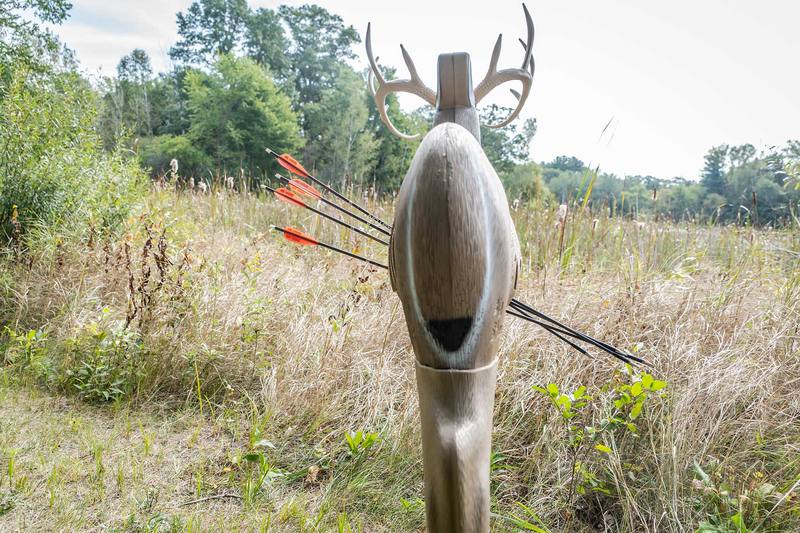
Bowhunter Magazine recommends shooting at least 50 elevated arrows a week in the month leading up to season — three short evening sessions beat one long Saturday range trip every time.3 Tired reps build tired form. Short reps build snap form. For more on building a complete preseason routine, see our first-season bowhunting guide.
Anchor Doesn’t Move — Your Whole Upper Body Pivots
Anchor point is sacred. It is the one reference that ties your face, your peep, and your sight together into a repeatable shot. If your anchor drifts when you bend at the waist, the pin lies to you, and the arrow chases that lie all the way to the deer.
The pivot has to come from the hips, not the neck. If you find yourself craning your head down to keep the peep aligned, your waist isn’t doing enough work and your spine is bending in the wrong place. A correct treestand pivot keeps the head and neck locked relative to the spine — only the hip joints rotate.
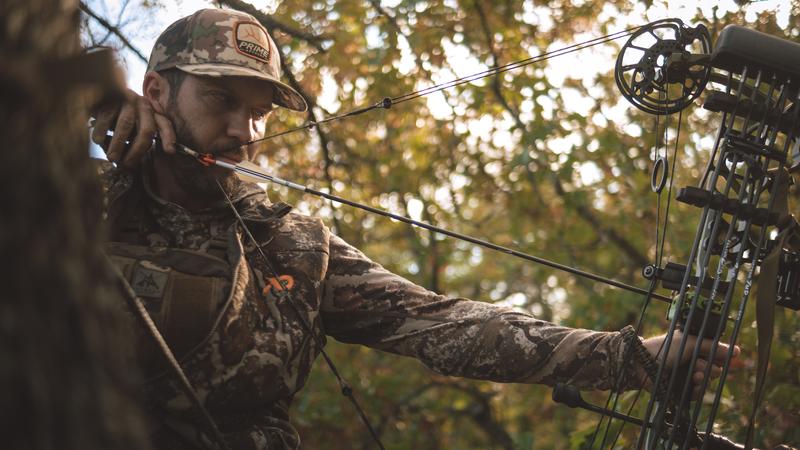
Bowhunters who struggle with this fix benefit from drilling a static anchor on flat ground until it’s bombproof. Read our breakdown of the anchor point in archery for the seven-step lock-in routine. Once it’s automatic, take that exact anchor up the tree and rotate around it.
Account for the Cosine Effect on Steep Shots
Here’s the part most articles skip and most rangefinders try to hide. Your sight is calibrated to the line-of-sight distance — but gravity only acts on the horizontal distance. The steeper the angle, the bigger the gap between what your rangefinder reads and how much your arrow actually drops.
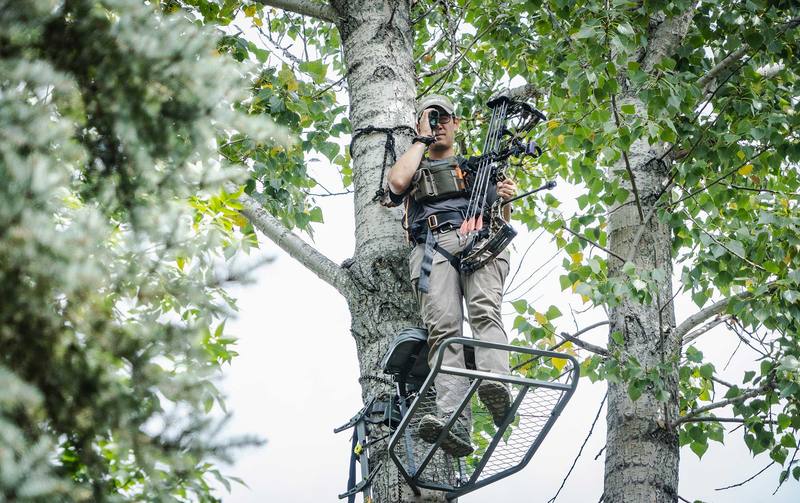
A 30-yard line-of-sight shot from a 20-foot stand is really about a 28-yard horizontal shot. Inside 25 yards that gap is usually irrelevant — your pin gap absorbs it. Past 30 yards and at steeper angles, it starts to matter. The fix: buy a rangefinder with angle compensation, or learn to multiply distance by the cosine of your angle in your head. (A 25-degree angle is about a 0.91 multiplier — close enough to memorize.) Realtree’s primer on uphill and downhill shooting drills this point home for steep terrain bowhunters.4
Most modern bow sights are calibrated for flat ground, so plan to either upgrade to an angle-compensating rangefinder or build a quick mental adjustment habit. Our compound bow sight-in guide covers how to set pins that hold up under the cosine variable.
Shot Placement Shifts When You’re Above the Animal
This is where bowhunters who got their form right still lose deer. From an elevated stand, the broadside lung-heart pocket isn’t the same shape it is at ground level. The arrow enters higher on the rib cage, travels through the chest cavity at a downward angle, and exits low on the opposite side. Aim for the same spot you’d use on the ground, and you’ll punch one lung and a lot of liver — a slow blood trail and a frustrating night.
The correct hold on a broadside shot from a 20-foot stand is roughly halfway up the body, directly behind the front leg, with the pin tracking through to the off-side leg. From a quartering-away shot, the off-side shoulder is the visual reference — drive the arrow toward it. Mossy Oak’s treestand shot guide goes deep on this geometry and is worth bookmarking before season.2
Avoid quartering-toward shots from a stand. The shoulder blade blocks the entry to the heart and lungs, and a tucked elbow can deflect even a heavy fixed-blade head. If the deer doesn’t give you broadside or quartering-away, let it walk. Pair this with a hard-hitting head choice from our fixed vs mechanical broadheads guide.
Treestand Setup That Helps You Shoot Better
Form fixes only work if your stand setup doesn’t fight you. A platform that twists, a seat that’s too high, or limbs in your draw window will undo every backyard rep you put in. Build the perch around the shot, not the other way around.
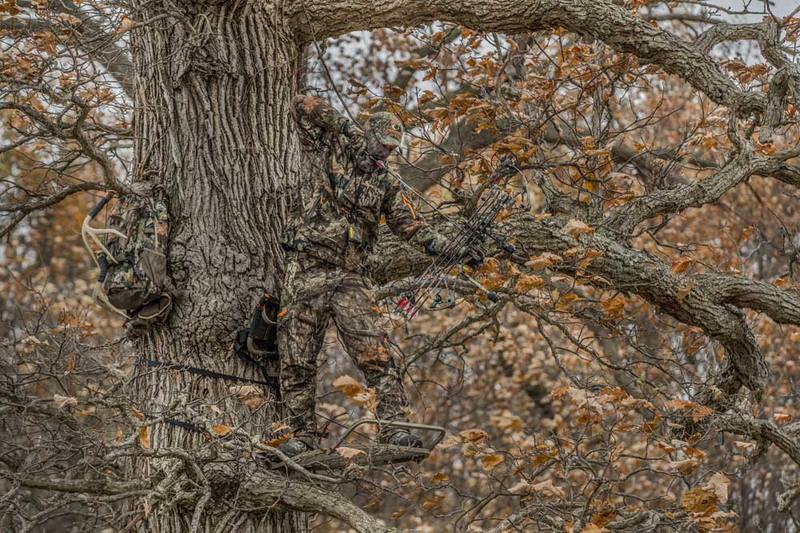
Three things to lock in before opening day. Set your stand 15 to 20 feet up — Outdoor Life’s field testing found this height gives the best compromise between concealment, shot angle, and missed-spot recovery.5 Higher than that and the angle gets brutal; lower and the deer pick you off the skyline. Clear shooting lanes in every realistic direction the deer might travel through, not just the obvious trail. And tie a Hunter Safety System lifeline from the ground to your stand height — the Treestand Manufacturers Association reports that more than 80% of treestand falls happen on the climb or transfer, not while seated.6
One opinion that costs me nothing to defend: a hunter who skips the safety harness is gambling future hunts against fifteen seconds of inconvenience. The math doesn’t work. Wear it.
Quick Pre-Hunt Checklist for Treestand Shooting
Run this list the week before opening day and again the morning of every hunt. It catches the small failures that turn good shots into lost deer.
- Form pivot drilled — at least 50 elevated practice arrows in the last 14 days.
- Anchor point bombproof — same nose-to-string, same kisser, same peep alignment from ground or stand.
- Rangefinder ranged — known distances to three to five landmarks in your shooting lanes, marked at horizontal distance.
- Bow tuned — paper-tuned and broadhead-flight-checked. See our cam timing guide if pins won’t group at 30 yards.
- Lifeline rigged — full-length lifeline from ground to stand, not just a stand-strap.
- Shooting lanes cleared — no twigs in the draw arc, no leaves in the sight window.
- Quiet draw practiced — let-down drilled in case the deer turns. See the draw weight chart if you find yourself fighting the bow at full draw.
- Hard pass criteria set — quartering-toward or alert-and-staring deer get a walk, not a release.
Watch Bill Winke break down the one form fix that solves most treestand misses in a few minutes — it pairs perfectly with the seven adjustments above:
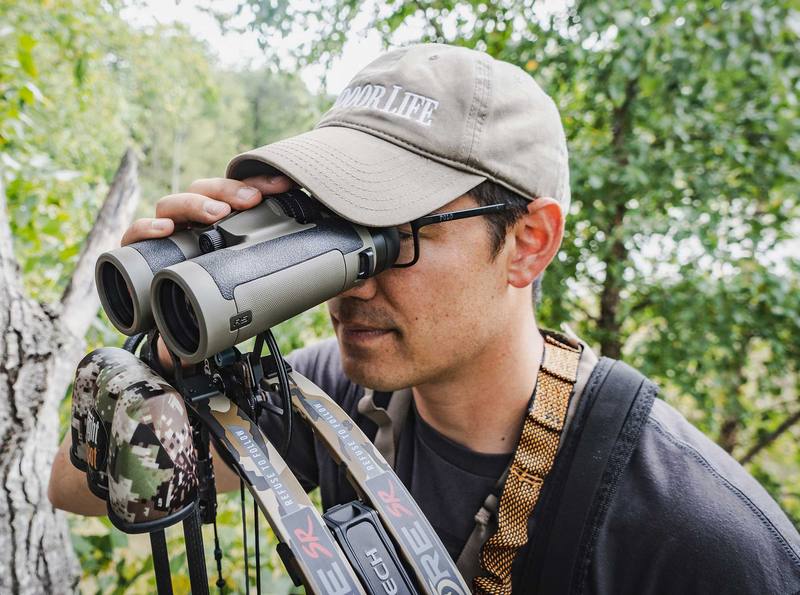
Set the Stand, Build the Form, Wait for the Shot
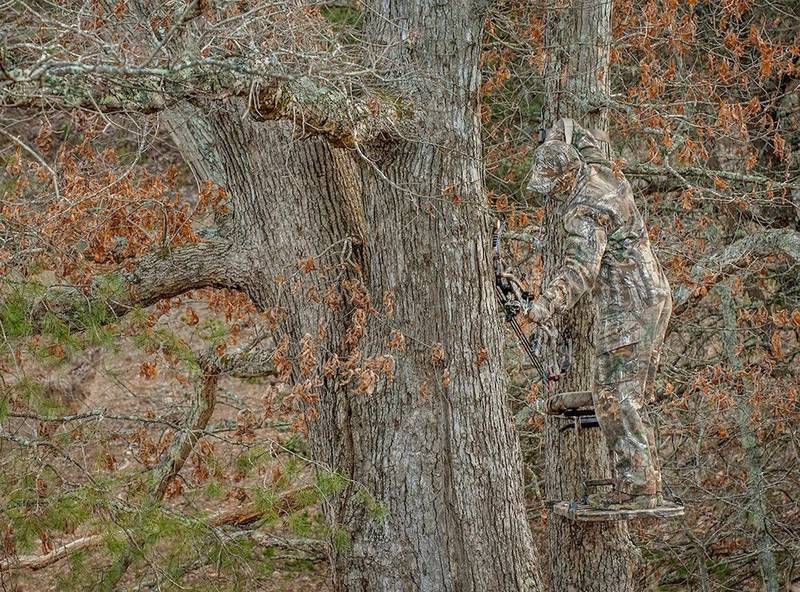
The bowhunter who tags out early isn’t the one with the most expensive bow. It’s the one who pivoted at the waist on every practice arrow in September and made the same motion automatic by October. Treestand shooting is a discipline of small, deliberate reps — and the freezer rewards the discipline. Pick one fix from this list, drill it this week, and add the next one when it’s automatic. Six weeks of that and you’ll outshoot 90% of the bowhunters in your county.
Sources
- MeatEater — How To Not Miss When Bowhunting From A Treestand — Tony Peterson on practice intensity, anchor drift, and elevated form.
- Mossy Oak — Where to Aim When Shooting from a Tree Stand — Shot placement geometry from elevated positions.
- Bowhunter Magazine — How to Master Shooting from a Treestand — Preseason rep volume and elevated practice protocol.
- Realtree — How to Shoot Uphill and Downhill — Cosine effect and angle compensation for bowhunters.
- Outdoor Life — Best Treestand Height for Bowhunting — Field testing of stand heights for shot angle and concealment.
- Treestand Manufacturers Association — Treestand Safety — Fall statistics and lifeline standards.
Browse archery bows, arrows, and accessories at the Archery Supplier shop →
Shop on eBay
Archery Equipment on eBay →
We may earn a commission when you shop through our eBay links.
