
Archery Blog
Let-Off Explained: How Compound Bow Cams Make Heavy Draw Weights Holdable
May
Pull a 70-pound recurve back and you are holding 70 pounds. Pull a 70-pound compound back and, somewhere past peak weight, the bottom drops out and you are suddenly holding 14 pounds. That collapse in holding weight is let-off, and it is the single biggest reason compound bows shoot the way they do. Without it, no one would aim a 70-pound bow for ten seconds while threading a pin through a vital zone.
Let-off is usually written as a percentage: 65%, 75%, 80%, 85%, even 90% on some target rigs. It tells you how much of the peak draw weight the cams remove once you reach the back wall. The mechanism is purely geometric — no batteries, no magic — and understanding it changes how you spec a bow, choose a cam, and read the draw cycle on the shop floor.
What Let-Off Actually Means
If your bow is set to 70 pounds peak draw weight and rated at 80% let-off, the holding weight at full draw is 70 × (1 − 0.80) = 14 pounds. At 65% let-off, that same 70-pound bow holds at 24.5 pounds. The peak weight — what you fight through during the draw cycle — is identical. The number that changes is what is left in your fingers (or release hand) once the cams roll over.
This is why a hunter can sit at full draw waiting for a buck to clear brush, and why a target archer can hold steady through a long aiming routine without the bow arm trembling. The skeleton, not the muscles, is doing most of the work at the back wall. Let-off is the feature that makes compound archery a holding game rather than a strength contest.
Peak Weight vs Holding Weight
Two numbers describe every compound:
- Peak draw weight — the maximum force the bow makes you pull, occurring partway through the draw cycle (usually around the 60–70% draw mark depending on cam shape).
- Holding weight — the residual force at full draw, after let-off has dumped most of the peak.
A 60-pound bow at 75% let-off has a holding weight of 15 pounds. A 70-pound bow at 80% let-off has a holding weight of 14. The 70-pound bow stores more energy and shoots a heavier arrow faster, yet feels lighter to hold. That counter-intuitive math is exactly what cam engineers are selling you.
How the Cams Pull Off the Trick
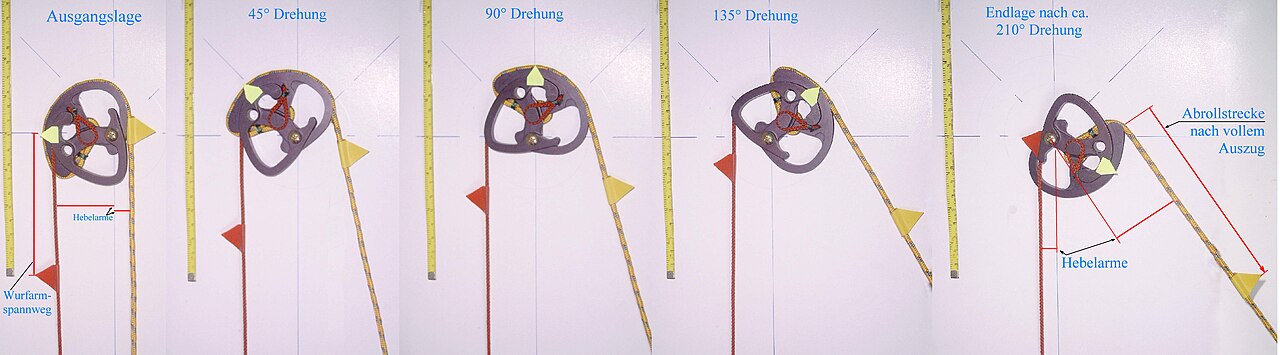
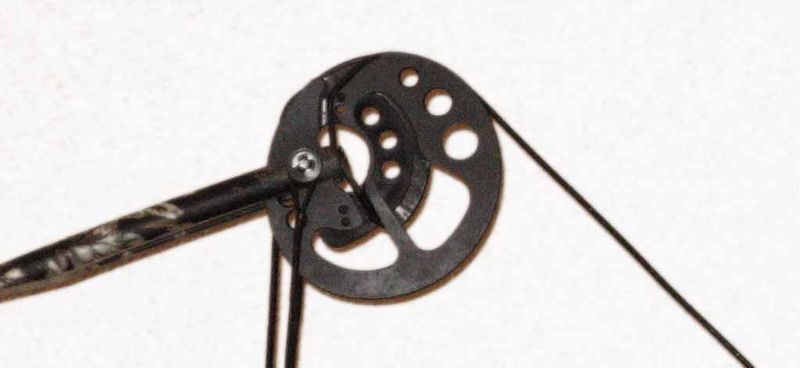
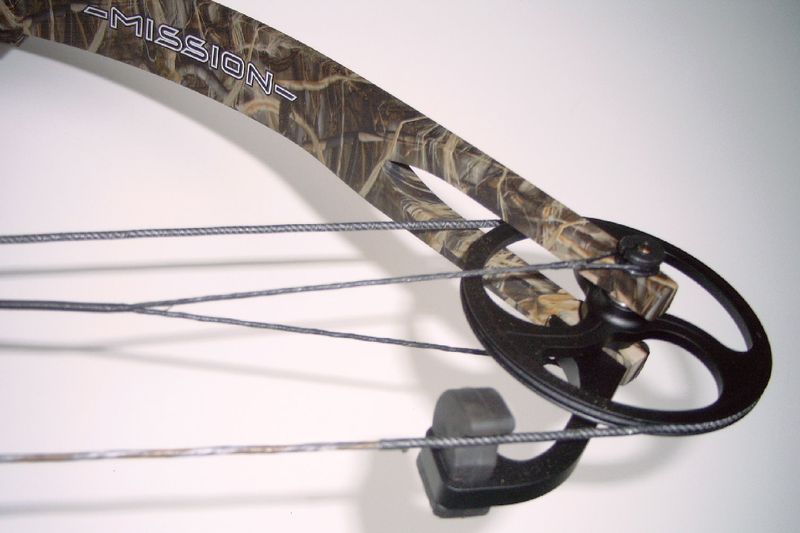
The cams at the ends of a compound’s limbs are not round. They are eccentric — shaped so that the effective lever arm between the string and the cam axle changes through the draw. Early in the draw, the lever is short, which forces you to muscle the limbs into bending hard (that is your peak weight). As the cam rotates past the peak, the lever lengthens dramatically, and the same limb load translates into much less force at your hand.

Think of it as a wrench on a stubborn bolt. Use a stubby wrench and you sweat. Slide a cheater bar over the handle and the bolt turns easily — same bolt, same resistance, longer lever. The cam pulls the same stunt on your bowstring, except in reverse: it gives you a long lever right when you need rest, and a short one right where the limbs need to be loaded.
Why the Wall Feels Like a Wall
The cams also define how abrupt the transition into let-off feels. A hard cam with an aggressive draw force curve makes you crash into the back wall — there is almost no transition zone, the holding weight just appears. A softer cam eases you in over the last couple of inches. Hard cams generally store more energy per inch of draw (so faster arrows for a given peak weight), but they punish creeping forward. Softer cams forgive but give up some speed.
The Standard Let-Off Percentages and What They Feel Like
65% Let-Off
The legacy hunting standard, still required for many target disciplines. On a 70-pound bow you hold 24.5 pounds. That is enough back tension to keep your release-side shoulder honest and to help drive the shot into the wall during execution. It also keeps you from collapsing on the shot, a common let-off-related fault. Target archers who execute with back tension often prefer this range.
It is also the maximum let-off the World Archery Federation permits for compound competition — so if you ever plan to shoot World Archery sanctioned events, your bow needs to be capable of being set at 65% or you are out of legal spec.
75–80% Let-Off
The modern hunting middle ground and the default on most factory-spec bows. Holding weight drops enough that you can wait for a shot opportunity without your bow arm collapsing, but you still have meaningful back tension to drive a clean release. This is where most off-the-shelf hunting compounds live, and it is the range where the largest number of archers shoot their best groups without conscious effort.
85–90% Let-Off
Aggressive hunting let-off. A 70-pound bow at 90% holds at 7 pounds. You can sit at full draw almost indefinitely, which matters when an elk is screwing around in the timber for forty seconds. The trade-off: there is almost no holding weight to anchor against, the wall can feel mushy, and creeping forward during the aim becomes a real concern. Shooters who execute with a hinge or thumb release and have rock-solid back tension can run this. Newer shooters typically over-hold, lose surprise release, and develop punchy habits.
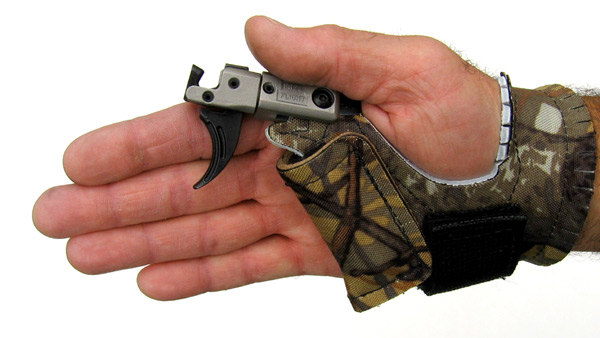
If you are shopping for a high-let-off cam system or want to upgrade your release for cleaner execution at low holding weights, a quality hand-held thumb or hinge release is the right next purchase:
Shop Thumb Release Aids on Amazon →
How Let-Off Interacts With Stored Energy
Here is the part most archers miss: let-off does not change how fast your arrow goes. Arrow speed is governed by the stored energy under the draw force curve — the integral of force over the entire draw stroke. Two bows can have identical IBO speeds with different let-off numbers, because the cams are sculpted to make up the difference elsewhere on the curve.
Bow designers play this trade constantly. A higher let-off means less area under the curve at the end of the draw, so engineers add it back earlier — usually by ramping more aggressively into peak weight, holding the peak longer, or extending the working portion of the cam. The result: a 70-pound, 85% let-off bow and a 70-pound, 65% let-off bow from the same manufacturer often shoot the same arrow at the same speed. The peak felt heavier on the 65% rig because you spent longer near it.
The Draw Cycle Shape That Goes With It
This is why two bows on the same peak weight can feel completely different to draw. A high-let-off, aggressive-cam hunting bow ramps fast, plateaus near peak, then dumps hard. A low-let-off target cam climbs more gradually and dumps less. Neither is right — they are tuned for different shot processes. The hunter wants to be done thinking by full draw; the target archer wants to feel every pound of the wall under their back.
Adjusting Let-Off on Your Bow
Most modern cam systems are not user-adjustable for let-off. The percentage is baked into the cam geometry — you would need to swap modules or entire cams to change it, and the available options are dictated by the manufacturer. A handful of bows (some target-oriented Hoyt and Mathews models in recent years) ship with multiple cam draw-stop posts or interchangeable modules that let a tech move you between, say, 75% and 85% during a tune.
Before you buy, confirm what your candidate bow offers:
- Fixed let-off (most common) — pick the spec that fits your shooting and live with it.
- Modular let-off — typically two or three options per cam, requires a press and a tech.
- Draw-stop adjustable — small range, usually changes wall feel more than the actual percentage.
Never try to change let-off by adjusting limb bolts or string twists. You will only shift draw weight and tune — the cam still has the geometry it was machined with.
Picking the Right Let-Off for You
If You Hunt
Default to 75–85%. You will be at full draw longer than you expect, sometimes in cold weather, sometimes after a long sit. The lower holding weight protects you from collapsing or letting down at the wrong moment. Go 90% only if you have your shot process dialed and your release execution is genuinely surprise-driven — otherwise the lack of back wall tension turns into target panic.
If You Shoot Target
For World Archery competition, you are capped at 65% and the rules force the issue. For 3D, indoor leagues, or unsanctioned target shooting, 75% is a comfortable middle that still gives you something to pull against. The key for target work is consistent back tension through the shot — anything that lets you stop pulling and start punching is a long-term liability.
If You Are New to Compound
Start in the 75–80% range with a peak weight you can pull cleanly while seated. New shooters chasing 90% let-off so they can muscle a 70-pound bow they cannot actually draw end up with shoulder injuries and bad form. Drop the peak, settle into a sane let-off, build technique, then climb. A good entry-level compound at moderate let-off will outshoot an aggressive hunter setup in untrained hands every time.
Shop Beginner Compound Bow Packages on Amazon →
Common Let-Off Mistakes
- Buying for the brag number. 90% let-off sells bows. It does not shoot them. If your release execution is shaky, drop to 75% and watch your groups tighten.
- Confusing let-off with draw weight. A 60-pound bow at 65% let-off and a 70-pound bow at 80% let-off hold the same 21 vs 14 pounds — but the 70 stores far more energy and shoots a heavier arrow harder. Holding weight is comfort. Peak weight drives performance.
- Ignoring let-off on bow upgrades. Moving from a 65% rig to an 85% rig will change everything about your shot process. Plan a tuning and form session, not just a quick swap.
- Creeping forward at high let-off. With only 7-10 pounds of holding force, your back can quit pulling without you noticing. The arrow loses speed and impact drops low. Conscious pull-through is mandatory at 85%+.
The Short Answer
Let-off is the percentage of peak draw weight that compound cams remove from your fingers at full draw. It does not change arrow speed; it changes how comfortable you are holding the bow. 65% is the target standard and World Archery legal ceiling. 75–85% is where most modern hunting bows live. 90% exists for archers with elite release execution who need to hold for extended periods. Pick based on your shot process and what you are doing with the bow, not the highest number on the spec sheet.
Once you can read a draw cycle and feel the difference between a soft wall and a hard one, let-off stops being a marketing number and becomes a real piece of equipment you choose deliberately. That is when compound bows start to make sense.
Sources
- World Archery Federation — equipment rules and let-off limits for sanctioned compound competition
- Wikipedia: Compound bow — overview of cam geometry, let-off, and draw force curves
- Bowhunter Magazine — long-form reviews and cam comparisons across hunting bows
Browse archery bows, arrows, and accessories at the Archery Supplier shop →
