
Archery Blog
Deer Grunt Call: 7 Sequences That Pull Bucks Into Bow Range
Jun
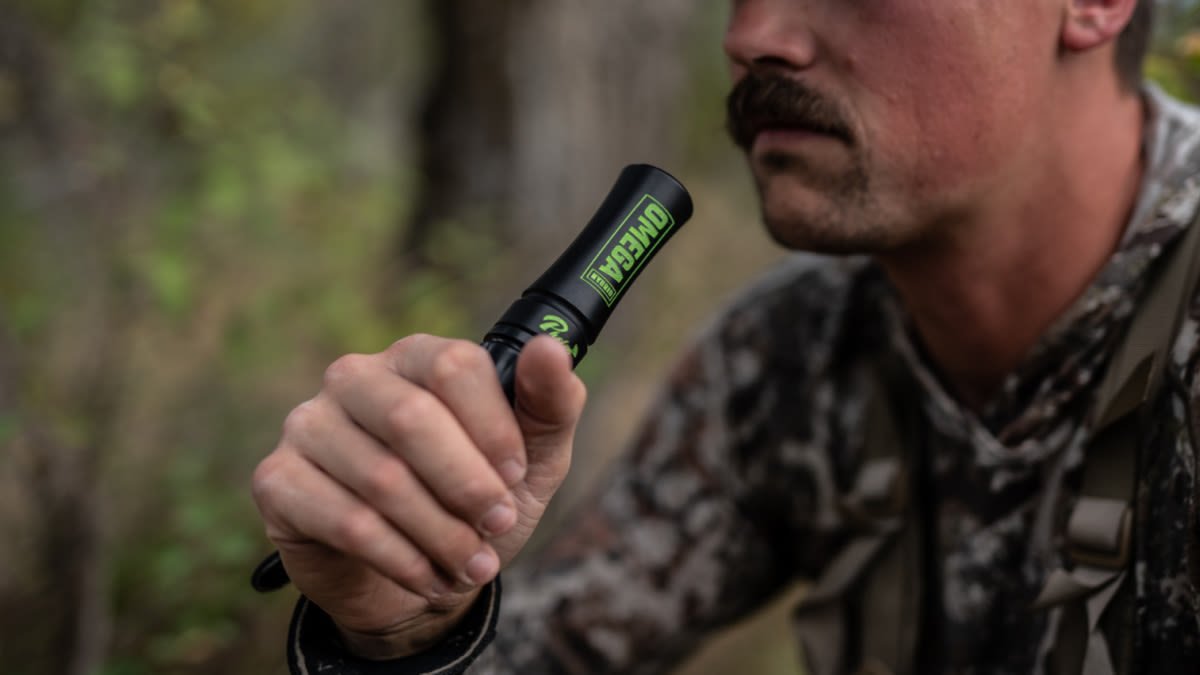
A deer grunt call is the cheapest piece of gear in your pack that can flip a hunt from boring to filled tag in under thirty seconds. Used right, it pulls cruising bucks off the line they were already walking and bends them toward a treestand inside 25 yards — bow range. Used wrong, it does the opposite: it pins a mature buck in place at 80 yards, blowing him out of the country with a single snort. The difference is sequence, cadence, and timing. Below are seven calling sequences bowhunters actually kill bucks with, plus the setup rules that decide whether any of them work at all.
What a Deer Grunt Call Actually Does
Deer grunting is a normal social vocalization, and a grunt tube reproduces three core whitetail versions: the social contact grunt, the tending grunt of a buck on a hot doe, and the aggressive challenge grunt of a buck willing to fight. Each one signals something different to a deer within earshot, and the wrong one at the wrong time of season triggers avoidance, not curiosity. Learning how to use a grunt call starts with accepting one rule: the point of a deer grunt call is not to bring deer to your stand from a mile out. It is to redirect a deer already passing within 80 to 120 yards. That distance window is small, and it is the reason setup matters more than tone.
When to Call — and When to Keep Your Mouth Shut
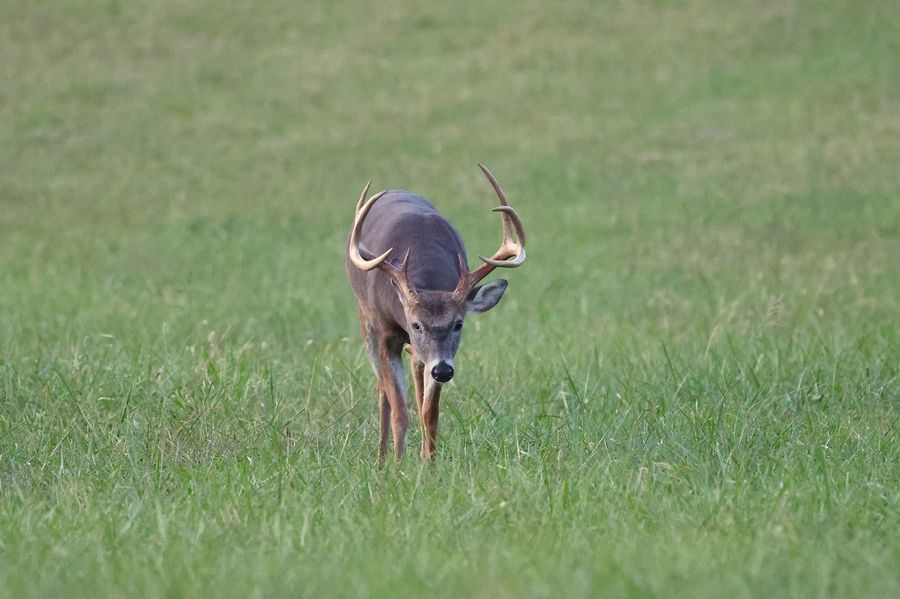
The Quality Deer Management Association tracked over 200 buck responses to calling across multiple seasons and found that response rates jumped from under 5% in early October to roughly 35% during the seek-and-chase phase a week before peak rut. Translation: the call is a rut weapon. Outside of late October through mid-November, expect indifference unless you find a buck already worked up.
Three windows actually deserve the grunt tube: the pre-rut roughly 7–14 days before peak chasing, the seek-and-chase phase itself, and the post-rut secondary chase when does that did not get bred cycle again. Early-season calling rarely works because social bonds are still tight and bucks have no reason to investigate. Late-season calling fails because survivors are exhausted and conserving calories. Hunt those rut windows and you have margin for error; hunt the other windows and you are basically blowing into a tube for nothing.
Sequence 1 — The Cold Contact Grunt
Blind-calling without a buck in sight gets a bad rap because most hunters do it loud and constantly. Done right it works. The cold contact sequence is two soft grunts — half a second each, low volume, your hand cupped over the end of the tube to muffle direction. Wait twenty minutes. Repeat. That is the entire sequence. Aim it at thick funnels where you cannot see deer until they are already inside bow range, like cedar thickets, CRP edges, or pinch points between bedding and food. The point is to nudge any buck within 100 yards into investigating without raising alarm.
Sequence 2 — The Tending Grunt
When a buck is actively trailing a doe, he produces a rolling string of short, rhythmic grunts — uh, uh, uh — every step or two. Reproducing that pattern during the chase phase is the single most productive calling sequence a bowhunter can run. Hold the tube and grunt 8 to 12 times in a five-second burst, then pause for 30 seconds, then repeat once. That is it. Stop. Mature bucks investigating tending grunts come in fast and hot, often jogging, because they think another buck is locked onto a hot doe and they want to either steal her or fight for her.
Sequence 3 — The Snort-Wheeze
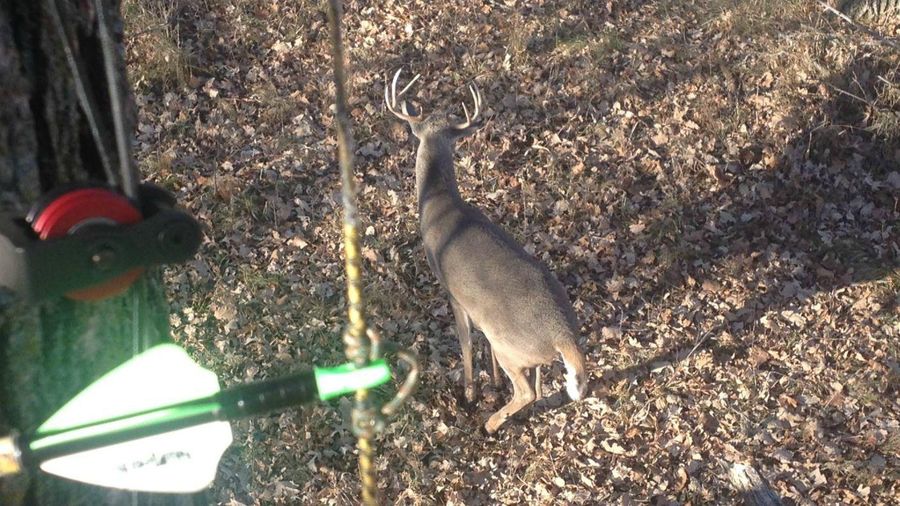
The snort-wheeze is the most aggressive vocalization in the whitetail vocabulary. It is what a buck does right before a fight, and it is the call you save for the buck that has already seen another buck and is not turning. Three sharp nasal puffs followed by a drawn-out wheeze. Most grunt calls do not produce it cleanly — you usually need a dedicated snort-wheeze call or a tube with a removable insert. Use it once. Then do not use it again on the same deer. If a mature buck answers, his hair stands up and he comes in stiff-legged looking for the fight. If he does not answer in 30 seconds, he was not in the mood and more calling will not change that.
Sequence 4 — Soft Trailing Grunts
Sometimes a buck cruises through 60 yards out, not stopping for anything, and you have one chance to bend him. The soft trailing sequence is three short grunts — barely audible to you, intentionally quiet — spaced one second apart. The idea is that the buck thinks he just walked past a subordinate buck he did not see. Half the time he keeps walking. The other half he stops, turns his head, and circles back to confirm. That circle is where bow shots happen. If he turns and stops broadside, do not grunt again. The follow-up call is what spooks mature deer. Let him commit on his own.
Sequence 5 — The Grunt-and-Rattle Combo
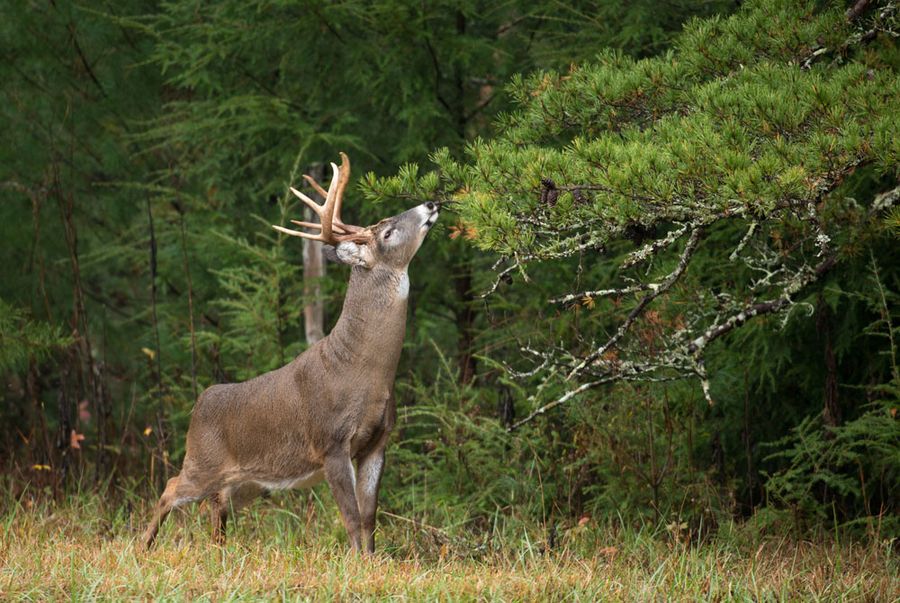
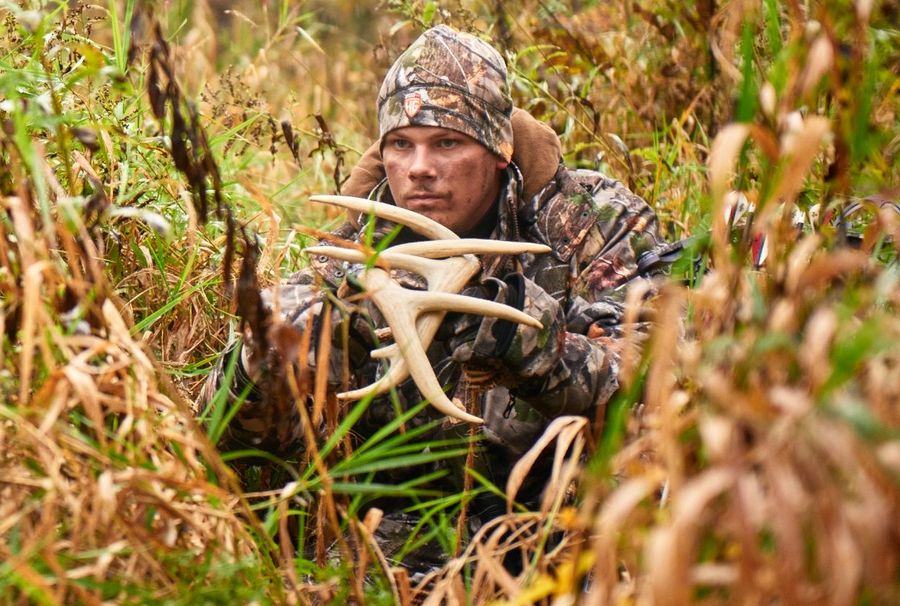
Rattling alone gets dismissed by a lot of bucks because it sounds like two strangers fighting somewhere they have no stake in. Pair it with grunts and the audio story changes — now it is two bucks they recognize, locked in over a doe nearby. The sequence is 30 seconds of moderate rattling (medium-aggressive tine clashes, not all-out), pause 5 seconds, two tending grunts, pause 30 seconds, then a 15-second clash with one snort-wheeze inserted. Wait twenty minutes minimum before repeating. This is the high-octane sequence and it works best during the seek-and-chase phase when bucks are checking every patch of timber for another fight.
Sequence 6 — Doe Bleat Plus Buck Grunt
An estrus doe bleat through a separate bleat can or grunt tube with a bleat insert says one thing to a buck during the rut: there is a receptive doe nearby and no buck has claimed her yet. Bleat once for 4 seconds. Wait 90 seconds. Add a single short buck grunt. The grunt sells the story — the buck listening now believes a subordinate male is also moving toward the doe. He does not want to lose her. This sequence is especially deadly the first few days after peak when most receptive does are already locked down and any unbred doe is a hot ticket.
Sequence 7 — The Pull-Back
The pull-back is what experienced callers use on a buck that is in sight but going the wrong way. Two contact grunts, then aim the tube directly away from the deer — into the woods behind your stand — and grunt twice more, the second pair quieter. The audio creates the illusion that a buck is moving away from him. Mature bucks that ignored the first pair often turn and follow the receding sound, looking for the intruder leaving their core area. If your stand is between him and the perceived retreating buck, he walks past at bow range. This is the single sequence that has saved more borderline hunts than any other.
Setup Before You Ever Blow the Tube
None of the seven sequences above matter if your setup is wrong. Bucks responding to a call almost always loop downwind before committing. If the wind is in your face from the direction you expect the deer, that buck will swing 50 yards behind you to scent-check the calling source before stepping into the open. He never sees you, but he smells your stand and leaves silent. The fix is a crosswind setup — wind blowing perpendicular to the expected approach — so a downwind loop still puts him in front of your bow.
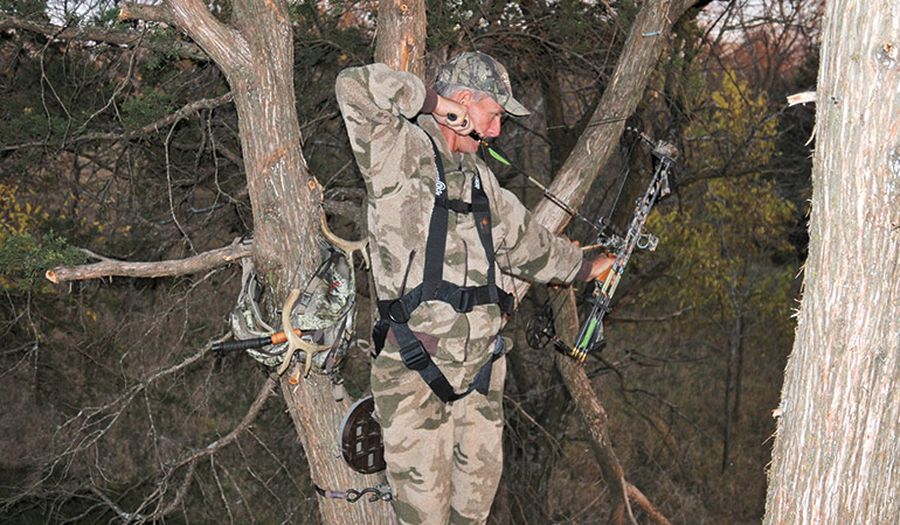
Position also matters for shooting lanes. A buck investigating a call is moving with his head up, ears swiveling, eyes locked on the source. He will pick off any movement above ground level. Drawing your bow before you call, not after, is non-negotiable. Hook your release, settle the bottom cam on your knee if you are seated, and then blow the sequence. If a buck answers and commits, you are already at half-draw, not scrambling.
Stand Selection Built Around Calling
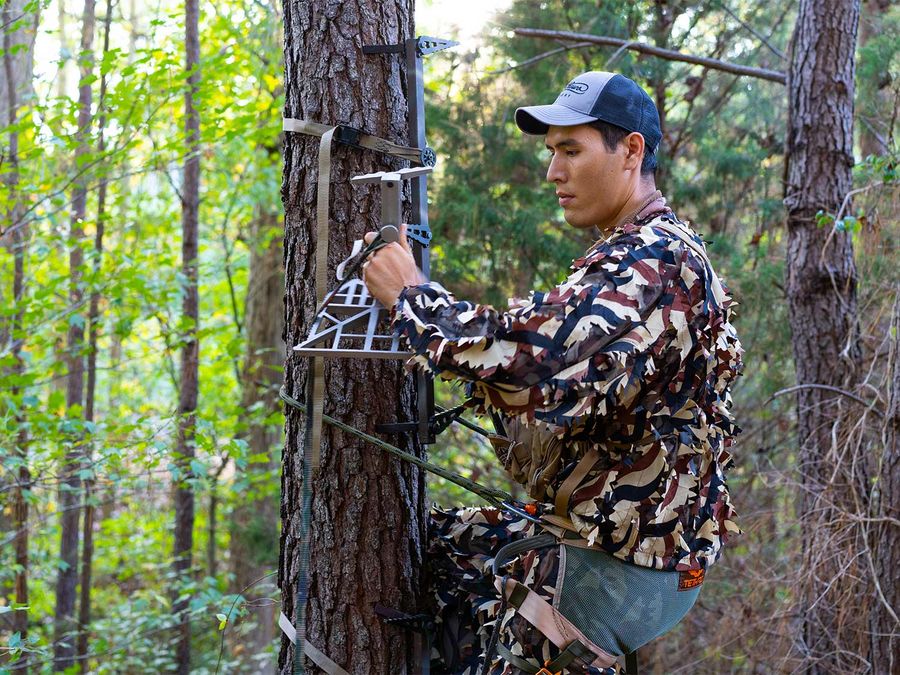
The best stands for calling are ones that fail without a call. Funnels too wide for natural ambush, edge cover too thin to draw deer without prompting, ridgelines where bucks travel but never stop — these are calling stands. Saddle-style timber benches near doe bedding are productive because cruising bucks check those benches constantly during the rut and respond hard to anything that sounds like competition. Pair calling stands with rut sign you have already confirmed via cameras or boot-leather scouting. Calling cold timber with no recent buck activity is a slow afternoon.
For more on building stand setups around buck sign, see our guide on how to make a mock scrape to anchor a calling stand, plus our trail camera placement rules for confirming a shooter buck is in the area before you commit five sits to one tree.
Watch: Deer Calling 101 from Virginia DWR
The Virginia Department of Wildlife Resources put together a clean breakdown of the three core whitetail vocalizations — grunts, bleats, and rattles — that pairs well with the sequences above. Worth four minutes of your time before opening day.
Common Mistakes That Kill Calling Setups
The mistake that ruins more hunts than any other is over-calling. A grunt tube blown every five minutes sounds nothing like a real deer. Bucks naturally vocalize in short bursts separated by long silences. One sequence every 20 to 30 minutes is the upper end of what reads as natural. Hunters also tend to blow too loud — the call distance for an actual whitetail grunt is closer to 100 yards than half a mile, and a tube blown at full volume often pegs the location too precisely, letting a mature buck triangulate exactly where you are.
The second mistake is calling at deer that are already coming your way. A buck on a string toward your stand needs nothing from you. Calling at him risks stopping him short, making him hang up at 50 yards while he tries to figure out why a strange buck is now in his lane. Save the tube for the buck that is going to walk past out of range — that one needs intervention. The one already coming does not.
Best Grunt Calls for Bowhunters in 2026
The gear matters less than the operator, but a few tubes consistently produce cleaner tones across volume ranges. The Primos Buck Roar handles aggressive calls and snort-wheezes better than most under $30. The Illusion Black Rack and Extinguisher are favored by serious whitetail guys for their tonal range from young buck contact grunts to mature buck challenge calls in a single tube. Whatever you carry, the truth is that an $8 tube blown by a hunter who understands cadence will outperform a $60 tube blown by someone who calls every five minutes. Practice the sequences in your living room before opening day.
From the Call to the Recovery
Calling a buck into bow range is one piece of the chain. Reading the shot opportunity and putting the arrow where it has to go is the next, and it is where most rushed hunters lose deer. A buck investigating a call is rarely standing still in a textbook broadside pose — he is quartering, head up, ears forward, scanning. Wait for the step that gives you the high heart-lung pocket, not the first second of an opening. For more on the shot itself, our breakdown of deer shot placement covers the angles that actually drop bucks fast.
One Final Cadence Note
Every veteran caller eventually lands on the same hard truth: silence is a calling tool. The buck that ignored your first sequence is not waiting on a second sequence — he is waiting to see if the sound was real or fake. A second call too soon confirms fake. Twenty minutes of patient nothing confirms real. Put the tube in your pocket, settle into your harness, and let the woods get quiet again before you decide whether the sequence failed or just needs another beat to land.
Sources
- Outdoor Life — When and How to Use a Grunt Tube to Call in Deer
- MeatEater Wired to Hunt — 3 Grunt Call Vocalizations Every Whitetail Hunter Should Know
- Grand View Outdoors — Snort-Wheeze: A Whitetail Hunter’s No. 1 Long-Range Vocalization
- HuntStand — How to Grunt and Rattle in Deer
- Georgia Outdoor News — Right and Wrong Times for Grunt Calls
- Virginia Department of Wildlife Resources — Deer Calling 101: Grunts, Bleats, and Rattles
Browse archery bows, arrows, and accessories at the Archery Supplier shop →
