Archery Blog
Deer Shot Placement: 7 Angles That Decide a Clean Kill
Jun
Deer shot placement decides whether you’re tracking a deer for 80 yards or 800. The vital zone on a whitetail is a roughly basketball-sized circle behind the front shoulder containing the heart and both lungs, and a clean double-lung arrow drops a mature buck inside 100 yards more than 90% of the time. Everything in this guide — angle, anatomy, arrow path — comes back to putting your broadhead through that circle.
The problem is that the vital zone moves. It shifts as the deer turns, lifts a leg, ducks a string, or swings its head to feed. A picture-perfect aiming point at full draw becomes a gut shot the moment that buck pivots three inches. Reading the angle in real time — and knowing which shots to pass — is the skill that separates seasoned bowhunters from frustrated ones.
The Vital Zone: Where Deer Shot Placement Actually Matters
The heart-and-lung vital area on a whitetail sits roughly between and just behind the two front shoulders, about one-third of the way up the body on the vertical plane. The heart hangs low and slightly forward; the lungs balloon out behind and above it. Hit either organ with a sharp two-blade or three-blade broadhead and the deer bleeds out fast — usually in under 30 seconds for a heart shot, under a minute for a double lung.
The shoulder blade (scapula) and the upper leg bone (humerus) sit in front of the vitals like a hinged door. Most bowhunters who lose deer hit one of those bones instead of slipping past them. Mechanical broadheads in particular can deflect or fail to penetrate when they catch the shoulder, which is why so many bowhunting elders preach “behind the crease, not on it.”
The liver sits behind the diaphragm, about a hand’s width behind the lungs. A liver hit is fatal but slow — count on a 4 to 8 hour wait before recovery, and pray it doesn’t rain. Anything further back is paunch, and paunch shots end in either a lost deer or an all-night tracking job that ruins the meat.
The Broadside Shot — The Gold Standard
A broadside whitetail is the cleanest deer shot placement angle a bowhunter will ever get. Both lungs are exposed, the heart is reachable, and the arrow has a straight path through soft tissue. There’s a reason every shot placement diagram opens with this angle — it’s forgiving on entrance and devastating on exit.
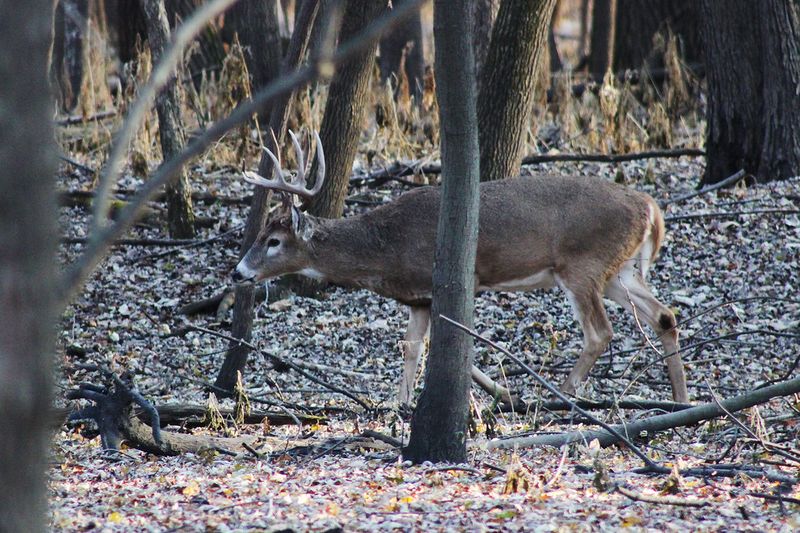
Broadside whitetail buck — the ideal angle for clean double-lung penetration.
Aim point: draw an imaginary vertical line up the back of the front leg, then a horizontal line across the middle of the body. Where they cross is roughly the bottom of the lungs and top of the heart. Most bowhunters then move the pin up two to four inches to compensate for a deer’s “string-jump” reflex — they drop a few inches as they react to the bow sound. The Texas Parks & Wildlife Department’s vital areas guide places the aim point about one-third up from the brisket, just behind the shoulder crease.
The modern Vital V technique pushes the aim slightly forward — about an inch ahead of the shoulder crease, into the V-shaped pocket formed by the scapula and humerus. Hit that pocket and you slice through the top of the heart and the front of both lungs. The Vital V drops deer fast but it’s less forgiving — a couple of inches off and you’re hitting solid shoulder bone. Bowhunters with heavy arrows (500+ grains) and fixed-blade heads have the structure to take the Vital V. Lighter setups should stay safely behind the crease.
Quartering Away — Why Many Bowhunters Prefer It Over Broadside
A deer quartering away from you at 20 to 45 degrees is, in many ways, a better shot than broadside. The off-side shoulder is rotated forward and out of the arrow’s path, which means a properly placed arrow drives through both lungs and exits cleanly through the opposite side ribs — sometimes through the on-side leg crease too. Mature bowhunters often wait specifically for this angle.
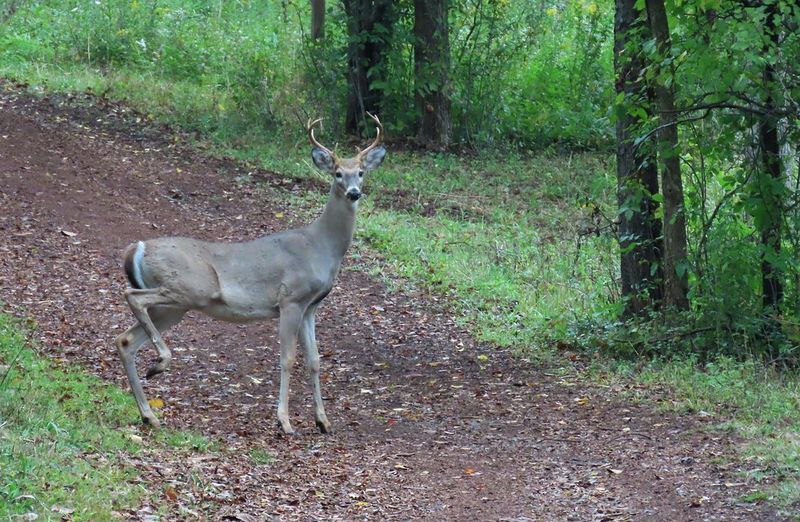
A quartering-away buck offers the cleanest path to both lungs.
The aim shifts. Don’t aim behind the near shoulder anymore — that’s the gut now. Instead, mentally draw a line from your stand to the opposite-side front leg and aim where the arrow needs to exit. On a buck quartering hard away, that aim point can land halfway back on the rib cage. The steeper the angle, the further back you aim. Many bowhunters miss low on quartering-away deer because they default to the broadside aim point instead of adjusting for the geometry.
The National Deer Association notes that the quartering-away shot is the deadliest angle for a bowhunter because the arrow path crosses more vital tissue per inch than any other approach. Pair it with a fixed-blade head and you’ll find blood within 50 yards almost every time.
Quartering Toward You — The Shot That Costs Most Deer
A deer quartering toward you at any angle steeper than a few degrees is a pass. The near shoulder shields the lungs, and the only opening to the vitals runs through the brisket, neck, or a tiny gap behind the leg pit — none of which a bowhunter should rely on. Even with a perfectly placed shot, the arrow has to defeat solid shoulder bone before reaching anything that bleeds out fast.
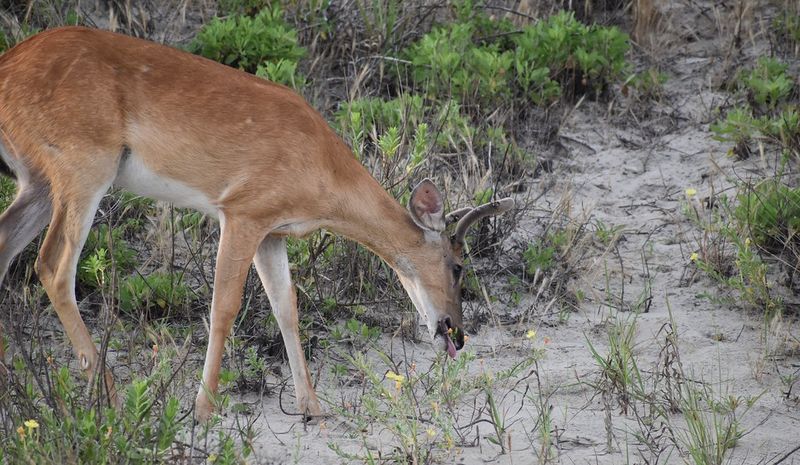
When a deer is angled wrong, wait. Feeding deer routinely turn within 60 seconds.
Bowhunting forums are full of “I hit her in the chest and she ran a hundred yards before I lost the blood” stories — and almost every one of them is a quartering-toward shot that hit shoulder and slid sideways. Wait. Feeding deer reposition every few seconds. A buck working a scrape will swing his hips. The angle you want is one short pause away.
Head-On and Straight-Away Shots: Both Are Passes
Head-on shots get pitched on hunting TV as “the high-percentage chest shot” — and they’re terrible shots for bowhunters. The arrow has to defeat the brisket, then thread a narrow lane between the front legs, then somehow find a lung. The exit is usually nonexistent because the arrow lodges in the chest cavity. With no exit hole, blood trails are sparse to zero, and recovery rates collapse.
Straight-away (“Texas heart shot”) is worse. The arrow’s only path to the vitals runs through the hindquarter, intestines, and stomach, and the femoral artery is the only quick-kill option — a target the size of a pencil. Even a perfect hit ruins the back straps. A bowhunter’s discipline is knowing that not every deer at 20 yards is a deer worth shooting.
Shot Placement for Elk, Turkey, and Hogs
The vital zone shifts with the species. Elk are 2.5 to 3 times the size of a mature whitetail, but their vitals sit further back relative to the shoulder — the heart is roughly four to six inches behind the front leg crease, not tucked tight against it. Bowhunters who shoot elk like deer hit shoulder. The aim point on a broadside bull should be a hand’s width back from the crease, slightly lower than you’d think.
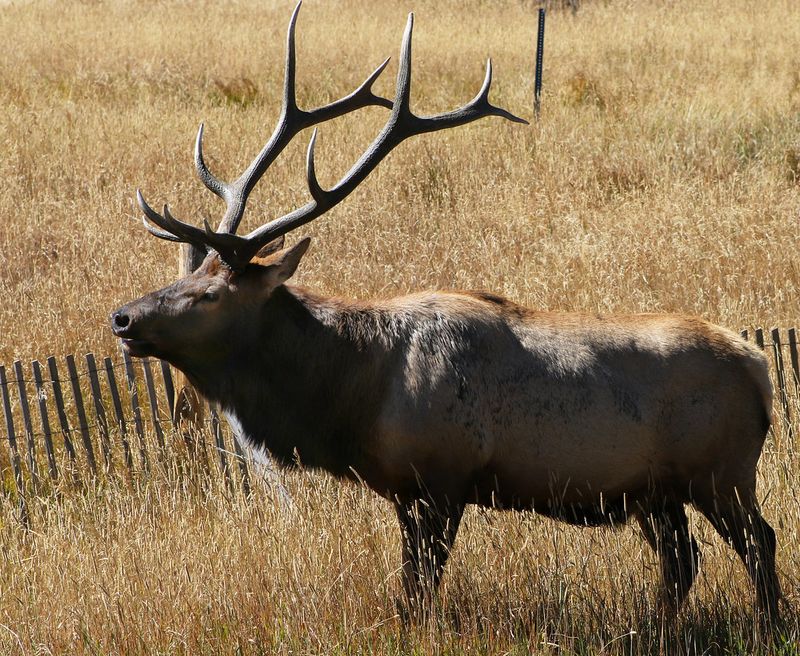
A standing broadside bull elk offers the largest vital area target in North America — and the most forgiving angle for a heavy archery setup.
Elk also have much heavier bones. A 70-pound draw weight bow with a 500-grain arrow and a sturdy two-blade fixed broadhead is the baseline for ethical penetration. Mechanical heads designed for whitetails routinely fail on elk shoulder. If you’re building a bowhunting setup for both species, choose the broadhead that works on elk and you’ve covered deer too — never the reverse. Our breakdown of the best broadheads matched to whitetail, elk, turkey, and hogs walks through which heads belong on which game.
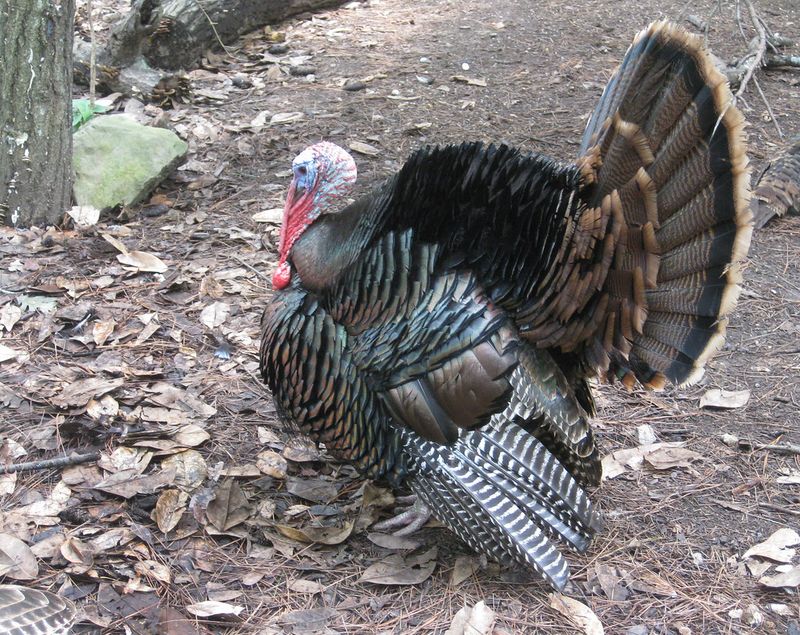
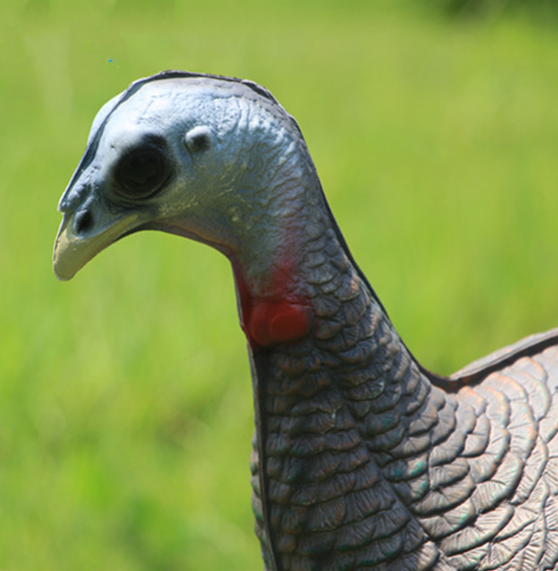
Turkey shot placement looks nothing like deer — there are no shoulders to avoid and no lungs to chase.
Turkeys throw the whole “double lung” playbook out. A bowhunter shooting a strutting tom broadside should aim at the wing butt — the point where the wing joins the body. That zone holds the heart, lungs, and major spine bone in one tight package. On a strutting bird facing away, aim at the base of the tail fan. On a head-on strutter, aim at the beard line in the lower chest. Mechanical broadheads with large cutting diameters dominate turkey hunting because penetration matters less than wound channel through soft tissue.
Wild hogs change the rules again. A boar’s shield — the dense gristle plate over the shoulder — can stop a fixed-blade broadhead cold. The vital zone sits lower and further forward than on a deer; the heart is essentially behind the elbow. Aim tight behind the front leg on a broadside hog, low, and use a heavy single-bevel head with at least 60 pounds of draw weight. Body-cavity hits without an exit on hogs are nearly impossible to recover.
The 3 Mistakes That Wound More Deer Than Bad Aim
Most lost deer don’t come from a hunter aiming at the wrong spot — they come from three preventable mistakes that turn a good shot into a bad one.
Shooting at high angles without compensating. A whitetail vital zone is calculated from level ground. Drop a 20-foot tree stand into the equation and the angle compresses the visible chest. Bowhunters who aim at the same crease-and-leg intersection from 18 feet up routinely shoot one lung instead of two. The fix is to mentally adjust the exit point — picture where the arrow needs to come out, then aim higher on the entrance side to make that exit happen. Our guide to shooting a bow from a treestand covers the form changes that prevent single-lung hits.
Ignoring deer body language. A relaxed deer with its head down and tail flat is a deer that will stand still through the shot. A deer with its head up, ears forward, and tail twitching is a deer that’s about to drop and bolt. The single biggest cause of high lung-or-spine hits is shooting at an alert deer that string-jumps. Wait for the head to drop, the tail to flick down, and the ears to relax. If the deer never relaxes, take the safest shot you have or pass entirely.
Rushing the recovery. A double-lung hit deer is usually dead in 15 seconds, but a marginal hit — liver, single lung, paunch — can mean a deer that beds within 80 yards and dies if left alone, or runs five miles if pushed. Mark the last sight of the deer, wait at least 30 minutes for a lung shot and 4 to 6 hours for a gut shot, and bring a partner with a tracking light. Blood trails fade. Patience finds deer that haste loses.
Practice Your Shot Placement Before Season — Not During
The single fastest way to improve your bowhunting shot placement is to stop shooting at a bullseye and start shooting at a 3D target. A bullseye trains you to aim at a colored center. A 3D target trains you to find the crease, picture the vitals through the hide, and execute on a realistic body shape — exactly the skill you need in the field.
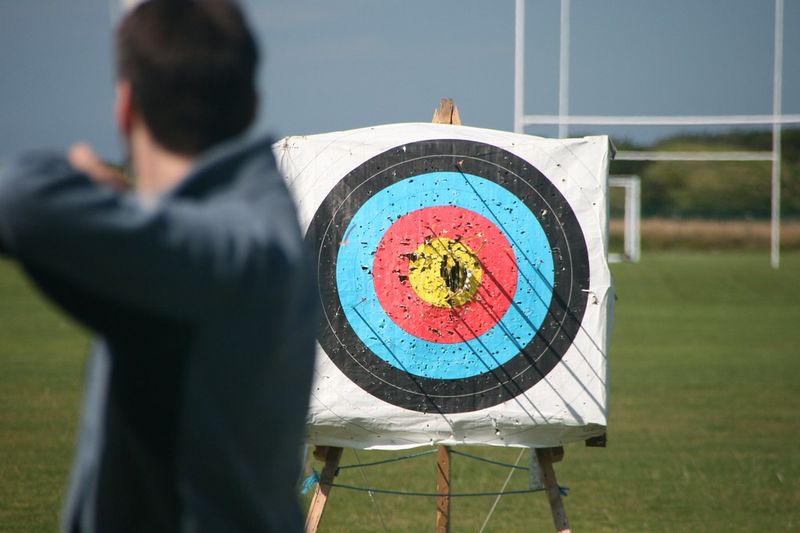
Practice the exact shot you plan to take — angle, distance, and stance.
Build practice sessions around realistic scenarios: 15 yards from a treestand-height platform, 25 yards on the ground, quartering-away angles set up by moving the target. Shoot a single arrow, then walk away and come back — that mirrors the cold-blooded one-shot reality of a hunt. Stacking ten arrows in a row builds rhythm, not pressure tolerance. Most missed deer were never missed in practice because most bowhunters never practice the shot they end up taking.
Watching deer through the off-season trains the other half of the skill. Glassing a feeding doe through binoculars teaches you what a relaxed posture looks like compared to an alert one — the difference that decides whether you should draw or wait. If you bowhunt from the ground, our spot-and-stalk bowhunting walkthrough covers how angle and wind dictate shot opportunities.
Watch the Shot Placement in Slow Motion
The footage below breaks down deer anatomy and shot placement on a real broadside whitetail — useful for visualizing how the arrow path crosses the vitals at the angles described above.
The One Question to Ask Before You Release
Every bowhunter eventually develops a mental checklist at full draw, but the question that matters most is this: can you picture the arrow’s exit hole? If you can see exactly where the broadhead will come out the other side of the deer — and that exit lands in the vital zone — release. If you can’t, hold or let down. Every poorly placed arrow this season will start as a release pulled before that question was answered.
Shot placement isn’t a single skill. It’s the product of angle reading, anatomy knowledge, equipment match, and field discipline practiced in the off-season and executed in the moment. The bowhunters who recover almost every animal they shoot aren’t better shooters than everyone else — they’re more patient. They wait one extra heartbeat for the angle, and they pass shots that other hunters take and lose.
Sources
- Texas Parks & Wildlife — Shots to the Vital Areas — official hunter-education vital zone diagrams and aim points
- National Deer Association — Improved Shot Placement for Enhanced Hunting Success — biology-driven shot placement education
- Bowhunters United — Shot Placement 101 — angle-by-angle bowhunting breakdown
- Vortex Optics — Ethical Bowhunting: Shot Placement Tips for Deer — practical aim points for whitetails
- U.S. Fish & Wildlife Service — White-tailed Deer Species Page — anatomy and behavioral background
Browse archery bows, arrows, and accessories at the Archery Supplier shop →
Shop on eBay
Archery Equipment on eBay →
We may earn a commission when you shop through our eBay links.
