
Archery Blog
Custom Arrow Building: A Bench-Side Walkthrough From Spine Chart to Finished Shaft
Jun
Buying a pack of pre-built arrows is fast, but it hides every choice that actually decides whether the shaft flies straight off your bow. Spine, cut length, point weight, fletching profile — all of those get locked in by a factory making a compromise for the average customer, not for your draw length, your peep height, or the broadhead you plan to shoot. Building your own arrows changes that. You stop guessing why a fletched shaft drifts left and start understanding the physics behind every component you glued, cut, or wrapped.
This walkthrough is meant to live on the workbench. It moves from spine-chart reading through cutting, inserting, fletching, and the verification shots that prove your build is honest. It assumes you already own a bow you can tune and that you want repeatable groups rather than a marketing story. Everything here is gear-agnostic — the same logic applies whether you shoot a compound at 70 pounds or a recurve at 38.
Why Build Instead of Buy
Factory-built arrows are spined for a range, not a point. A box of 340-spine carbons assumes a 28-inch shaft, a 100-grain field point, and a draw weight in the middle of the chart row. Shift any of those variables and the dynamic spine changes — sometimes by a full chart column. That’s why a stock arrow that prints fine for a buddy may paper-tune like a banana for you.
Building lets you treat the arrow as a tuned system. You match shaft stiffness to your real draw weight, you cut to a length that suits your draw and rest geometry, you pick point weight that lands FOC in the window you want, and you fletch a profile that matches the broadhead or field tip you’ll actually shoot. Done well, a custom build holds tighter groups at distance, recovers faster from a shot you flinched, and gives broadheads a fighting chance of flying with field points.
Reading the Spine Chart Without Lying to Yourself
Every shaft manufacturer publishes a chart, and almost every archer reads it wrong. The chart row is anchored on a peak draw weight, but the column you actually need depends on your real shaft length (nock groove to back of point, not arrow length), your point weight, and any adjustments for cam aggression on a compound or a heavy finger release on a recurve. Pretending you draw 70 pounds when your scale reads 67, or assuming a 28-inch column when your shaft will be cut to 27.25, is how people end up two columns soft.
Adjust for Point Weight Before You Pick a Spine
Heavier points weaken dynamic spine. A common rule of thumb is that every 25 grains over the chart baseline (typically 100 grains) acts like adding roughly five pounds of draw weight. If you plan to shoot a 125-grain broadhead, run the chart at your peak weight plus five before you choose a column. The opposite applies for lighter points — drop your effective weight if you’ll shoot 85-grain target tips.
Adjust for Cut Length
A longer shaft is dynamically weaker; a shorter shaft is stiffer. If your chart row assumes 28 inches and you’ll cut to 29, you may need to move one column stiffer. Compound shooters with long draws and short stabilized rests often run into this. Don’t fight the chart — respect it, and only shop the column that matches your real measurements.
Choosing Shaft Material
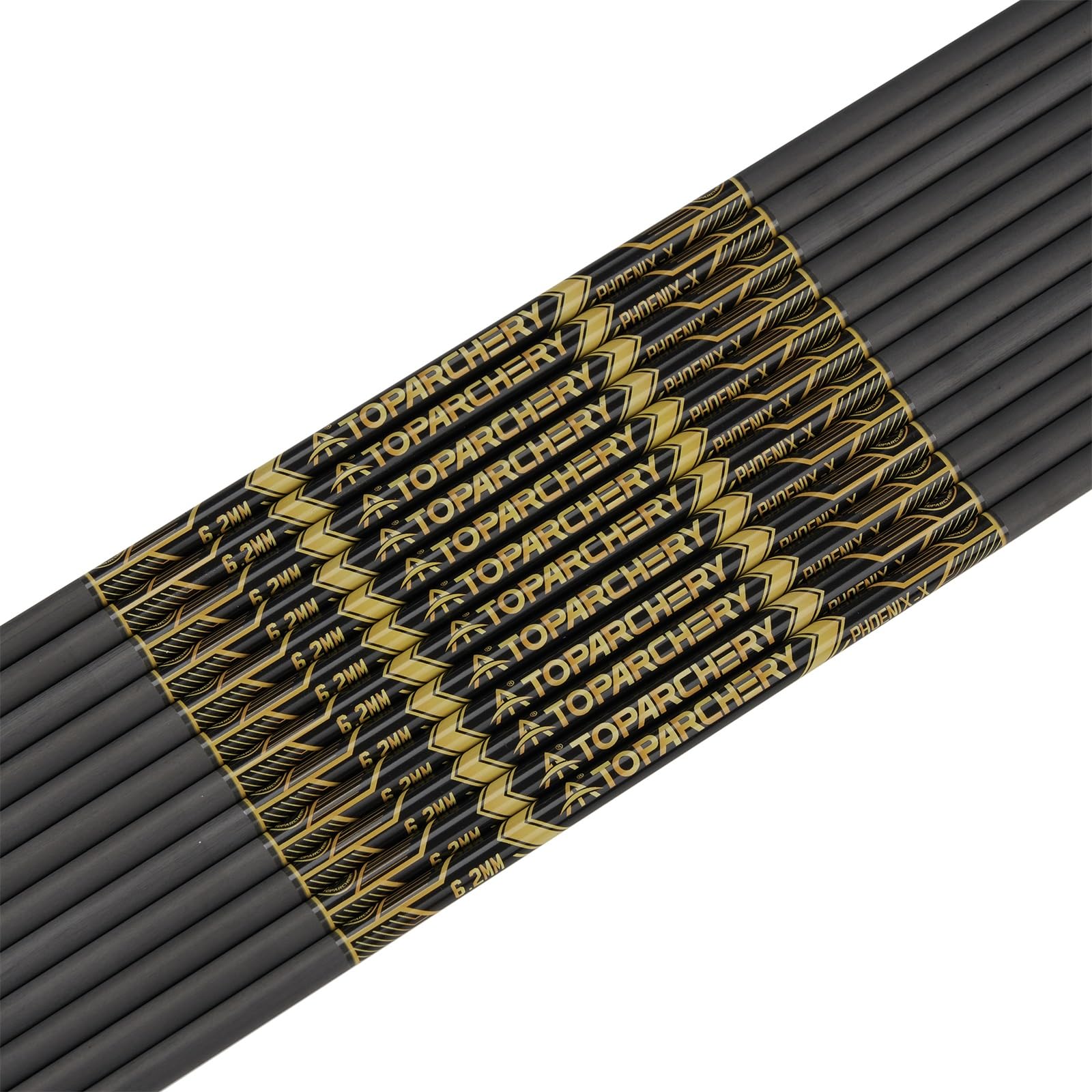
Material decides three things: tolerance, durability, and what happens when you hit a hard target. Carbon dominates the modern bench because spine tolerances on premium shafts are tight enough to skip individual spine-indexing for most setups, and a carbon shaft that survives a target hit will usually shoot true. Aluminum is still alive and well for target archers who want a slightly heavier, slow-recovering shaft that prints cleanly on paper and rewards a smooth release. Carbon-aluminum hybrids — typically a carbon shaft sleeved over a thin aluminum core — sit between the two and have become the go-to for serious bowhunters chasing FOC and penetration.
If you’re building your first set, pure carbon is usually the right call. It’s forgiving on price, simple to cut on a high-speed abrasive saw, and accepts both press-fit inserts and the newer half-out designs without drama. Save aluminum for when you understand what you’re trading away.
Cut Length and the Bare-Shaft Mark
Cut length is where most home builders give themselves away. The temptation is to cut at the back of the rest plus an eighth of an inch and call it done. The smarter approach is to fletch one bare-shaft prototype an inch long, tune it bareshaft from twenty yards, and only then commit to a final cut for the rest of the dozen.
Why? Because a properly tuned bareshaft tells you whether your spine choice was right. If the bareshaft impacts left of your fletched arrows for a right-handed compound shooter, the dynamic spine is weak — cutting a quarter inch off stiffens the shaft and pulls the bareshaft back into the group. If it impacts right, the shaft is stiff; you live with that or add point weight. Cutting all twelve shafts to your guess before tuning a single one is how people end up with a dozen mismatched arrows.
Inserts, Outserts, and Point Weight Math
The insert is the small aluminum or steel sleeve that bonds inside the shaft and accepts your threaded point. Three rules keep this step boring, which is exactly what you want. First, square the cut end of the shaft on a shaft squaring tool before gluing. A burr or angled cut puts the insert in crooked and you’ll never tune it out. Second, use a slow-set hot melt or a two-part epoxy rated for arrow inserts — instant CA glue holds up to target shots but fails on a hard angle in a 3D foam butt. Third, dry-fit and rotate the insert as the glue sets so the threads sit aligned with the shaft axis.
Point weight is where you tune FOC — the percentage of total arrow mass forward of the centerline. Target archers usually live in the 8–12% FOC window; bowhunters with traditional setups often climb to 18–25% for penetration. To raise FOC without weakening spine, switch to a heavier insert before adding more point weight. To drop FOC, lighten the point or move to a brass-free insert.
Fletching: Profile, Helical, and Choice of Material
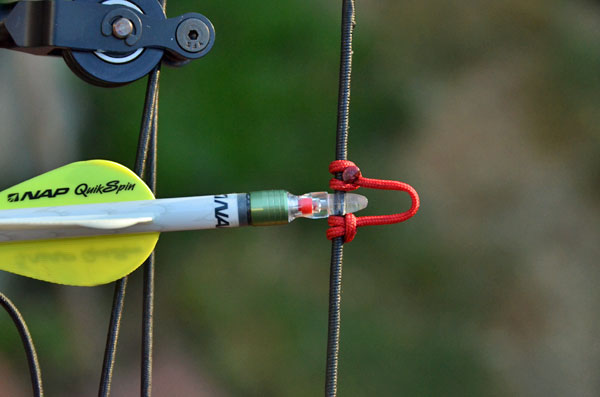
Fletching is steering drag. Bigger vanes spin and stabilize broadheads faster, but they bleed speed and amplify any imperfection in form. Smaller low-profile vanes hold speed and forgive a slightly tilted bow, but they need a clean release to do their job. For compound bowhunters with fixed-blade broadheads, a four-inch helical vane in a three-fletch or a two-inch high-profile in a four-fletch are both honest answers. For mechanical broadheads or field-point-only target archery, a two-inch low-profile vane in a slight offset is usually plenty.
Helical vs Offset vs Straight
Helical wraps the vane around the shaft, forcing rotation immediately on launch and giving broadheads the spin they need to fly true. The trade-off is drag and a sliver of arrow speed. An offset clamp angles the vane without curving it — less rotation, less drag, a good compromise for field tips. Straight clamps are reserved for indoor target archers who care about nothing except sub-50-yard speed.
Feathers for the Traditional Side
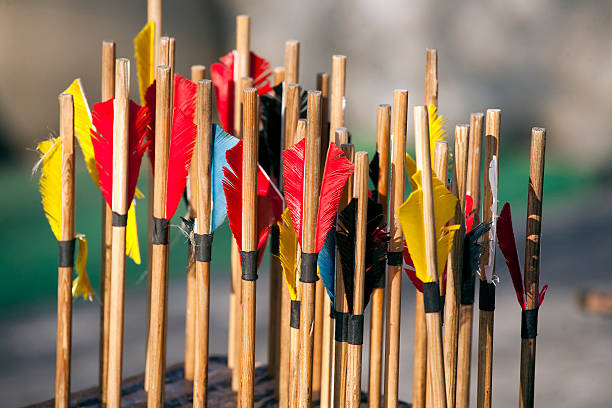
If you shoot a recurve or longbow off the shelf, real feathers are still the right answer. They collapse over a riser shelf where a vane would deflect off it, and they recover quickly when an arrow paradoxes around the bow. Match feather chirality (left- or right-wing) to the side of the bow you shoot — mixing wings in the same set is a common rookie error that bleeds groups.
Nocks, Wraps, and Final Assembly
Nocks are the cheapest component on the arrow and the easiest to get wrong. Press-fit nocks should snap onto the string with a click you can feel but not so tight that the arrow lifts when you let the bow hang. Pin nocks reduce nock damage by absorbing impact in the bushing rather than the shaft, and they’re worth the upgrade for indoor target archers shooting tight groups. Lighted nocks add weight at the back of the arrow — drop them from the build math and you’ll watch your FOC fall a point.
Wraps are optional, but they make fletching glue stick to carbon better, hide cosmetic shaft variation, and make finding arrows in tall grass easier. Apply a wrap straight, smooth out air bubbles with a credit card, and let it sit thirty minutes before fletching so the adhesive sets.
Verifying the Build at Distance
A finished arrow earns its place in the quiver by passing two tests. The first is a spin test on a flat plate or arrow spinner — any wobble at the point or nock means your insert is crooked or your nock is misaligned, and the arrow will leave the bow tracking sideways. The second is a thirty-yard fletched-against-bareshaft test. If your bareshaft prints in the same hole as the fletched arrows out to thirty yards, the build is honest. If it drifts beyond the fletched group, your tune is off — and the cause is almost always spine or rest, not the fletching itself.
When Your Build Drifts: A Quick Diagnostic
Most builds drift for one of three reasons. The most common is a soft dynamic spine — usually because the shooter rounded up draw weight on the chart or under-counted point weight. The fix is either a quarter-inch cut or a switch to a lighter point. The second is a fletching contact problem against the rest or riser, visible as a single torn vane on a paper test. Rotate the nock or move to a smaller vane. The third is insert misalignment, which shows on a spin test before it shows on a group — re-glue the offending shaft if it’s salvageable, or cut the bad inch off and start that arrow fresh.
Building arrows isn’t glamorous, but it’s the most direct way to understand why arrows fly the way they do. Once a dozen of your own shafts are stacking inside three inches at distance, factory arrows stop looking like a shortcut and start looking like a compromise.
Sources
- Easton Archery — Shaft specs and spine charts
- Gold Tip Arrows — Carbon shaft technical resources
- Bohning — Fletching products and adhesives
- USA Archery — Equipment standards and training resources
Browse archery bows, arrows, and accessories at the Archery Supplier shop →
Shop on eBay
Archery Equipment on eBay →
We may earn a commission when you shop through our eBay links.
