
Archery Blog
Archery Etiquette: Range Rules Every Archer Should Know

Jul
Walk onto a busy archery range on a Saturday morning and you’ll see forty people holding weapons that can send a carbon shaft through a target at over 150 miles per hour. Nobody gets hurt. That’s not luck — it’s etiquette. The unwritten (and sometimes written) code of range behavior is what turns a field full of arrows into one of the safest sports you can practice. Break the code and you’re not just rude; you’re dangerous.
Most new archers pick up bow technique in their first lesson but learn range manners by embarrassing themselves. This guide skips the embarrassment. Here are the range rules and courtesies every archer should have down cold before their second visit.
What Archery Etiquette Actually Covers
Archery etiquette breaks into two buckets: safety rules that are non-negotiable, and courtesies that keep the range pleasant. The safety half is enforced by whistle commands and a hard line you don’t cross. The courtesy half — staying quiet, respecting gear, cleaning up — is the difference between being welcomed back and getting side-eye from the regulars.
Here’s the honest truth most beginners miss: the experienced archers aren’t judging your groupings. Nobody cares that your arrows are scattered across the target. What they notice is whether you’re safe and whether you’re aware of the people around you. Master that and you’ll fit in faster than any tight arrow group could earn you.
The Whistle Commands That Run Every Range
The whistle system is the backbone of range safety, standardized by World Archery and used almost everywhere, from Olympic finals to your local club’s beginner night. Learn these four signals before anything else:
- Two blasts — Archers may move up to the shooting line. Arrows stay in the quiver.
- One blast — Begin shooting. You may now nock an arrow and draw.
- Three blasts — Shooting is over for that end. Walk forward to collect your arrows.
- Five or more blasts — Emergency. Stop immediately, let down your draw, and return your arrow to the quiver. Someone or something is downrange.
That last one matters most. If you ever hear a rapid burst of whistles, don’t finish your shot, don’t look around to see what’s wrong — let down first, ask questions later. A range officer blows that signal because a life could be on the line.
Never Draw When Anyone Is Downrange
This is the one rule that has no exceptions, no gray area, and no “just this once.” If a single person is standing between the shooting line and the targets — even off to the side, even collecting arrows two lanes over — every bow stays down. You do not nock. You do not draw to “test the string.” Nothing.

A drawn bow with a nocked arrow is a loaded weapon, and a slip of a finger releases it. USA Archery’s range procedures treat a violation of this rule as grounds for immediate removal, and they’re right to. If you need to adjust your sight or nock point, step back from the line to do it. Never handle a nocked arrow while people are forward. If you’re new to setting up your own space, our guide on how to set up a backyard archery range walks through building safe shooting lanes at home.
Shooting Line Etiquette: Straddle, Wait, and Respect the Space
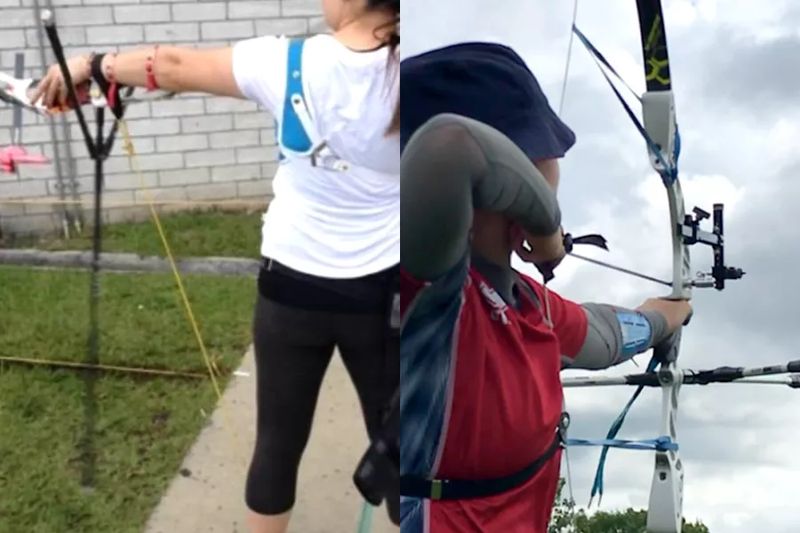
When you shoot, straddle the shooting line with one foot on each side. That’s the standard stance and it keeps everyone’s position consistent so the range officer can see who’s ready. Once you’ve fired your arrows, step back behind the line — that’s the universal signal that you’re done and it’s safe for others to keep the pace.
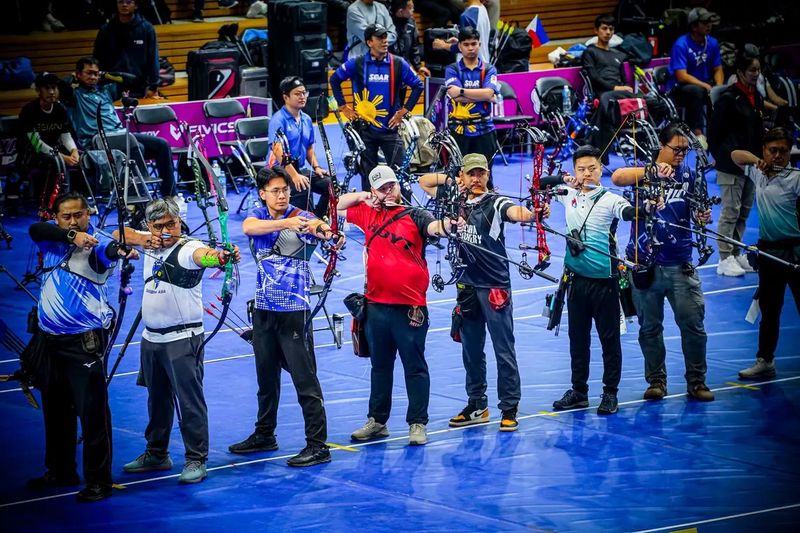
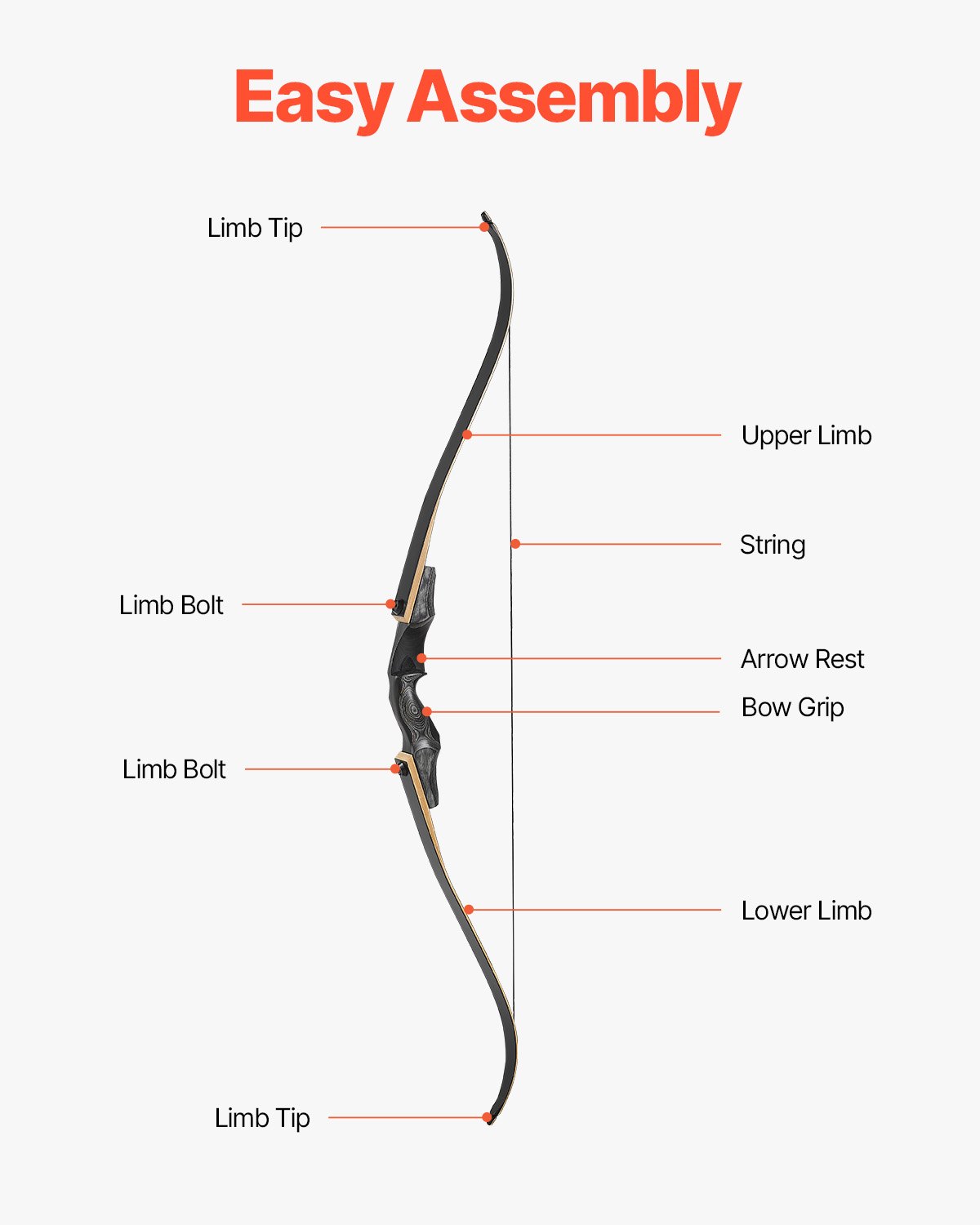
Give your neighbors room. A recurve bow is nearly six feet of limb and string, and a careless turn can clip the person next to you. Never walk behind an archer at full draw closely enough to distract them, and never cross into someone else’s shooting lane with your body or equipment. Space is courtesy, and on the line it’s also safety.

Sharing a Target: One Archer Pulls at a Time
When two or three archers share a single target face, only one person pulls arrows at a time. Everyone else stands back from the target, not crowding the butt. The reason is simple and a little grim: arrows sticking out of a target sit at eye and throat height, and someone leaning in to yank a shaft while you lean in beside them is how ranges send people to the emergency room.
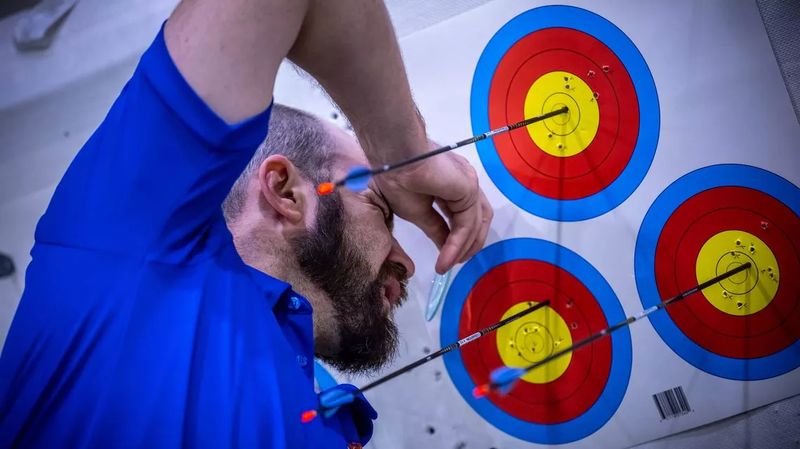
Pull arrows with one hand braced flat against the target face and the other gripping the shaft close to the target, pulling straight back in line with the arrow. Watch behind you before you tug — a stuck arrow that suddenly releases can drive your elbow into whoever’s standing there. Our step-by-step on how to remove arrows from a target covers the technique that saves both your fletchings and your neighbors.
Hands Off Other People’s Equipment
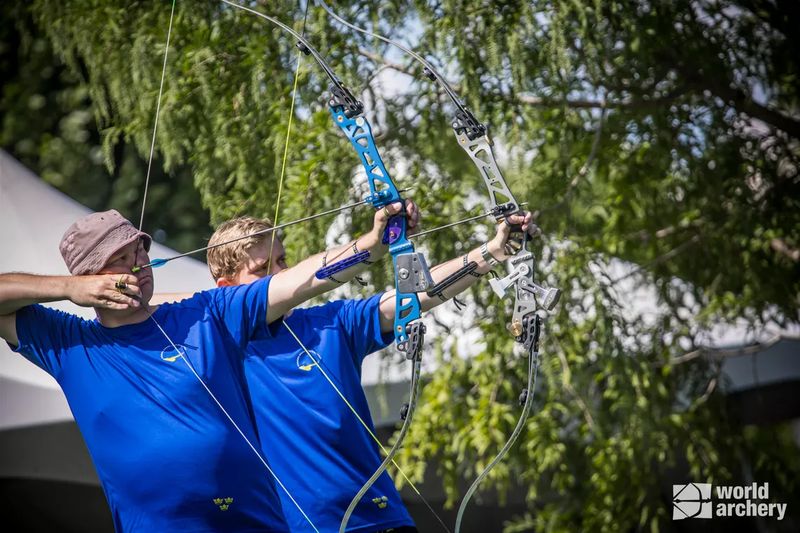
Never touch another archer’s bow, arrows, or gear without explicit permission. This one trips up beginners who mean well — you spot a beautiful riser on the rack and want a closer look, or someone left arrows in the target and you helpfully pull them. Don’t. Bows are tuned to the individual, arrows are matched to spine and length, and a lot of archers are quietly superstitious about their setup. A dropped limb or a bent nock can cost real money and real trust.
The same goes for the bow rack: lift your bow off carefully and set it back the same way. Knocking over a rack of bows is the range equivalent of bowling a strike through everyone’s afternoon.
Keep It Quiet and Keep It Clean
Archery demands concentration, and the shooting line is not the place for loud conversation, blaring phones, or coaching commentary aimed at strangers. Keep your voice down, silence your phone, and save the play-by-play for after the end. If someone asks for advice, great — otherwise assume they’re working on something and let them focus.
Clean up after yourself, too. Pick up your fallen arrows, don’t leave water bottles on the line, and if you nick a target or damage a bag, tell the range officer instead of walking away. Ranges run on goodwill and volunteer hours; leaving the place better than you found it is how you earn a reputation as someone worth having around.
Show Up Prepared: Gear Etiquette
Part of range courtesy is not being the person who holds everyone up. Bring what you need: your bow, enough arrows for an end, an arm guard, a finger tab or release, and a quiver so you’re not juggling shafts. Fumbling for gear between every arrow slows the whole line’s rhythm.
An arm guard in particular is etiquette as much as protection — a string slap that makes you flinch mid-line is distracting for everyone, and a bloody forearm is nobody’s idea of a good session. Basic personal gear signals that you take the sport, and the people around you, seriously.
Casual Range vs. Competition Etiquette
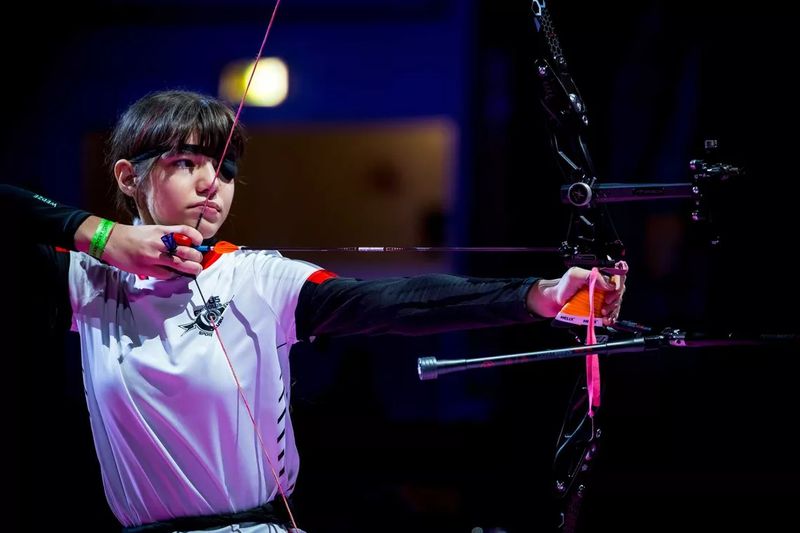
Most of these rules hold everywhere, but competitions add a layer. At a scored event you don’t touch arrows until they’ve been scored, you call your own line carefully, and you keep talk to a whisper near shooters at full draw. Timing is stricter — you shoot within the allotted time or lose the arrow — so you move to the line promptly on the signal rather than dawdling.
The etiquette floor is the same at both: safety first, courtesy always. If you’ve only ever shot casually, read your event’s rules before your first tournament so the pace doesn’t catch you off guard. New to the whole scene? Start with our complete archery for beginners guide, then find a welcoming club through our roundup on how to find local archery ranges and clubs.
The Etiquette Mistakes Beginners Make Most
A few slip-ups show up again and again. Watch for these:
- Dry firing — releasing the string with no arrow nocked. It can shatter a bow and send shrapnel flying. Never do it, not even to “feel the draw.”
- Walking to the target early — heading downrange before the three-whistle signal because you’re sure everyone’s done. You’re not sure. Wait for the whistle.
- Over-drawing a borrowed bow — pulling a club bow past its intended draw length to look strong. It stresses the equipment and looks reckless.
- Crowding the target — three people yanking arrows at once. Take turns.
- Ignoring the range officer — they run the line for a reason. When they call a hold, hold.
None of these require talent to avoid — just attention. And attention is the whole game.
Set Yourself Up to Shoot Safely at Home
Range etiquette isn’t a hazing ritual; it’s a hundred years of hard-won safety habits compressed into a few simple signals and courtesies. Learn the whistle commands, respect the line, keep your hands off other people’s gear, and stay aware of everyone around you — do that and you’ll be trusted on any range in the world within a single session.
If you’re building your own practice space to drill those habits between club visits, a proper backstop and a safe lane matter as much as the bow itself. Gear up with a range-ready recurve kit and make good etiquette second nature before your next competition.
Sources
- World Archery Rulebook — official field-of-play and shooting procedures for target archery.
- USA Archery — national governing body range safety and event reference guidelines.
- Oregon Department of Fish & Wildlife — Archery Range Rules — public-range etiquette and whistle command reference.
