
Archery Blog
Complete Compound Bow Buying Guide 2026: How to Choose the Right Setup
Aug
The compound bow market in 2026 offers more choices than any previous generation of archers has faced. From sub-$300 beginner packages to $1,500 flagship hunting rigs, the range is wide enough to satisfy every type of shooter — and to genuinely confuse most of them. The problem isn’t a shortage of information; it’s an excess of specifications presented without the context that makes them useful. This guide unpacks what those numbers actually mean for your shooting, how to match a bow to your body and your purpose, and what to look for across different price tiers before you commit to a purchase you’ll live with for years.
What the Spec Sheet Is Really Telling You
Most buyers focus on the wrong numbers. IBO speed gets the headline treatment in marketing materials, but for a first-time buyer it’s one of the least useful metrics when choosing between two bows. Understanding the specifications that actually affect your day-to-day shooting experience requires knowing what each measurement reflects in practice — and what trade-offs it carries.
Draw Weight
Draw weight is the peak pounds of force required to pull the bowstring back through its full draw cycle. For adult bowhunters pursuing whitetail deer, most states set a legal minimum between 35 and 45 lbs; the practical ethical range for clean kills sits between 50 and 65 lbs at typical hunting distances. For target archery at the club and recreational level, 40–55 lbs is common. The consistent mistake first-time buyers make is purchasing a bow set too heavy for where their muscles and form currently are. A peak draw weight you cannot control smoothly leads to flinching — involuntarily anticipating the shot — and flinching destroys accuracy in a way that no sight adjustment can compensate for. Start lighter than instinct suggests, build archery-specific strength through consistent repetition, and adjust the draw weight upward as your consistency proves you’re ready. Most quality compound bows allow draw weight adjustment of 10 lbs in either direction by simply turning the limb bolts.
Draw Length
Draw length is the distance from the grip to the bowstring at full draw, measured in inches, and it is the most critical measurement in compound bow fitting. A draw length that is too long pushes your bow arm forward and collapses your form at the back; one that is too short compresses your anchor point and typically causes string contact with your bow arm. To estimate your draw length before visiting a shop, stand with both arms outstretched and have someone measure your full wingspan in inches from fingertip to fingertip. Divide that number by 2.5. The result is a starting point — a pro shop with an adjustable bow can confirm and refine it by watching you draw. Modern compound bows adjust draw length through rotating cam modules, with most quality bows covering a 4–6 inch range. When shopping online, always verify that the bow’s module range covers your measurement before adding anything to your cart.
Axle-to-Axle Length and Brace Height
Axle-to-axle (ATA) length is the distance between the axles that hold the bow’s cams. Shorter ATA bows — typically 28 to 32 inches — are more maneuverable in a treestand or ground blind but require more precise form because the string angle is steeper at full draw, creating greater torque potential at the grip. Longer ATA bows — 34 to 38 inches — shoot more smoothly and consistently and are favored in 3D and target archery. Brace height is the distance from the grip to the string at rest. A shorter brace height of 5–6 inches means the arrow stays on the string longer during the power stroke, generating higher speed — but it also amplifies any torque or timing inconsistency in your release. A longer brace height of 7–8 inches sacrifices a small amount of velocity in exchange for forgiveness — a trade-off that matters enormously for beginners still building the muscle memory of a repeatable shot.
The Let-Off Equation
Let-off is the defining mechanical advantage that separates compound bows from recurves and longbows. As you draw through the peak weight, the cam system rolls over a geometric valley and the holding weight drops dramatically — typically between 65% and 90%. A bow with a 65 lb draw weight and 80% let-off only requires you to hold 13 lbs at full draw while you settle your pin, control your breathing, and execute the shot. That reduced holding weight makes extended hold times genuinely manageable, which is why compound bows are so dominant in bowhunting: a hunter can draw on an animal, wait for an ethical shot window, and hold steady without muscular failure.
Higher let-off is not universally better, however. At 90%, the bow locks hard into the valley and becomes difficult to let down without shooting — a real concern for hunters who draw on animals that then step behind cover or turn to a bad angle. Most bowhunters prefer 75–85% let-off for the balance between holding comfort and control during a letdown. Competitive archers shooting under USA Archery or NFAA rules should check the rulebook for any let-off cap before buying, as compound divisions at certain levels carry restrictions on maximum let-off percentage.
IBO Speed — Useful Context, Not a Purchase Driver
IBO speed is a standardized benchmark measured under controlled lab conditions: 70 lbs draw weight, 30-inch draw length, 350-grain arrow. Change any of those variables and your real-world velocity changes substantially. A bow rated at 340 fps IBO might deliver 300–310 fps with a 28-inch draw, 400-grain hunting arrow — and that’s a completely normal real-world result, not a sign of false advertising. The marketing number and the hunting number are simply measuring different things.
Speed genuinely matters at extended ranges where trajectory drops significantly and wind drift amplifies the effect of small misjudgments. Inside 40 yards, where the vast majority of ethical bowhunting shots are taken, the difference between 285 fps and 340 fps translates to a fraction of an inch of trajectory drop on a deer-sized target — not a meaningful factor for clean kills. The faster bow is often noisier, shorter in brace height, and less forgiving of form imperfections. Buy for fit and forgiveness first. Buy for speed only when your form is consistent enough that speed is the actual limiting factor in your shooting.
Budget Tiers and What They Actually Deliver
Entry-level compound bows under $400 are built to a price point, and that reality shows in the machining tolerances, limb material quality, and cam engineering. Cast aluminum components, wider tolerance limb pockets, and simpler cam geometry are the norm at this tier. That said, reputable manufacturers like Bear Archery, Diamond Archery, and Genesis produce entry-level bows that are genuinely capable hunting and target tools. The difference between a $350 Bear and a $900 Hoyt is real and measurable on a pressure test — but it only matters in your shooting if your form and execution are developed enough to expose it. Most new archers at this budget are better served by investing the savings in quality arrows, a few lessons, and range time.
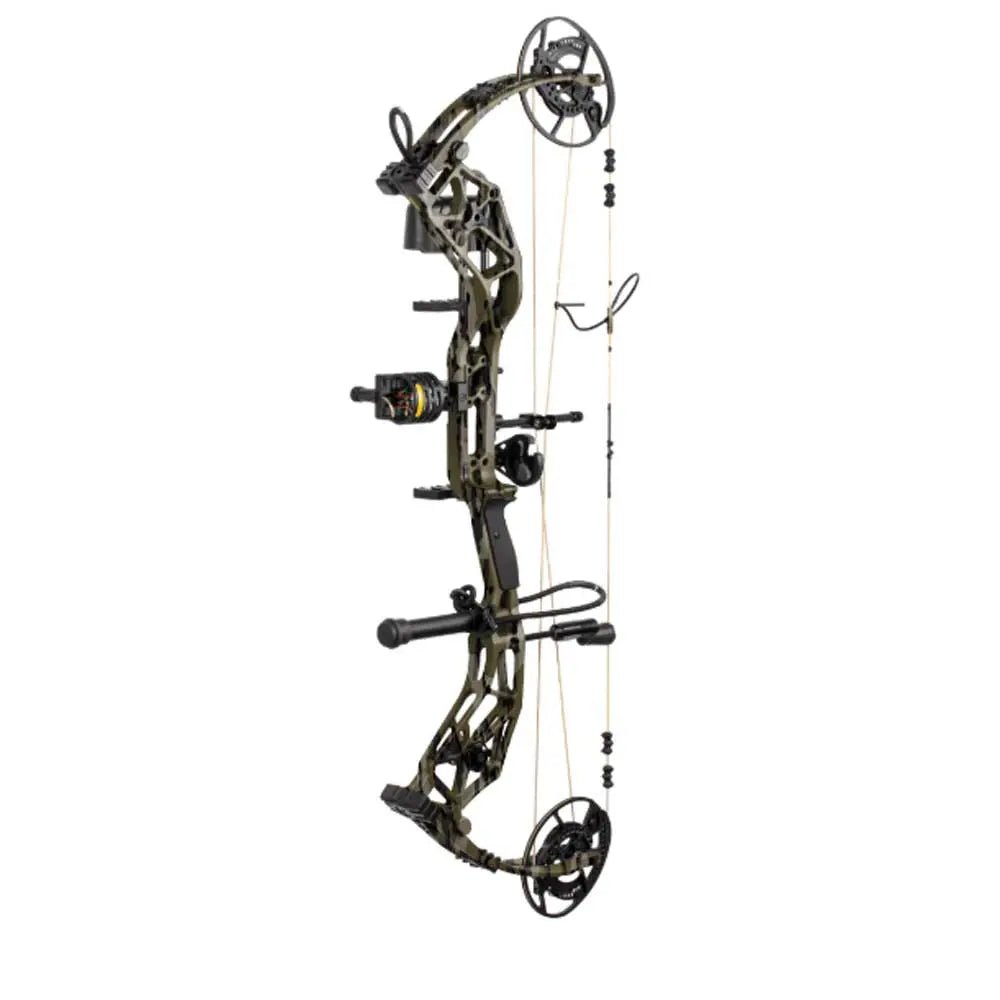
Mid-range bows priced between $400 and $800 represent the sweet spot for most archers making a serious first purchase or stepping up from entry-level. At this price, manufacturers invest in tighter cam tolerances, forged or CNC-machined riser sections, and features like adjustable draw stops that let you dial in the back wall hardness to your preference. PSE, Bear’s upper bow lines, Obsession, and Prime compete aggressively in this tier. The shooting experience improves meaningfully over entry-level in terms of vibration, noise, and tuning precision.
Premium bows above $800 — from Hoyt, Mathews, Bowtech, and their direct competitors — use 7075 aluminum CNC-machined risers, split limb designs with tight-tolerance limb pockets, and cam systems refined through years of professional-level competition and hunting feedback. The difference in noise, vibration, and smoothness through the draw cycle is real and will be apparent in a side-by-side range comparison. These bows amplify your shooting; they do not fix technique problems. If your shot execution is inconsistent, a premium bow will reveal exactly where your process breaks down — which is useful information, but not what most beginners need from their first compound.
Shop Compound Bow Package Deals on Amazon →
What a Package Deal Includes — and What It Doesn’t
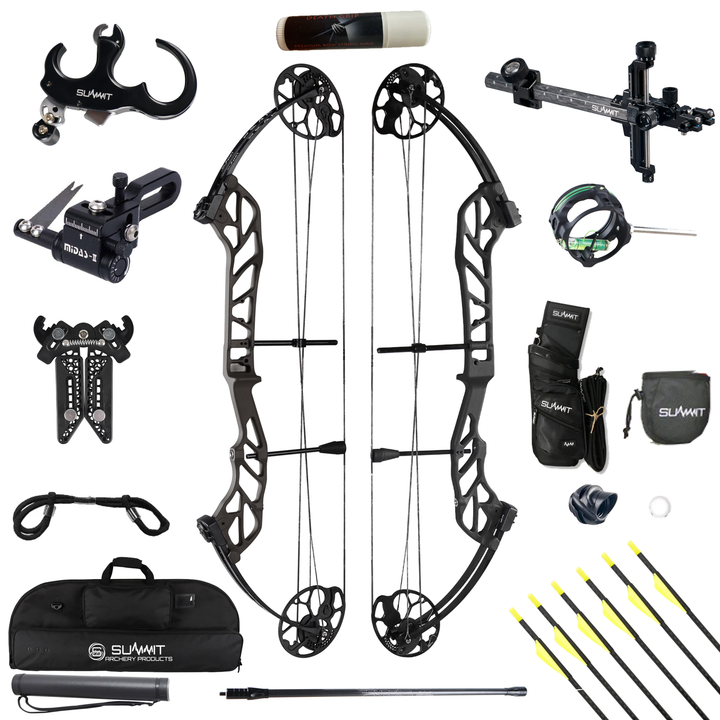
Compound bow packages are common in the entry and mid-range tiers and represent genuine value when they save you from buying mismatched components separately. A typical package includes a bow sight — usually a 3-pin fixed or a single-pin slider — a containment or drop-away arrow rest, a stabilizer, a wrist sling, and sometimes a pre-installed peep sight and D-loop. These accessories work, but they are usually minimum-spec items. Upgrading the sight and rest after six months of shooting is extremely common once your form develops to the point where the package components become a limiting factor.
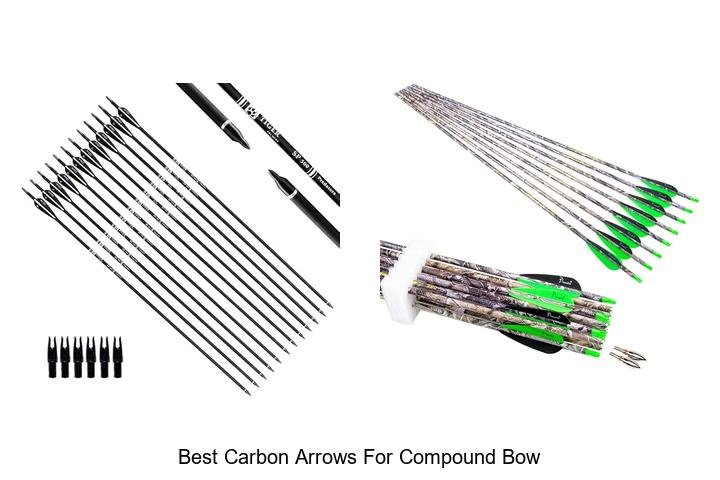
What no package includes is arrows — and this is the most important omission. Arrow spine, the stiffness rating of the shaft, must be matched to your specific draw weight, draw length, and point weight. A mismatched spine causes erratic arrow flight that no amount of sight adjustment will correct. Use the arrow manufacturer’s spine selection chart as your starting point after the bow is set up and draw weight confirmed, then have a pro shop verify the selection if you have any doubt. Buying a compound bow without budgeting for a set of properly spined arrows is one of the most common first-purchase mistakes.
Getting Fitted vs. Buying Online
For a first-time compound bow buyer, the pro shop is worth the slightly higher sticker price. The value isn’t only the transaction — it’s the fitting session. A trained shop employee will measure your draw length with precision, watch you draw the bow to check for elbow clearance and anchor consistency, and in most shops will let you shoot two or three candidate bows before you decide. Walking out of a pro shop with a properly fitted bow is a fundamentally different experience from opening a box at home and discovering the draw length is a full inch off.
Returning a compound bow purchased online is slow and can be expensive if a return shipping label isn’t included. Experienced archers who already know their exact draw length and weight preferences can shop online with confidence, comparing models and pricing across multiple retailers. For most first-time buyers, the pro shop experience — including the post-sale setup service many shops provide as part of the purchase — is the lower-risk path to a setup that works from day one.
Setting Up and Tuning Your New Compound
A compound bow straight from the factory is not ready to shoot accurately. Tuning aligns the arrow’s flight path with the bow’s mechanical center, sets the nocking point and arrow rest at their correct positions, and establishes a peep sight height that matches your natural anchor point. These steps take roughly an hour the first time through and should be completed before you begin sighting in at real yardages — skipping tuning and going straight to distance work is how archers spend hours chasing groups that are fundamentally caused by misalignment rather than sight calibration.
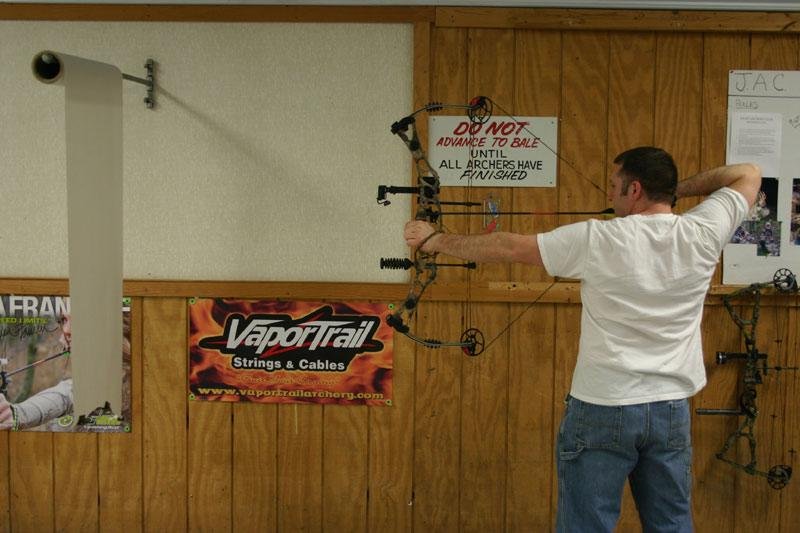
Paper tuning involves shooting through a sheet of paper held perpendicular to the flight path at roughly six feet. A clean bullet hole indicates the arrow is exiting the bow with minimal fishtailing or porpoising. Any tear shape — vertical, horizontal, or diagonal — indicates adjustments needed in arrow rest height, rest lateral position, or nocking point location. Walk-back tuning then confirms your sight is calibrated to your arrow’s actual flight path across distances, catching any centershot errors that close-range paper tuning can miss. Peep sight height is set so the peep centers your sight housing at your natural anchor without any head tilt or string torque — every single shot, not just when you’re deliberately trying. A pro shop will typically walk you through all three steps at no charge with a bow purchase.
Shop Archery Release Aids on Amazon →
Release Aids — the Other Half of Your Shot
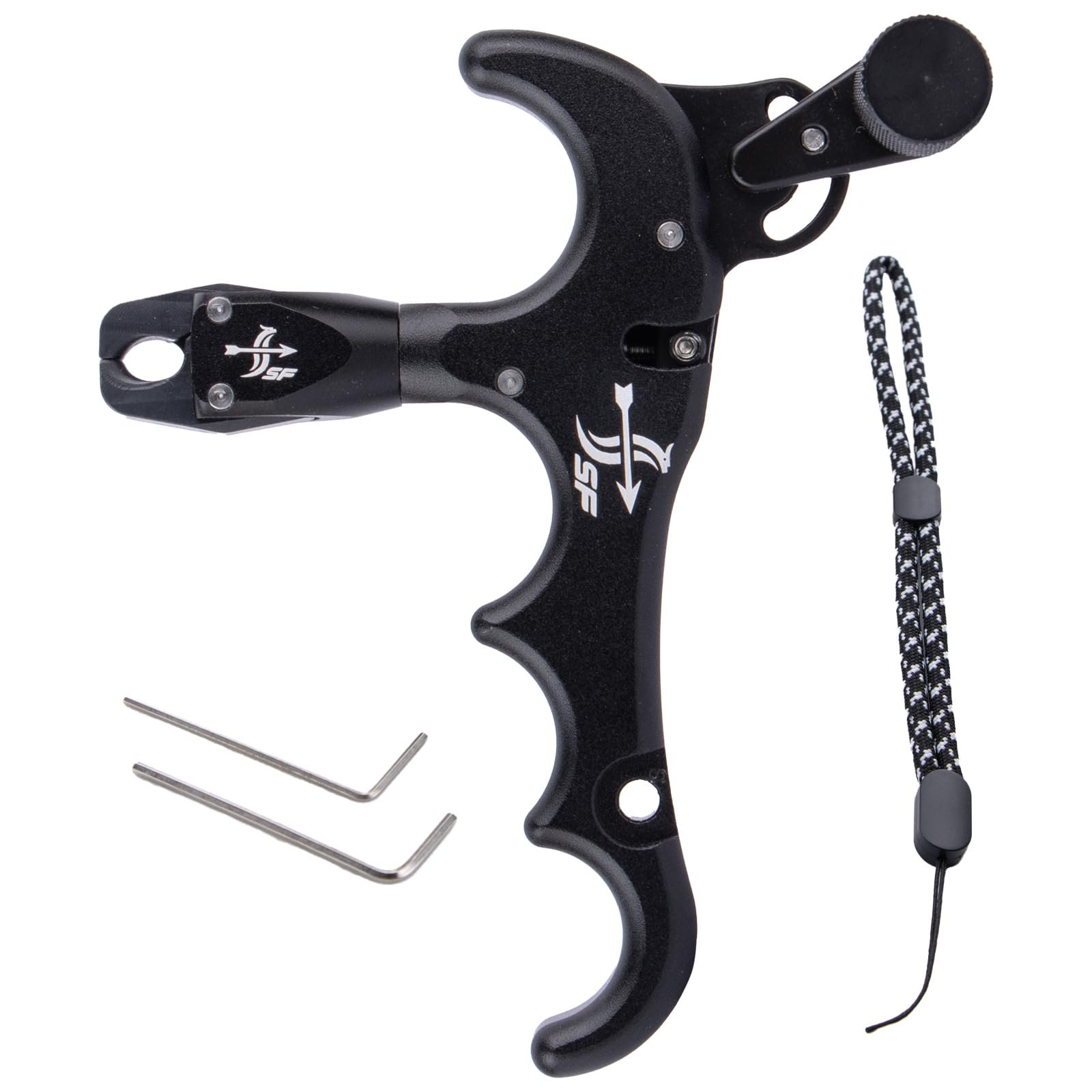
Compound bows are almost universally shot with a mechanical release aid rather than fingers. The reason is consistency: a release aid contacts the D-loop at a repeatable point and fires with a defined trigger input, eliminating the string torque and timing variation that finger release introduces into the shot. For new compound archers, a wrist-strap caliper release is the standard starting point — it wraps around the wrist for retention, clips onto the D-loop easily even with gloves, and provides a stable platform for learning proper trigger control without a lot of mechanical complexity.
As your shooting develops, a thumb-trigger release or a back-tension hinge release may suit your style and goals better. Back-tension releases fire through rotation rather than a deliberate trigger pull, which over time eliminates the habit of punching — flinching the trigger before the pin is settled. Many target archers and experienced bowhunters make the transition after a year or two of consistent practice. Whatever style you choose, budget at least $60–$120 for a release aid from a reputable manufacturer. A $25 release on a $700 bow is a false economy that will introduce its own consistency problems and eventually need replacing anyway.
Shop Carbon Arrows for Compound Bows on Amazon →
The Bottom Line for 2026 Buyers
The right compound bow for 2026 is not the fastest on the spec sheet or the most expensive in the case. It’s the one measured to your draw length, set to a draw weight you can control smoothly through the shot, and tuned by someone who watched you draw it. Speed, brand prestige, and feature lists matter far less than fit. If you can visit a pro shop before buying, do so — even if you ultimately purchase elsewhere, the information from a proper fitting is worth the time. Buy a bow priced honestly for your current skill level, invest the balance in properly spined arrows and consistent practice, and plan to move up when your form genuinely outgrows your equipment rather than because marketing convinced you it should.
Sources
USA Archery — national governing body for the sport in the United States; publishes equipment rules and guidelines for all competition divisions.
National Field Archery Association — NFAA rules and resources for 3D archery and field archery competition formats.
World Archery Federation — international governing body; publishes equipment specifications and competition standards used globally.
Wikipedia — Compound Bow — overview of compound bow mechanics, cam geometry, and history of the design.
