
Archery Blog
Compound Bow Tuning: Dialing In Cam Timing, Cam Lean, and Rest
Jul
A compound bow can be perfectly built, expensive, and razor-sharp on paper, yet still throw arrows that fishtail, porpoise, or wander off the mark. The culprit is almost never the shooter’s aim — it is tune. Tuning is the process of getting every mechanical part of the bow working in harmony so the arrow leaves the string cleanly and flies without fighting itself in the air. Three systems do most of the heavy lifting here: cam timing, cam lean, and the arrow rest. Understand how they interact and you can turn a frustrating rig into one that stacks arrows.
This guide walks through each of those systems in the order most archers should tackle them, then finishes with the paper-tuning and walk-back checks that confirm your work. None of it requires a pro shop for the fundamentals, though a bow press makes the deeper adjustments far safer and faster.
Why Tuning Matters More Than Gear
When an arrow leaves a compound bow, the string does not push it in a perfectly straight line. The nock end kicks slightly as the string rolls off, and the arrow flexes around the riser and rest before it stabilizes. A well-tuned bow keeps that flex minimal and consistent, so every arrow behaves the same way. A poorly tuned bow amplifies the flex, and you see it as erratic groups, loud noise, or fletching contact marks on the rest.
The payoff of tuning shows up most at distance. At ten yards a badly tuned arrow might still hit the middle because it hasn’t had time to misbehave. Push out to forty or sixty yards and the same arrow scatters. Tuning is what makes your effective range match your ambition, and it is the cheapest accuracy upgrade available — it costs time, not money.
Start With Cam Timing
On a modern two-cam or binary-cam bow, cam timing describes whether both cams reach the end of their rotation at the same instant during the draw. If one cam rolls over before the other, the string and cables are not sharing the load evenly, and the arrow gets an asymmetric launch — usually seen as a stubborn vertical (up-and-down) tear that no rest adjustment will fully fix.
The quickest visual check is to draw the bow (ideally on a draw board or hooked into a mechanical device rather than by eye alone) and watch the draw stops or cam marks. Both cams should hit their stops together. If one hits early, that cam is “advanced” and needs to be slowed by adding twists to the cable that controls it, or removing twists from the opposing cable. Small changes matter here — a single twist can shift timing noticeably.
Draw Length and Wall Feel
Timing is closely tied to how the back wall of the draw feels. Cams that are in time give a crisp, solid wall. If the wall feels spongy or the bow creeps forward at full draw, timing or cable length is often the reason. Because adjusting cable twists changes both timing and can subtly shift draw length, recheck your peep alignment and anchor after every timing tweak. Never adjust cables without a bow press — releasing a cable off the cam under tension is dangerous.
Correcting Cam Lean
Cam lean is the sideways tilt of the cam relative to the bow’s vertical plane. Some static lean is designed in, but excessive lean twists the string’s path and forces the arrow to launch with a horizontal (left-right) bias. It is one of the most common causes of a persistent horizontal paper tear that resists rest movement.
On bows with a split-cable yoke system, you correct lean by adjusting the two yoke legs — adding twists to one leg and removing from the other pulls the top of the cam back into line. This is called yoke tuning. Bows with a single cable and no yoke rely on a different fix, often a shim change on the cam or a cable-guard rod adjustment to reduce how far the cables are pulled to the side.
To eyeball lean, stand behind the bow at full draw (again, on a draw board) and sight down the string. It should split the cam and the sight window symmetrically. If the top of the string cants left or right of center, you have lean to correct. Because yoke changes also affect timing, treat timing and lean as an iterative pair: adjust, recheck both, repeat.
If your bow press, draw board, and string-servings work is getting frequent, a dedicated maintenance kit saves headaches. A basic bow-press-compatible setup and a set of quality serving tools keep these adjustments repeatable at home.
Shop Portable Compound Bow Press on Amazon →
Setting Up the Arrow Rest
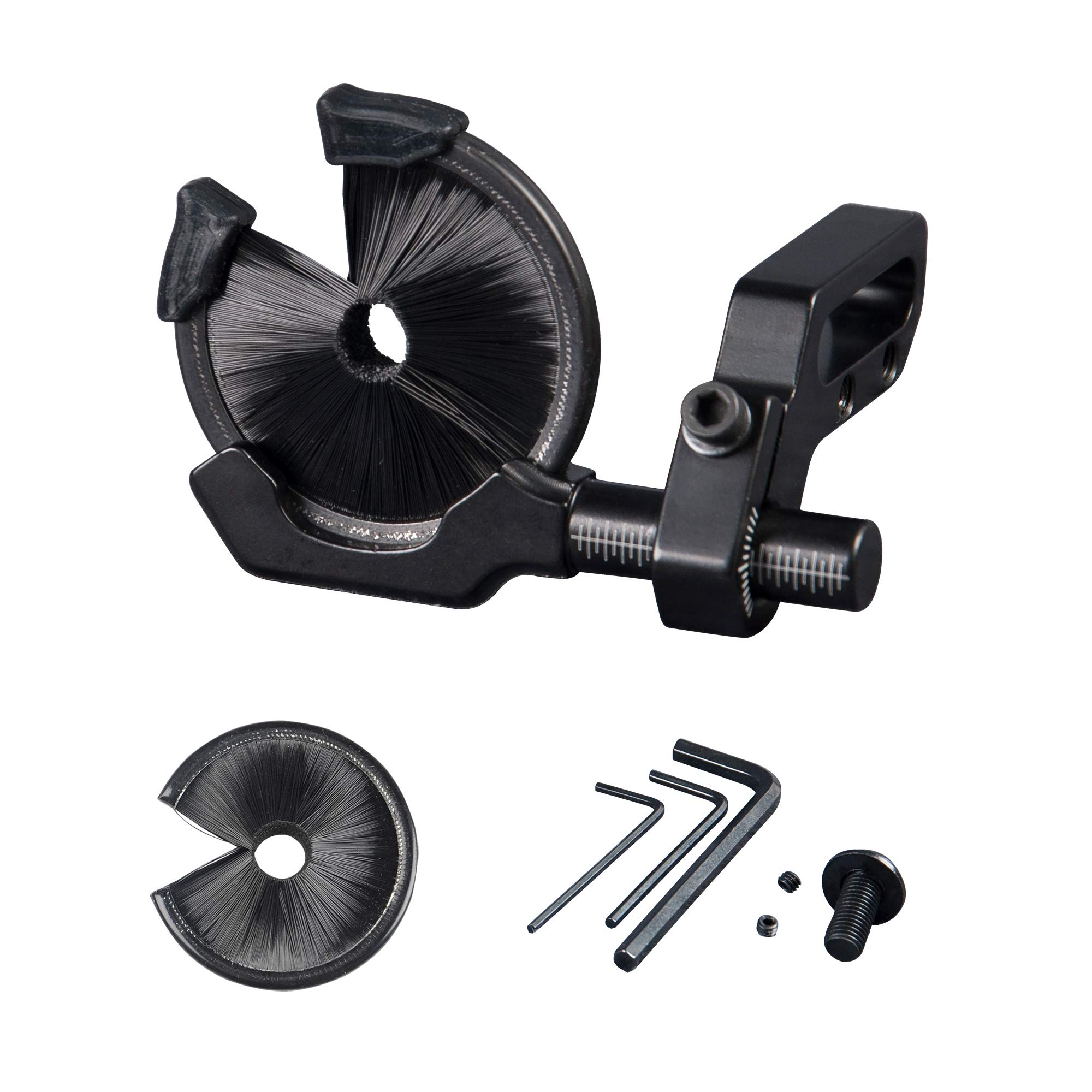
With the cams timed and lean corrected, the rest is where you fine-tune arrow flight. Two measurements define a good starting point: centershot (the left-right position of the arrow relative to the string) and nocking point height (the up-down position where the arrow sits on the string).
Centershot
Centershot aligns the arrow so it points straight down the shooting line rather than angling across the riser. A common starting reference is to set the arrow so its centerline sits somewhere around 13/16 inch from the riser on many setups, but the safest method is to nock an arrow, stand behind the bow, and align the string, arrow, and berger hole so the arrow appears to run straight through the center of the string. From there, small horizontal rest moves during paper tuning dial it in precisely.
Nocking Point Height
The arrow should sit level or with a hair of nock-high angle when squared with a bow square. Setting the rest so the arrow runs perpendicular to the string, or slightly nock-high, prevents the fletching from slapping the rest and reduces vertical tears. If you shoot a drop-away rest, also confirm the timing of the rest’s fall — it should be fully up while the arrow is on it and drop clear before the fletching arrives.
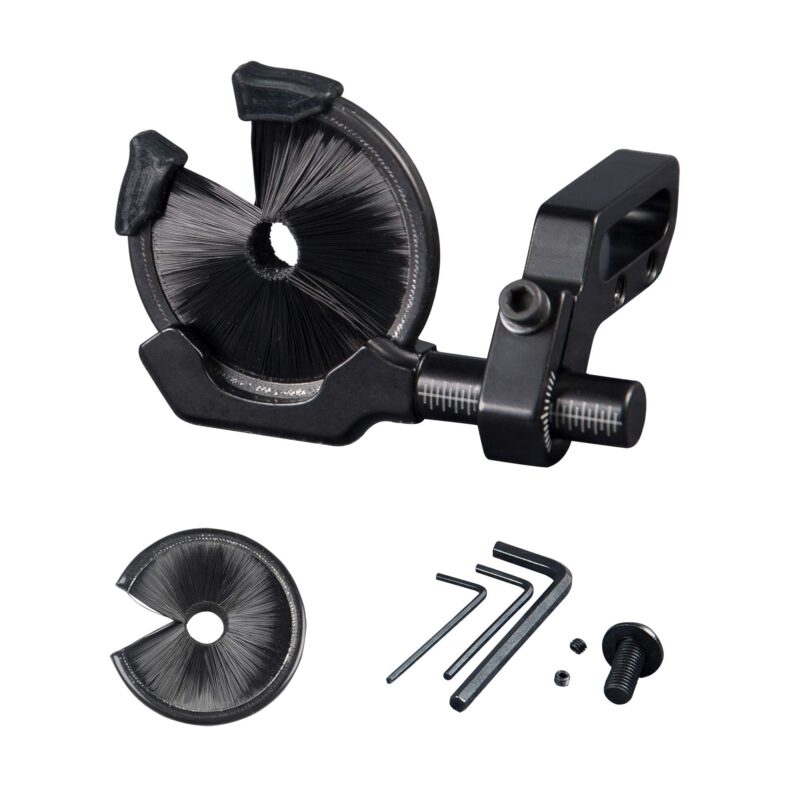
A quality drop-away rest with reliable containment and a clean fall is one of the highest-value upgrades for consistent flight, especially for hunters who need the arrow captured until the shot breaks.
Shop Drop-Away Arrow Rest on Amazon →
Paper Tuning: Reading the Tear
Paper tuning is the confirmation step that ties timing, lean, and rest together. You shoot a bare or fletched arrow through a sheet of paper stretched in a frame from a few feet away and read the hole the arrow leaves. A perfect tear is a round hole with three (or four) small slits from the fletching radiating evenly — it means the arrow passed through nose-first and level.
The direction of the tear tells you what to fix:
- Tail high (slits above the hole): lower the nocking point or raise the rest slightly.
- Tail low: raise the nocking point or lower the rest.
- Tail left (for a right-handed shooter): move the rest a hair to the right — but if it won’t clear up, suspect cam lean.
- Tail right: move the rest slightly left, and again check lean if it persists.
The key discipline is to make one small change at a time and reshoot. Chasing two directions at once is how archers spend an afternoon going in circles. If horizontal tears refuse to close no matter how you move the rest, that is your signal to go back to cam lean and yoke tuning rather than forcing the rest into an extreme position.
Walk-Back and Bare-Shaft Tuning
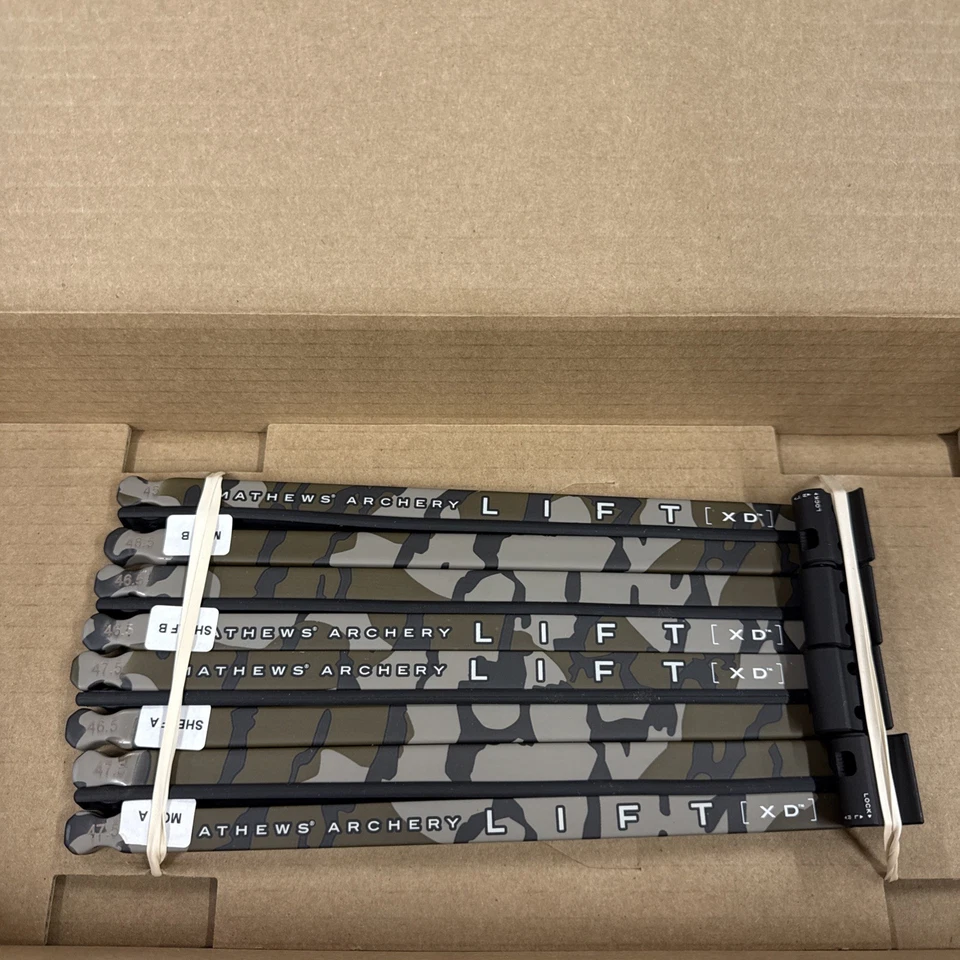
Paper tuning gets you close, but two range-based methods verify the tune at real distance. Walk-back tuning has you aim at a single fixed point and shoot from progressively longer distances — say ten, twenty, thirty, and forty yards — using the same sight pin or a plumb line. If the rest’s horizontal position is correct, the impacts stack in a straight vertical line beneath the aim point. If they drift left or right as you back up, nudge the rest a tiny amount in the opposite direction of the drift.
Bare-shaft tuning compares where an unfletched arrow lands against your fletched arrows at twenty yards or so. Fletching masks flight errors by steering the arrow, so a bare shaft exaggerates any remaining tune problem. When the bare shaft groups with the fletched arrows, your setup is genuinely tuned rather than just fletching-corrected. This is the gold standard many target archers finish on.
Matching Arrows and Broadheads to the Tune
Tuning does not happen in a vacuum — the arrow itself has to be right for the bow. An arrow with the wrong spine (stiffness) for your draw weight and length will fight every adjustment, because it flexes too much or too little around the riser. If you have chased a horizontal tear endlessly and the mechanicals check out, an over- or under-spined shaft is a prime suspect. Getting arrow spine right is foundational to any tune.
Hunters have an extra step: broadhead tuning. Fixed-blade broadheads act like little wings and reveal tune flaws field points hide. After you are tuned with field points, shoot broadheads at the same aim point. If they hit with the field points, you are ready. If they wander, small rest moves toward the broadhead group — or switching to a well-matched mechanical head — brings them back in line. A properly matched arrow-and-broadhead combination protects all the tuning work you just did.
Shop Carbon Arrows for Compound Bows on Amazon →
Keeping a Bow in Tune
A tune is not permanent. New strings and cables stretch and settle over their first few hundred shots, which is exactly why fresh strings need a re-tune after break-in. Temperature swings, a bump to the sight or rest, or a change in arrows can all pull a bow off. The good news is that once you understand the relationship between timing, lean, and rest, catching drift is quick — a paper shot or a walk-back check tells you immediately whether anything moved.
Build the habit of a quick tune check at the start of each season and after any hardware change. Log your yoke twists, centershot measurement, and nocking point height somewhere you can find them. That record turns re-tuning from a guessing game into a five-minute reset, and it means your bow is always ready to shoot to its full potential.
The Bottom Line
Compound bow tuning follows a logical chain: get the cams timed so both share the load, correct cam lean so the string tracks straight, then set centershot and nocking point so the arrow launches clean. Confirm the whole system with paper, walk-back, and bare-shaft checks, and back it all with a correctly spined arrow. Work methodically, change one thing at a time, and the reward is arrows that fly true and groups that finally reflect how well you can actually shoot.
Sources
