
Archery Blog
Arrow Rest Types: Drop-Away vs Whisker Biscuit vs Blade 2026
Jun
The four arrow rest types you actually need to know are full-containment (whisker biscuit), drop-away (cable-driven and limb-driven), launcher (prong), and blade. Pick the wrong one and your fletchings shred, your groups open up at 40 yards, and your $1,200 compound bow shoots like a pawn-shop special. Pick the right one and a $40 rest will out-shoot an expensive rig that’s never been tuned. This guide walks through every rest design on the market in 2026, where each shines, and how to match the rest to the way you actually shoot.
The Four Arrow Rest Types Every Compound Shooter Should Know
Modern compound bows ship with a confusing number of rest options, but they all fall into four buckets. Full-containment rests hold the arrow at all times, no matter how violently you tilt the bow. Drop-away rests support the arrow during the draw cycle, then collapse out of the way the instant you release. Launcher rests use one or two thin prongs to cradle the arrow, while blade rests use a single V-shaped or flat blade. Each design solves a different problem.
The split between these categories isn’t trivial. A Field & Stream rest test measured a 3–6 fps speed difference between full-containment and drop-away on the same bow — small on paper, real on a 50-yard 3D course. The deeper differences are fletching wear, tuning forgiveness, and whether you can draw with frozen fingers in November without losing your arrow.
Full-Containment Rests (Whisker Biscuit and Cousins)
Trophy Ridge launched the original Whisker Biscuit in 2003 and the design barely needed to change. A circle of stiff nylon bristles surrounds the arrow shaft. The arrow can’t fall off — not when you climb a treestand, not when you spin around for a quartering shot, not when you draw with thick gloves. That single feature is why Whisker Biscuits have remained the default rest for guided hunts and beginner setups for two decades straight.
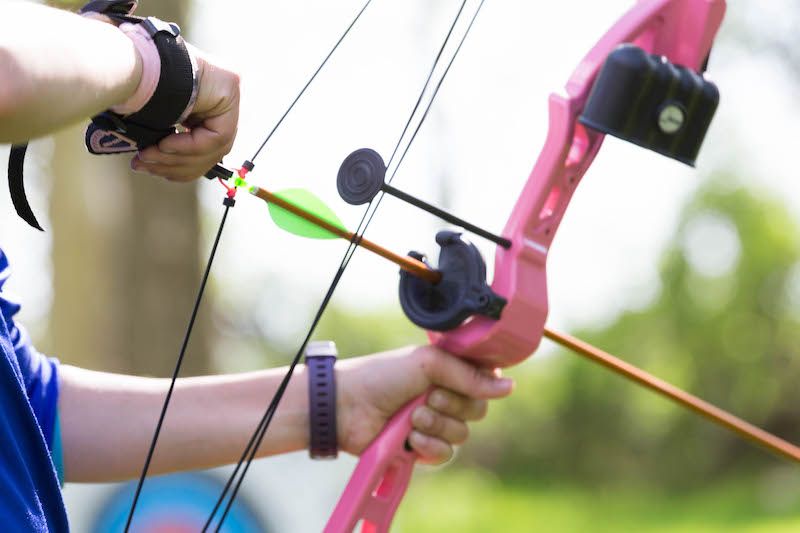
A full-containment rest holds the arrow no matter how the bow is angled.
The tradeoff is fletching contact. Every shot drags the vanes through bristles. After 50–80 shots most shooters notice the fletchings looking ragged, and after a few hundred shots you’ll need to re-fletch. Speed loss is real but minor — 3 to 6 fps measured, which translates to roughly half an inch of drop at 40 yards. For 90% of bowhunters that’s invisible. For tournament 3D shooters punching 12 rings at 50 yards, it matters.
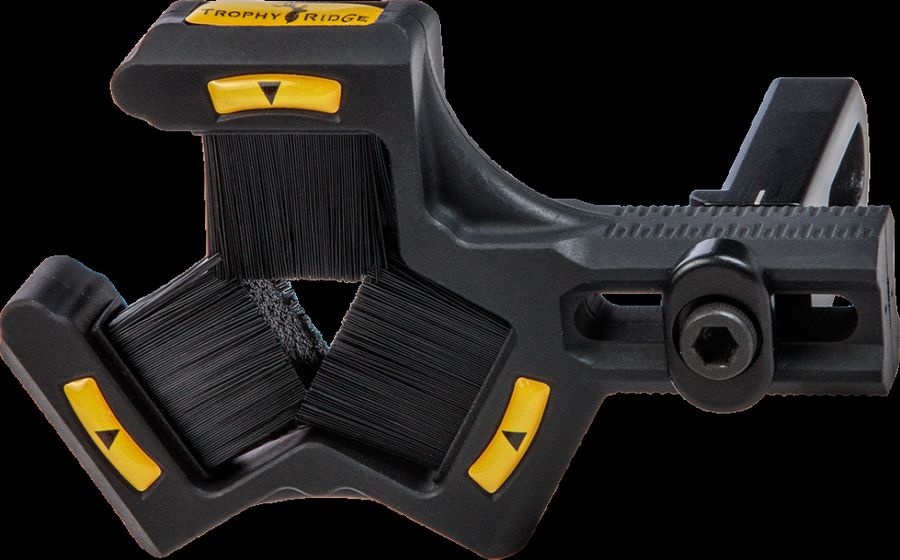
Newer full-containment designs like the Trophy Ridge Whisker Biscuit V, the QuikTune Smackdown, and Ripcord’s Code Red soften the contact problem with brush-style fingers or rubberized supports. They’re still full-containment — your arrow stays put — but with less drag on the vanes.
Drop-Away Rests — Cable-Driven vs Limb-Driven
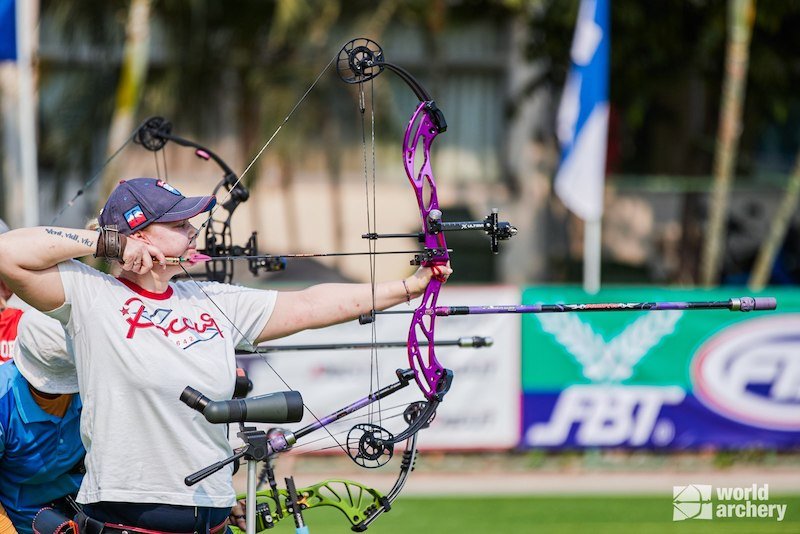
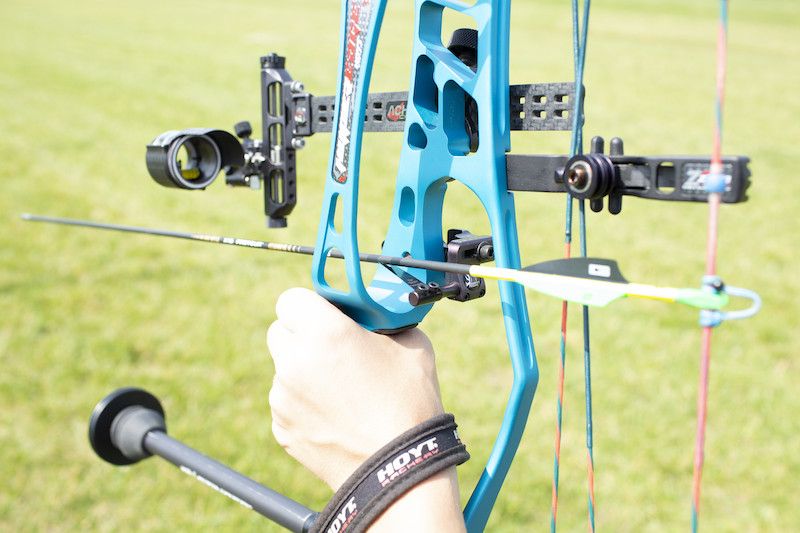
A drop-away rest holds the arrow during the draw and the first few inches of the power stroke, then falls flat the moment the cable or limb tells it to. No fletching contact at the shot. That’s the whole pitch. The arrow exits the rest with zero interference, which is why every World Archery compound champion and almost every serious 3D shooter runs one.
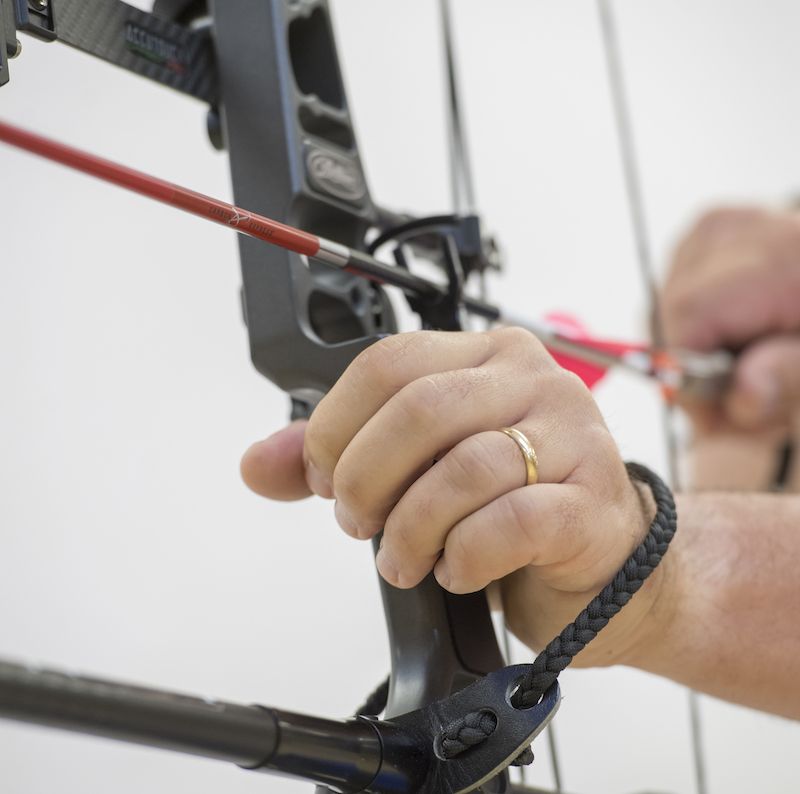
A drop-away rest in the up position at full draw.
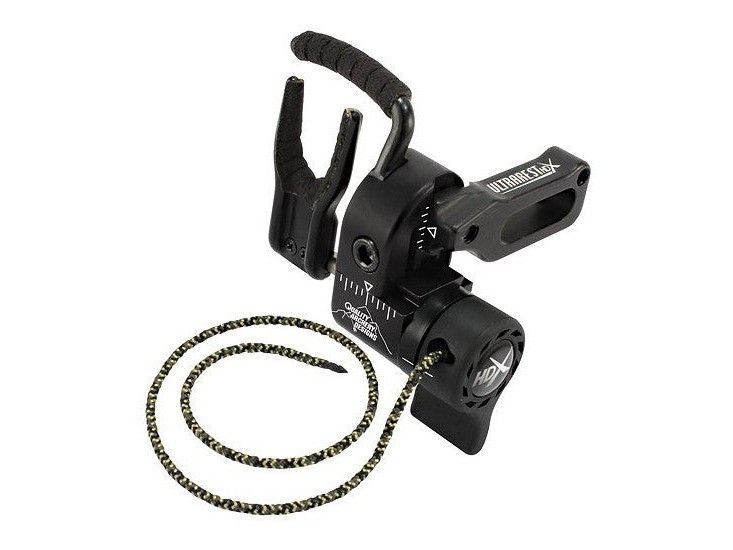
Two flavors exist. Cable-driven rests like the QAD Ultrarest HDX attach to the down-cable of the bow. As you draw, the cable rotates the rest arm up into position. On release, the cable yanks it back down before the arrow passes overhead. Cable-driven rests are easy to install on almost any modern compound and tune quickly. Most major brands ship cable-driven as the default upgrade.
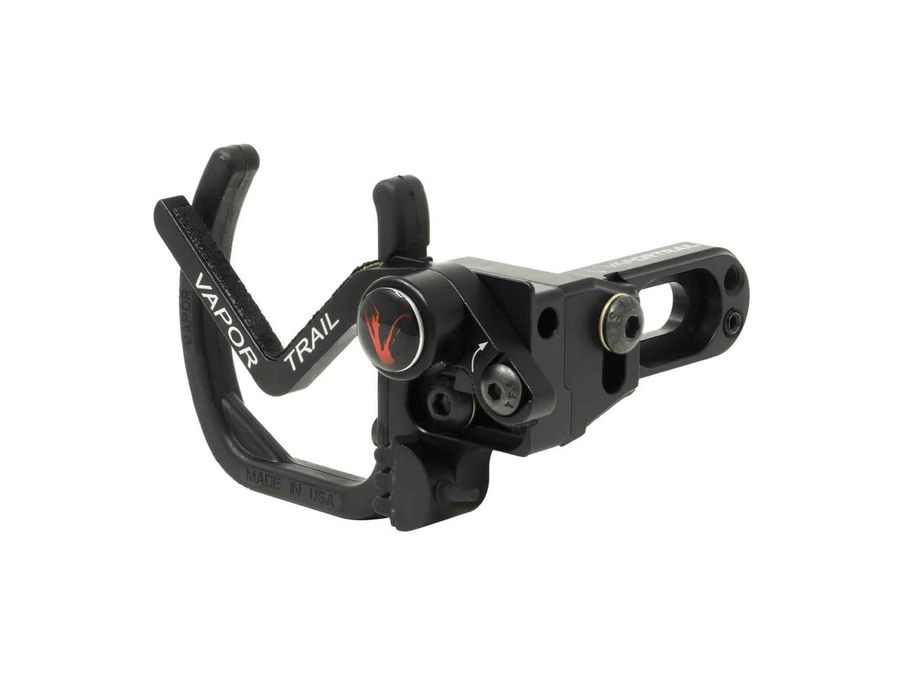
Limb-driven rests like the Vapor Trail Limb Driver Pro-V attach to the bottom limb instead. A short cord runs from the limb to the rest arm. As the limb flexes back during the draw, the cord lifts the arm. Limb-driven designs lift later in the draw cycle and drop faster after release — Vapor Trail claims arrow support for 70% of the shot cycle. That extra support is why limb-driven rests are favored on speed bows that launch arrows above 340 fps, where any micro-jitter at release matters.
The truth most bowhunting forums won’t admit: drop-away rests fail more often than full-containment rests. Cords stretch and break, dampeners crack, and a poorly tuned drop-away can drop too early and shred a vane on the riser shelf. Hunters who switched from a Whisker Biscuit to a cheap drop-away and lost a buck because the cord came loose are why some old-timers refuse to ever leave full-containment.
Blade and Launcher Rests for Target Archers
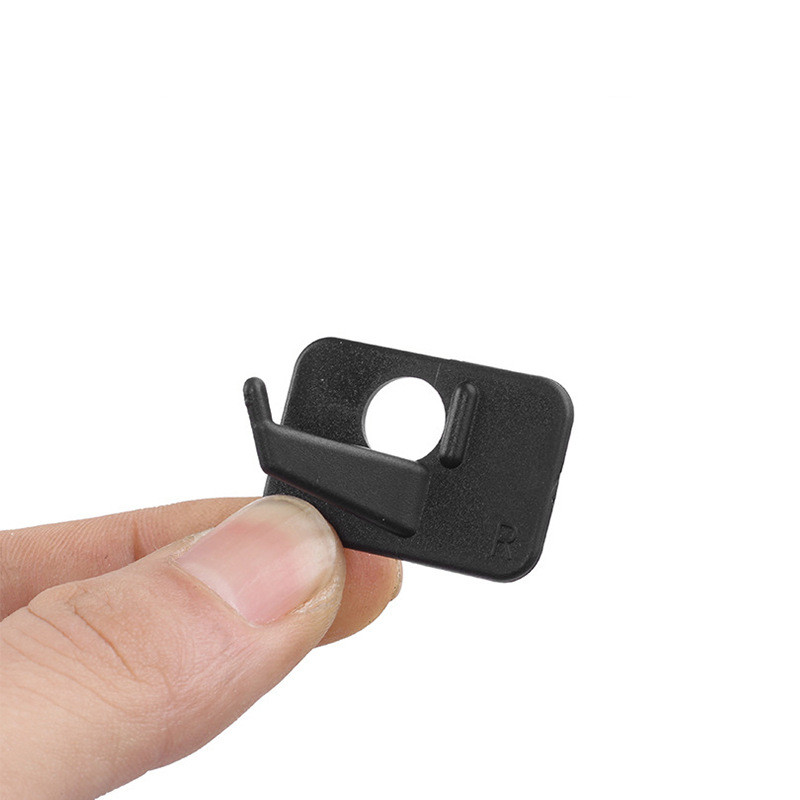
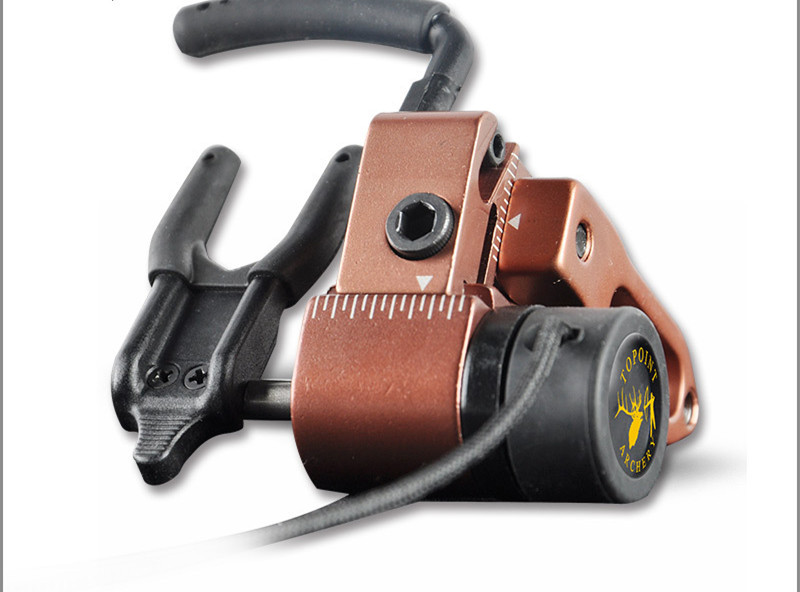
Launcher and blade rests are the original arrow rest types — they predate full-containment by decades. They’re simple, light, infinitely tunable, and the entire field of Olympic and World Archery compound champions shoots them. A launcher rest uses one or two thin spring-steel prongs. A blade rest uses a single flexible spring-steel blade, often V-shaped at the tip. The arrow sits in the cradle, fletching contact is near zero, and there are no moving parts.
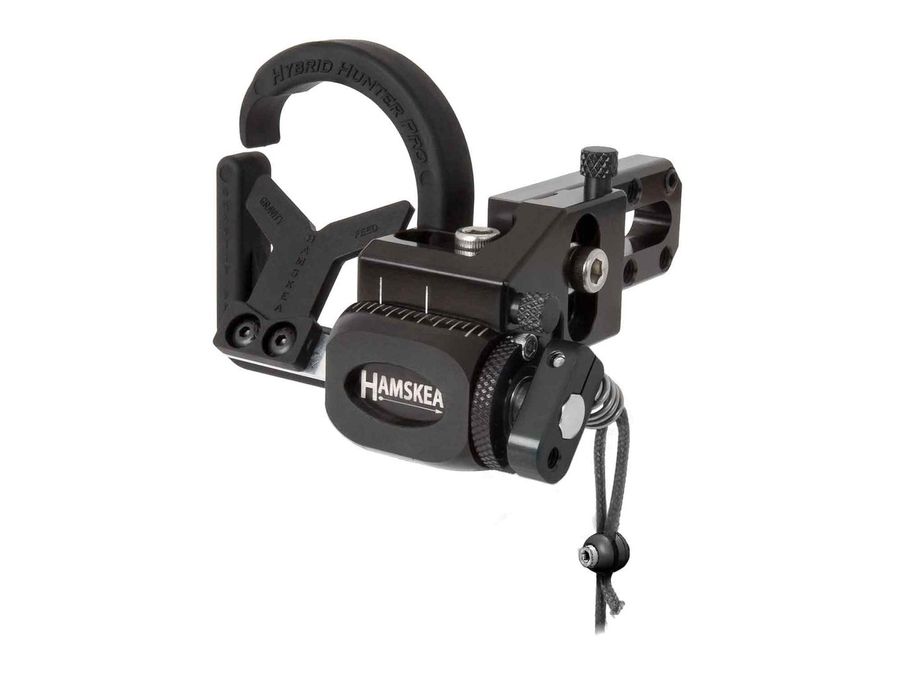
Hamskea’s Hybrid Hunter Pro is a blade-style design that’s bridged into bowhunting. The V-shaped blade self-centers the arrow, the rest body is micro-tunable, and the launcher arm rides on sealed stainless ball bearings — premium engineering. Hamskea markets it as a hunting rest, but it’s really a target-blade design with a hunting price tag.
Launcher and blade rests are unforgiving of bad form. Torque the grip and the arrow walks off the prong. Drop the bow and the arrow falls to the shelf. They demand a controlled draw, a still bow arm, and a clean release. If your shot process isn’t dialed, a launcher rest will magnify every flaw. If your shot is locked in, a launcher will out-group every full-containment rest on the planet.
Recurve and Traditional Arrow Rests
Recurve archers split into two camps. Olympic-style recurve shooters use a magnetic launcher rest mounted to the riser, paired with a pressure plunger (a spring-loaded button that sets horizontal arrow position). The Shibuya Ultima Rest is the Tokyo gold standard — over 90% of the Olympic compound field shoots one. Tuning involves dialing plunger tension and rest height until the arrow flies straight, a process called bare-shaft tuning that takes hours but rewards every minute.
Traditional recurve and longbow shooters mostly shoot off the shelf or off a stick-on rest. Shelf shooting uses a piece of leather, hair, or velcro glued to the arrow shelf. Stick-on rests like the Bear Weather Rest add a small horizontal arm to lift the arrow off the riser. Both setups demand cock-feather-out arrow indexing — the cock vane points away from the bow to prevent feather contact with the riser. Longbow shooters usually start off the shelf and never bother with anything else. It works.
How to Pick the Right Arrow Rest for Your Setup
If you’re new to compound shooting and your priority is dropping a deer in the next 90 days, buy a full-containment rest. It’s the lowest-friction path to a setup that won’t betray you on opening morning. Whisker Biscuit, QuikTune Smackdown, or Ripcord Code Red are all under $50 and all work fine.
If you’ve been shooting compound for a year, your form is consistent, and you’re chasing tighter groups past 40 yards, switch to a cable-driven drop-away. The QAD Ultrarest HDX is the workhorse — every treestand hunter who upgrades from a full-containment rest seems to land here. Budget around $130 and expect to spend a weekend tuning.
If you’re shooting a speed bow above 340 fps or chasing target ringers, look at limb-driven (Vapor Trail Pro-V) or premium blade (Hamskea Hybrid Hunter Pro). These are $150–$250 rests that reward a clean shot process. Don’t buy one expecting magic — buy one expecting to put 500 arrows through it learning to use it.
If you’re shooting traditional longbow or barebow recurve, ignore everything above. Shoot off the shelf with a hair or leather pad, and spend your money on better arrow spine matching instead.
Tuning, Maintenance, and When to Replace
Every arrow rest needs paper tuning. Shoot through a paper screen at six feet. A clean bullet hole means the rest is centered. A horizontal tear means the rest is too far left or right. A vertical tear means too high or low. Adjust the rest in 1/32-inch increments until the hole is clean, then walk back to twenty yards and repeat. Broadhead tuning follows the same logic but at longer distances with fixed broadheads.
Cable-driven rests need their down-cable cord inspected before every season. The cord runs against the cam, takes friction every shot, and a frayed cord that breaks at full draw will dump your arrow on the shelf during a shot. Limb-driven rests need their dampener pad checked for crushing — a flat dampener changes the timing of the drop. Full-containment bristles wear from arrow drag, but they last for years; replace the bristle ring only when you see visible gaps or matting.
Most arrow rests last 5–10 years if you keep them clean and dry. Salt fog (saltwater bowfishing) eats bearings inside a season. Hot car storage softens dampeners. If you store your bow in the safe and shoot it weekly, the rest will outlive the bow’s strings.
The Honest Take
Most bowhunters obsess over which rest to buy when the rest is the smallest variable in their accuracy. A $40 Whisker Biscuit on a properly tuned bow with a confident shooter behind it will outshoot a $250 Hamskea on a bow that’s never seen a paper screen. Pick a rest that matches your skill level today, not the level you wish you had. Upgrade when you’ve out-shot your gear, not before. The fastest path to better groups isn’t a new rest — it’s 200 arrows a week with the rest you already own.
Sources
- Field & Stream — The Best Arrow Rests Tested — comparative testing across rest categories
- Outdoor Life — Best Arrow Rests of 2026 — 2026 manufacturer roundup and field testing
- Quality Archery Designs — Ultrarest HDX — official cable-driven drop-away specifications
- Hamskea Archery — Hybrid Hunter Pro — blade-rest hunting design specifications
- MeatEater — Is the Whisker Biscuit Dead? — modern take on full-containment rests in 2026 bowhunting
Shop on Amazon
Arrow Rests on Amazon →
As an Amazon Associate we earn from qualifying purchases.
Shop on eBay
Arrow Rests on eBay →
We may earn a commission when you shop through our eBay links.
