
Archery Blog
Bow String Wax: 7 Steps to Double Your String’s Life
Jun
A custom-built compound bowstring runs $80 to $200, and most pro shops will charge another $50 in labor to install one. A $4 tube of bow string wax stretches the lifespan of that string from one season to three. The math is brutal — and most archers still skip it until the string starts shedding fibers like a cheap sweater.
Bow string wax is the cheapest insurance policy in archery. It keeps strands flexible, blocks moisture, smooths out shot noise, and dramatically slows the abrasion that creeps in every time you draw. This guide walks through how often to wax, what to use, the exact 7-step application, and the mistakes that turn a maintenance habit into a string-killing one.
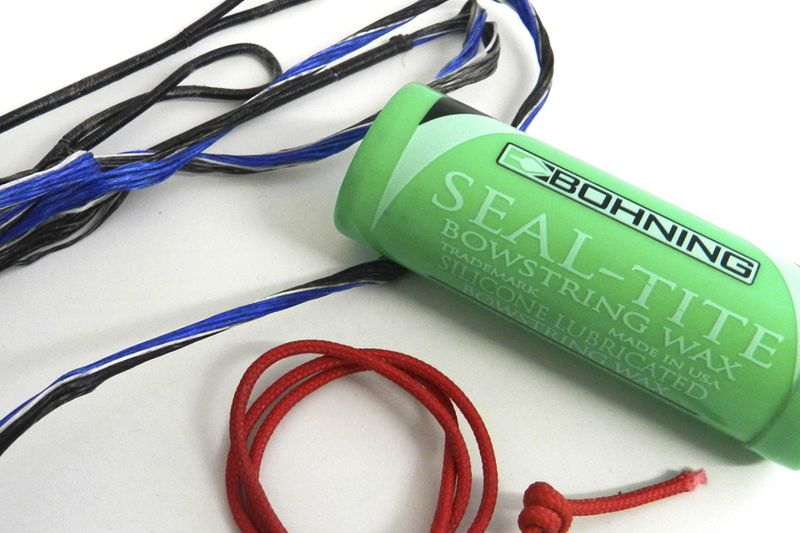
Bohning Seal-Tite is the silicone-based wax most shops keep in stock — it stays workable in cold and hot weather.
Why Bow String Wax Actually Matters
Modern bowstrings are built from blended fibers — usually a mix of high-modulus polyethylene strands like BCY 452X, Mercury, or 8125G. Those strands hold up to thousands of shots, but only when the bundle stays bonded together. Wax does three things at once: it lubricates the fibers so they slide instead of grinding, it seals out water and grit, and it locks the bundle into a single working unit instead of a fan of loose threads.
Skip the wax and the bundle starts to “fuzz.” Once individual strands start fraying, draw weight drops a touch, arrow speed dips, and the string begins to creep — meaning your peep rotation goes off, your nock points shift, and your groups open up at 30 yards. The truth is, most archers blame their form for that slow opening of groups when the actual culprit is a dry, frayed string. 60X Custom Strings, a high-end string builder, reports a properly waxed string outlasts an unwaxed one by 60% to 100% in its testing.
How Often to Wax a Bow String
The honest answer: every two to three weeks during shooting season, plus before any wet weather shoot, plus any time the string looks dry or feels rough. World Archery’s coaching team recommends every two weeks for shooters putting 100+ arrows down range a week, and once a month for casual archers.
Storage time counts too. A bow that sits in a closet for the off-season still loses wax to slow evaporation and ambient temperature swings. Wax it before you put it away, and wax it again before the first shoot back. If you live in a humid climate — Florida, the Gulf Coast, Southeast Asia — bump the frequency to every 10 days during use.
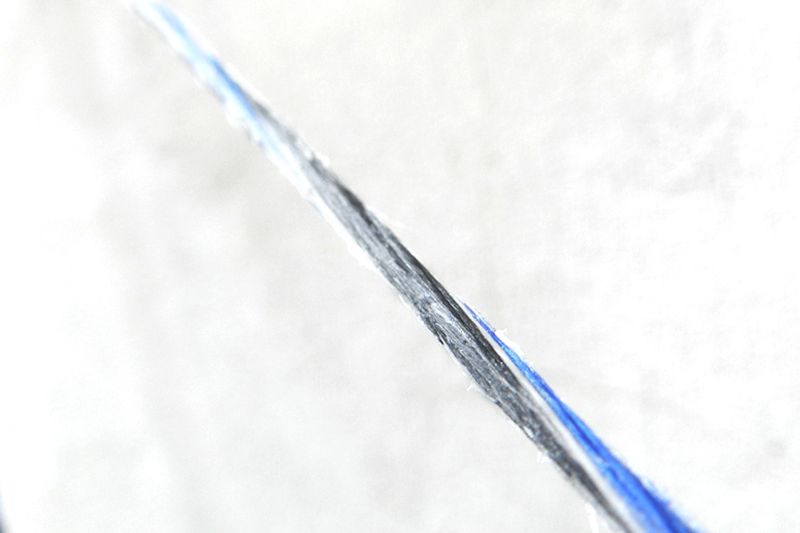
If the strands look frosty, gray, or feathered like this, you’re already overdue.
There’s a quick field test. Run your thumb and forefinger up the string. If you feel any roughness, see any fuzz lifting off the bundle, or notice the strands have lost their slight tackiness, it’s time. A well-waxed string feels like a thick piece of dental floss — slick, slightly sticky, and uniform from limb tip to limb tip.
Types of Bow String Wax Compared
Three categories cover almost everything you’ll see at a pro shop or online.
- Silicone-based synthetic — Bohning Seal-Tite, Scorpion Venom, RGD Hot & Cold. Smoothest application, best cold-weather performance, won’t get sticky in summer heat. Most compound shooters land here.
- Beeswax-based natural — Pine Ridge, Bohning Tex-Tite, Allen Bow String Wax. Slightly tacky finish, traditional choice, the kind grandpa used. Works fine in moderate temperatures but can stiffen below freezing.
- Polymeric blends — KBE BowGuy, Bohning Tex-Tite II, conditioner-style products. Combine wax with conditioning oils. Pricier but a solid pick for high-volume target shooters who want maximum string life.
For most archers reading this, a silicone-based wax is the safe pick. It applies easily, handles temperature swings, and is the same formula competitive 3D shooters trust during long summer tournaments. World Archery’s Archery 101 maintenance guide recommends a silicone synthetic for any string on a compound, longbow, or modern recurve.
How to Wax a Bow String: 7 Steps Done Right
The whole process takes under five minutes. The trick is doing it the same way every time so the string sees consistent care, not a once-a-year deep clean.
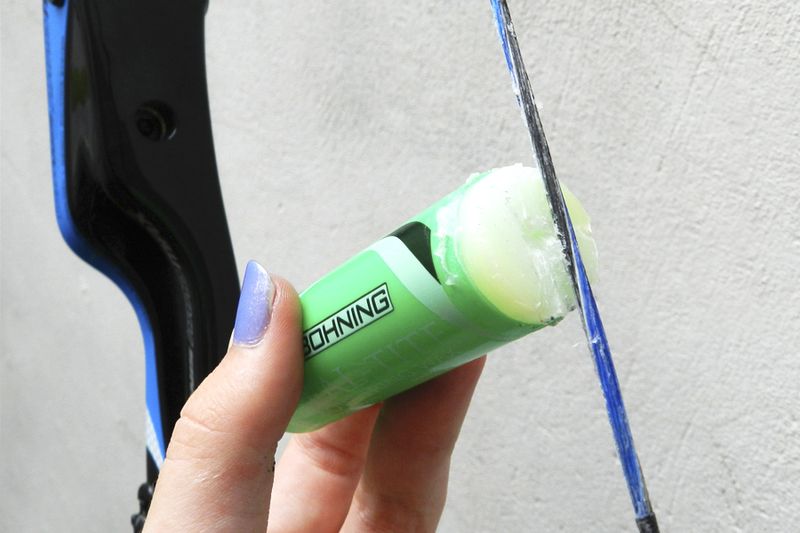
Press the open end of the wax tube against the string and slide along the entire length.
- Inspect the string first. Look for broken strands, fraying near the cams or limb tips, and anywhere the serving has separated. If you spot any of these, stop and read our companion guide on when to replace a bow string before waxing — wax won’t save a string that’s already failing.
- Wipe the string down with a soft cloth. Old wax buildup, dirt, and sap all need to come off so new wax bonds to the fibers, not to last month’s residue.
- Apply the wax in long strokes. Hold the tube with the open end on the string and slide from one limb tip toward the other. Keep light pressure. You want a thin, even coat — not chunks.
- Skip the servings. The center serving, end servings, peep area, and D-loop wraps stay dry. Wax under a serving makes it slip and unravel.
- Work it in with friction. Pinch the waxed section between thumb and forefinger and rub up and down. The heat melts the wax into the fibers. You should see the wax disappear into the bundle.
- Use a leather scrap or a piece of cord for the deep work. A short piece of paracord folded over the string and pulled back and forth works wax into the inner strands the cleanest. This is how the World Archery technicians do it on competition strings.
- Check for excess. If you see white flakes or wax beads after rubbing, wipe them off. Excess wax attracts grit and adds drag through the cams on a compound.
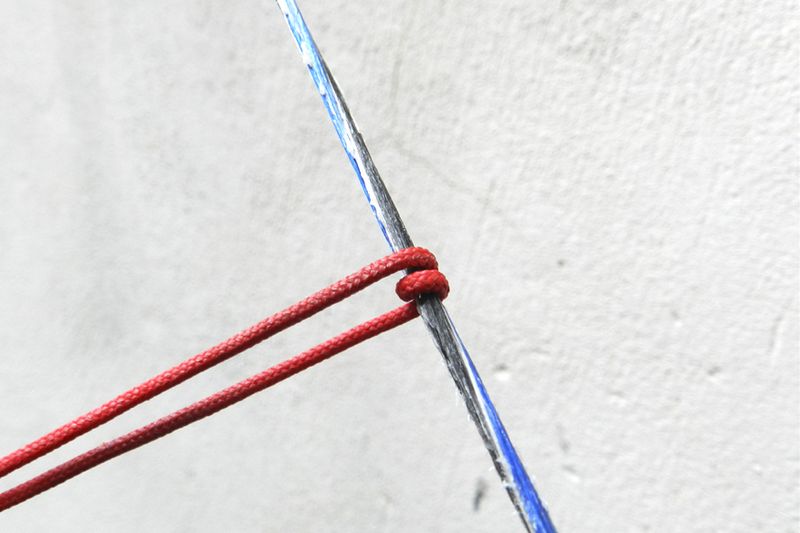
A folded loop of paracord drives wax into the strand bundle far better than fingers alone.
Where Not to Wax — And Why
The serving is the wrapped section in the center of your string (where your nock sits) and at each end (where the string attaches to the cams or limb tips). It’s a separate thread tightly bound around the main bundle, and it has one job: keeping the bundle aligned and protecting the high-wear zones.
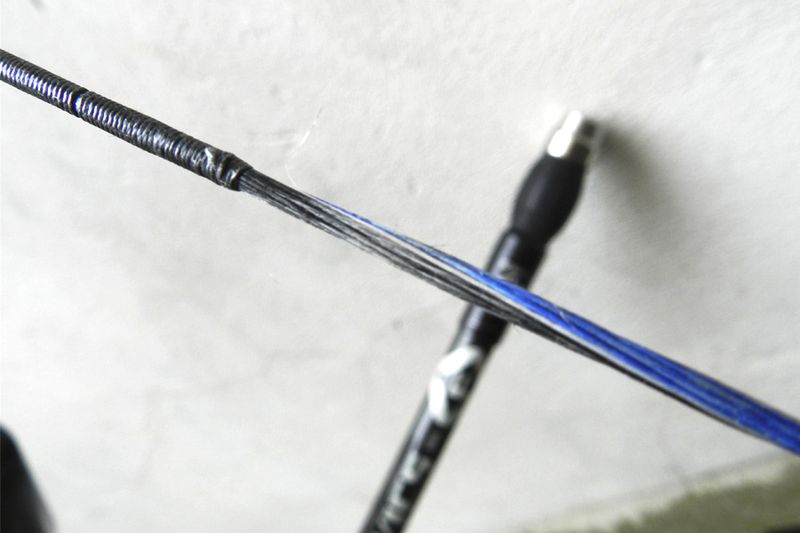
The wrapped section is the serving. Keep it dry.
Wax under a serving acts like a lubricant between the wraps and the bundle. The serving slides, gaps open, and within a few hundred shots your nock point will start drifting. On a compound, separating servings near the cams can cause string derailment — which is exactly how a $200 string turns into a $400 repair bill. The fix is simple: leave the serving alone. If wax accidentally lands on it, wipe it off immediately with a dry cloth.
Signs Your Bowstring Has Passed the Wax Threshold
Wax extends life. It doesn’t reverse damage. A string that’s already broken down needs replacement, not maintenance. Here are the seven indicators that the wax tube can’t fix:
- Visible broken strands anywhere along the bundle
- Fuzzing that returns within a week of waxing
- Discoloration that won’t wipe off — usually means UV degradation
- A noticeable stretch beyond 1/8 inch from your original brace height
- Serving separation that you can lift with a fingernail
- Peep rotation that won’t stay set after twist adjustments
- String age past 36 months on a compound, or 24 months on a heavily shot recurve
For more depth on the failure points to watch for, our bow string replacement guide covers the inspection routine in detail. The general rule from the Archery Trade Association is that any compound shooter putting 5,000+ arrows a year through a bow should plan on a new string every 12 to 18 months, even with perfect wax discipline.
Bow String Wax Mistakes That Shorten String Life
The five most common ways to wreck a string while trying to help it:
- Over-waxing. A thick crust of wax attracts dust, dirt, sand, and arrow fletching debris. The grit acts like sandpaper between the strands. One thin coat every two weeks beats one thick coat once a season.
- Heat-blasting the wax in. Hair dryers and torches melt the wax fast — and they also degrade BCY-452X fibers above 120°F. Friction from your fingers generates enough heat. Skip the appliances.
- Waxing the cables (sometimes). Compound cables can be waxed, but only the unserved sections. Most cables are served end to end, which means there’s nothing to wax. Check before you slather.
- Using car wax or candle wax. Both contain petroleum distillates that break down synthetic string fibers. Stick to wax labeled for archery.
- Ignoring the cam grooves. Wax that smears into a compound’s cam grooves can change cable timing. Wipe overspray off the cams every time you wax.
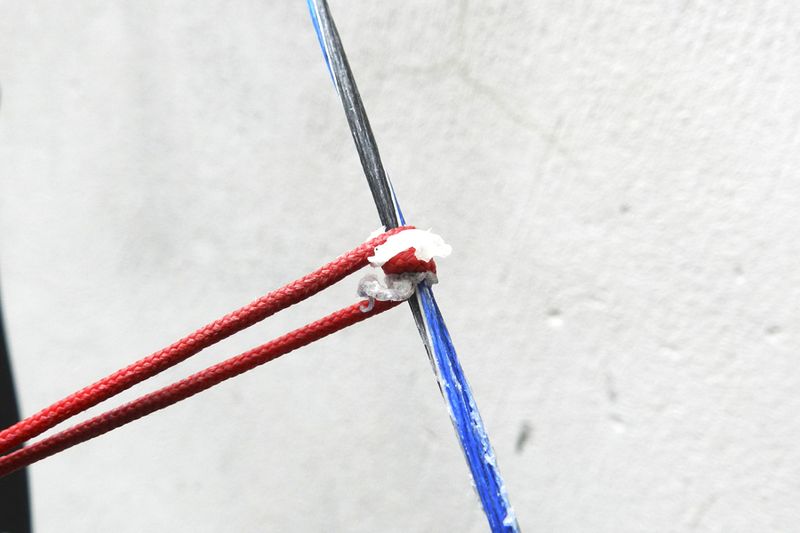
Excess wax peels off after a thorough rub-in. Don’t leave it on the string.
Weather, Storage, and Wax — The Edge Cases
Cold weather changes the math. Below freezing, beeswax-based products stiffen and can crack off the string. Switch to a silicone synthetic for any late-season hunt or indoor winter league. RGD makes a dual-formula wax specifically for archers who shoot in 20°F mornings and 90°F afternoons in the same season.
Rain and humidity require a pre-shoot wax, not a post-shoot one. Wax beads water and pushes it off the bundle before it can wick into the fibers. After the shoot, dry the string with a soft towel — don’t re-wax over a wet string, since the moisture gets locked in. Let it dry overnight first.
For long-term storage, give the string a generous wax coat, slack the bow if it’s a longbow or recurve, and store the bow in a hard case at moderate temperature. The wax coat sacrifices itself to UV and air, protecting the strands underneath. When you pull the bow back out next season, wipe the old wax off and apply a fresh coat before stringing up.
The same maintenance logic applies to your full setup. If you’re already this deep into string care, you should be running a complete inspection routine — our compound bow maintenance schedule lays out weekly, monthly, and yearly tasks that pair with your waxing routine.

Tournament shooters wax before every line. Backyard archers usually wait too long.
Watch: How to Wax a Bow String (World Archery)
The Bottom Line on Bow String Wax
Pick a silicone wax. Apply a thin coat every two to three weeks during the season. Stay off the servings. Rub it in with friction, not flame. Inspect for damage before every wax session, and replace the string the moment you see broken strands. That’s the entire system — and it’s the same system the people getting custom strings from 60X Custom Strings follow to make $200 strings last three full seasons.
Your string is the only piece of equipment on your bow that touches every shot. Treat it like the engine of the setup. Once the wax habit is locked in, you’ll notice quieter shots, more consistent groups, and a peep that finally stays put. Pair this with a proper compound bow tune-up and the difference at 50 yards is impossible to miss.
Sources
- World Archery — Archery 101: How to wax a bowstring — Governing body coaching guidance on waxing technique and frequency
- 60X Custom Strings — Why Wax a Bow String? & How Often? — Custom string builder breakdown of wax frequency and material recommendations
- Archery Trade Association — Industry guidelines for bowstring lifespan and replacement intervals
Browse archery bows, arrows, and accessories at the Archery Supplier shop →
Shop on eBay
Archery Equipment on eBay →
We may earn a commission when you shop through our eBay links.
