
Archery Blog
Arrow Weight and FOC Explained: The Physics Behind Penetration, Forgiveness, and Flight
May
Two arrows can look identical on the shelf and behave like completely different projectiles in the air. One drives through a foam target and leaves a clean exit. The other wobbles off the rest, drifts in the smallest crosswind, and slaps the backstop sideways. The difference is rarely the bow. It is almost always the arrow’s total weight and where that weight sits along the shaft — what archers call FOC, or front of center.
This guide unpacks both numbers in plain English. Not the marketing version that says “heavier is always better,” and not the spec-sheet version that buries you in grains-per-inch tables. The goal is to leave you able to weigh your own arrow, calculate its FOC with a tape measure, and decide whether the number you got is doing you any favors.
What Arrow Weight Actually Measures
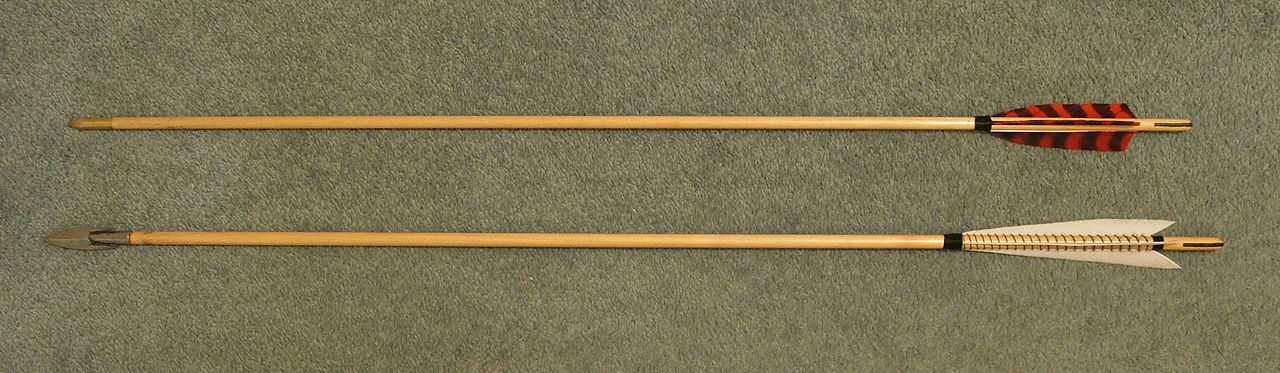
Arrow weight is reported in grains. One grain equals 1/7000th of a pound, which sounds absurdly small until you realize a full hunting arrow can run 450 to 650 grains and a thin target arrow under 300. Every component contributes: the bare shaft (rated in GPI, grains per inch), the point or broadhead, the insert that holds the point, the nock, and the fletching. Wraps and lighted nocks count too. The total of all of these is your finished arrow weight.
For a quick sanity check, multiply your shaft’s GPI by its cut length, then add roughly 30 grains for nock and fletching plus whatever your point weighs. A 28-inch shaft at 8.5 GPI with a 100-grain point lands near 368 grains. A 29-inch shaft at 10.2 GPI with a 125-grain point and a brass insert pushes 480. The same bow throws those two arrows very differently.
Why Total Weight Matters
Heavier arrows carry more kinetic energy and significantly more momentum at the same bow setup. Momentum is what drives a broadhead through bone and gristle, not raw speed. A light arrow leaves the bow faster but bleeds energy quickly because it has less mass to maintain it. A heavy arrow loses speed off the string but holds onto its energy further downrange. This is why elk and moose hunters routinely build arrows north of 550 grains, while indoor spot shooters trying to draw a fat line through a 10-ring run as light as their bow’s IBO rating allows.
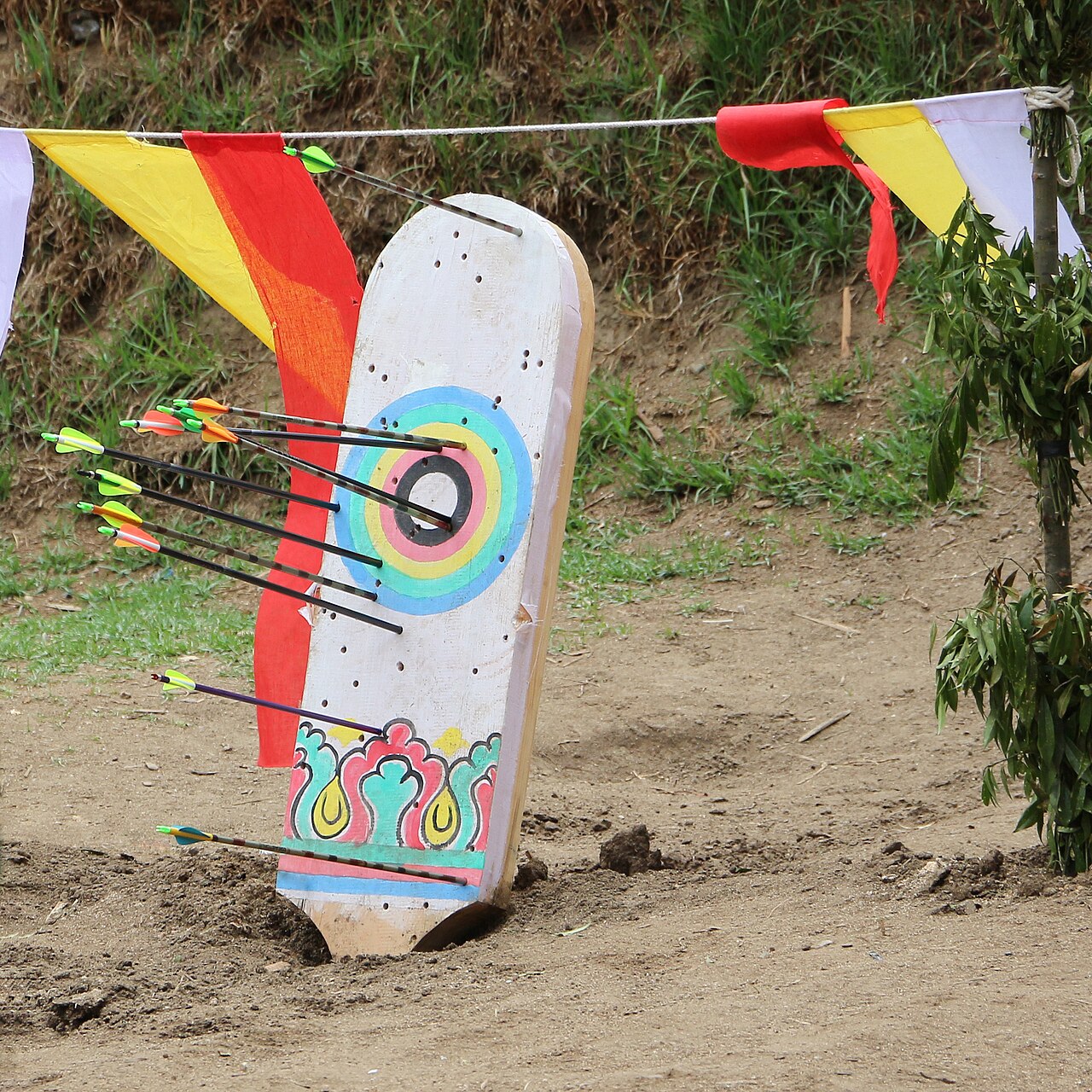
There is also a quieter benefit nobody talks about in the catalogs: heavier arrows absorb more of the bow’s stored energy at the shot. That means less leftover energy ringing through the riser as vibration and noise. A 6-grains-per-pound arrow on a 70-pound bow (about 420 grains minimum) is the industry rule of thumb to protect the bow itself. Drop below that and you risk both inconsistent tune and limb damage.
FOC: The Number Nobody Calculated Until They Had To
FOC stands for Front of Center. It is a percentage that describes how much of the arrow’s total weight sits forward of its physical midpoint. A perfectly balanced arrow — weight evenly distributed end to end — has 0% FOC. Add a heavy point and that balance shifts forward. Most modern hunting arrows live somewhere between 10% and 20% FOC. Target arrows trend lower, usually 7% to 12%.
The reason this matters is aerodynamic. A forward-weighted arrow flies like a dart: the heavy nose leads, the lighter tail trails, and the fletching has more leverage to correct any yaw. A rear-weighted arrow flies like a poorly trimmed paper airplane — the tail wants to overtake the nose, and the fletching has to fight that tendency every meter of the way. The result is a wobblier flight, especially with fixed-blade broadheads, which are notoriously sensitive to imperfect arrow alignment.

How to Calculate FOC
You only need a ruler and a balance point. Build your arrow with all components installed — point, insert, nock, fletching, wrap, everything. Then balance it on the edge of a thin object (a paper clip on its side works well) and slide it until the arrow rests level. Mark that balance point.
- Measure the arrow’s total length, throat of nock to back of point. Call this L.
- Find the center of the arrow: L divided by 2.
- Measure from the throat of the nock to the balance point. Call this B.
- FOC % = ((B − L/2) ÷ L) × 100
Example: a 29-inch arrow with the balance point 16 inches from the nock. Center is at 14.5. B minus L/2 equals 1.5. Divide by 29 and multiply by 100, and you get roughly 5.2% FOC. That is low. Adding 25 grains to the point would shift the balance forward perhaps half an inch, lifting FOC into the 7–8% range without changing anything else.
The FOC Ranges That Actually Work
There is no single “correct” FOC. There are useful ranges for different jobs, and most arguments online stem from people applying hunting standards to target setups (or vice versa).
- Target / indoor: 7–12%. Stability is good enough, and the lower nose weight keeps trajectory flatter for known-distance shooting.
- 3D and field: 10–15%. Slightly forward of target setups because broadhead-like forgiveness matters when distances are estimated.
- Hunting with mechanicals: 12–17%. Mechanicals are aerodynamically clean in flight, so extreme FOC is less critical.
- Hunting with fixed blades: 15–20%+. Fixed broadheads need the nose-heavy steering effect to fly true alongside field points.
- Extreme FOC (EFOC): 19% and up. A specialty approach popularized by traditional and trad-curious bowhunters who prioritize penetration above all else on heavy game.
Going higher than 20% buys diminishing returns for most archers. The arrow becomes slower, drops faster at distance, and starts to fly nose-down. The penetration gains are real but only meaningful on heavy-bone game at modest yardage. For a deer hunter shooting inside 40 yards, 12–17% does everything the EFOC crowd promises without the trajectory penalty.
How to Move FOC Up or Down
Once you know your current FOC and your target, adjustment is mostly about where you add or remove weight. Anything in front of center pushes FOC up. Anything behind center pulls it down.
Raising FOC
- Heavier points or broadheads: the most impactful single change. Going from 100 to 125 grains often shifts FOC by 2–3 percentage points.
- Brass or stainless inserts: a brass insert can add 40–75 grains right behind the point, hugely effective.
- Weighted half-outs or footings: popular with EFOC builders for extreme nose loading.
- Shorter shafts: reducing arrow length moves the center back toward the (heavier) front, raising FOC even without adding mass.
Lowering FOC
- Lighter point or aluminum insert: the inverse of the above.
- Heavier nocks (lighted nocks, pin nocks with collars): shifts weight rearward.
- Longer fletching or feathers: a small but real rearward shift, plus more drag-based stability.
- Wraps: typically add 8–12 grains behind center.
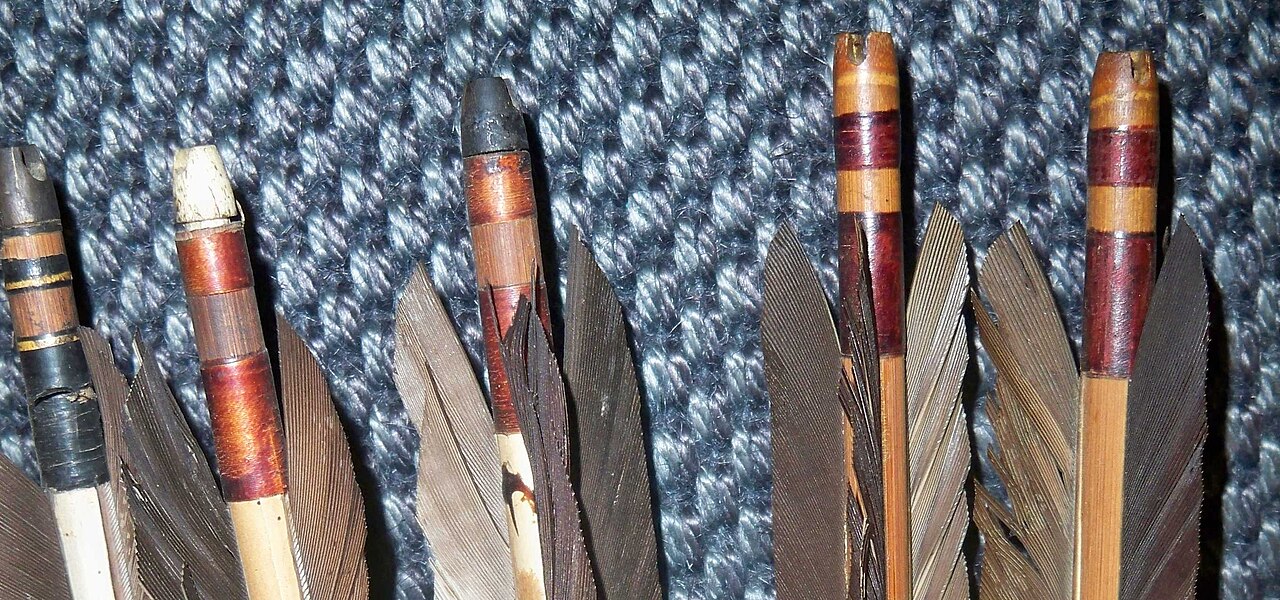
The Spine Trap Hidden in Every FOC Change
Here is the catch nobody mentions until you’ve already ordered the wrong shafts: changing point weight changes effective spine. A heavier point makes the arrow act weaker (the front of the shaft flexes more around it). A lighter point makes the arrow act stiffer. So if you swap your 100-grain field tips for 150-grain broadheads to chase FOC, you may also need a stiffer raw shaft to compensate — otherwise your perfectly tuned bow will throw broadheads in unpredictable directions.
Most arrow manufacturers publish spine charts that account for point weight. Use them. Easton’s chart in particular is treated as the industry baseline. If you are adding more than 25 grains to the point compared to what your shafts were originally spined for, expect to re-tune at minimum, and possibly re-shaft.
The Real Trade-Off: Speed vs. Forgiveness vs. Energy
Arrow weight and FOC are levers on the same machine. Pull one and the others move. The honest framing is that you are buying one quality with the currency of another.
- Lighter arrow, lower FOC: fastest trajectory, flattest aim, least forgiving of imperfect form or crosswind, lowest penetration energy.
- Heavier arrow, moderate FOC (12–15%): the all-around setup most hunters and 3D shooters settle on. Reasonable trajectory, strong stability, plenty of penetration.
- Very heavy arrow, high FOC (17%+): bulletproof flight with fixed broadheads, deepest penetration, but trajectory drops sharply past 40 yards and shot placement margin shrinks.
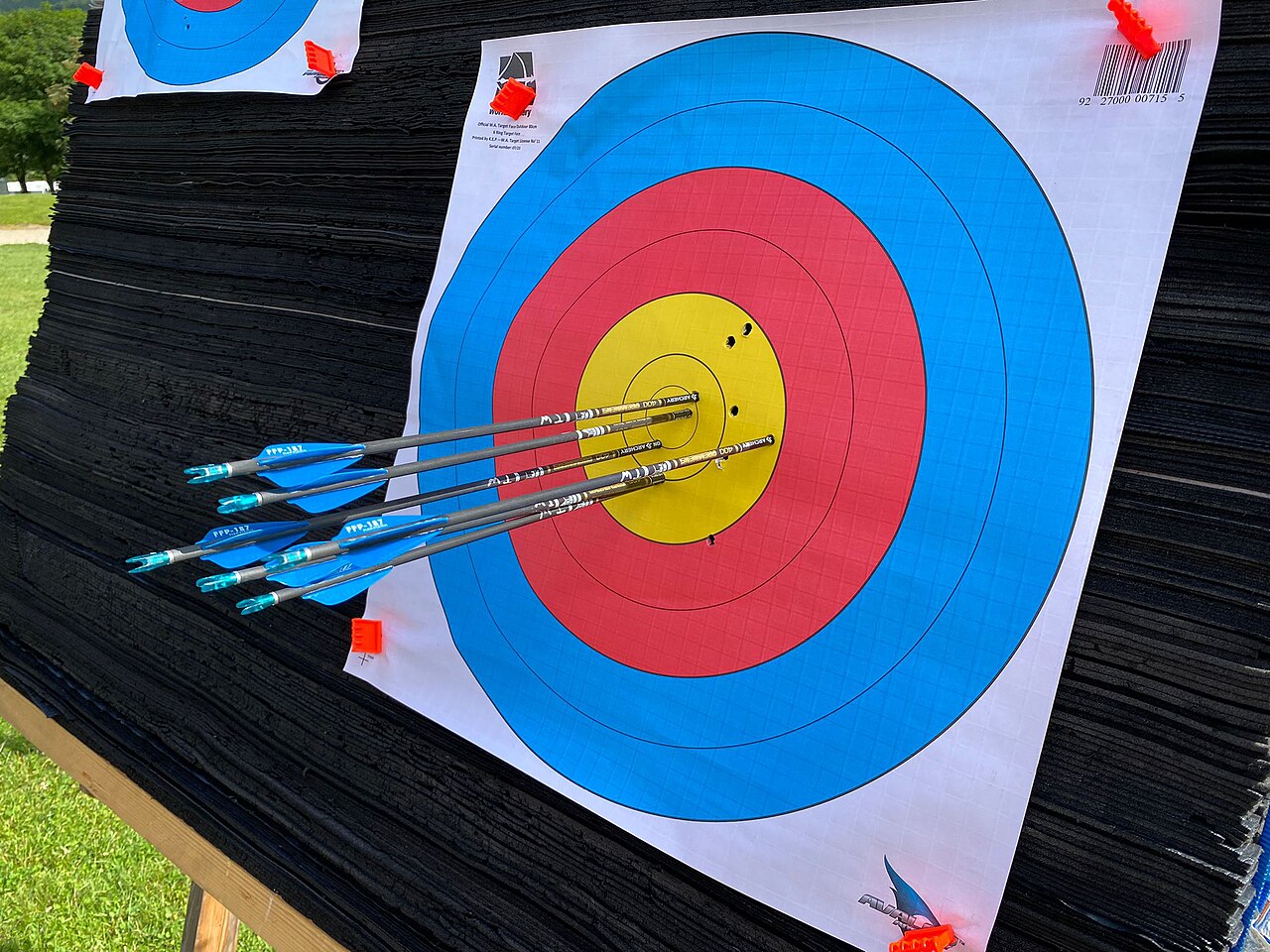
A Sensible Process for Building Your Own
If you are setting up arrows from scratch — or rebuilding a set that never quite tuned right — work in this order. Skipping steps is the most common reason archers end up with arrows that group field points but scatter broadheads.
- Decide your purpose first. Indoor target, 3D, deer, elk. Each has a sensible weight and FOC band.
- Pick shaft spine off the chart for your bow’s draw weight, draw length, and the point weight you intend to shoot.
- Cut shafts to length based on your draw, with a small amount past the rest for safety.
- Assemble one complete arrow — insert, point, nock, fletching, wrap — and weigh it on a grain scale.
- Balance and calculate FOC. Compare to the band for your purpose.
- Adjust if needed: swap to a heavier point or brass insert to raise FOC, lighter components to lower it.
- Paper tune, then bareshaft tune, then broadhead tune in that order. Each catches problems the last one hides.
Common Mistakes Worth Avoiding
Three errors come up over and over in archery forums, pro shop conversations, and lost-arrow stories.
- Chasing FOC without re-spining. You add a brass insert and 50 more grains up front and wonder why broadheads now hit a foot left at 30. The shaft is too weak for the new point. Re-check the spine chart.
- Going below the 5-grains-per-pound floor. Some hunters drop arrow weight to flatten trajectory and end up under their bow’s minimum arrow weight rating. This voids warranties and damages limbs over time.
- Treating FOC as the only number. A 22% FOC arrow that weighs 320 grains is still a weak penetrator on big game. Weight and FOC work together. Either alone is incomplete.
Bringing It Together
An arrow is the only piece of equipment that actually leaves your bow and does the work. The bow is a launcher. Everything that happens after the string releases — flight, stability, penetration, recovery from imperfect form — is the arrow’s job. Total weight decides how much energy survives the trip downrange. FOC decides how well the arrow keeps its nose pointed at the target while it gets there. Tune both with intent, document what you build, and you will spend a lot less time wondering why your groups opened up at 40 yards.
If you take one thing from this guide: build a complete arrow, weigh it, calculate its FOC, and compare it to the band that fits your purpose. That five-minute exercise reveals more about your setup than any pro shop spec sheet.
Sources
- Easton Archery — shaft spine and selection charts used industry-wide.
- Gold Tip Arrows — manufacturer spec sheets for GPI and component weights.
- Archery Trade Association — industry standards and safe arrow weight guidelines.
- Wikipedia — Arrow — overview of arrow construction, terminology, and physics.
Browse archery bows, arrows, and accessories at the Archery Supplier shop →
