
Archery Blog
Compound Bow Buying Guide 2026: What Every Spec Actually Means
Aug
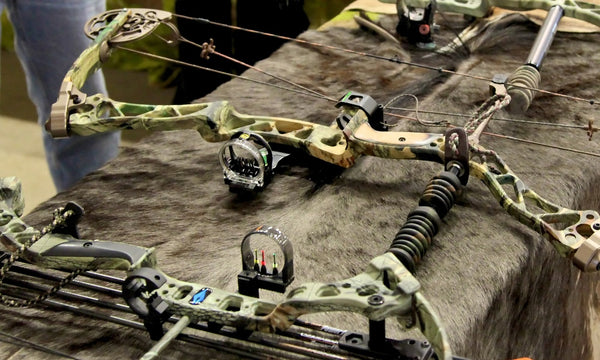
Walk into any archery pro shop and the wall of compound bows looks like a spec war — IBO speeds printed in huge font, let-off percentages highlighted in yellow, axle-to-axle measurements listed to the millimetre. For a first-time buyer, or even a returning archer upgrading after a few years away, none of it maps naturally to the question you actually care about: will this bow work for me? This guide answers that. Not by listing the best bows of 2026, but by explaining what every number means, why it matters, and how to weigh it against your goals before you spend a dollar.
Draw Weight: The Number That Matters Most
Draw weight is the peak force — measured in pounds — required to pull the bowstring back to full draw. It is the single most important spec to get right, and the single most common mistake new buyers make is going too heavy.
A compound bow’s cam system means you never feel the full weight at full draw — that’s what let-off handles, which we’ll cover shortly. But you do feel the full weight during the draw cycle, and if your peak draw weight is too high, you’ll develop bad habits immediately: creeping forward before the shot, rushing the draw, torquing the bow to muscle through it. None of those habits go away easily.
For adults new to archery, a 40–50 lb compound is a reasonable starting point. You have enough speed to shoot accurately at 30–40 yards and enough power to hunt whitetail deer in most US states (minimum draw weights for deer range from 35 to 45 lb depending on jurisdiction). If you’re buying specifically for elk or larger game at distance, 60–70 lb gives you the kinetic energy margins you need. Most adult compounds are adjustable across a 10 lb range — a 60–70 lb bow lets you start light and increase as your form develops.
Children and youth archers need age-appropriate draw weights. Look for bows specifically designed as youth models with a 15–30 lb range, or adult bows with a wide adjustment range that can be turned down significantly. Trying to shoot a 50 lb bow at age 12 produces injury, not improvement.
Draw Length: Getting the Fit Right
Draw length is the distance from the grip to the bowstring at full draw, measured in inches. It must match your body — specifically your wingspan — or the bow will never feel natural and your accuracy will suffer regardless of how expensive the riser is.
The classic measurement method is wingspan divided by 2.5. Measure your total arm span fingertip to fingertip and divide by 2.5. A person with a 70-inch wingspan should be shooting roughly a 28-inch draw length. This is a starting estimate, not gospel — experienced archers often fine-tune by half-inch increments based on anchor point feel — but it gets you close.
Modern compound bows adjust draw length via module swaps, rotating modules, or cam changes. Some bows — especially budget beginner models — adjust across a 3–4 inch range with a simple module change using an Allen key. Higher-end bows may require a press and a module swap for each half-inch. Before buying, confirm the adjustment range covers your draw length and ask the pro shop what the adjustment process involves. A bow that requires a $60 trip to the shop every time you adjust draw length by half an inch is a hidden ongoing cost.
Let-Off: Why You Can Hold a 70 lb Bow at Full Draw All Day
Let-off is expressed as a percentage and describes how much the draw weight drops at full draw. A 70 lb bow with 80% let-off requires only 14 lb of holding weight at full draw. This is the mechanical advantage of the cam system and it’s what separates compound bows from recurves and longbows — you can hold at full draw for an extended time without muscle fatigue affecting your aim.
Let-off on modern compounds typically ranges from 65% to 90%. Higher let-off (85–90%) is favoured by hunters who may need to hold at full draw while waiting for an animal to step into a clear shooting lane. Lower let-off (65–75%) is sometimes preferred by target archers who feel the back-tension of a slightly heavier hold gives them more feedback and a crisper shot. There is no universally correct let-off — it comes down to shooting discipline and application. If you’re hunting, prioritize high let-off. If you’re shooting 3D or indoor targets and want to develop sensitivity to your shot cycle, lower let-off teaches you more.
Axle-to-Axle Length: Stability vs. Maneuverability
Axle-to-axle (ATA) length is the distance between the two axle pins — the points at the top and bottom of the riser where the cams mount. It directly affects how forgiving and stable the bow is to shoot.
Longer ATA bows (32 inches and up) have a wider string angle at full draw. A wider string angle means less vertical string torque at the anchor point, which translates to a more forgiving bow — small aiming errors produce smaller misses. These bows dominate indoor and 3D target archery. The trade-off is maneuverability: a 36-inch ATA bow in a tree stand or ground blind is awkward.
Short ATA bows (28–31 inches) are compact, lighter to carry, and easier to maneuver in tight spaces. They are the dominant choice for bowhunters, especially tree stand hunters. They are slightly less forgiving, which is manageable at hunting distances (under 40 yards) but starts to matter more at 60+ yards on the target range.
A 30–33 inch ATA bow is a reasonable all-purpose choice if you’re doing both target shooting and hunting.
IBO Speed: The Marketing Number You Should Use Carefully
IBO speed is measured in feet per second (fps) and represents the arrow speed a bow produces under standardized International Bowhunting Organization test conditions: 70 lb draw weight, 30-inch draw length, 350-grain arrow. A bow rated at 340 fps IBO will not shoot 340 fps in your hands unless you match those exact conditions.
Real-world arrow speed depends on your draw weight, your actual draw length, your arrow weight, and your accessories. Add a rest, sight, and stabilizer (which add string drag and mass) and you’ll typically see 20–30 fps below IBO in real shooting conditions. This doesn’t mean IBO speed is useless — it’s a consistent comparison point across bows tested the same way. A 360 fps IBO bow will be faster than a 310 fps IBO bow in the real world, all else being equal.
For hunting, 260–300 fps of real-world speed is more than enough for clean kills at ethical distances. Don’t sacrifice draw cycle smoothness, let-off, or ATA length chasing a 10 fps IBO advantage on paper.
Shop Compound Bow Beginner Packages on Amazon →
Cam Types: What Single, Binary, and Hybrid Mean in Practice
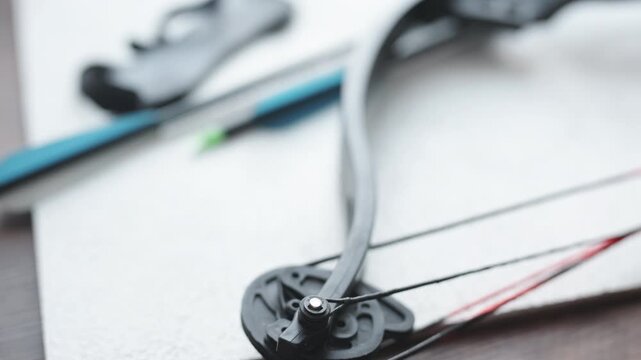
The cam (or wheel) is the eccentric pulley at each limb tip that creates the let-off and controls the draw cycle. Cam design is one of the most discussed elements in compound bow tech, and for good reason — it shapes how the bow draws, peaks, and breaks over the wall.
Single cam bows have one round idler wheel at the top and one power cam at the bottom. They are generally quieter, easier to tune, and more maintenance-friendly. They dominated the market in the early 2000s and still have strong advocates, especially among hunters who want a quiet, low-maintenance setup. The trade-off is that they can nock travel slightly (the nocking point tracks a slight arc rather than a true horizontal) which some target archers dislike.
Binary cam systems link both cams to each other with a secondary cable. This keeps both cams synchronized and produces a very level nock travel, which proponents argue improves consistency. Binary cams require more careful synchronization during setup but are extremely popular in the hunting market for their aggressive, hard-hitting draw cycle.
Hybrid cam designs use a true power cam at the bottom and a control cam at the top, splitting the difference between single and binary. They aim for ease of tuning with nock travel closer to horizontal. Most modern compounds use some variant of hybrid or binary cam design.
For beginners, cam type matters less than draw cycle feel. At a pro shop, draw every bow on your shortlist and notice where the draw peaks, how it transitions to the wall, and whether the back wall (the hard stop at full draw) feels solid. A smooth draw cycle you enjoy shooting is worth more than a 20 fps speed advantage from a more aggressive cam.
Brace Height: Forgiveness vs. Speed
Brace height is the distance from the deepest part of the grip to the bowstring at rest. It is inversely related to speed and forgiveness — shorter brace height means faster arrow speed (the string is in contact with the arrow longer during the power stroke) but less margin for error in your form.
A brace height of 7 inches or more is considered forgiving. A brace height of 5–6 inches is aggressive. Sub-5 inch brace heights push maximum speed but demand near-perfect technique — any wrist or grip movement during the shot gets amplified. Beginners and intermediate archers are better served by 6.5 inches or more. Experienced shooters chasing speed records can explore shorter brace heights once their form is locked in.
Budget Tiers: What You Actually Get at Each Price Point
The compound bow market in 2026 is segmented fairly consistently across three tiers.
Under $400 (entry-level): Bows in this range — often sold as ready-to-shoot packages with a sight, rest, quiver, and stabilizer — are functional learner tools. The risers are typically aluminium die-cast rather than machined, the cams are simpler, and the overall tolerances are looser. If you are genuinely unsure whether archery will stick as a hobby, this tier is a low-risk entry. Brands like Bear Archery, Genesis, and Barnett produce serviceable bows at this price point. Package deals are convenient but note that the included accessories are usually baseline quality — budget for upgrades if you get serious.
$400–$900 (mid-range): This is where the market’s best value lives. Bows in this tier use machined aluminium risers, quality cam systems, and better overall consistency from unit to unit. You’ll find bows here from Hoyt, Mathews, Bear, and PSE that professional-level archers have used to win competitions. The draw cycles are noticeably smoother, the back walls are crisper, and the bows are quieter. If you know archery is your sport and plan to shoot regularly, the performance jump from entry-level to mid-range is substantial.
$900 and up (premium): At this level you’re paying for the absolute highest quality machining, more exotic riser geometries, carbon or hybrid riser materials, and refined cam timing out of the box. Bows like the Hoyt Carbon RX-9, Mathews Phase 4, and Bowtech Revolt X sit here. The performance gap between mid-range and premium is narrower than the gap between entry and mid-range. These bows are worth the premium if you are competing seriously or want the best possible out-of-box tuning experience. For recreational hunting and weekend target shooting, a well-tuned mid-range bow performs nearly identically.
Shop Hunting-Ready Compound Bows on Amazon →
The Accessories You’ll Need (and What to Skip First)
A bare bow is not a shooting bow. You need at minimum: a sight, an arrow rest, a quiver, a release aid, and arrows. Here’s how to think about each for a first setup.
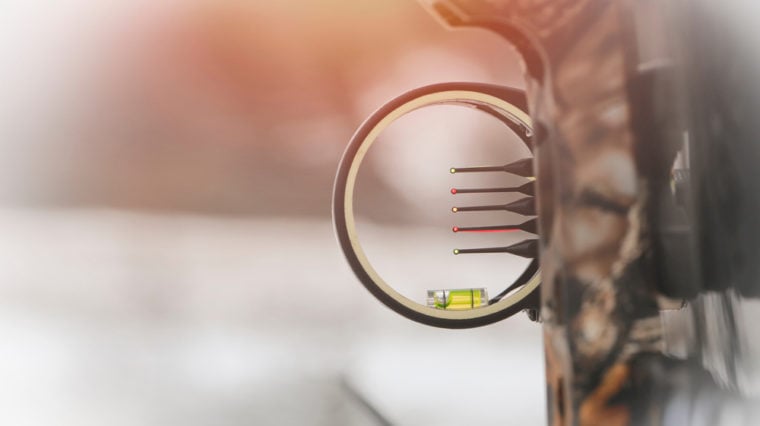
Sight: A single-pin movable sight is simpler to understand and set up than a multi-pin fixed sight — you dial one pin to your yardage. A three- or five-pin sight is faster for hunting (no adjustment mid-shot) but requires setting each pin for a specific distance. Either works; choose based on whether you’re primarily hunting or target shooting.
Arrow rest: Drop-away rests offer maximum arrow clearance and are the go-to for hunting. Containment rests (the whisker biscuit style) keep the arrow captured from nock to release, making them idiot-proof for beginners and hunting in movement-heavy situations. For indoor target work, a blade-style rest with full clearance produces the tightest groups.
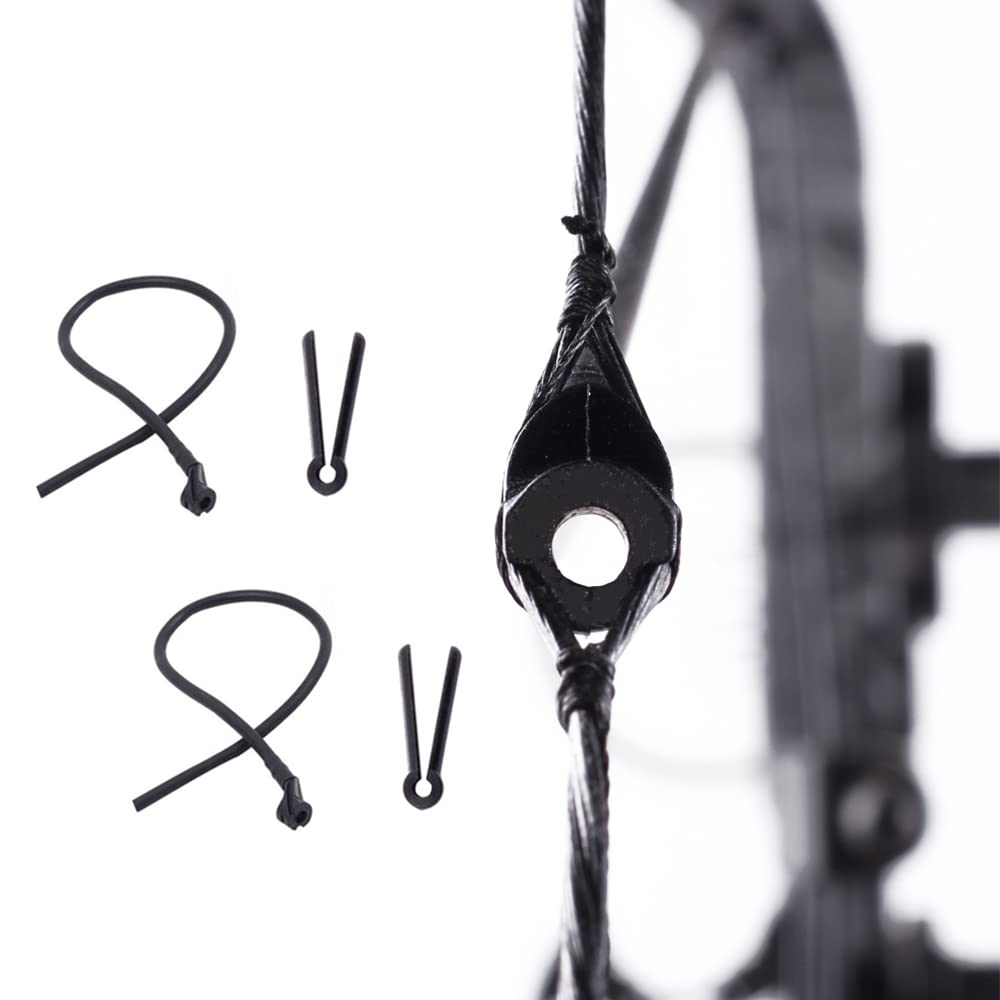
Release aid: Most compound shooters use a wrist-strap trigger release for its consistency and grip. If you’re shooting longer distances seriously, consider a thumb trigger or index-finger back-tension release for better shot activation discipline. Never start with a back-tension release — it requires understanding of shot execution that beginners don’t yet have.
Arrows: Arrow spine (stiffness) must match your draw weight and arrow length. A too-weak spine fishtails out of the bow; a too-stiff spine costs you speed and kills penetration. Arrow manufacturers publish spine selection charts — use them. For hunting, a minimum 400-grain total arrow weight (shaft plus tip) maintains enough momentum for ethical penetration.
Shop Compound Bow Sights and Rests on Amazon →
Buy From a Pro Shop If You Can
Online purchasing is convenient and often cheaper, but a quality archery pro shop provides something no website can: a draw-length measurement, a draw-cycle demo, and an experienced hand to set everything up before you leave. Many pro shops will shoot a bow with you before you commit. The cost savings of buying online can be quickly eaten by return shipping, conversion costs to get your draw length reset, and the friction of troubleshooting a setup problem remotely.
That said, if you know your measurements, know the model you want, and have access to a local shop for setup help (even if you buy elsewhere), online purchasing on a mid-range or premium bow can save $100–$200. Many shops will still press and set up a bow you purchased elsewhere for a reasonable fee.
The compound bow market in 2026 has never offered better value at every tier. Whether you’re buying your first bow or upgrading after a decade away, the specs above give you a framework to cut through the marketing noise and pick a setup that fits your body, your goals, and your budget — not just whatever’s rated fastest on the wall.
Sources
- World Archery Federation — Equipment Rules and Standards
- Bowhunting.com — Compound Bow Selection Resources
- Archery 360 — Beginner Archery Guides
