
Archery Blog
Finger Release vs Mechanical: The Technique Differences That Decide Your Accuracy
Jun
Pick up two archers shooting the same draw weight at the same target, and the thing most likely to separate their groups isn’t the bow — it’s how they let go of the string. Finger release and mechanical release aren’t just two different pieces of gear; they’re two different physics problems, two different anchor geometries, and two different definitions of what “a clean shot” even means. Get the technique wrong for your discipline and no amount of tuning will save you.
This guide walks through what each release technique actually does to the arrow, where each one demands you make trade-offs, and how to decide which belongs in your hand — without falling into the trap of assuming “mechanical = accurate, fingers = traditional.” The reality is messier and more interesting.
How Each Release Actually Works
Before you can compare techniques, you have to understand what the release is physically doing to the string at the moment of separation. The differences are larger than most archers realize.
The Finger Release (Mediterranean Draw)
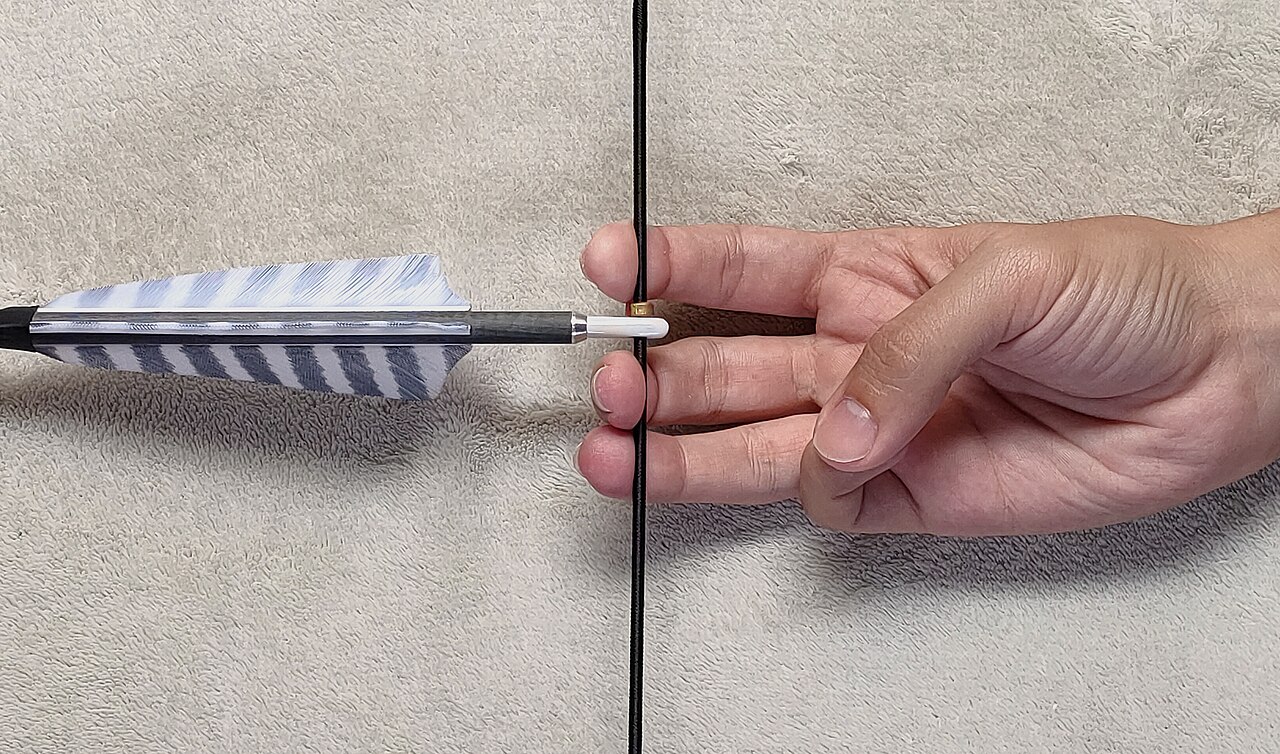
With a finger release — almost always shot through a leather or synthetic tab — three fingers hook the string. Index above the nock, middle and ring below. When you relax those fingers, the string rolls off them in sequence, deflects sideways before snapping back, and launches the arrow with a built-in lateral oscillation called archer’s paradox. The arrow literally bends around the riser as it leaves the bow.
This sounds chaotic, but it’s predictable and repeatable if your spine, tab thickness, and finger pressure are consistent. Olympic recurve archers have shot sub-centimeter groups at 18 meters this way for decades. The technique demands a deep hook (string in the first joint of the fingers, not the fingertips), consistent finger pressure distribution, and a back-tension expansion that pulls the hand straight through the face — never plucks outward.
The Mechanical Release
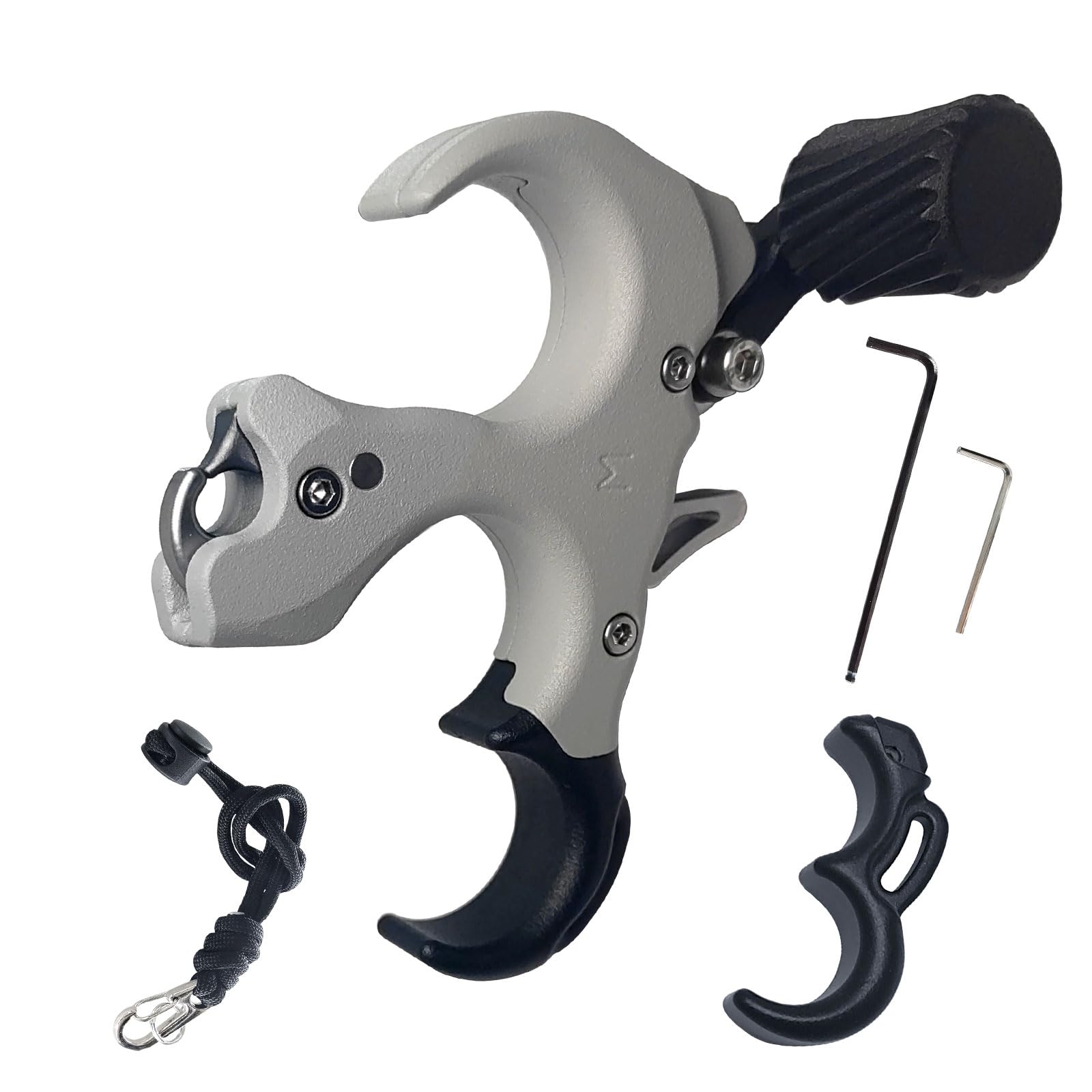
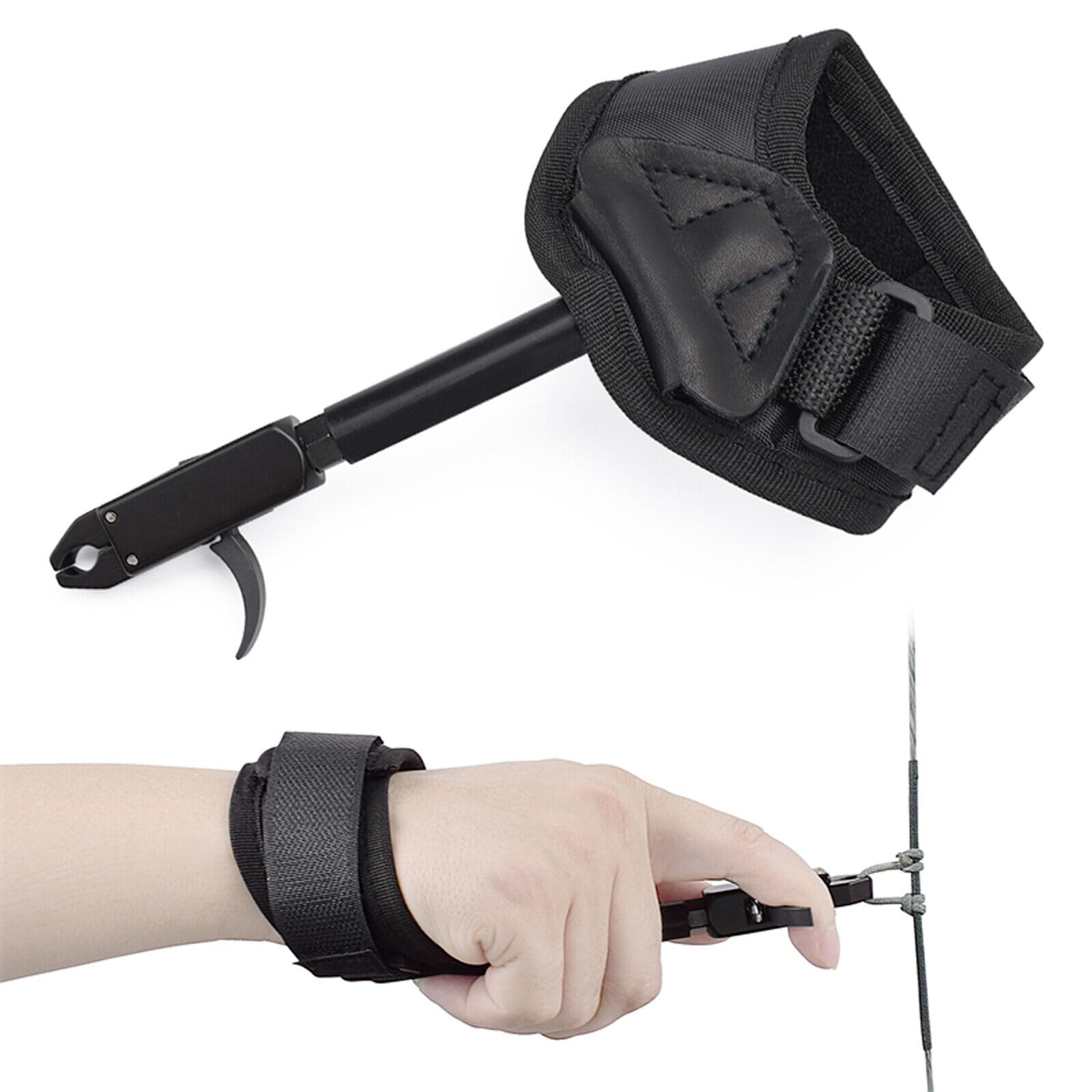
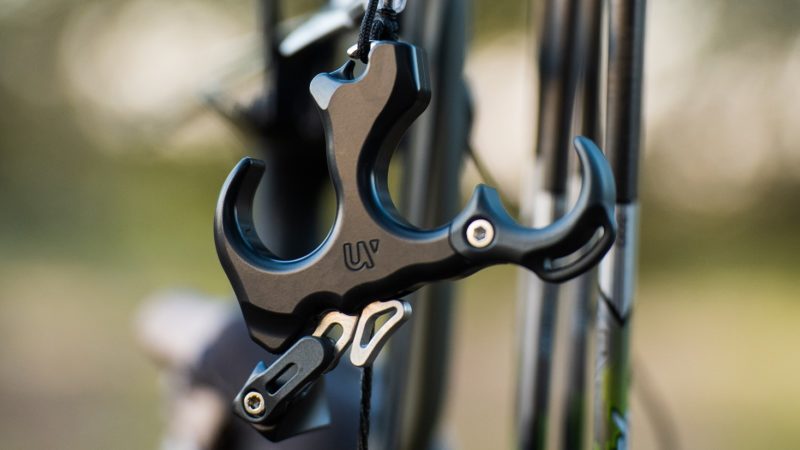
A mechanical release — wrist strap caliper, handheld thumb button, hinge, or tension-activated — clamps onto a D-loop tied to the bowstring. When triggered, a pair of jaws or a rotating sear opens and the loop snaps free in a near-perfectly straight line. No lateral deflection. No archer’s paradox to manage. The arrow leaves the bow with substantially less yaw than a finger release allows, which is why compound shooters can run stiff arrows on rigid blade rests and still tune cleanly.
The trade-off: the release becomes the trigger of the shot, and “how you make it fire” determines whether you’ve actually executed a shot or just punched a button. This is where mechanical release technique gets harder than people think.
The Technique Differences That Actually Matter
Anchor Point Geometry
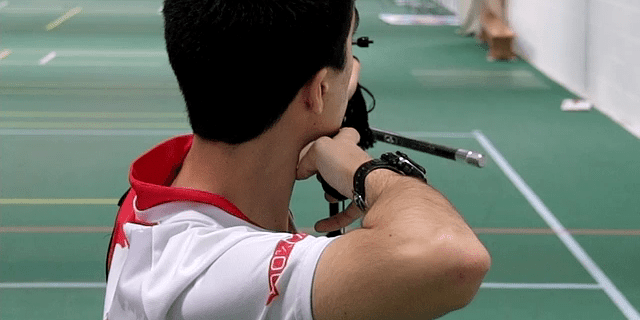
Finger shooters anchor with the string touching the face — typically index finger under the jaw and string kissing the corner of the mouth or the tip of the nose. The drawing hand is the reference. With a mechanical release the string never touches your face; instead, the kisser button, peep sight, and the back of your hand against your jaw or neck become the anchor system. These are two completely different reference frames, and switching between them mid-session is one of the fastest ways to scatter your group.
String Path and Torque Sensitivity
The finger release introduces lateral string movement at separation, which means torque from the bow hand magnifies into nock-left or nock-right impact. Finger shooters spend serious time eliminating bow hand torque — open grip, relaxed fingers, push from the lifeline of the palm. Mechanical shooters care about torque too, but the consequences are smaller per unit of error because the release imparts almost no lateral input itself.
The Surprise Factor
Both disciplines preach “the shot should surprise you,” but they get there differently. With fingers, the surprise is in the relaxation of the drawing hand under continuous back-tension expansion. With a mechanical release — especially a hinge or tension-activated model — the surprise is in the rotation or pull that builds until the release fires itself. Punching a thumb button or slapping a wrist trigger is the equivalent of slapping a rifle trigger: you’ll hit clay, but you’ll never hit the ten ring consistently.
Accuracy and Consistency Trade-offs
Head-to-head, a well-tuned mechanical release on a compound bow will outshoot a finger release on a recurve at every measurable distance. That’s not the question. The question is whether you’re comparing apples to apples. Strip the bow away and compare the release technique alone, and the picture changes:
- Repeatability under fatigue: Mechanical releases hold a slight edge — the finger hook degrades as forearm fatigue sets in, while a mechanical trigger doesn’t care how tired you are.
- Sensitivity to form errors: Fingers punish every form fault louder. A small bow-hand twist that a release shooter never notices becomes a visible left-right miss for a finger shooter.
- Cold-weather performance: Mechanical release with gloved hand stays consistent. Numb fingers on a tab change pressure distribution and string pickup — accuracy degrades fast.
- Target panic susceptibility: Mechanical releases — especially index-finger triggers — have a higher target panic risk because you can punch the trigger the second the pin floats over gold. Fingers can develop the same problem (called “snap shooting”), but the failure mode is slower to set in.
When Fingers Win (And Why Olympic Archers Use Them)
Olympic recurve, barebow, traditional longbow, and instinctive shooting are finger disciplines by rule or by culture. World Archery’s Olympic recurve rules require a tab or glove; mechanical releases are banned in those divisions. So if your goal is to compete in recurve, the question is moot — fingers it is, and your job is to master the technique.
Beyond rules, fingers genuinely win in a few practical situations. Stump shooting and 3D roving where you want fast, intuitive shots without fiddling with a release strap. Traditional bowhunting where the simplicity of a tab in your pocket beats remembering to clip in. And anytime the sensory feedback of the string on your fingertips is part of what you love about archery — that’s not a small thing. The technique is older than written history for a reason.
When Mechanical Wins (And Why Most Hunters Use Them)
Compound bows were essentially designed around the mechanical release. The combination of let-off, peep sight, and a release aid creates a shot system where the variables become small enough to control. For hunting, this matters: the difference between a 30-yard heart shot and a 30-yard gut shot is sometimes one inch of accuracy under adrenaline, and the mechanical release reduces variance under stress.
Compound target disciplines — indoor 18m, outdoor field, 3D in the open compound class — are dominated by mechanical releases because the consistency ceiling is higher. World-class compound archers run thumb buttons or hinge releases almost universally. Wrist-strap index-finger releases are common among hunters because they stay attached to the wrist during a long sit and free both hands for binoculars and rangefinder.
Crossover Cases: Mechanical on Recurve, Fingers on Compound
Both crossovers exist, and they’re worth understanding because they reveal how much the release technique drives the rest of your setup.
Mechanical on recurve is rare but legal in some 3D divisions. The accuracy benefit is real, but the bow has to be retuned — typically stiffer arrows because there’s no archer’s paradox to compensate for. Most archers who try it find the recurve’s lighter let-off makes the trigger discipline harder, not easier.
Fingers on compound exists as a small but stubborn discipline (the Compound Fingers class in some federations). It demands a longer axle-to-axle bow to reduce finger pinch at full draw, weaker arrow spine to absorb the paradox, and a no-peep aiming reference. Finger compound is harder than either pure recurve or pure mechanical compound — and the archers who shoot it do it on purpose, usually because the rules of their division require it.
A Practical Decision Framework
If you’re standing in a pro shop trying to decide which technique to commit to, work through these questions in order:
- What are the rules of your division? Olympic recurve, barebow, traditional: fingers, no choice. Open compound: mechanical, no real choice.
- Do you want to bowhunt with a compound? Mechanical release. The accuracy ceiling and cold-weather reliability matter when an animal’s life is on the line.
- Do you find the act of pulling a bow and feeling the string on your fingers part of what you love? If yes, fingers — even on a compound — will keep you shooting longer than a technically superior setup that bores you.
- Are you struggling with target panic on a mechanical release? Switch to a back-tension or hinge release before you blame the bow. The trigger style is usually the problem.
- Are you a recurve archer with persistent left-right misses? The fix is almost never the tab — it’s bow-hand torque, inconsistent finger pressure, or anchor drift. Don’t switch techniques to escape a form problem.
Common Technique Mistakes That Plague Both Disciplines
Most release problems aren’t about fingers vs mechanical — they’re about the same handful of execution errors showing up in different costumes.
Collapsing on release. The drawing arm relaxes before the shot fires, sending the arrow low. Finger shooters lose their back tension; mechanical shooters “creep” into the valley before the release breaks. Cure is the same in both: hold expansion through the shot and well past it.
Anticipating the shot. Finger shooters pluck. Mechanical shooters punch. Both are the same neurological problem — the body firing the shot ahead of the conscious decision to release — and both respond to the same medicine: blank bale work, blind bale, and shooting with the eyes closed until the shot process feels automatic again.
Grip inconsistency. Both techniques amplify bow-hand torque, but mechanical shooters get away with more of it because the release doesn’t add its own lateral input. If you switch from mechanical to fingers and your groups open up, the first place to look is your bow hand — not your draw hand.
The Bottom Line
Finger release and mechanical release are not two grades of the same tool — they’re two different shot processes with different physics, different anchor systems, and different failure modes. The mechanical release is the more accurate technique when measured raw, which is why every world-class compound score and nearly every bowhunting setup runs one. The finger release is the older, more sensory, rules-mandated technique for recurve and traditional disciplines, and it rewards the archer who’s willing to manage archer’s paradox with consistent form.
Pick the technique your discipline demands, commit to it for at least a year before you second-guess, and remember that no release in the world fixes a bad bow hand or a collapsing draw. The hardware decides the ceiling. Your form decides whether you ever get there.
Sources
- World Archery — governing body for Olympic and international archery; rulebooks specify release equipment per division.
- USA Archery — domestic federation resources on recurve and compound technique standards.
- National Field Archery Association — field and 3D archery division rules, including barebow and compound fingers classes.
- Wikipedia: Archer’s Paradox — physics of arrow oscillation under finger release.
Browse archery bows, arrows, and accessories at the Archery Supplier shop →
