Archery Blog
Broadhead Tuning Guide: 7 Fixes for Better Flight

Apr
If your field points group cleanly but your hunting heads drift left, right, high, or low, broadhead tuning is the missing step. A good broadhead tuning guide starts by matching your arrow spine, bow timing, and rest position so your broadheads and field points leave the bow on the same path.
That matters because broadheads magnify mistakes. A fixed blade head catches more air than a field point, and a mechanical head still exposes small setup errors when the arrow is underpowered, poorly aligned, or leaving the string with too much tail kick. The good news is that most broadhead flight problems can be traced to a short list of causes, and most of them are fixable at home before you burn a hunt over bad impact points.
This guide focuses on compound-bow broadhead tuning for hunters who want dependable arrow flight, clean broadside penetration, and fewer surprises after switching from practice points to hunting heads. If you have already worked through our draw length calculator guide, hunting arrow weight guide, and compound bow release aid breakdown, this is the next logical step.
Broadhead tuning guide basics
The goal is simple. Your field points and broadheads should hit together at realistic hunting distance. If they do not, something in the system is out of line. In most cases, the problem is one of these seven issues:
- Arrow spine too weak or too stiff for draw weight and point weight
- Rest position slightly off center
- Nock height or vertical launch angle off
- Cam timing or lean issues on the bow
- Broadheads not spinning true
- Contact somewhere on the rest, cables, vanes, or launcher
- Form problems that only show up with hunting heads
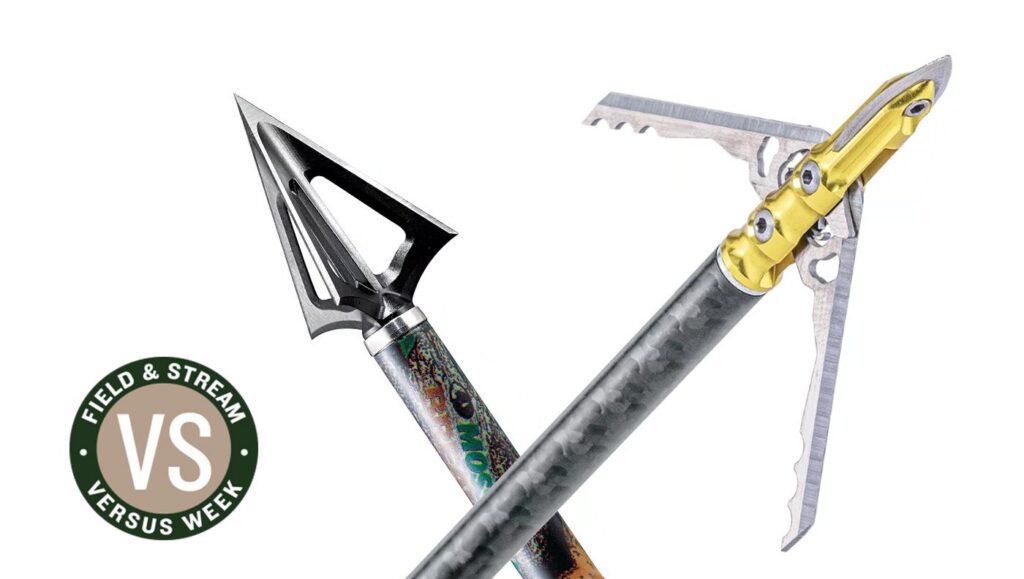
Start close. Shoot field points and broadheads at 20 yards with the same arrow batch. Use the same anchor, same release, and same sight picture. If the groups separate consistently, you have a tuning clue, not random bad shooting.
1. Check arrow spine before moving the rest
A lot of hunters move the rest first because it feels easy. Sometimes that works, but if the arrow is fundamentally mismatched, rest movement only hides the real problem. Broadheads punish bad spine. Heavy heads, longer shafts, higher draw weights, and aggressive cams all make a weak arrow behave worse.
If your broadheads are grouping with a consistent tail-left or tail-right pattern in paper, or they drift farther than field points as distance increases, revisit your arrow build. Point weight, insert weight, shaft length, and actual measured draw weight all matter. That is why pairing this step with an arrow weight calculator helps. A hunting arrow that is too light or too weak may never tune cleanly with a fixed blade.

2. Verify broadheads spin true
If the broadhead itself wobbles, you are wasting arrows while blaming the bow. Spin each finished arrow on a spinner. Watch the tip and ferrule. Any visible wobble can come from a bent insert, poor insert seating, damaged shaft end, crooked half-out, or a broadhead with a ferrule problem.
Fixed blade heads especially need perfect alignment. Even a small wobble changes airflow and opens groups fast. Mechanical heads are a little more forgiving in flight, but they still deserve a spin check before a hunt. This step is boring, but it saves a lot of frustration later.
Shop 100 Grain Practice Broadheads
Useful for confirming broadhead flight before moving to your final hunting setup.
3. Paper tune, then confirm with broadheads
Paper tuning is not the end of broadhead tuning, but it is still one of the fastest ways to find a launch problem. Shoot a bare shaft or fletched field-point arrow through paper at close range. You want a clean bullet hole or a tear that makes sense and can be repeated.
If the tear shows a strong horizontal issue, make small rest adjustments. If it shows a vertical issue, check nocking point, D-loop position, and rest height. Once paper looks good, go back to broadheads. Paper only tells you how the arrow starts. Broadheads tell you what happens after drag and steering take over downrange.
4. Move the rest in tiny increments
When broadheads and field points separate horizontally, tiny rest changes usually matter more than big ones. The old rule many technicians use is to move the rest very slightly toward the broadhead group. The key word is slightly. A sixteenth of an inch can be too much if you are already close.
Make one change, shoot again, and keep notes. Do not mix rest movement with sight movement during tuning. Tune first, sight second. If the gap closes at 20 yards, repeat at 30 and 40 yards. A setup that looks fine at 20 can still open up when broadhead drag has more time to work.
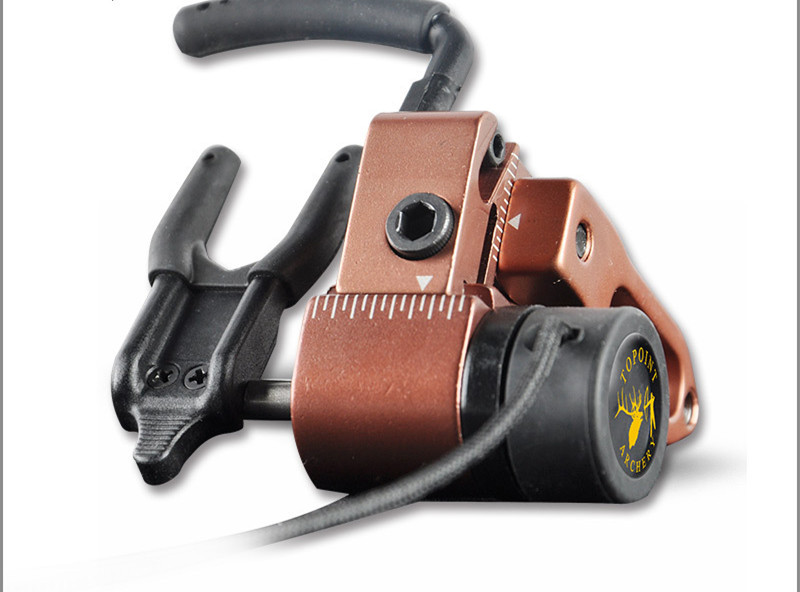
Shop a Drop-Away Arrow Rest
A stable launcher and repeatable timing make broadhead tuning much easier on a compound bow.
5. Check timing, lean, and contact
If broadheads still refuse to come in after sensible rest movement, look at the bow itself. On a dual-cam or hybrid-cam system, timing differences can create ugly launch dynamics. Cam lean can push the string path sideways. Vane contact can destroy groups even when paper looks close. Powder spray, lipstick, or foot powder on vanes and rest parts can reveal contact quickly.
On a drop-away rest, make sure the launcher is getting fully up in time and fully down after the arrow passes. On fixed-cable rests, check activation length and cord tension. On some bows, a twist or two in the yoke or a cam shim change is what finally brings broadheads in line. This is where manufacturer setup documentation and a bow press can become important. Hoyt, Mathews, Bowtech, and PSE all stress timing and center-shot consistency in their tuning resources.
6. Fixed blade vs mechanical broadhead flight
Hunters often ask whether mechanical heads solve tuning problems. They can hide some of them, but they do not erase them. A well-tuned bow should shoot both fixed blade and mechanical broadheads accurately at hunting distance. Fixed blades usually expose flaws sooner because they act like little wings at the front of the arrow. Mechanical heads usually fly more like field points, but they still depend on good arrow flight and enough energy for reliable deployment.
If your bow will not shoot a compact fixed blade at all, that is usually a sign to fix the setup, not a reason to give up. Once the system is right, many hunters discover that both styles can be useful. Fixed blades often win on durability and penetration confidence. Mechanical heads often win on easy flight and larger cutting diameter. Your local regulations, target species, and shot distance should drive the final choice.
7. Confirm with a realistic hunting test
The last step in any broadhead tuning guide is real-world confirmation. Shoot from a hunting distance you actually use, not just a flattering short-range group. If you hunt from a treestand, shoot from elevation. If you hunt in cold weather, shoot with your jacket and release gloves. If you hunt with a quiver on the bow, tune and confirm with it attached.
One clean group at 20 yards does not finish the job. Broadhead tuning is done when your hunting arrows hit where you expect under hunting conditions. That means consistent impact, no random flyers, and no change in point of impact every time you screw on a fresh head.
Shop an Arrow Puller
Broadhead practice gets old fast without a solid puller, especially on dense targets.
Common broadhead flight problems and quick fixes
- Broadheads hit right of field points: check center shot, cam lean, and possible weak-spine symptoms.
- Broadheads hit left of field points: check for stiff-spine behavior, contact, and over-correction at the rest.
- Broadheads hit low: inspect nock height, rest height, and launcher timing.
- Groups are large with both points: rule out form, loose hardware, or damaged arrows before chasing tune.
- Only one arrow flies badly: spin test the shaft, insert, and broadhead before touching the bow.
When to stop DIY tuning and get shop help
If you have checked spine, verified head alignment, confirmed no contact, and made logical rest changes without progress, it is time for a good pro shop. That is especially true if the bow may need cam shims, yoke tuning, or timing correction. A quality technician can often diagnose in ten minutes what takes hours to chase alone.
Still, doing the basic work yourself makes you a better hunter. You learn how your bow reacts, what your arrow build is really doing, and how small setup choices change downrange performance. That knowledge matters far more than internet arguments over whether one broadhead brand magically fixes everything.
Broadhead tuning is really about honesty. If field points and hunting heads do not agree, the bow is telling you something. Listen early, fix it carefully, and your confidence on the first real shot of the season will be a lot higher.
Sources
- Hoyt Archery – Manufacturer tuning resources and setup references for compound bows.
- Mathews Archery – Bow setup and tuning education relevant to broadhead flight.
- New Archery Products – Broadhead product and setup information for hunting arrows.
