Archery Blog
How to Measure Draw Length: 4 Methods + Compound Bow Chart
Jun
Most archers walking into a pro shop guess their draw length within an inch or two — and that guess costs them five-ring groups at 30 yards. How to measure draw length isn’t complicated, but the difference between a 28.5-inch shooter forcing a 29-inch bow and the same shooter on a properly fitted rig is the difference between a fight at full draw and a clean release. Draw length is the single most important measurement on your bow setup, and most stock charts get it wrong by half an inch.
What Draw Length Actually Means
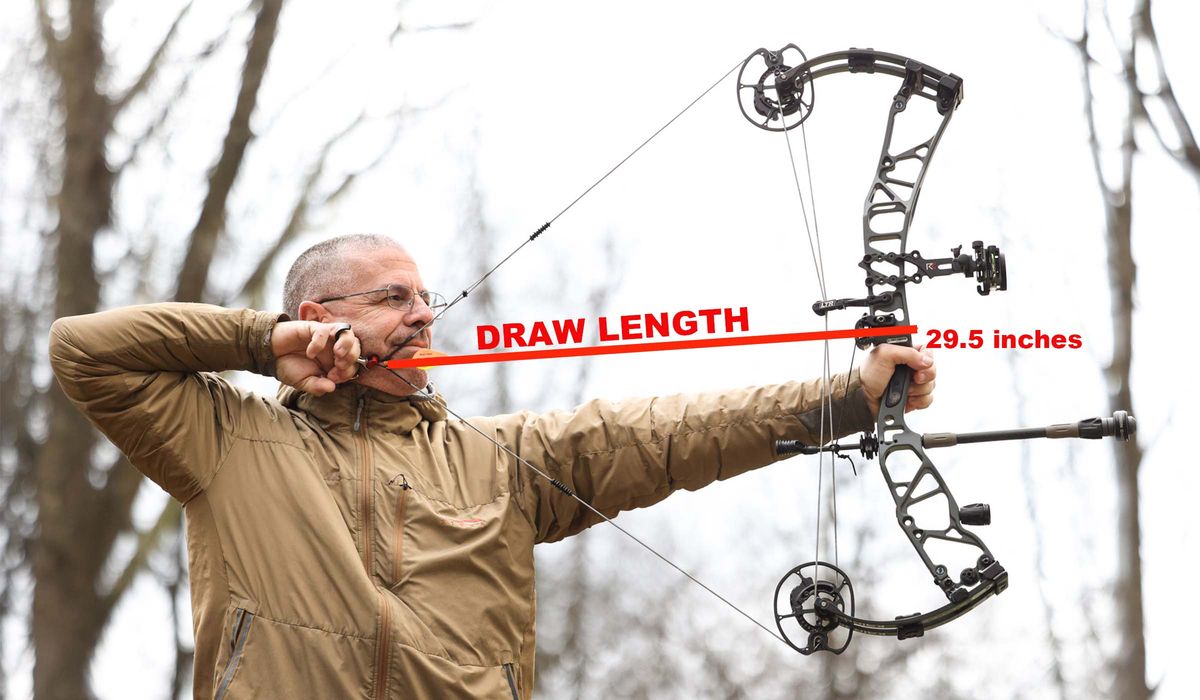
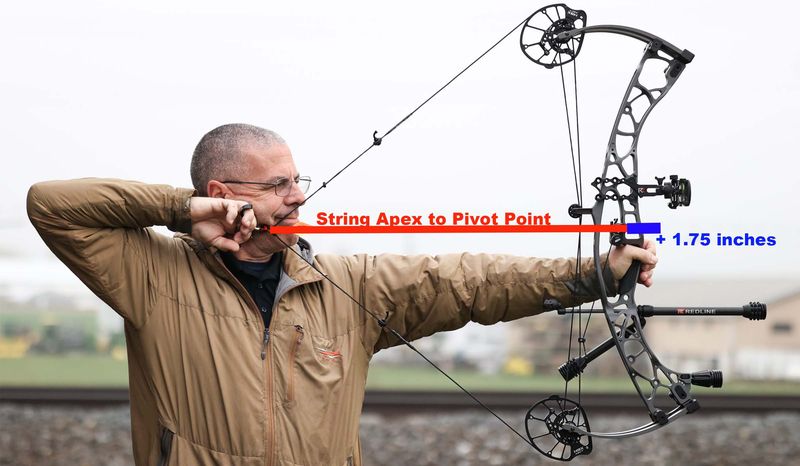
Draw length is the distance from the string at full draw — specifically the deepest point of the nock groove — back to the pivot point of the bow grip, plus 1.75 inches. That 1.75-inch addition is the AMO (Archery Manufacturers Association) standard, established so that bows from any company use the same yardstick. A “29-inch draw” Mathews and a “29-inch draw” Hoyt should pull to the same distance for the same archer.
Here’s the part most beginners miss: your draw length is a property of your body, not a number you pick. It’s set by your shoulder geometry, your stance, and your anchor point — and if any of those three change, your draw length changes with them. A shooter who switches from a kisser button anchor to a hooked-thumb anchor can lose half an inch of effective draw without touching the bow.
The Wingspan Method: Your Starting Point
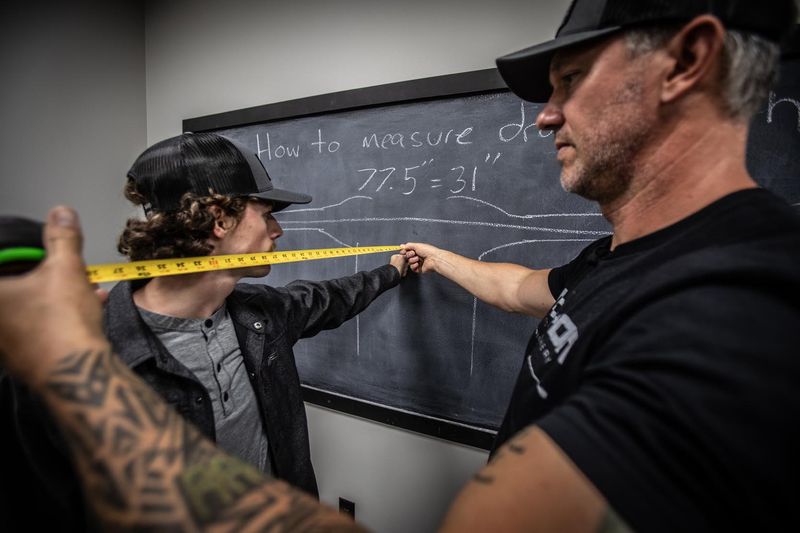
The fastest way to estimate draw length is the wingspan formula. Stand with your back to a wall, arms stretched horizontally to either side, palms forward, hands relaxed. Have a helper measure from the tip of one middle finger to the tip of the other. Divide that wingspan number by 2.5. That’s your starting draw length.
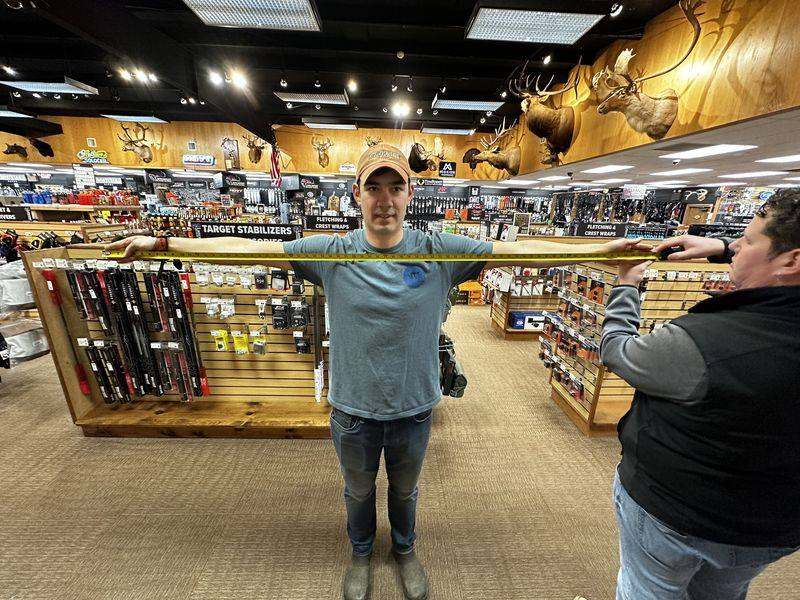
A 71-inch wingspan equals a 28.4-inch draw. A 75-inch wingspan equals a 30-inch draw. Industry tests by bow engineers found this 2.5 ratio holds true across heights and builds because it’s tied to shoulder anatomy in a neutral position, not to height. Two archers with the same height can have wingspans two inches apart, which is why pulling a draw length off a height chart gets it wrong half the time.
The wingspan formula is accurate to within about three-quarters of an inch for most shooters. Treat it as the number you start with — not the number you commit to.
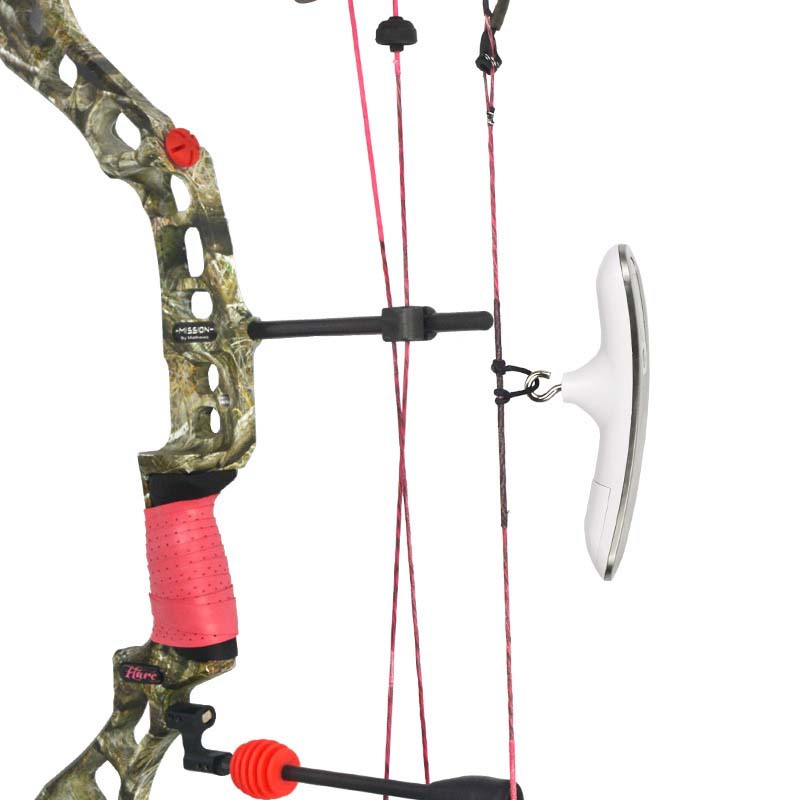
The Wall Method: T-Formation Measurement
The wall method removes the “are my arms really straight?” problem the wingspan formula has. Stand sideways to a wall, bow arm extended, fist pressed against the wall as if you were gripping a bow. Turn your head only — not your shoulders — toward the wall. Have a helper measure from the corner of your mouth (your anchor point) to the knuckle of your bow-hand index finger pressed against the wall.
That number is your true anchor-to-grip distance. Add 1.75 inches to convert to AMO draw length. A measurement of 26.5 inches becomes a 28.25-inch draw.
The wall method tends to come in a touch shorter than the wingspan formula because it accounts for the natural slight bend in your bow arm. That bend is what you want — a locked, hyperextended bow elbow leads to string slap and joint pain in the long run.
The Pro Shop Method: A Calibrated Draw Bow
A draw-length measuring bow is a low-poundage rig with a calibrated arrow marked in half-inch increments. The archer pulls to a natural anchor point, and the shop tech reads the number directly off the arrow at the front of the riser. This is the only method that measures your actual draw, not a calculated approximation.
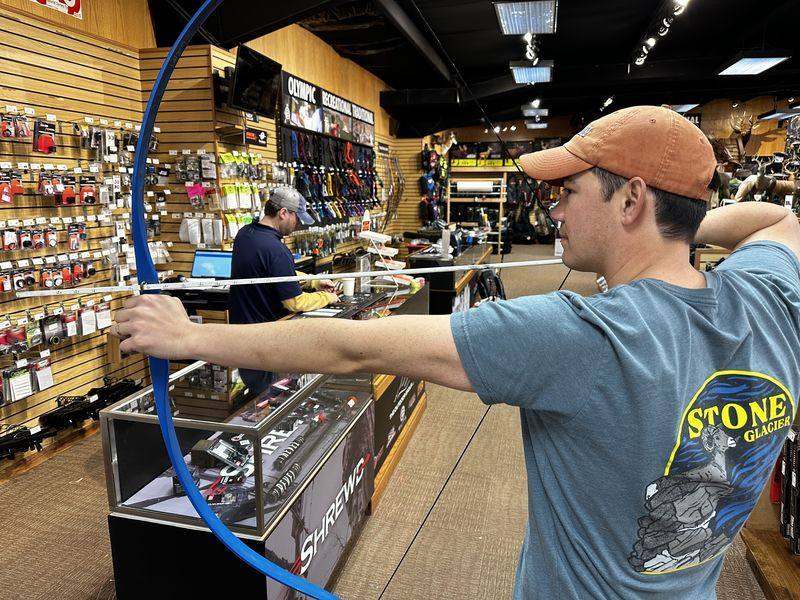
If you’re within driving distance of a real archery shop, this is the measurement that matters. Most shops will do it free if you’re buying a bow from them. The formulas above are good for ordering equipment online or sanity-checking a shop’s number. The draw bow is what should set the final spec on a compound you’re about to lay down $1,200 for.
Ask the tech to measure you twice — once cold, once after you’ve made three or four practice pulls. Many shooters extend a half-inch after their shoulders warm up, and that’s the number you actually shoot at.
Self-Draw Method on a Compound Bow
If you already own a compound and want to check its setup against your body, you can self-measure. Nock an arrow, draw to your normal anchor point, and have a helper mark the arrow shaft where it crosses the front edge of the riser (not the rest — the riser face). Let down, pull the arrow, and measure from the nock groove to that mark. Add 1.75 inches.
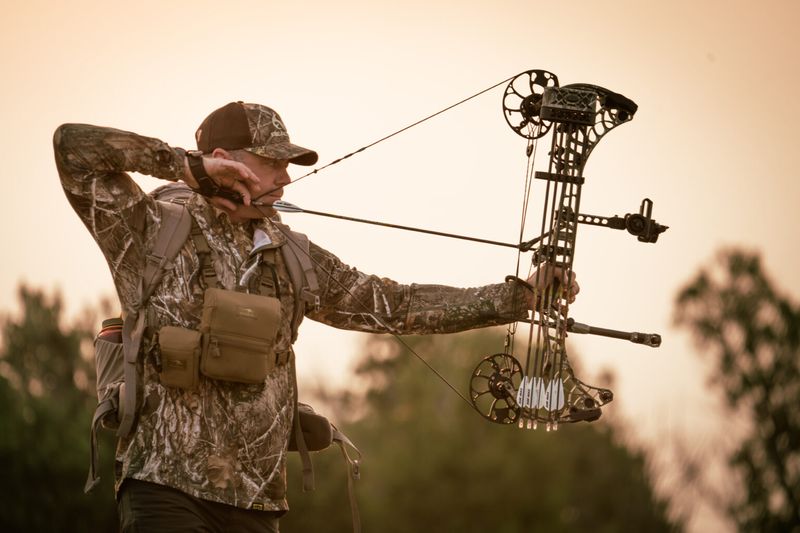
The catch is that your draw length on a current bow only tells you what your current bow is set to — not what your body wants. If you’ve been shooting an inch long for two years, the self-draw number is just confirming the wrong setting. Cross-reference with the wingspan or wall method before deciding the bow is right.
Compound Bow Draw Length Chart
This chart pairs wingspan with a starting compound bow draw length using the AMO 2.5 divisor. It’s a planning tool, not a substitute for a draw-bow measurement.
| Wingspan (in) | Draw Length (in) | Typical Height |
|---|---|---|
| 60 | 24.0 | 5’0″ |
| 63 | 25.0 | 5’3″ |
| 66 | 26.5 | 5’6″ |
| 69 | 27.5 | 5’9″ |
| 71 | 28.5 | 5’11” |
| 73 | 29.0 | 6’1″ |
| 75 | 30.0 | 6’3″ |
| 77 | 31.0 | 6’5″ |
Notice the height column drifts. A 5’11” shooter with a basketball-player wingspan can need a 30-inch draw, while a 5’11” shooter with shorter arms might land at 27.5. Measure the wingspan; do not assume the height.
How to Tell Your Draw Length Is Wrong
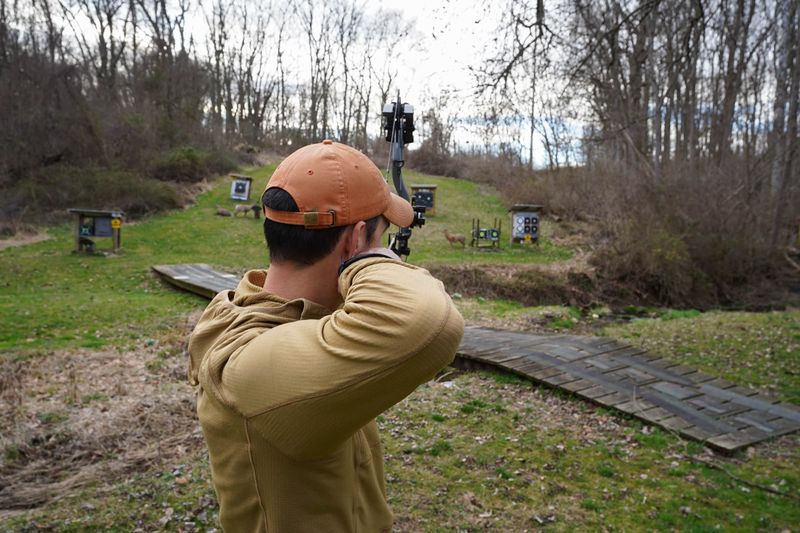
The body tells you before the bow does. A draw length that’s too long pulls your shoulders past their natural alignment, you lose back tension, and your bow arm tries to lock out to hold the wall. A draw that’s too short crowds your release hand, kinks your bow arm, and forces a punchy release because there’s nowhere to expand into.
Signs your draw length is too long:
- String contacts the tip of your nose or pushes against your lips
- Bow elbow hyperextends and locks out
- You can’t reach your normal anchor without leaning forward
- Release-hand wrist torques inward
Signs your draw length is too short:
- Release hand crowds your face and you anchor in front of the corner of your mouth
- Bow arm bends noticeably at the elbow
- Groups drift left for a right-handed shooter (or right for a lefty)
- Recoil feels harsh because the bow stops you instead of you stopping the bow
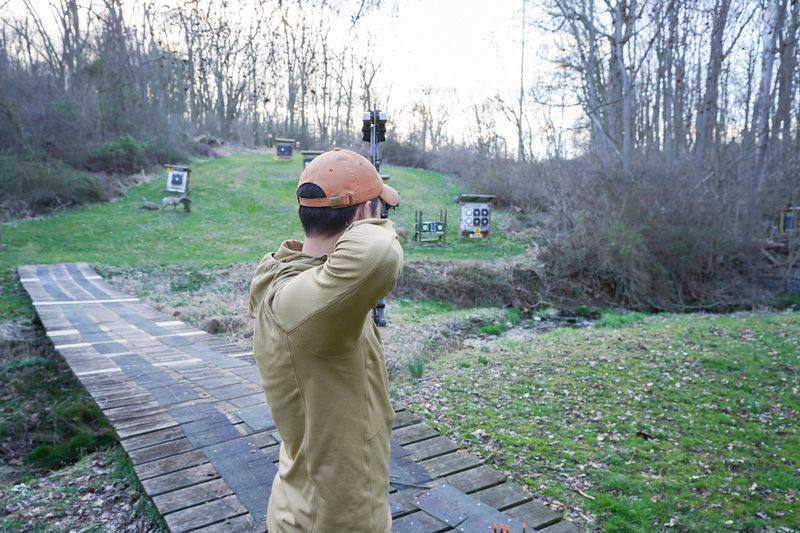
Proper alignment looks like a straight line from the release elbow, through the arrow, to the front of the bow. When the elbow lifts above that line or drops below it, the draw length is off. The fix isn’t more practice — it’s a module swap or a cam change. A locked anchor point only works when the draw length matches it; otherwise you’re anchoring different spots every shot to compensate.
How Draw Length Differs by Bow Type
Compound bows have a hard wall. Pull to the stop and that’s it — there’s no “drawing through it” without damaging the cam. This is why getting compound draw length right matters more than on a traditional bow: you can’t just pull deeper if you feel cramped.
Recurves and longbows have no mechanical stop. You can pull a recurve to your anchor at 27 inches today and 28.5 next month without anything breaking. The cost shows up in arrow spine — a longer draw stores more energy and demands stiffer arrows. Traditional shooters generally pick a draw length they can hold consistently rather than maxing out range.
Crossbow shooters can ignore this entire conversation. The string is mechanically cocked to a fixed power stroke, and your body length doesn’t enter the equation.
Adjusting Draw Length on a Compound Bow
Three mechanisms move a compound bow’s draw length: rotating modules, draw-length-specific cams, and adjustable post systems. Most modern bows use rotating modules — small numbered or lettered pieces bolted to the cam that you reposition with an Allen wrench. Each position moves the draw length half an inch.
Some older Mathews bows use draw-length-specific cams, meaning you’d buy a new cam to change drawn length. Mission and Mathews FastFit-equipped bows let you adjust in under thirty seconds with a single tool. Hoyt’s adjustable post cams cover up to four inches without a press.
Whenever you change the module, check cam timing afterward. A draw-length adjustment can shift the cam stop position enough to throw off synchronization between the top and bottom cams, which kills accuracy worse than a half-inch draw length error. A quick way to verify is to watch both cams roll over together at full draw — if one hits the wall before the other, see our compound bow cam timing guide for the fix.
Watch: Proper Draw Length Explained
John Dudley of Nock On walks through the wingspan and pro-shop methods with the camera at full-draw eye level — worth the eight minutes if you’re about to spec a new bow.
What to Do With Your Number
Once you have a confirmed draw length, write it on a piece of tape inside your bow case. Every time someone else’s hand touches your bow — a shop tech, a friend, a serviceman replacing a string — they get the number too. Bow strings stretch, modules wander, and after a thousand shots a “29.0” bow can quietly become a 29.25. Re-measure once a year, after every string replacement, and any time your groups open up without an obvious cause. Then book ten minutes at a pro shop and confirm with a draw bow. Half an inch of accuracy is hiding in there for almost everyone.
Once your draw is dialed, the next setup variable to lock down is your sight pin gap and anchor — see how to sight in a compound bow to finish the job.
Sources
- Outdoor Life — How to Measure Draw Length — Field-tested guide to the wingspan, wall, and pro-shop methods, with proper alignment photos.
- Mission Archery by Mathews — Finding Your Draw Length — Manufacturer reference for the 2.5 wingspan divisor and module adjustment.
- Uukha — Draw Length: Definition, Measurement and AMO Standard — Technical breakdown of the AMO 1.75-inch convention from a limb manufacturer.
- Archery Trade Association — Industry body maintaining AMO/ATA measurement standards.
Browse archery bows, arrows, and accessories at the Archery Supplier shop →
