Archery Blog
Compound Bow Tuning: 9-Step Checklist
Mar
Winter is fading, and archery season is right around the corner. Whether you’re gearing up for 3D tournaments, spot-and-stalk bowhunting, or weekend target shooting, a thorough spring tune-up can mean the difference between tight groups and frustrating flyers. A compound bow that sat in a case for months needs more than a quick once-over — it needs a systematic inspection from limb tip to stabilizer.
This 9-step compound bow tuning checklist walks you through everything you should do before launching your first arrow of the season. Follow these steps in order, and you’ll head to the range with confidence that your setup is dialed in.
1. Inspect Your Bowstring and Cables
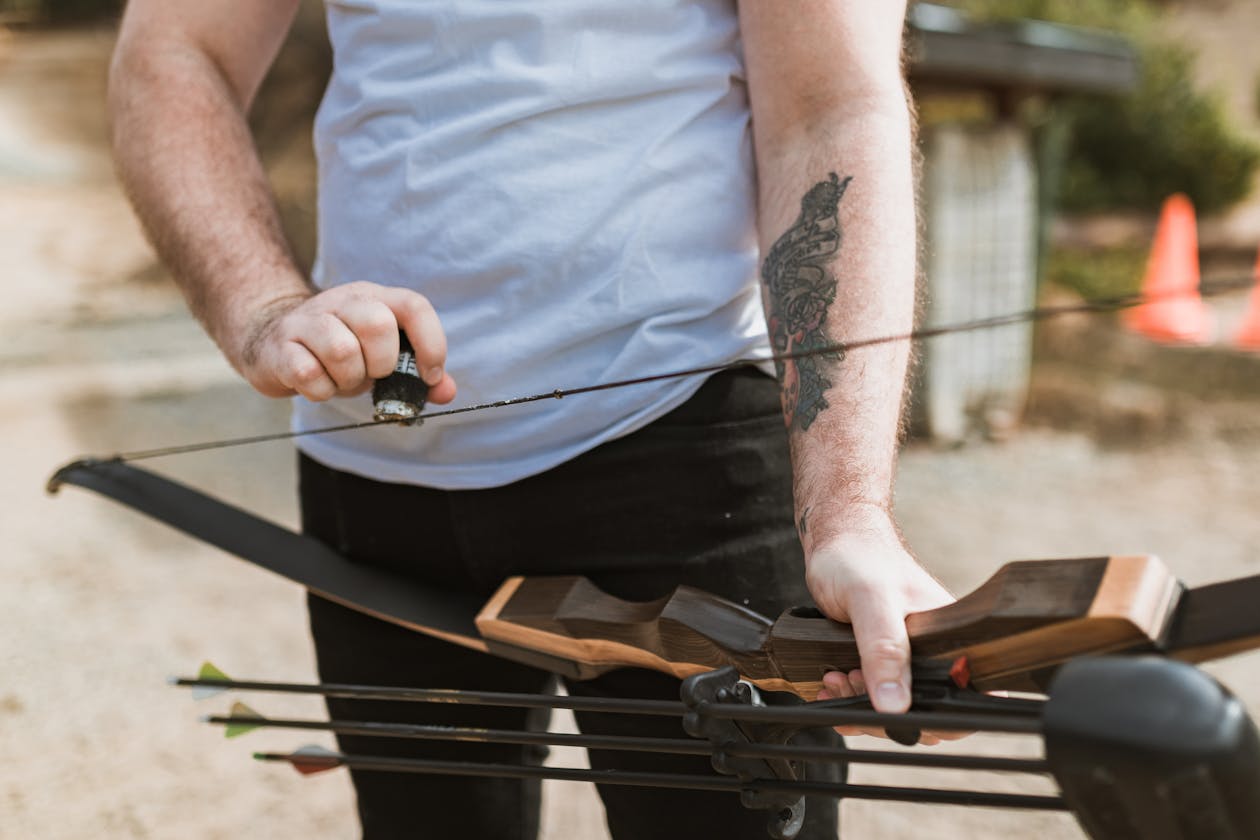
Start with the most critical component on your compound bow: the string and cables. Look for fraying, serving separation, and fuzzy spots — particularly near the cam tracks, peep sight, and D-loop. If your string shows significant wear, replace it before doing any other tuning work. A compromised string will throw off every adjustment you make.
Even if the string looks good, apply a generous coat of bowstring wax and work it in with your fingers. The heat from friction helps the wax penetrate the fibers. Pay extra attention to areas between the servings where bare strands are exposed. A well-waxed string lasts longer and maintains consistent performance.
2. Check Limb Bolts and Draw Weight
Limb bolts can back out during storage or transport, especially if your bow experienced temperature changes. Use an Allen wrench to bottom out both limb bolts, then back them out the same number of turns to reach your desired draw weight. Count each turn carefully — even a half-turn difference between the top and bottom limbs can cause tuning issues.
Spring is also a great time to reconsider your draw weight. If you’ve been lifting or stayed active during winter, you might bump it up a few pounds. If you’ve been sedentary, start where you left off and build back gradually. Forcing a draw weight you can’t control ruins form faster than anything else.
3. Verify Cam Timing and Synchronization
Dual-cam and hybrid-cam systems depend on precise synchronization. If one cam hits the stop before the other, you’ll get inconsistent nock travel and erratic arrow flight. Draw the bow slowly and watch both cams roll over. They should reach full draw at the same time.
Most cam timing adjustments are made by adding or removing twists from the cables or control cable. If you’re not comfortable with a bow press, take the bow to a pro shop for this step. But you should still know how to check it — an archer who understands cam timing makes better decisions about when a tune-up is needed.
4. Set Your Nocking Point and D-Loop
Your nocking point position directly affects arrow flight. Start by confirming that the D-loop is tied securely and hasn’t shifted during storage. If you use a brass nock set above the loop, check that it hasn’t slid. The standard starting point places the arrow nock roughly 1/8 inch above perpendicular to the rest, but your specific setup may differ.
Tie a fresh D-loop if the existing one looks worn, flattened, or has any signs of heat damage from a release aid. A new D-loop is cheap insurance for consistent shooting. Keep the loop length consistent — longer loops change the effective draw length and can affect peep alignment.
5. Level and Align Your Arrow Rest
Whether you shoot a drop-away rest, a whisker biscuit, or a blade-style rest, alignment matters. Place an arrow on the rest and look from behind: the arrow should appear to run straight through the center of the riser, or very slightly outside center depending on your setup. Use a bow square or laser alignment tool for precision.
For drop-away rests, confirm the timing cord is intact and that the rest falls completely clear before the arrow passes. If the rest drops late, you’ll see inconsistent contact marks on your fletchings — a telltale sign you need to shorten the cord or adjust the activation point.
6. Paper Tune for Clean Arrow Flight
Paper tuning is the gold standard for diagnosing compound bow issues. Set up a paper frame about six feet from your shooting position and shoot through it at a target behind. A perfectly tuned bow produces a bullet hole — just the point and three fletching tears with no tail in any direction.
Here’s how to read the common tears:
- Nock-high tear: Lower the rest or raise the nocking point
- Nock-low tear: Raise the rest or lower the nocking point
- Nock-right tear (right-handed): Move rest slightly left or increase arrow spine
- Nock-left tear (right-handed): Move rest slightly right or decrease arrow spine
Make small adjustments — 1/64 inch at a time on the rest — and re-shoot. Patience during paper tuning pays off at 50 yards and beyond.
7. Sight In at Multiple Distances
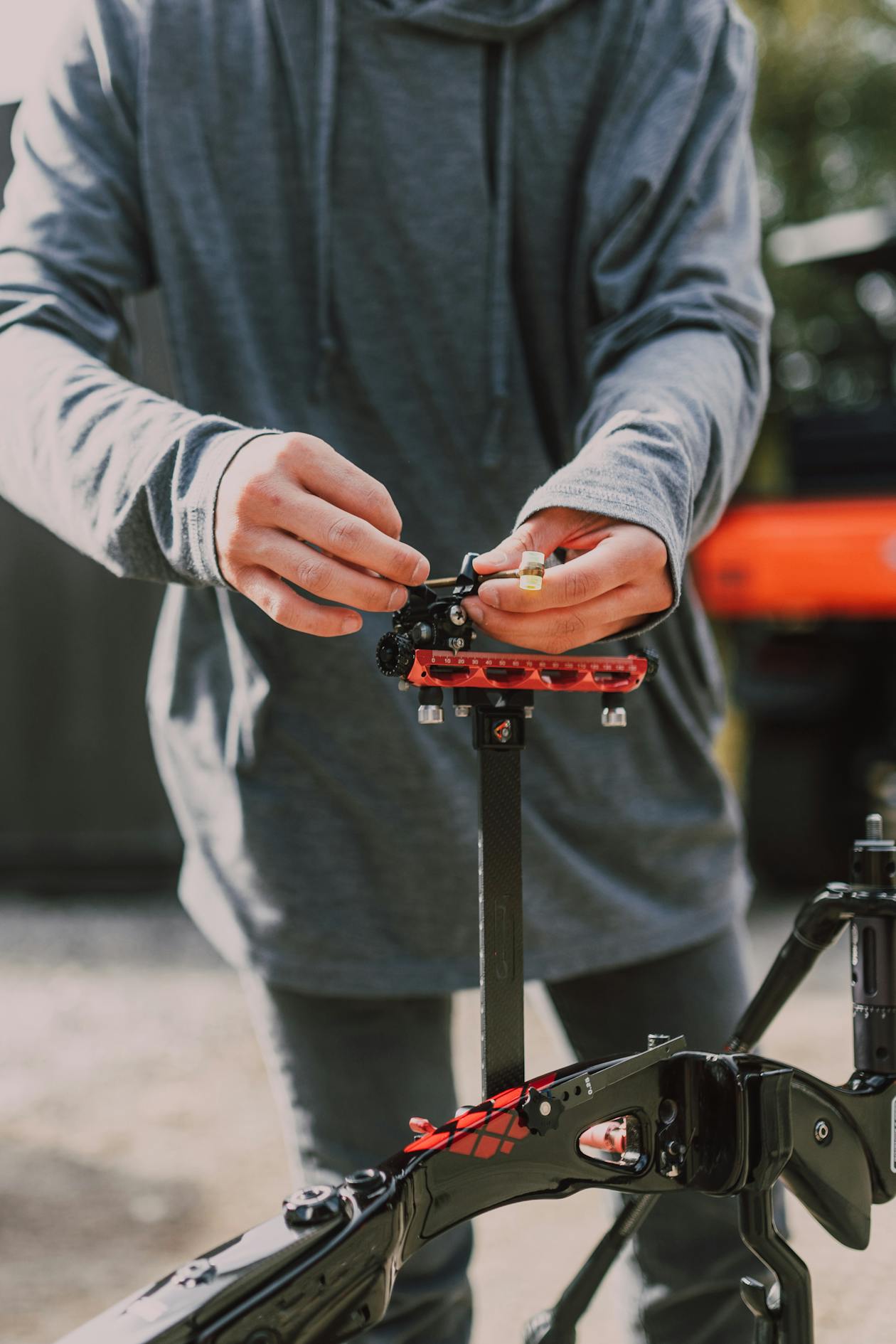
Once paper tuning confirms clean flight, it’s time to sight in. Start at 20 yards and shoot three-arrow groups. Adjust your pins to center the group, then move to 30, 40, and 50 yards. If you’re a bowhunter, include at least one steep angle — treestand shots behave differently than flat-ground shooting.
If you use a single-pin adjustable sight, build a fresh sight tape using your actual arrow speed. Don’t rely on last year’s tape — even small changes in draw weight, arrow weight, or string stretch can shift your velocity enough to miss at long range.
8. Test Your Broadheads
If you bowhunt, broadhead tuning is not optional. Fixed-blade broadheads amplify any imperfection in arrow flight, so they serve as the ultimate test of your tune. Shoot your broadheads alongside your field points at 30+ yards. If they hit the same spot, your bow is well-tuned. If the broadheads plane away from the field points, you need further micro-adjustments to the rest or yoke tuning.
Mechanical broadheads are more forgiving, but they’re not immune to poor arrow flight. Test them too. And always shoot the exact broadheads you plan to hunt with — not just the same model from a different batch. Weight variations between individual heads can produce surprising shifts at distance.
9. Tighten Everything and Do a Final Vibration Check
The last step is a full hardware check. Go through every bolt, screw, and fastener on your bow with the appropriate wrench. Sight bolts, rest mounting screws, stabilizer connections, quiver mounts — all of them. Vibration during shooting loosens hardware over time, and things you haven’t touched since last season may be surprisingly loose.
After tightening, shoot a dozen arrows and listen. Rattles, buzzing, or unusual vibrations point to something loose or a dampener that needs replacing. A quiet bow is a healthy bow. If everything sounds clean and your groups are tight, your spring tune-up is complete.
When to Visit a Pro Shop Instead
Most of this checklist is doable at home with basic tools and a little experience. But certain situations call for professional help. If your string or cables need replacing, the cams require re-timing with a bow press, or you suspect a cracked limb, take it to a qualified archery technician. Pro shops also have chronographs and draw-force curve analyzers that can reveal issues invisible to the naked eye.
Spring tuning isn’t a once-and-done event — it’s the foundation for every shot you take this year. Put in the work now, and you’ll shoot with the kind of confidence that turns close misses into center punches. Your future self at full draw will thank you.
