
Archery Blog
Scent Control Strategies: 8 Bowhunting Habits to Beat a Whitetail’s Nose
Jun
A whitetail deer sorts the air with roughly 297 million olfactory receptors. You have about 5 million. By the time you smell coffee in the kitchen, a buck 80 yards downwind already knows what brand of detergent your jacket was washed in, what you ate for breakfast, and whether you sweated on the walk in. That is the wall every bowhunter runs into, and no $200 spray bottle alone is going to break it. Scent control is a system — layered habits, gear, and discipline that stack the odds enough to put an arrow inside 30 yards.
The good news: deer noses can be beaten consistently. Public-land bowhunters who tag mature bucks year after year are not lucky. They run a checklist that starts the night before the hunt and ends when they pull boots off in the truck. Below are the eight scent control strategies that show up in every one of those checklists, ranked roughly by impact per dollar and minute spent.

Why a Whitetail’s Nose Is the Apex Sense in the Woods
Before you spend a dollar on scent eliminator, understand what you are fighting. A whitetail’s nasal architecture includes a vomeronasal organ that processes pheromones separately from ordinary smells, plus a turbinate structure that gives it directional sensitivity humans cannot match. Researchers at Mississippi State’s Deer Lab have documented mature bucks responding to scent trails up to 36 hours old in cool, damp conditions.
That means your scent cone — the plume of human odor drifting downwind from your stand — is not a momentary problem. It is a forensic record. Every time the wind swirls and pushes that cone across a bedding area, you are educating deer. The goal of scent control is not to be odorless. That is impossible. The goal is to reduce, dilute, and direct your scent so the deer that matter never get a clean sample of it.
1. Play the Wind Like Your Hunt Depends On It (Because It Does)
The single most important scent control tool costs nothing: wind discipline. If your stand sits with the wind blowing from you toward the trail or bedding area you expect deer to use, no spray, no ozone, no carbon suit will save the hunt. Sit a different stand or stay home.
Build a stand inventory with at least three options per property, each rated for a specific wind direction. Apps like HuntStand and onX overlay forecast wind on satellite imagery so you can pre-pick the morning’s setup. On the ground, milkweed seeds beat puff bottles for reading thermals — they drift slowly enough to show real air movement at canopy height, which is often the opposite direction of the surface breeze in the first 30 minutes of light.
Thermals Matter More Than Forecast Wind
In hill country, thermals reverse twice a day. Cold morning air sinks down ridges and draws; warm midday air rises. A south wind on the forecast can be irrelevant if you are stand-hunting a saddle at 6:30 a.m. Plan your access route, stand location, and exit on thermal logic, not just the surface report.
2. Build a Layered Clothing System That Stays Clean
Hunting clothes absorb scent every time you wear them — campfire smoke, exhaust, gas station coffee, deodorant residue. The fix is a closed loop. Wash hunting layers in unscented, baking-soda-based detergent. Dry on a line outside or in a dryer that has never seen fabric softener. Store in a sealed bin with cedar chips, pine boughs, or a few activated carbon pouches.
Carbon-lined suits like Scent-Lok and ScentBlocker have been debated for decades. The science is muddier than the marketing, but field-tested hunters report meaningful results when carbon garments are kept clean, dry, and reactivated in the dryer between hunts. Treat them as a contributing layer, not a force field.
3. Treat Your Skin, Hair, and Breath Like Gear
Your skin sheds bacteria-laden flakes continuously, and your breath carries volatile compounds for hours after every meal. Shower with unscented body wash and shampoo before every hunt. Skip deodorant or use a scent-free hunter formulation. Brush teeth with baking soda or unscented paste, and bring a small bottle of water for the stand — coffee breath at 20 yards is its own scent cone.
Spray exposed skin — face, neck, hands, wrists — with a quality scent eliminator after dressing at the truck, not at the house. The walk in always generates fresh sweat odor that needs to be knocked down before you climb the stand.

4. Rubber Boots and the Ground Scent Problem
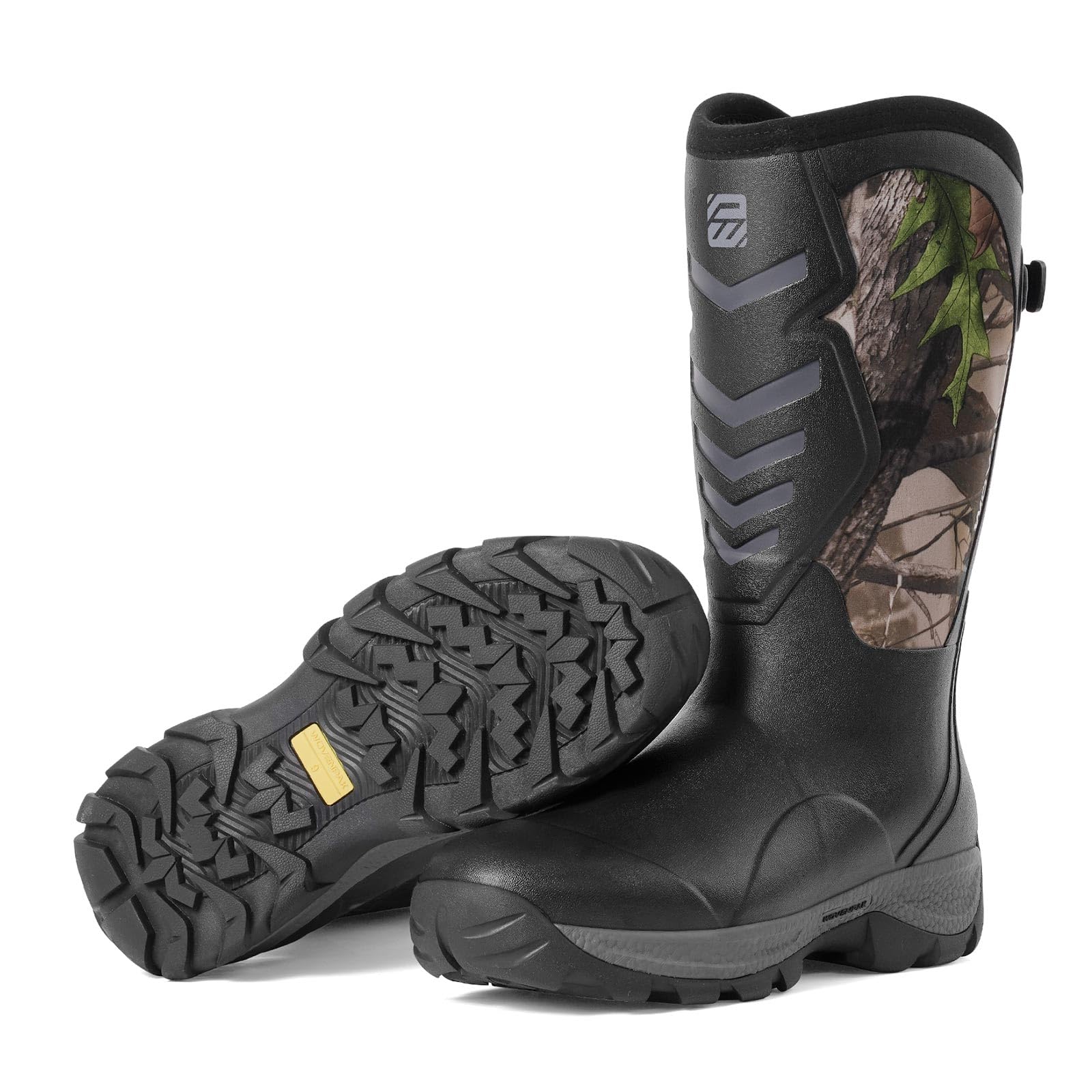
Leather boots leak. So do mesh trail runners and any boot you have ever worn to a gas pump. Switch to dedicated knee-high rubber hunting boots and put them on at the truck, not at home. Rubber blocks the porous transfer that broadcasts ground scent at every step on the way in.
Walk a clean access route. Avoid kicking through ferns and saplings that hold scent on broken stems for hours. Where possible, walk a creek or ditch to break the trail. Some hunters spot-spray boot soles with scent eliminator at the trailhead — it costs nothing and may pay off when a buck cuts your inbound track at 9 a.m.
5. Ozone: Real Effect, Honest Limits
Ozone generators built for hunting — Ozonics and similar units — release O3 above your stand. The third oxygen atom bonds with odor molecules in the downwind cone and breaks them apart. Independent testing has shown measurable scent reduction in controlled conditions, and a sizable share of mature-buck hunters now run an ozone unit as a routine layer.
The honest limits: ozone is not invisibility. It does not cover ground scent on your inbound track, it does not work well in heavy wind, and a deer standing on the upwind side of your unit gets no benefit. Treat it like a moderate edge that bridges marginal wind days, not a license to sit a bad-wind stand.
6. Storage and Transport Discipline
The biggest single failure point in most scent control systems is the truck cab. Hunting clothes worn during the drive absorb gasoline fumes, fast-food grease, and dog hair before you ever reach the woods. Store clean hunting layers in a sealed Rubbermaid tote with a few sprigs of oak leaves or pine needles from the property you hunt. Dress at the trailhead.
The same principle applies to your bow. Wipe the riser and limbs with an unscented cloth before each hunt — fingerprints and grip oils carry odor too. Pack snacks in zip bags to control food scent on stand. Anything that goes into your pocket should be scent-neutral or scent-locked.
7. Stand Selection That Hides Your Scent Cone
Even perfect scent discipline gets defeated by a poorly placed stand. The best setups hide the downwind cone in dead air — over a swamp, a wide creek, an open ag field, or a steep bluff face — somewhere deer rarely or never travel. If your downwind scent is drifting across a known bedding ridge or a primary trail, you are training deer to avoid that stand even on days you do not hunt it.
Saddle hunters and mobile bowhunters have an advantage here because they can shift the platform 10 to 20 yards based on the actual wind that morning. Fixed-stand hunters need a deeper stand inventory and the discipline to skip a sit when none of them fits the conditions.
8. The Pre-Hunt Routine That Ties It All Together
Habits beat heroics. Run the same routine every hunt and the gaps in your scent control system disappear on their own. A reliable checklist looks like this:
- Shower with unscented soap the morning of the hunt.
- Brush teeth with baking soda; skip coffee on the drive in or seal it in a thermos.
- Drive in street clothes with hunting layers sealed in a tote.
- Park into the wind so your truck scent blows away from the access route.
- Dress at the truck; rubber boots on last, after pants are tucked.
- Spray skin, hair, hat, pack, and bow with scent eliminator.
- Check the forecast wind one more time with a milkweed pod or puffer.
- Take the long, clean access route — never the easy one through a food plot.
- Power up the ozone unit as soon as you settle, before deer are likely to appear.
- Exit the same way you came in, and bag clothes immediately for the drive home.

Common Mistakes That Quietly Blow Hunts
Hunters who run a clean scent system but still get winded are usually losing the hunt on one of four predictable mistakes. Recognize them and you cut your blown sits in half.
- Trusting a marginal wind. A 90-degree crosswind is not safe — it swirls. If the wind isn’t within 30 degrees of your preferred direction, pick another stand.
- Pumping gas in hunting clothes. A single fill-up contaminates everything inside the cab. Always change at the trailhead.
- Sweating in on the walk. A fast pace in heavy clothing pumps body heat and scent. Walk slow, layer light, dress fully at the base of the tree.
- Skipping the exit plan. Climbing down through a feeding area at dark blows the next morning’s hunt. Plan exits as carefully as entries.
Final Thoughts: Stack the Layers, Trust the System
No single product beats a whitetail’s nose. A milkweed pod, a clean rubber boot, a thermal forecast, and a stand inventory built around wind direction will outperform the most expensive carbon suit run carelessly. Scent control is the discipline of layering small advantages until the deer that matters never gets a clean read on you.
Build the routine this off-season — the totes, the boots, the wash cycle, the stand inventory — and run it without shortcuts when the season opens. The buck you catalog on trail camera in July will still be a buck on a known trail in November. Whether he walks under your stand at 18 yards or 80 yards downwind comes down to how well you stacked these eight habits.
Sources
- Mississippi State University Deer Lab — research on whitetail behavior and scenting capability
- National Deer Association (formerly QDMA) — habitat, behavior, and hunter education resources
- USDA Forest Service — public land hunting access and wildlife reports
- Wikipedia: White-tailed Deer — overview of biology and sensory anatomy
Browse archery bows, arrows, and accessories at the Archery Supplier shop →
