Archery Blog
Hunting Arrow Weight Guide: 5 Keys to the Perfect Setup
Apr
Getting your hunting arrow weight dialed in is the single biggest factor separating clean kills from disappointing blood trails. Whether you’re chasing whitetails from a treestand or spot-and-stalking elk in the Rockies, the total weight of your arrow — measured in grains — directly controls how much energy transfers into the animal on impact. Too light, and you sacrifice penetration. Too heavy, and your trajectory drops like a stone past 30 yards. The key is finding that sweet spot where speed, kinetic energy, and momentum all work together for a lethal, ethical shot.
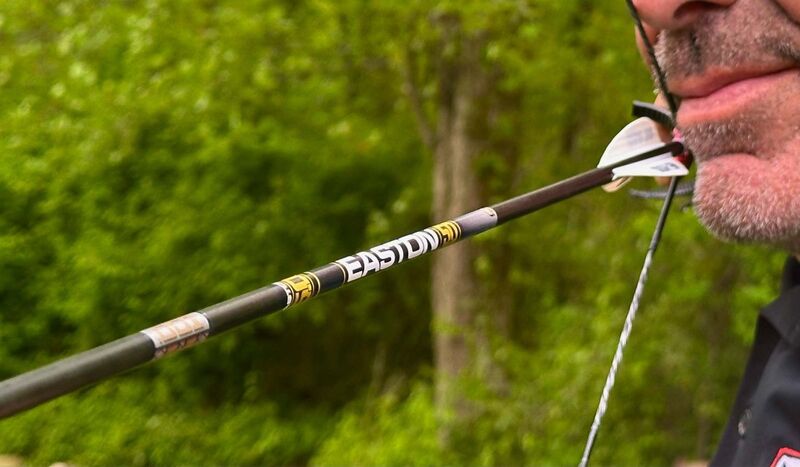
This guide breaks down everything you need to know about hunting arrow weight — from grains per inch (GPI) and front of center (FOC) calculations to species-specific recommendations and a step-by-step process for building the perfect bowhunting arrow setup.
Why Hunting Arrow Weight Matters More Than Speed
Walk into any archery shop and the first number most bowhunters ask about is speed. “How fast does it shoot?” It’s the wrong question. Speed sells bows. Weight kills animals.
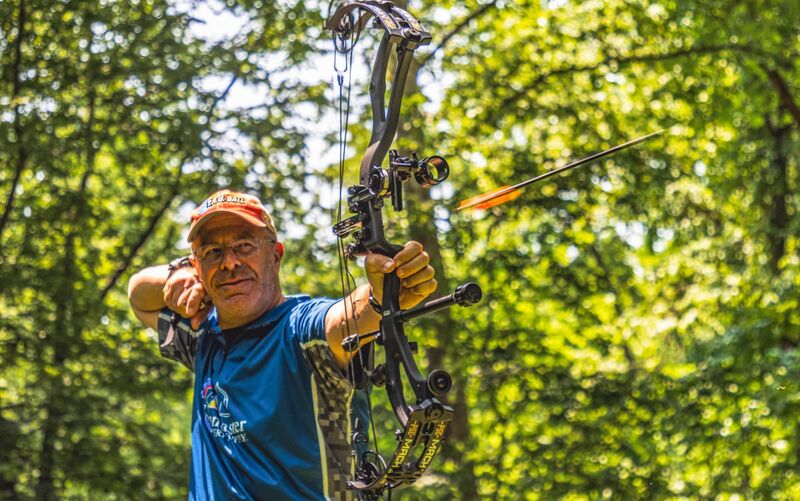
Here’s the reality: an arrow traveling at 320 fps but weighing only 350 grains carries less punch than a 480-grain arrow moving at 280 fps. The heavier arrow generates more momentum — the force that drives a broadhead through hide, muscle, and bone. Speed bleeds off fast. A lightweight arrow might leave the bow screaming, but it sheds velocity at an alarming rate compared to its heavier counterpart.
Think of it this way: a ping-pong ball thrown at 100 mph bounces off your chest. A bowling ball rolled at 15 mph knocks you flat. That’s momentum in action, and it’s exactly what matters when your broadhead meets a whitetail’s rib cage.
The archery industry spent two decades pushing speed as the ultimate metric. Bow manufacturers marketed IBO speeds of 340+ fps because big numbers sell. But experienced bowhunters — the ones who’ve recovered hundreds of animals — almost universally favor heavier arrows. They’ve seen firsthand that a well-built 475-grain arrow with proper FOC punches through both shoulders and buries in the dirt on the other side, while a 350-grain speed arrow stops in the off-side shoulder blade.
What Is Grains Per Inch (GPI) and Total Arrow Weight
Before you can build a properly weighted hunting arrow, you need to understand how arrow weight is measured and where it comes from. Arrow weight is measured in grains — the same unit used for bullets and gunpowder. One ounce equals 437.5 grains.

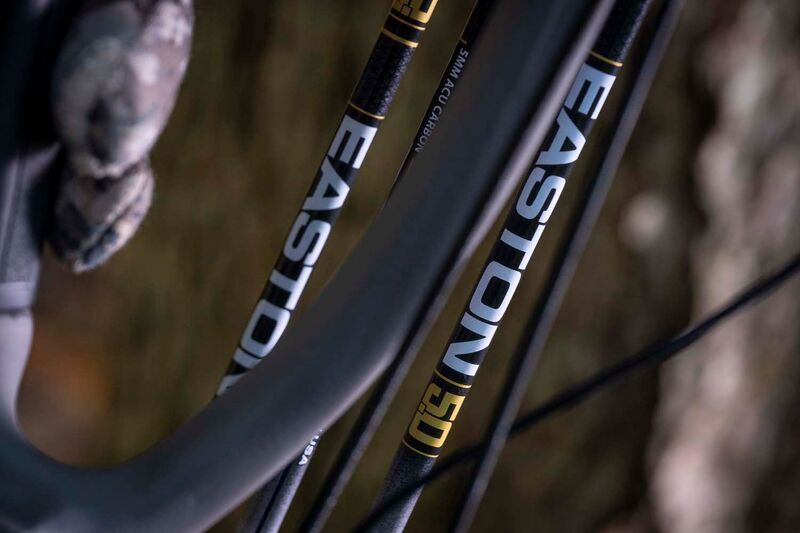
Grains per inch (GPI) refers to the weight of the bare arrow shaft per inch of length. This number varies by shaft model, spine, and material. For example, an Easton Axis 5mm in 340 spine weighs approximately 9.5 GPI. A Gold Tip Hunter in the same spine runs closer to 8.2 GPI. Lighter target-focused shafts might run as low as 6 GPI, while heavy-duty hunting shafts can exceed 11 GPI.
Your total arrow weight includes every component assembled together:
- Bare shaft weight: GPI × arrow length (e.g., 9.5 GPI × 28.5″ = ~270 grains)
- Insert or outsert: Typically 50–100 grains (standard inserts around 50 grains, weighted inserts up to 100+)
- Broadhead or field point: 100–150 grains (most hunting broadheads are 100 or 125 grains)
- Nock: 8–15 grains
- Fletching: 15–25 grains (3 vanes total)
- Wraps (if used): 5–8 grains
Add those up and you get your finished arrow weight. For whitetail deer hunting, the sweet spot sits between 400 and 500 grains total. Justin Zarr of Bowhunting.com recommends targeting 450–500 grains for the ideal balance of speed, trajectory, and penetration on deer-sized game. That range gives you enough mass to punch through ribs and reach vitals while keeping your trajectory flat enough for shots out to 40 yards.
Front of Center (FOC): The Hidden Key to Arrow Performance
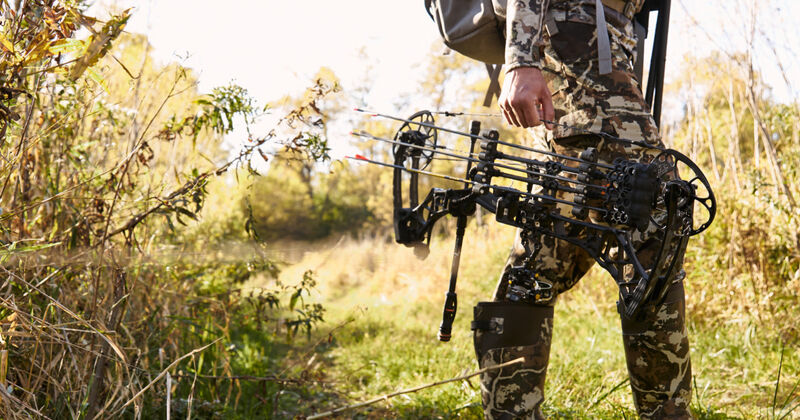
If total arrow weight is king, then front of center (FOC) is the queen. FOC measures how much of your arrow’s total weight is concentrated in the front half — specifically, how far forward the balance point sits from the arrow’s physical center, expressed as a percentage.
Here’s how to calculate FOC:
- Find the arrow’s total length from the nock throat to the end of the shaft (not including the broadhead).
- Balance the fully assembled arrow (with broadhead) on a sharp edge and mark the balance point.
- Measure the distance from the nock throat to the balance point.
- Use this formula: FOC % = ((Balance Point – Total Length / 2) / Total Length) × 100
For hunting applications, Jace Bauserman at Bowhunter Magazine recommends an FOC between 11% and 15% for most hunting scenarios. Heath Wood at Mossy Oak suggests pushing that to 13–16% for elk and large-bodied deer in heavy timber where penetration through thick bone is critical.
What happens when FOC is too low (below 10%)? The arrow becomes tail-heavy and unstable in flight. You’ll see erratic grouping, poor broadhead flight, and reduced penetration on impact. The arrow may plane or porpoise, especially with fixed-blade broadheads that catch more air.
What happens when FOC is too high (above 19%)? The arrow drops faster at distance because the front-heavy balance creates more drag. You sacrifice trajectory for penetration. For treestand hunters shooting under 30 yards at deer, a higher FOC is actually fine — the trajectory penalty barely matters at close range, and the penetration gain is enormous. For western hunters taking 50-60 yard shots, staying in the 11–15% range keeps your arrow flying flatter.
Arrow Weight by Game Animal
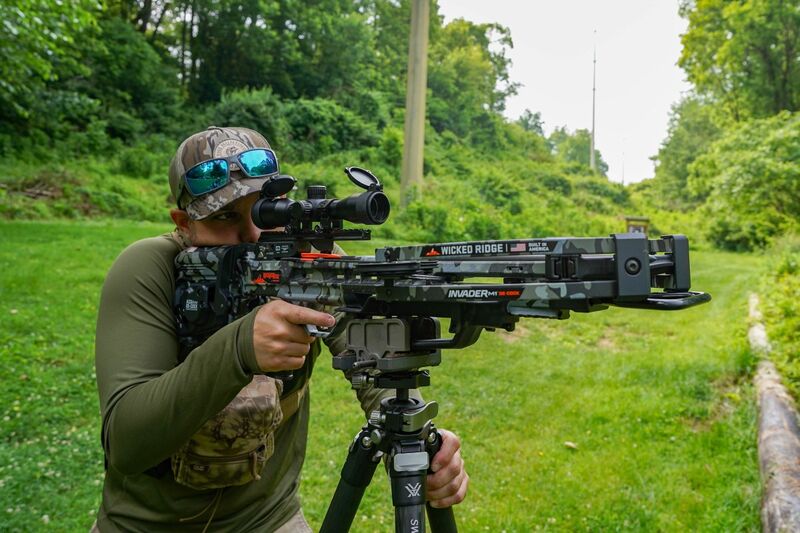
Not all game animals demand the same arrow weight. A turkey’s vitals sit behind thin feathers and a relatively small body. A bull elk’s rib cage is armored with dense bone and thick muscle. Your arrow setup should reflect the animal you’re targeting.
| Game Animal | Recommended Total Arrow Weight | Minimum Kinetic Energy | Recommended FOC |
|---|---|---|---|
| Whitetail Deer | 400–500 grains | ~40 ft-lbs | 11–15% |
| Mule Deer | 425–525 grains | ~45 ft-lbs | 12–15% |
| Elk | 500–650 grains | ~55 ft-lbs | 13–16% |
| Turkey | 350–450 grains | ~25 ft-lbs | 10–13% |
| Moose | 550–700+ grains | ~65 ft-lbs | 15–19% |
| Pronghorn | 380–450 grains | ~35 ft-lbs | 10–13% |
These numbers assume a properly tuned bow shooting at reasonable draw weights (60–70 lbs for most adult bowhunters). If you’re pulling less weight — say 50 lbs — you can still hunt deer effectively, but you’ll want to stay on the lower end of the weight range and focus on razor-sharp, fixed-blade broadheads that require less energy to cut through tissue.
5 Steps to Dial in Your Hunting Arrow Weight
Building a properly weighted hunting arrow isn’t about picking the heaviest shaft you can find and bolting on a massive broadhead. It’s a systematic process where each component works together. Here’s how to do it right.
Step 1: Set Your Draw Weight
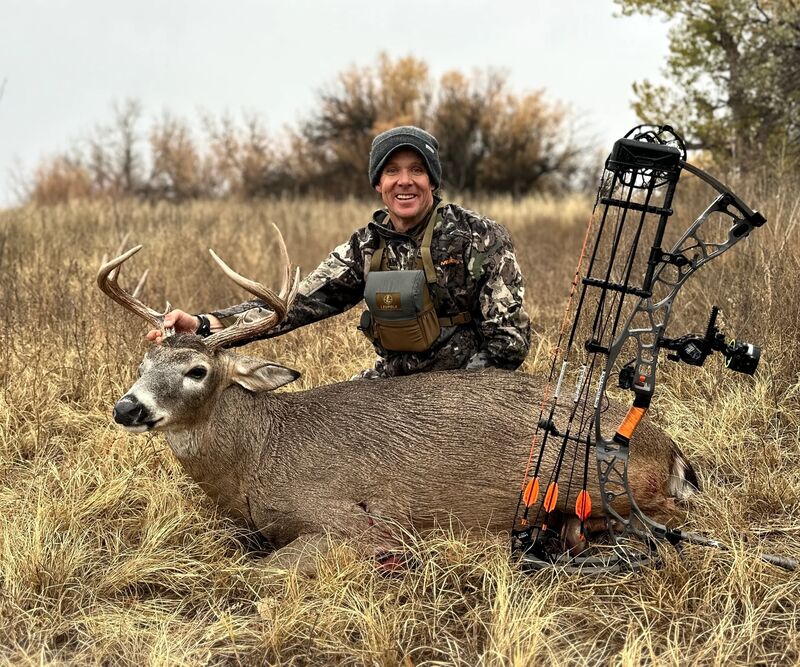
Everything starts with your bow’s draw weight. A 70-lb bow generates substantially more energy than a 60-lb bow, which means it can efficiently push heavier arrows. If you’re pulling 60–70 lbs (the most common range for adult deer hunters), you have the widest selection of arrow weights to work with. Pulling 50 lbs? You’ll want to stay closer to 400–425 grains total to maintain acceptable speed and trajectory.
Step 2: Pick Your Shaft and GPI
Choose an arrow shaft that matches your bow’s draw weight and your draw length. For a typical 60–70 lb deer setup, you’re looking at 340–350 spine shafts. Within that spine range, compare GPI numbers between brands. A shaft running 8.0 GPI gives you a lighter platform that you build up with heavy inserts and broadheads. A shaft running 10+ GPI gives you a heavier base that needs less added weight up front. Visit Easton’s hunting arrow lineup to compare GPI across spine options.
Step 3: Choose Your Insert Weight
This is where most bowhunters either nail it or blow it. Standard inserts weigh around 50 grains. But aftermarket weighted inserts range from 50 to 300+ grains. A 75-grain or 100-grain insert combined with a 100-grain broadhead shifts your balance point forward and increases FOC significantly. This is the easiest way to manipulate both total weight and FOC without changing your shaft.
Step 4: Choose Your Broadhead Weight
Most hunting broadheads come in 100-grain or 125-grain options. Some companies offer 150-grain heads. A 125-grain broadhead paired with a 75-grain insert puts 200 grains up front — that’s a serious FOC booster. Make sure your chosen broadhead matches your total arrow weight goals and spine.
Step 5: Measure FOC and Verify Total Weight
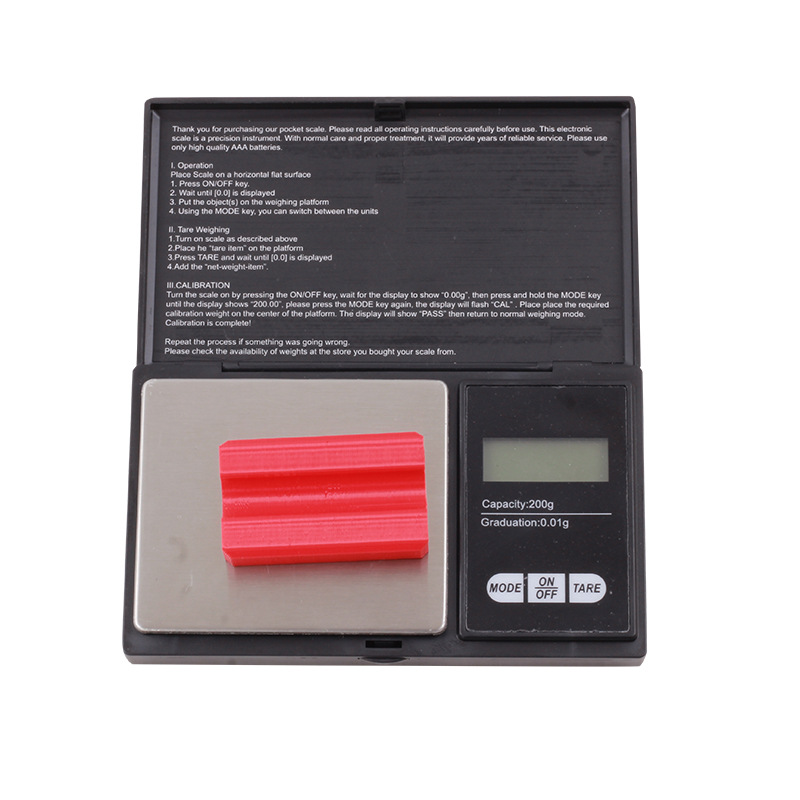
Assemble your finished arrow — shaft, insert, broadhead, nock, fletching, wrap. Weigh it on a grain scale. Then balance it to find the FOC using the formula above. Your targets:
- Total weight: 400–500 grains for deer, 500–650 for elk
- FOC: 11–15% for most hunting, 13–16% for heavy game
If your FOC is too low, swap to a heavier insert or broadhead. If it’s too high and you’re losing trajectory at distance, lighten the insert or switch to a higher-GPI shaft that distributes weight more evenly.
Kinetic Energy vs. Momentum: Which One Should You Chase?
This debate splits the bowhunting community right down the middle, and understanding both concepts will make you a better arrow builder.
Kinetic Energy (KE) measures the energy an object carries in motion. The formula is:
KE = (mass × velocity²) / 450,240
(where mass is in grains and velocity is in fps, giving you ft-lbs)
Notice that velocity is squared. That means a small increase in speed creates a disproportionately large increase in KE. This is why lightweight-arrow advocates point to kinetic energy — their fast arrows generate impressive KE numbers on paper.
Momentum measures an object’s resistance to stopping. The formula is:
Momentum = (mass × velocity) / 225,120
(where mass is in grains and velocity is in fps, giving you slug-ft/s)
Here, mass and velocity carry equal weight. No squaring. That means a heavier arrow benefits more from the momentum equation than a lighter one.
So which one matters more for hunting? Momentum. Here’s why: kinetic energy measures how much total energy your arrow carries, but it doesn’t tell you how that energy is applied. When a broadhead hits an animal, it encounters resistance — hide, muscle, bone. The arrow must push through that resistance over a distance. That’s what momentum excels at. A heavier arrow maintains its velocity better through resistance because it has more mass to push with. A lightweight, fast arrow might have equal or greater KE at impact, but it decelerates faster as it encounters tissue and bone.
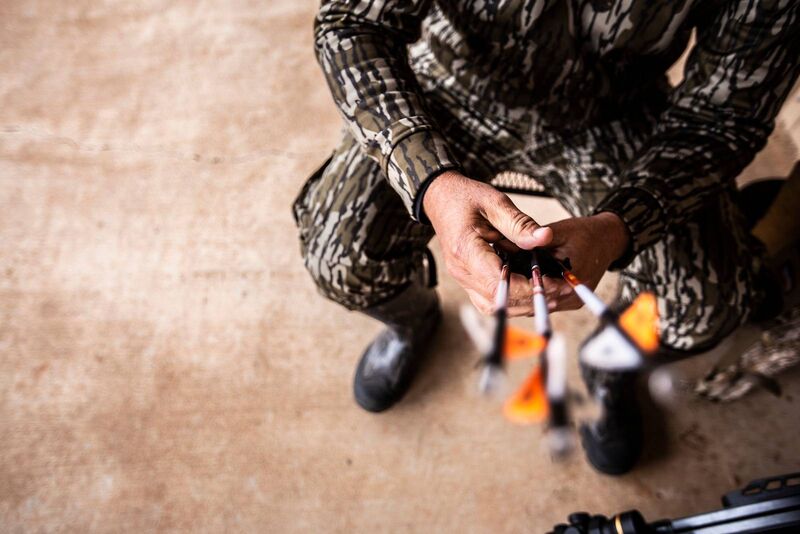
Think of it practically: a 350-grain arrow at 310 fps and a 500-grain arrow at 265 fps might generate similar kinetic energy numbers around 65–75 ft-lbs. But the 500-grain arrow carries significantly more momentum. It drives deeper. It breaks through more bone. It’s more likely to produce a full pass-through, which creates two wound channels and a better blood trail.
For deer, the minimum recommended KE is around 40 ft-lbs. For elk, you want at least 55 ft-lbs. Most properly built hunting arrows easily exceed these thresholds. Where the rubber meets the road is in penetration — and that’s where momentum wins every time.
Build Your Arrow Right, Hunt with Confidence
Hunting arrow weight isn’t a number you guess at — it’s a system you engineer. Start with your draw weight, pick the right shaft GPI, add appropriate insert weight, select a broadhead that hits your FOC target, and verify everything on a grain scale. Whether you’re hunting whitetails at 20 yards or bugling in a bull elk at 50, the math doesn’t lie: heavier arrows with proper FOC penetrate deeper, fly more consistently, and kill more cleanly than lightweight speed demons.
If you’re just getting into archery, check out our complete arrow spine chart guide to make sure your spine matches your setup. And for dialing in your bow’s accuracy, don’t overlook a quality compound bow stabilizer — it complements a well-built arrow by reducing torque at the shot.
The best bowhunters don’t chase speed. They chase penetration. Get your arrow weight right, and the rest falls into place.
Sources
- Arrow FOC Explained and Why It’s Important for Bowhunting — Bowhunter Magazine, Jace Bauserman
- Building the Best Arrow for Deer Hunting — Bowhunting.com, Justin Zarr
- Proper Arrow Builds for Elk and Deer Hunting — Mossy Oak, Heath Wood
- Easton Hunting Arrows — Easton Archery
