Archery Blog
How to Set Up a Backyard Archery Range: Complete Guide
Feb
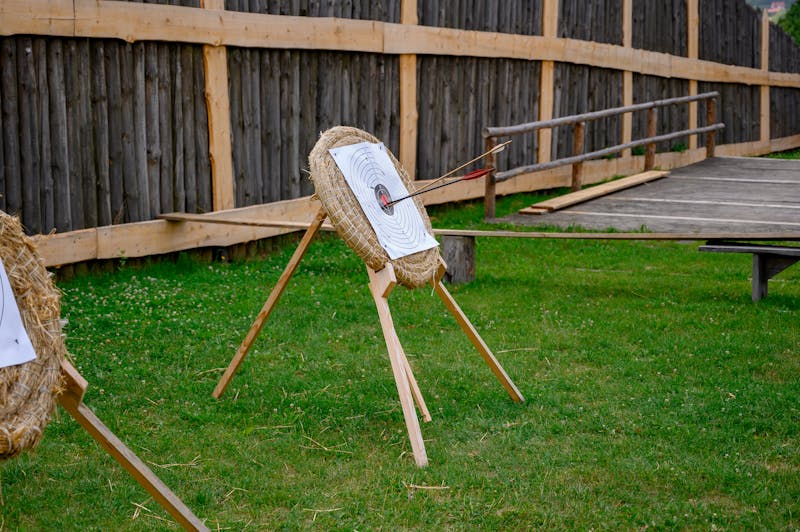
Setting up a backyard archery range lets you practice whenever you want without driving to a club or public range. With the right setup, you can shoot safely and improve your skills from home. This complete guide covers everything you need to create a functional practice space that will serve you for years.
Space Requirements for Your Backyard Archery Range
You need at least 20 yards (18 meters) of clear shooting distance for basic practice. Beginners often start at 10-15 yards, but having extra room lets you progress without relocating your setup. The shooting lane should be about 10 feet wide to account for arrows that drift left or right of the target.
Check your local regulations before setting up. Some municipalities have ordinances about projectile weapons, even on private property. Homeowners association rules may also apply. A quick call to your local government office can save headaches later.
Measure your available space carefully. You need room not just for the shooting distance, but also for a safety buffer behind the target and space to move around comfortably at the shooting line.
Choosing a Safe Location
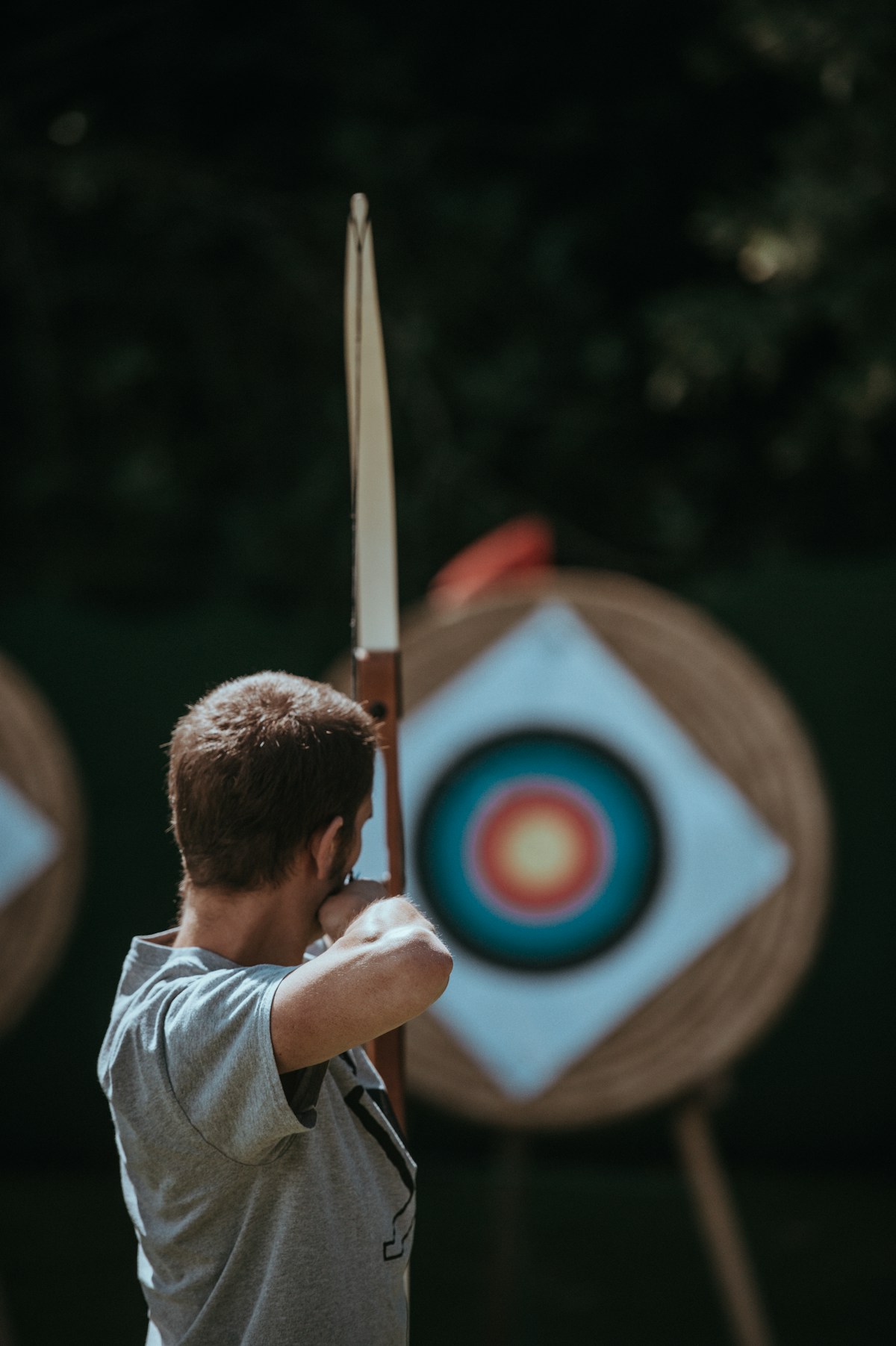
Position your range so arrows travel away from houses, roads, and areas where people walk. The ideal setup has a natural backstop like a hill, dense trees, or a solid fence behind the target. Never shoot toward property lines or areas you cannot see clearly.
Consider the sun position throughout the day. Shooting directly into sunlight makes aiming difficult and can be dangerous if you lose sight of your target. East-west orientation often works best, allowing comfortable shooting during morning and evening hours.
Think about noise as well. While archery is quieter than firearms, the sound of arrows hitting targets can carry. Position your range away from neighbors bedrooms and outdoor living spaces when possible.
Essential Equipment for Your Home Archery Range
Target and Backstop
EVA foam targets offer the best combination of durability and arrow protection for home ranges. A 50x50cm foam block stops arrows cleanly and lasts through thousands of shots. Layer targets or use thicker foam for higher draw weights above 40 pounds.
Add a backstop net or curtain behind your target to catch arrows that miss or pass through. Commercial archery netting works well, or you can hang a heavy horse stall mat. This secondary barrier protects your property and makes arrow retrieval easier.
Target Stand Construction
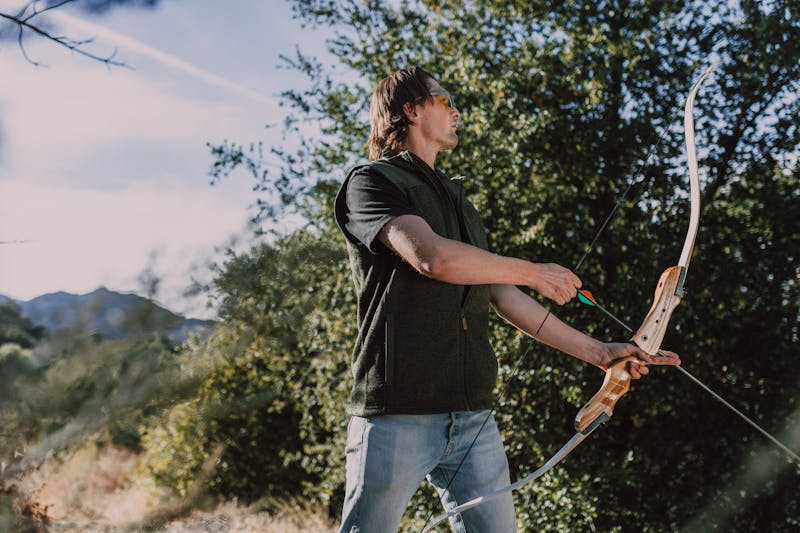
Build a simple wooden frame to hold your target at chest height. Two vertical 4×4 posts with a horizontal crossbar works for most foam targets. Sink the posts at least 18 inches into the ground for stability, or use a portable base with sandbags.
Angle the target slightly forward so arrows striking high still embed properly rather than glancing off. A 5-10 degree forward tilt is usually sufficient.
Shooting Line Markers
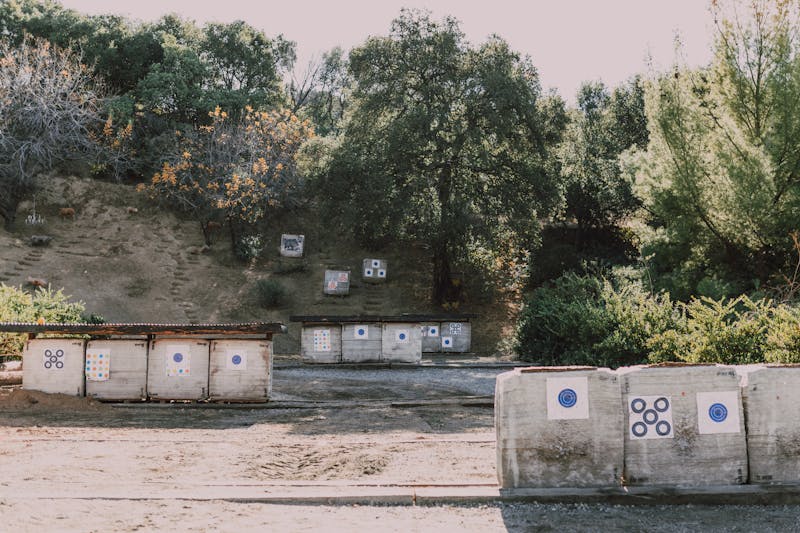
Mark your shooting positions with stakes, paint, or rope laid on the ground. Having consistent distances helps track improvement over time. Mark 10, 15, and 20 yards at minimum, with additional marks at 25 and 30 yards if space permits.
Safety Setup for Home Archery
Create clear boundaries around your range with orange safety fencing on either side of the shooting lane. This warns family members and visitors about the active shooting area. Post signs indicating archery practice is in progress.
Establish a rule that nobody enters the range while shooting. Use a flag or sign system to indicate when the range is hot (active shooting) or cold (safe to retrieve arrows). Make sure everyone in your household understands and follows these protocols.
Keep a first aid kit nearby. Arrow wounds are rare with proper safety practices, but preparedness matters. Include tweezers, bandages, and antiseptic at minimum.
Watch: How to Build a Backyard Archery Range
Maintaining Your Backyard Range
Inspect targets regularly for wear. Foam targets develop soft spots after heavy use where arrows pass through too easily. Rotate the target face to distribute wear evenly, and replace the target when arrows consistently pass through.
Keep the shooting lane clear of debris that could cause trips. Mow grass short so you can find arrows that miss the target. Tall grass swallows arrows and makes retrieval frustrating.
Store equipment indoors when not in use. UV exposure degrades foam targets and bowstrings over time. A simple shed or covered area near the shooting line protects your investment.
Upgrading Your Setup Over Time
Start simple and upgrade based on experience. Many archers add features like multiple target faces at different heights, 3D animal targets for hunting practice, covered shooting positions for weather protection, and lighting for evening practice sessions.
A basic backyard archery range costs under $200 to set up and provides years of convenient practice. Start with quality safety equipment and a durable target, then expand as your skills develop and you discover what features matter most to your shooting routine.
Ready to build your range? Check out our EVA Foam Target Backing and Target Pins to get started.
