Archery Blog
Archery Peep Sight: Installation, Alignment & Troubleshooting Guide

Mar
If you’ve ever drawn back your compound bow only to find your peep sight completely out of alignment—or worse, you can’t see through it at all—you know exactly how frustrating this small component can be. The archery peep sight is one of the most important yet often misunderstood accessories on a compound bow. Get it right, and you’ll have a consistent, repeatable aiming reference every single shot. Get it wrong, and you’re basically shooting blind. This guide walks you through everything you need to know about peep sight selection, installation, alignment, and fixing the most common problems archers encounter.
What Is an Archery Peep Sight and Why Does It Matter?
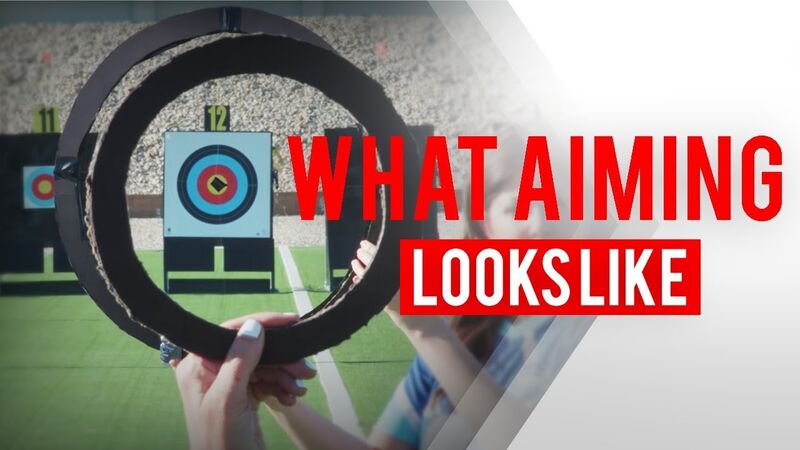
A peep sight is a small disc or ring inserted into the bowstring of a compound bow. When you draw back to full draw, the peep aligns with your front sight, creating a consistent eye-to-sight reference point for every shot. Without a peep sight, your eye position can vary shot to shot, leading to inconsistent accuracy—especially at longer distances.
Think of it like the rear sight on a firearm. The peep forces your eye to look through the same point every time you anchor, dramatically improving accuracy consistency. For hunters and competitive target archers alike, a properly installed and aligned compound bow peep sight is non-negotiable.
Types of Peep Sights for Compound Bows
Not all peep sights are created equal. Here are the main types you’ll encounter:
Standard Peep Sights
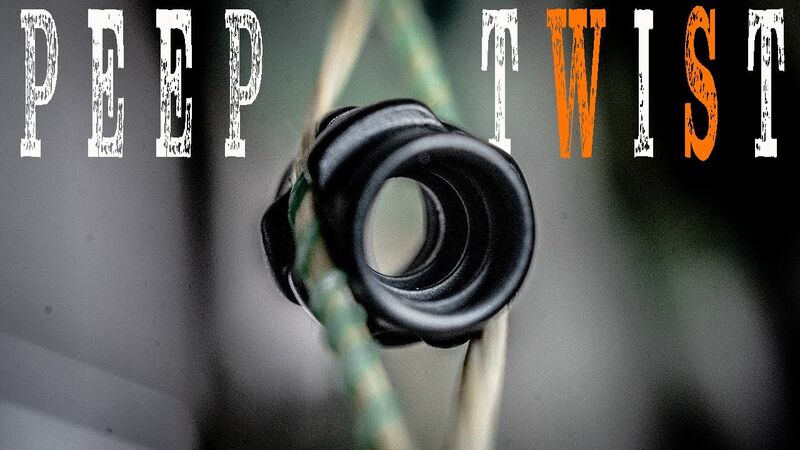
The most common type—a simple circular disc with a hole in the center. They come in various aperture sizes, and choosing the right diameter makes a significant difference in both visibility and accuracy.
Clarifier Peep Sights
A clarifier peep sight is designed specifically for use with a lens-equipped front sight. The clarifier lens inside the peep helps sharpen and clarify the image you see through your scope. They’re extremely popular with competitive target archers because they reduce the blurry ring effect that standard peeps can create. Clarifier peep sights consistently search around 390 monthly searches.
Verifier Peep Sights
A verifier peep sight works similarly to a clarifier but is designed for archers who don’t use a magnifying front sight lens. The verifier lens helps archers with vision issues see their front sight pin more clearly. With around 480 monthly searches, verifier peeps are popular among competitive shooters shooting “bare bow” style front sights.
Tubing vs. Tied-In Peep Sights
Older peep sight designs used a rubber tube that connected the peep to the bow limb, ensuring it rotated to the correct position at full draw. Modern compound bows have largely moved away from peep sight tubing in favor of tied-in peeps that are served directly into the string. The tubing-free approach is cleaner, more reliable, and eliminates the tube snap problem that plagued archers for years.
Choosing the Right Peep Sight Size
Peep sight aperture (hole) size is critical and often overlooked. The right size depends on your shooting discipline:
- 3/16″ (4.75mm): Popular for target archery and 3D shooting where maximum aiming precision matters
- 1/4″ (6.35mm): A versatile all-around size good for both hunting and target practice
- 3/8″ (9.5mm): Preferred by hunters who need a wider field of view in low-light conditions
- 1/2″ (12.7mm): Very large opening—used for low-light bowhunting where seeing the target matters more than precision
For hunting, most archers choose 3/8″ or larger because it lets in more light at dawn and dusk. For target shooting, smaller apertures improve aiming precision. The key rule: your front sight housing should fill approximately 80% of the peep’s opening when you’re at full draw.
How to Install a Peep Sight on a Compound Bow
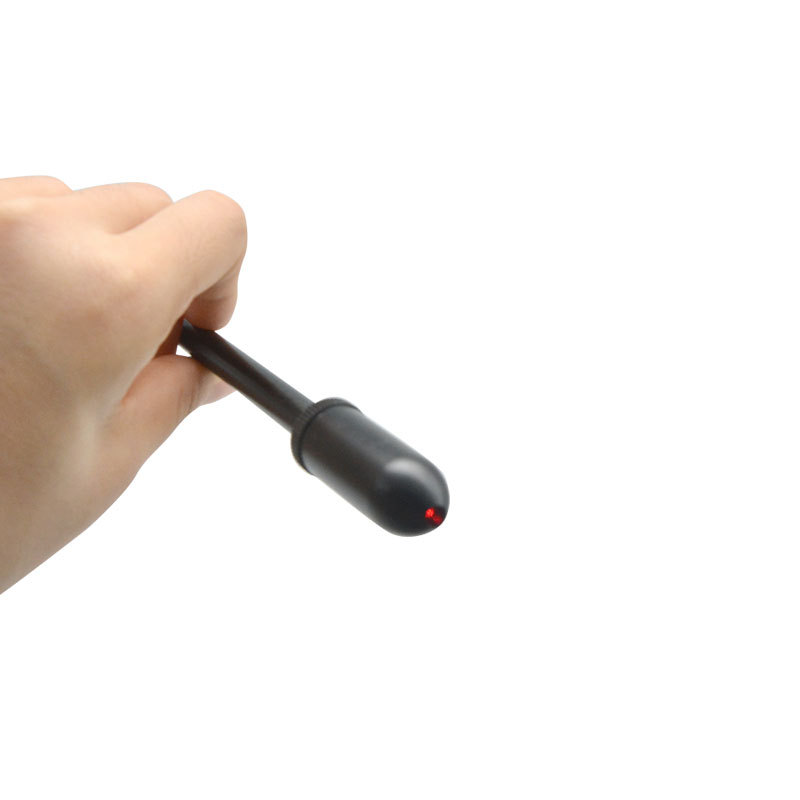
Installing a compound bow peep sight requires separating the bowstring strands, inserting the peep, and either serving or tying it in place. Here’s the complete process:
Tools You’ll Need
- Peep sight (correctly sized for your string)
- Bow press (essential for safe installation)
- Serving thread
- Peep sight spreader tool or small flathead screwdriver
- Serving tool
- Scissors or thread cutters
Step-by-Step Peep Sight Installation
Step 1: Put the bow in a press. Never try to install a peep sight without relaxing tension on the bowstring. Use a bow press to safely relax the string. Attempting to separate string strands under tension can damage the string and is dangerous.
Step 2: Find the correct height. With the bow at rest in the press, estimate where your peep should sit. A common starting point is 1-2 inches above the nock point. The exact position depends on your draw length and anchor point. When you draw the bow to your anchor, the peep should naturally align with your eye.
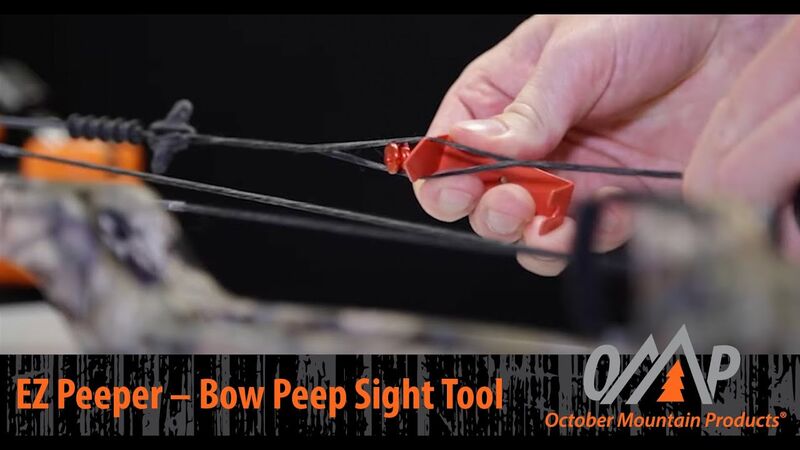
Step 3: Separate the string strands. Use a peep sight spreader or carefully use your fingers to separate the bowstring into two equal bundles of strands. Most bowstrings are made of multiple strands and split evenly into two groups.
Step 4: Insert the peep. Place the peep sight between the two bundles of string strands. The hole in the peep should face forward (toward the target) when installed correctly.
Step 5: Serve the peep in place. Use serving thread to tie the peep tightly above and below its position. This prevents it from sliding up or down the string. Apply 3-5 wraps of thread above and below, knotting securely.
Step 6: Remove from press and test draw. Carefully bring the bow out of press, draw to your anchor point, and check if the peep rotates to face you correctly. The hole should be directly in front of your eye at full draw.
Peep Sight Alignment: Getting It Right Every Time
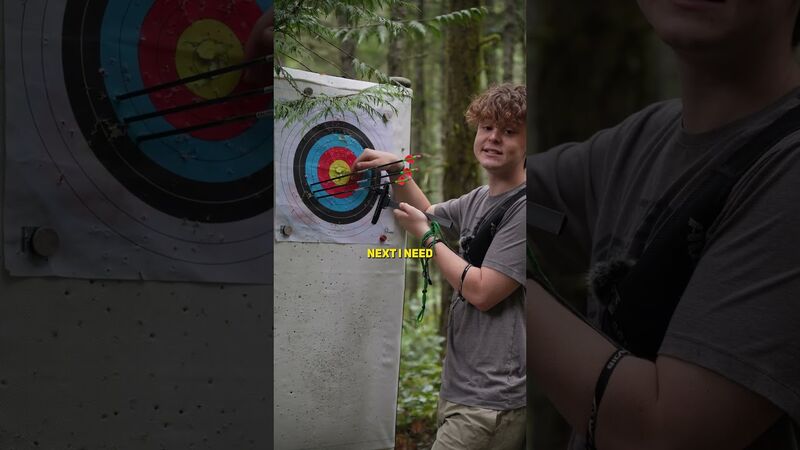
Proper peep sight alignment means the peep rotates to face your eye exactly when you reach full draw. If it’s rotated even slightly, you’ll see a partial view through the hole or nothing at all.
How to Align Your Peep Sight
Check the rotation angle. Draw the bow and note which direction the peep hole is facing. If it’s rotated left or right, you need to adjust the string twist.
Adjust string twist. Adding twists to the string will rotate the cable slightly and change how the peep sits at full draw. To rotate the peep clockwise, add twists to the string (twist the string in the same direction as its existing twist pattern). Remove twists to rotate it counter-clockwise. Add twists one at a time and test between each adjustment.
Mark and verify. Once aligned, use a small piece of white-out or nail polish on the peep’s edge to create a reference mark. If you ever see this mark at full draw, you know the peep has rotated out of alignment.
For a comprehensive understanding of how peep alignment affects your overall sight picture, see our guide on Bow Sight Adjustment: Windage, Elevation & Pin Settings—understanding the full aiming system helps you dial in every component correctly.
Setting Peep Height
Height adjustment is equally critical. At full draw, your anchor point should feel natural and consistent, with the peep centered on your eye naturally—not forcing your head up or down. To adjust:
- Move peep up if you’re looking slightly downward through it at anchor
- Move peep down if you’re straining to look upward through it
- Make small adjustments (1/4 inch at a time) and re-test
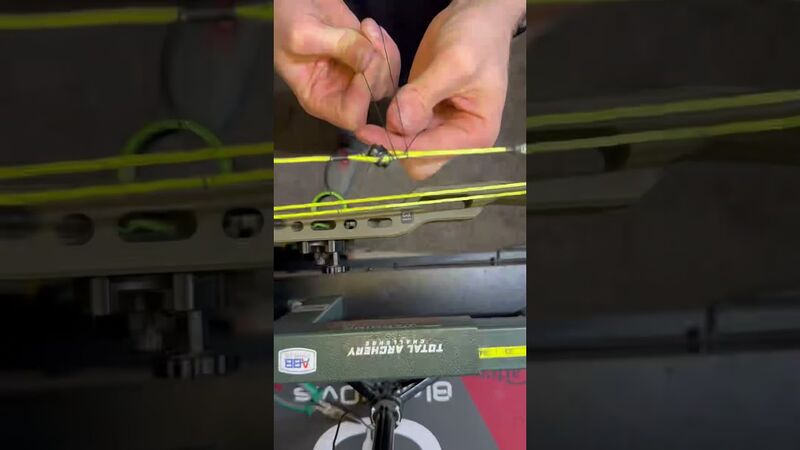
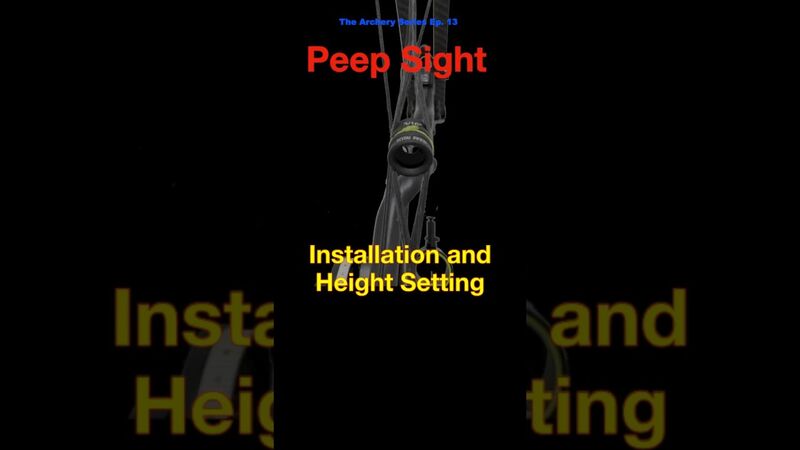
Watch: How to Install a Peep Sight on a Compound Bow
Visual learners will appreciate this step-by-step video tutorial demonstrating proper peep sight installation technique:
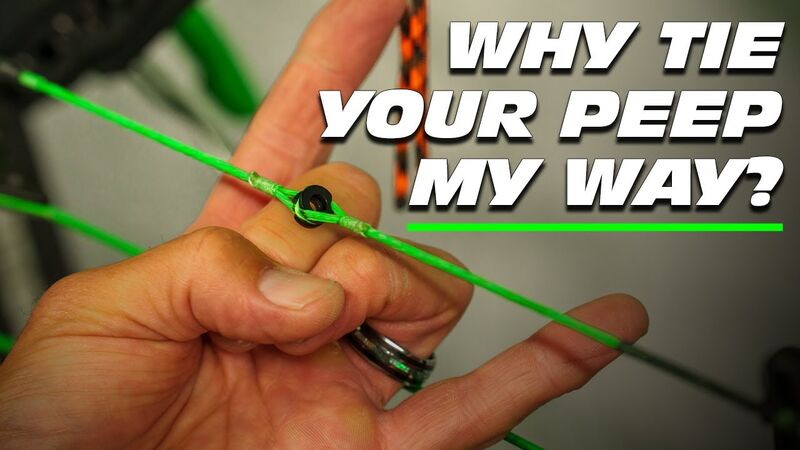
Peep Sight Troubleshooting: Fixing Common Problems
Even after proper installation, peep sights can cause headaches. Here are the most common issues and how to solve them:
Problem: Peep Won’t Stay Aligned
This is the most common complaint. The peep rotates out of alignment after a few shots or over time. Causes include:
- String stretch: New bowstrings stretch significantly during the break-in period (approximately 200-300 shots). Keep making minor string twist adjustments as the string settles.
- Serving is too loose: If the serving thread has loosened, the peep can rotate. Re-serve the peep with tighter wraps.
- Wrong number of twists: Sometimes you need to experiment with significantly more or fewer string twists to find the sweet spot where the peep stays aligned through the string’s stretch cycle.
Problem: Can’t See Through the Peep in Low Light
Bowhunters frequently encounter this problem. Solutions include:
- Switch to a larger aperture size (3/8″ or 1/2″)
- Use a peep sight with an orange or illuminated ring
- Consider a tube peep that automatically orients correctly regardless of string rotation
- Use a specialized hunting peep with a tapered opening
Problem: Peep Sight Slides Up or Down During Shooting
This usually means the serving is inadequate. The fix: apply more serving wraps above and below the peep, and make sure you’re using serving thread that’s the right diameter for your string type. Some archers also add a small loop serving (like a D-loop style tie) specifically for securing the peep.
Problem: Blurry or Distorted View Through Peep
If your front sight appears blurry through the peep:
- Clean the peep aperture—debris or moisture can fog it
- If using a clarifier or verifier, ensure the lens power is correct for your vision
- Try a different aperture size—sometimes blurring indicates the hole is too small for your vision at that distance
Peep Sight Setup as Part of Overall Compound Bow Tuning
Your peep sight doesn’t exist in a vacuum—it’s part of a complete archery system. The peep height and alignment directly affect your arrow flight and where your arrows impact the target. For this reason, always set up your peep sight before doing final paper tuning or walk-back tuning.
The correct sequence when setting up a compound bow is:
- Install the arrow rest and set nocking point
- Install peep sight at estimated height
- Set your bow sight (front sight)
- Shoot at close range (10 yards) to verify peep alignment with your eye
- Adjust peep height and alignment
- Do final paper tuning and sight-in
If you change your draw length, anchor point, or shooting form significantly, expect to re-adjust your peep sight position. These are all interconnected. For a deep dive into the full process, check our complete Compound Bow Tuning Guide.
Peep Sight Tips for Bowhunters
Hunting with a peep sight requires some special considerations beyond target shooting:
- Use a larger aperture (3/8″ minimum) for low-light hunting situations
- Practice in hunting conditions—gloves, thick clothing, and cold weather affect your anchor point and eye position
- Verify alignment seasonally—extreme temperature changes can affect string twist and peep alignment
- Consider backup options—some hunters carry spare peep sights and serving supplies in their field kit
- Shoot from hunting positions—kneeling, seated in a tree stand, or contorted around brush affects how your eye aligns with the peep
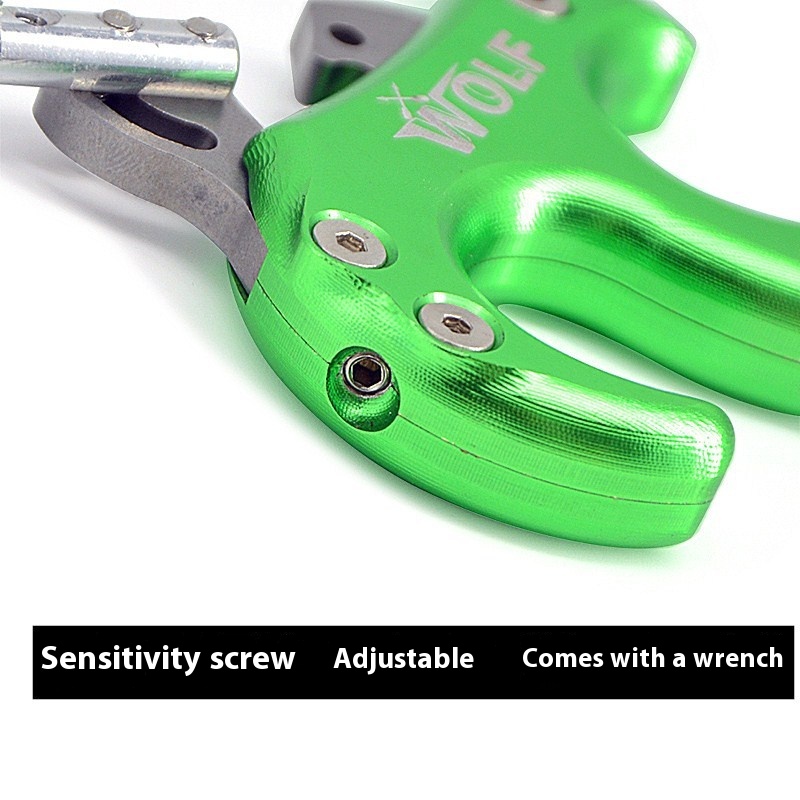
The peep sight works as part of your entire aiming system, which includes your release aid. For consistent shooting mechanics, pair your properly installed peep sight with a quality release:
Professional Installation vs. DIY
While many experienced archers install their own peep sights, there’s real value in having a pro shop handle it, especially the first time. A qualified archery technician can:
- Properly identify the ideal peep height for your specific draw length and anchor point
- Use professional bow presses that safely handle higher-poundage bows
- Guarantee the serving is secure and won’t slip
- Recommend the correct aperture size based on watching you shoot
According to Archery 360, peep sight issues are among the top reasons archers visit pro shops, and having it done right from the start saves frustration. The World Archery Federation recommends consistent equipment checks as part of any competitive archer’s routine. If you do choose to DIY, refer to your bow manufacturer’s documentation for string specifications.
When to Replace Your Peep Sight
Peep sights are relatively inexpensive and should be replaced if:
- The aperture is cracked or damaged
- It consistently won’t stay aligned despite adjustments
- You notice light streaks or visual distortion through the hole
- The serving thread around the peep is fraying or coming loose
- You’re changing to a significantly different shooting style or discipline
Consider annual inspection of your peep sight as part of Bowhunters United’s recommended pre-season equipment check.
Frequently Asked Questions About Archery Peep Sights
Q: Can I shoot a compound bow without a peep sight?
A: Yes, but your accuracy will suffer significantly at longer distances. Some instinctive shooters and barebow archers do shoot without peeps, but for most compound bow shooting (especially hunting), a properly installed peep sight is essential.
Q: How long does peep sight installation take?
A: For an experienced archer with a bow press, 20-30 minutes. For a beginner learning the process, allow 1-2 hours including adjustment time.
Q: What’s the difference between a 3/16″ and 1/4″ peep?
A: A 3/16″ (4.75mm) aperture is smaller and gives more aiming precision for target shooting. A 1/4″ (6.35mm) is slightly larger and is a popular compromise between precision and low-light usability.
Q: Why does my peep sight twist at full draw?
A: String twist mismatch is the most common cause. The number of twists in your bowstring affects how much the string rotates when drawn. Experiment with adding or removing string twists until the peep faces your eye cleanly at full draw.
Q: Is peep sight tubing still used?
A: Rarely. Peep sight tubing was common on older bows but has largely been replaced by tube-free peep sights that are served directly into the string. Tubing could snap or weaken over time and is generally considered outdated technology for compound bows.
Conclusion: Master Your Peep Sight for Better Accuracy
The archery peep sight is deceptively simple—just a small ring in your bowstring—but its impact on your accuracy is enormous. Proper installation, correct aperture sizing, and meticulous alignment work together to give you a reliable, repeatable sight picture on every shot. Take the time to get your compound bow peep sight dialed in correctly, and you’ll immediately notice improved consistency whether you’re shooting targets, 3D courses, or chasing game in the field.
Remember: the peep sight is just one part of your complete archery system. Pair it with properly adjusted bow sights, a tuned arrow rest, and consistent shooting form for the best results. Happy shooting.
Sources
- World Archery Federation. Official Equipment Rules. worldarchery.sport
- Archery 360. “Understanding Peep Sights for Compound Bows.” archery360.com
- Bowhunters United. “Compound Bow Maintenance Guide.” bowhuntersunited.com
