
Archery Blog
Bow Wrist Sling: How to Choose, Attach, and Shoot with One
Aug
Every competitive archer who has switched to shooting with a wrist sling describes the same experience: groups tighten up within a dozen arrows. The reason is direct. A tight grip on the bow riser twists the riser microscopically at the moment of release — enough to push arrows off-target in ways that look random but aren’t. A wrist sling removes the need to grip at all. Your hand stays open, the bow moves forward naturally after the shot, the sling catches it, and the arrow goes where your sight was pointing.
What a Bow Wrist Sling Actually Does
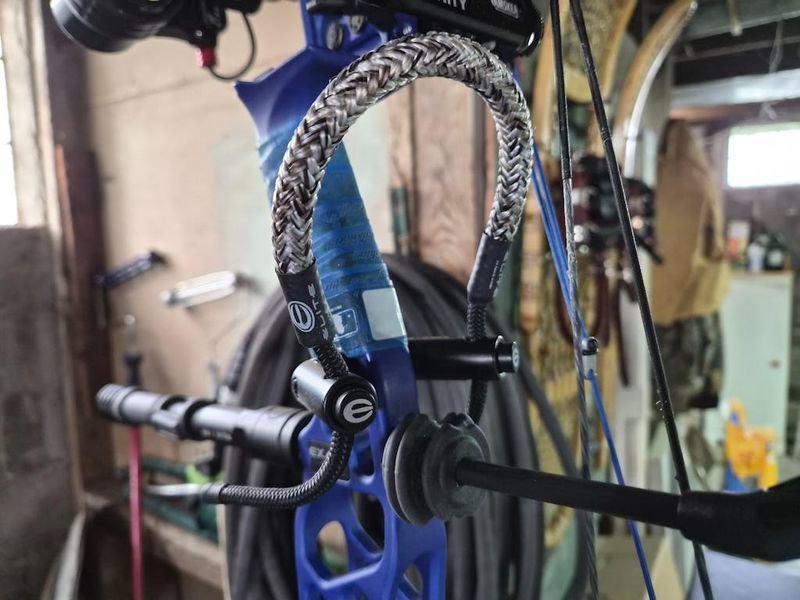
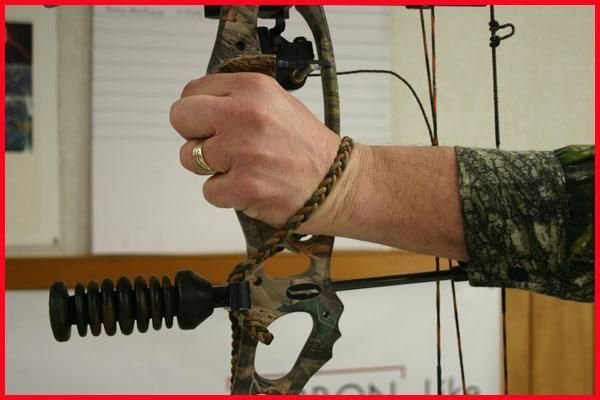
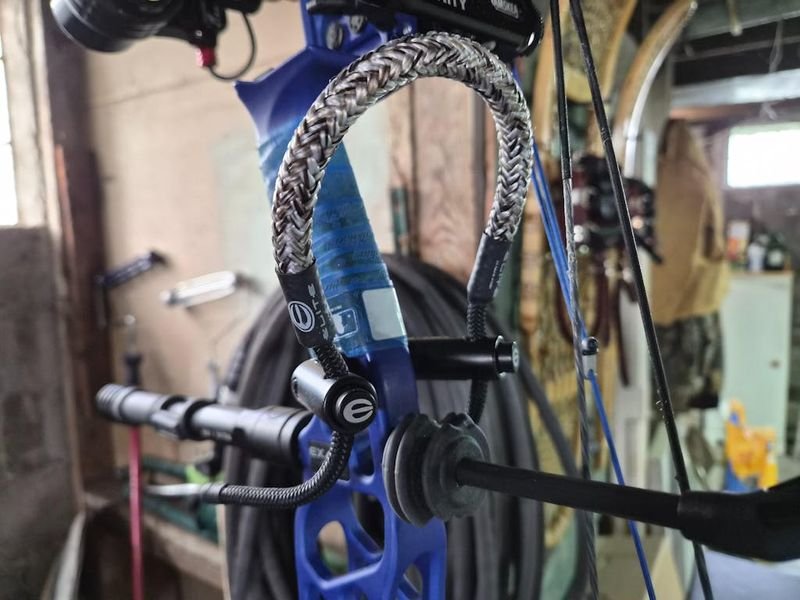
A wrist sling attaches to the stabilizer bushing on your bow’s riser — the same threaded hole you’d use for a stabilizer. One end threads through this bushing, the other loops around your wrist. You draw and shoot with your bow hand completely open, fingers relaxed. At the shot, the bow lunges forward; the sling stops it from leaving your hand.
Grip is the single biggest accuracy error most archers overlook. When you squeeze the grip, your hand muscles apply uneven pressure to the riser from pre-draw through the release. The bow torques, and that torque pushes arrows left or right. A wrist sling fixes this without any major form overhaul — put one on, keep your hand loose, and the torque problem disappears.
Wrist Sling vs Finger Sling — 3 Key Differences
Finger slings and wrist slings do the same job, but the mechanism is different. A finger sling loops around your thumb and index finger rather than your wrist. Recurve target archers tend to favor them because they allow a cleaner wrist position at full draw. Compound bowhunters usually go for wrist slings — they stay on the bow when you’re in a tree stand, they work fine with gloves, and they don’t tangle during a sudden hand shift.
- Attachment point: Wrist slings bolt into the stabilizer bushing; finger slings loop around your thumb and index finger. Both secure the bow, but wrist slings don’t require any specific finger placement.
- Security: Wrist slings are more reliable for bowhunting — the bow stays on your arm even if your hand relaxes completely. Finger slings rely on thumb/index tension to hold the bow.
- Draw position: Finger slings allow a slightly cleaner wrist angle for traditional recurve target form. For compound shooting with a release aid, wrist slings work with whatever hand position you already use.
If you shoot a compound bow for any purpose — hunting, 3D, target — a wrist sling is the correct choice. For Olympic-style recurve, a finger sling is standard.
How to Attach a Bow Wrist Sling to Your Compound Bow
Most wrist slings install the same way. The process takes about two minutes and requires no special tools.
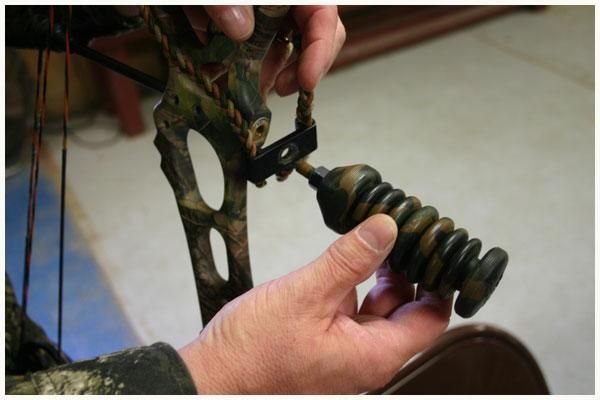
- Remove your stabilizer (if installed). The sling yoke threads through the stabilizer bushing, so the stabilizer will screw into the yoke rather than directly into the riser.
- Thread the yoke through the bushing. Most wrist slings have a leather or polymer yoke with a loop at one end. Pass this loop through the stabilizer bushing hole in the riser from the front.
- Reattach your stabilizer. Screw it through the yoke loop and into the bushing. The yoke is now sandwiched and locked between the stabilizer and riser — it won’t slip under draw weight.
- Connect the wrist strap to the yoke. Run the paracord or neoprene strap through the yoke loop and adjust to your wrist size. Most slings have a sliding knot or buckle for fine-tuning.
- Test tension before shooting. Put your hand through the strap with the bow hanging at your side. The bow should swing freely without any hand tension. If you’re gripping to hold the bow up, the strap is too long.
Getting the Fit Right
This is where most archers make the mistake. A wrist sling should be loose enough that your bow hand is fully open at full draw. If the strap is pressing on your wrist during the draw cycle, it’s too tight — and that contact creates the same torque you were trying to eliminate in the first place.
The correct fit: at full draw with your hand completely open, there should be roughly half an inch of slack in the strap. The bow should not feel held or supported by the sling during the draw — it sits in your open palm with the sling as a backup. After the shot, the bow rotates forward into the sling. That rotation is the only moment the sling should bear any load.
A strap that’s too loose lets the bow drop too far before the sling catches it, which can bring the limbs into contact with your arm. The half-inch slack rule prevents both failure modes without any guesswork.
What Wrist Slings Are Made Of
Three materials dominate the market, each with a clear use case.
Paracord is the most popular by a wide margin. It’s lightweight, weather-resistant, and easy to adjust. Paracord handles rain, sweat, and field conditions without degrading. Custom makers like Slingit Customs pair paracord straps with leather yokes for extra durability at the bushing attachment — worth the upgrade if you hunt in mixed conditions.
Leather is the classic recurve choice. Stiff at first, leather wrist slings break in well over time and have a satisfying weight and feel. They’re heavier than paracord and need waterproofing treatment if you’re hunting in wet conditions. Better suited to range shooting than field use.
Neoprene appears mostly in padded slings like the Limbsaver Kodiak Air. The extra cushioning makes sense for archers doing high-volume target sessions where cumulative wrist pressure adds up. For hunting, neoprene adds bulk and can catch brush — stick with paracord in the field.
Hoyt and Mathews both offer slings calibrated to their specific riser bushing depths. If you’re running a bow from either brand, their house sling fits cleanly without fiddling. On any other compound bow with a standard bushing, a quality aftermarket paracord sling works just as well.
Which Archers Actually Need a Wrist Sling
Any compound shooter benefits from one. The accuracy argument — open hand, no torque, tighter groups — applies to everyone from first-year bowhunters to experienced 3D competitors. The $15–$40 price is the smallest investment you can make in your shooting.
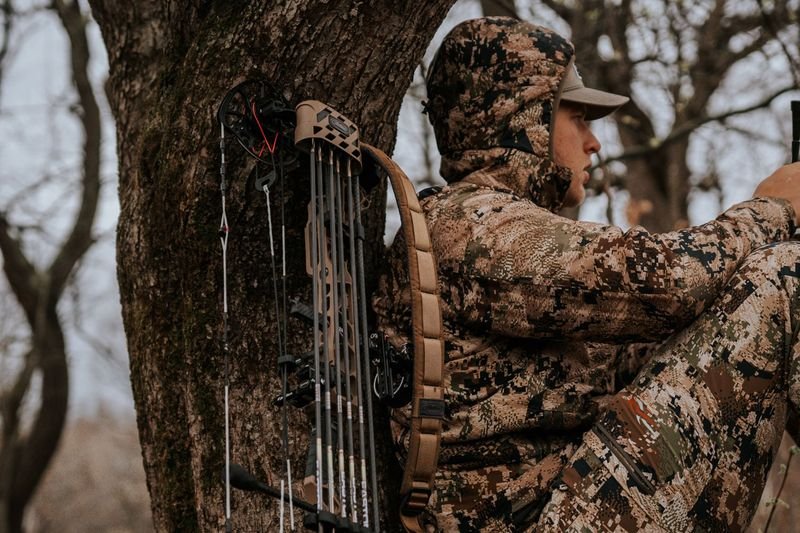
Bowhunters have a second reason beyond accuracy. Lancaster Archery Supply points out a practical safety consideration: a wrist sling keeps your bow tethered to you if you lose your footing in a tree stand. A bare bow tumbling 15 feet onto hard ground isn’t just expensive — it’s dangerous. The sling is cheap insurance.
Olympic-style recurve archers already know this — wrist or finger slings are standard equipment at any serious tournament. The open-hand technique is built into the coaching framework for the sport at every level.
Where slings genuinely aren’t necessary: traditional longbow archers who shoot with a thumb-ring grip often skip them because the draw style is fundamentally different. But if you shoot a compound with a release aid and you’re not using a wrist sling, you’re leaving accuracy on the table.
Bowhunting with a Wrist Sling — What Changes
Three considerations matter more in the field than at the range.
Noise discipline. Paracord slings with no metal hardware are quiet. Metal buckles and D-rings can click against the riser during a stalk or in cold temperatures when materials contract. Buy a soft-hardware sling specifically for hunting — they’re the standard for this reason.
Cold-weather glove compatibility. You need to be able to slip your hand in and out of the strap wearing hunting gloves. Wrist slings with an open sliding loop rather than a cinch buckle are easier to manage in the field. Practice the motion in your gear before the season opens.
Tree stand protocol. When climbing into a stand, your bow should be on a haul line — never carry it up by hand. Once you’re at height, the wrist sling stays engaged any time the bow is in your shooting hand. A dropped bow from a stand can cause serious harm to anyone below.
4 Mistakes to Avoid
Still gripping the bow. Putting on a wrist sling but continuing to squeeze the grip during the shot solves nothing. Train the open-hand habit deliberately. Some archers put a strip of tape on the grip with “OPEN” written on it until it becomes automatic.
Cinching the strap too tight. Too much tension creates wrist contact during the draw and adds its own torque. Half an inch of slack at full draw is the correct setting — revisit this every few sessions until you’ve internalized it.
Skipping the yoke under the stabilizer. Trying to clip a wrist sling around the outside of a stabilizer already installed in the bushing will fail. The yoke goes between riser and stabilizer, held in place by the stabilizer’s threads. You have to remove the stabilizer, thread the yoke, then reinstall.
Buying a recurve sling for a compound bow. Recurve wrist slings often have longer yokes designed for recurve stabilizer bushing geometry. Check yoke length before purchasing — most compound slings list compatibility clearly.
Learn from a World Champion
Paige Pearce — multi-time compound world champion and Team USA member since age 13 — demonstrates the correct wrist sling technique in this Lancaster Archery video. Pay attention to how loose her bow hand is at full draw and how the bow rotates naturally forward after release.
The sling is doing exactly what it’s supposed to: nothing during the shot, everything after. If you’re new to shooting with an open hand, watching how a world-class archer handles it is worth ten range sessions of guessing.
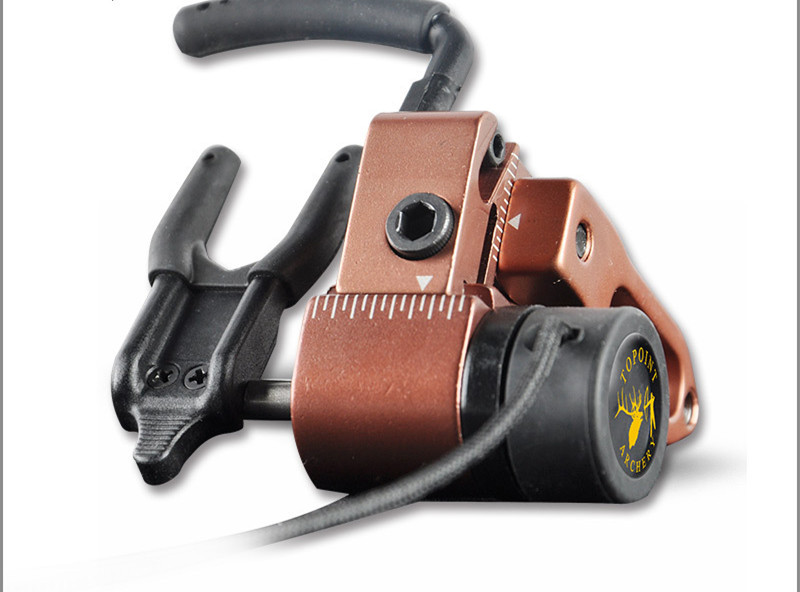
A wrist sling is one of the fastest upgrades you can make to your compound bow setup. Pair it with a properly tuned drop-away arrow rest and a correctly sized peep sight, and the foundational accuracy problems most shooters fight for years disappear quickly. For hand protection while you’re developing the open-grip habit, check the guide on archery finger tabs vs gloves as well.
Sources
- Lancaster Archery Supply — Wrist and Finger Slings: Do I Need One? — Detailed breakdown of sling types, purpose, and bowhunting applications from a leading archery retailer.
- Bowhunter Magazine — Use a Wrist Sling for Greater Accuracy — Technical explanation of how grip torque affects accuracy and how wrist slings correct it.
- Legend Archery — Finger or Wrist Sling: Which Do I Need? — Comparison of sling types for different bow styles and shooting disciplines.
