Archery Blog
FOC in Archery: What Your Arrow’s Balance Really Does
Jul
Two archers can shoot arrows of identical length and spine, tuned on the same bow, and still watch them behave completely differently downrange. One drives deep and flies true through a gust; the other planes off target and skips off resistance. The hidden variable is almost always a pair of numbers most shooters never measure: total arrow weight and where that weight sits along the shaft. That second number has a name — FOC, or Front of Center — and once you understand how it works alongside raw grains, you stop guessing about arrow builds and start engineering them.
What Arrow Weight Actually Measures
Arrow weight is measured in grains, an old unit where 7,000 grains equal one pound. It sounds trivially small, but the difference between a 380-grain arrow and a 500-grain arrow is enormous in terms of how the shaft carries energy. When people talk about “arrow weight,” they usually mean one of two things, and mixing them up causes most of the confusion.
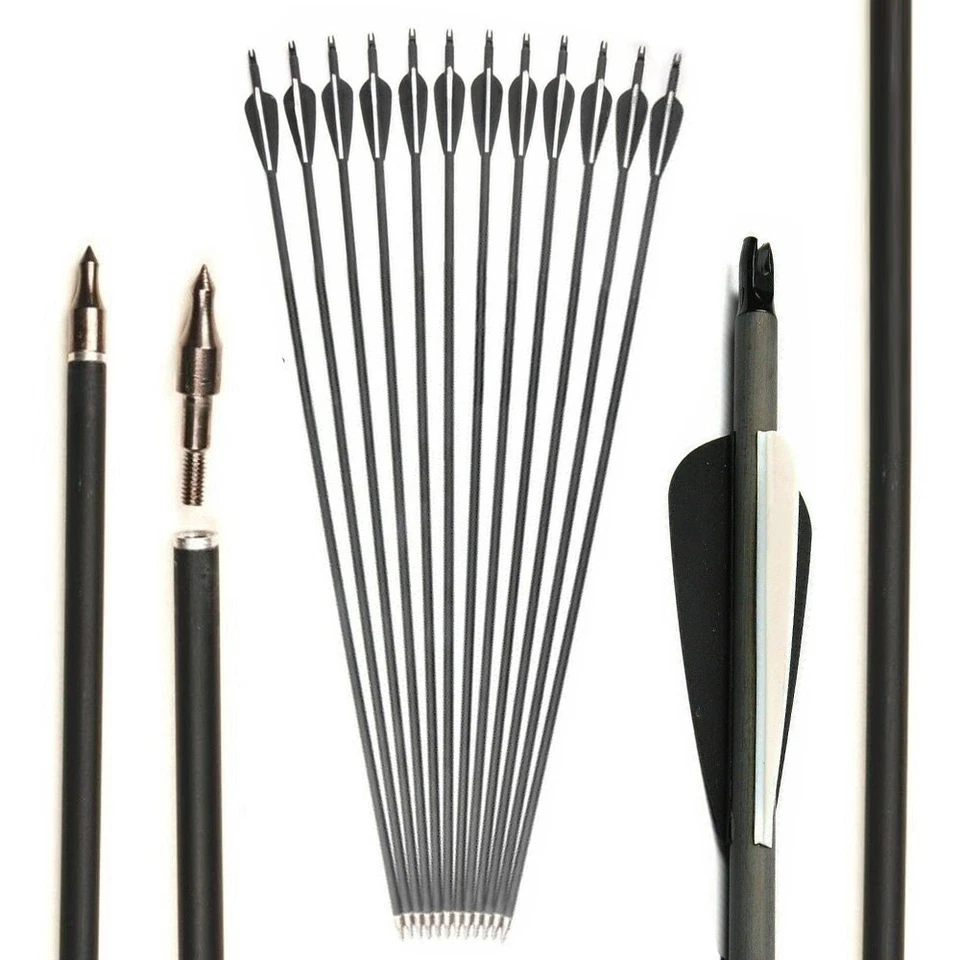
The first is total finished weight — everything on the arrow added together: the shaft, the insert, the point or broadhead, the nock, the fletching, and any wraps. This is the number that determines how much kinetic energy your bow transfers into the arrow and how that energy survives the flight. The second is GPI, or grains per inch, which is a property of the bare shaft alone. A shaft rated at 8.5 GPI weighs 8.5 grains for every inch of its length before you add any components. GPI matters when you cut a shaft down, because a shorter arrow is a lighter, stiffer arrow.
Hunters often layer a third concept on top: grains per pound of draw weight, or GPP. A 70-pound bow shooting a 350-grain arrow is running 5 grains per pound, which is about as light as most manufacturers will warranty. Push that same bow to 500 grains and you are at roughly 7.1 GPP, a heavier, quieter, more efficient setup. None of these three numbers tells you how the mass is distributed, though — and distribution is where FOC enters.
Front of Center: Where the Weight Lives
FOC describes how far forward the arrow’s balance point sits, expressed as a percentage of the arrow’s overall length. An arrow that balanced perfectly in the geometric middle would have 0% FOC. Because the point and insert live at the front, real arrows always carry their balance point ahead of center, and the percentage tells you by how much. A typical target arrow lands somewhere around 7% to 12% FOC, while hunting builds commonly reach 12% to 15%, and “extreme FOC” enthusiasts push past 20%.
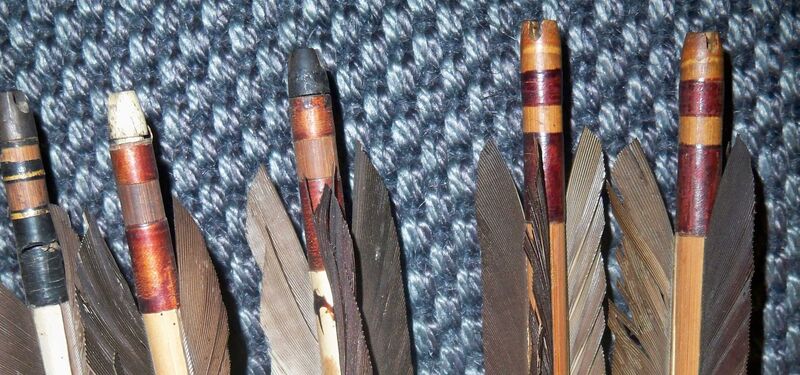
Think of FOC the way you would think about a dart versus a pencil. A dart flies point-first and self-corrects because its mass is concentrated up front; a pencil tumbles because its weight is spread evenly. The more weight you concentrate toward the tip of an arrow, the more the shaft “wants” to fly straight, dragging its lighter back end into line behind the heavy nose. That self-righting behavior is the whole reason FOC is worth measuring.
How to Calculate FOC
The math is simpler than the jargon suggests, and you only need a ruler and a finished arrow. First, measure the full length of the arrow from the throat of the nock — where the string sits — to the very end of the shaft, not including the point. Call that number L. Next, balance the finished arrow on a thin edge, like the back of a knife or a dedicated stand, until it sits level, and mark that balance point. Measure from the throat of the nock to that mark and call it A.
Now plug the two numbers into the standard formula: FOC equals 100 times the quantity (A minus L divided by 2), all divided by L. If your arrow is 28 inches long and balances 16 inches from the nock, then L over 2 is 14, A minus 14 is 2, and 2 divided by 28 is 0.0714. Multiply by 100 and you get 7.1% FOC. Change nothing but the point — swap a 100-grain tip for a 150-grain broadhead — and that balance point marches forward, lifting the percentage into hunting territory without touching spine or length.
Why Balance Point Changes How an Arrow Flies
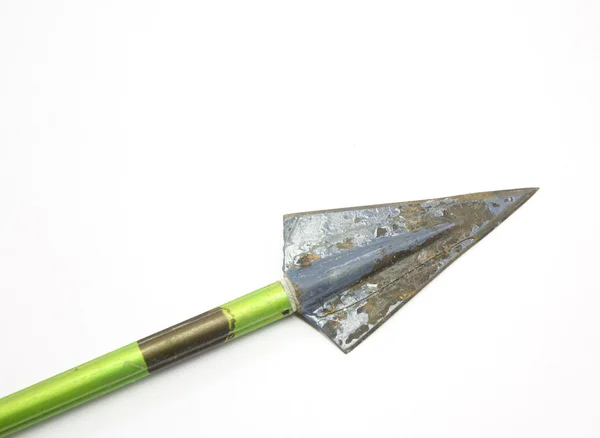
Higher FOC buys you forgiveness. An arrow with more weight forward recovers faster from the flexing it undergoes as it leaves the bow — the phenomenon known as archer’s paradox — and settles into stable flight sooner. That stability is especially valuable with broadheads, whose blades act like small wings that amplify any steering error. A fixed-blade broadhead on a low-FOC arrow will often plane away from where your field points hit, and no amount of sight adjustment fully fixes it. Add forward weight and the broadhead falls back into line with the field points.
The trade-off is trajectory. Weight forward does not create energy; it redistributes it and adds mass. A heavier, high-FOC arrow leaves the bow slower and drops more over distance, which means your sight pins stack closer together and gaps between yardages grow. For a treestand hunter shooting inside 40 yards, that drop is a fair price for deep, reliable penetration and quiet flight. For a target archer ranging out to 70 meters, too much FOC turns into a rainbow trajectory that magnifies ranging errors, which is exactly why competitive target FOC tends to stay modest.
Penetration is where high FOC earns its reputation. A forward-heavy arrow keeps driving after impact because its momentum is concentrated behind the tip, and it resists deflecting off angled resistance. This is why bowhunters chasing large-bodied animals gravitate toward heavier points and higher FOC — they are trading a little speed for the confidence that the arrow will bury itself rather than glance.
Shop Fixed-Blade Broadheads on Amazon →
How Total Weight and FOC Work Together
Here is the point most arrow-build guides gloss over: total weight and FOC are two dials, not one, and they interact. You can build a heavy arrow with low FOC by loading grains into the back half — heavier shafts, larger nocks, big vanes — and you will have a slow arrow that still flies like a pencil. You can also build a relatively light arrow with high FOC by keeping the shaft thin and putting a heavy point on the front. The arrows will feel and fly nothing alike even if a scale says they weigh the same.

This is also why raising point weight to chase FOC has a spine consequence. A heavier point makes the shaft behave as if it were weaker, or more flexible, because there is more mass resisting the string’s push at launch. Push point weight up far enough and a shaft that was perfectly tuned suddenly reads as underspined, and your groups open up. The forward weight and the spine have to be solved together, not in sequence, which is why serious arrow builders treat point weight, insert weight, shaft spine, and length as a single system.
Tuning FOC Without Wrecking Your Spine
The cleanest lever for FOC is point weight. Field points and broadheads commonly come in 100, 125, and 150 grains, and stepping up a size is the fastest way to move the balance point forward. Because heavier points soften effective spine, you often pair a heavier point with a slightly stiffer shaft or a shorter cut to keep the arrow tuned.
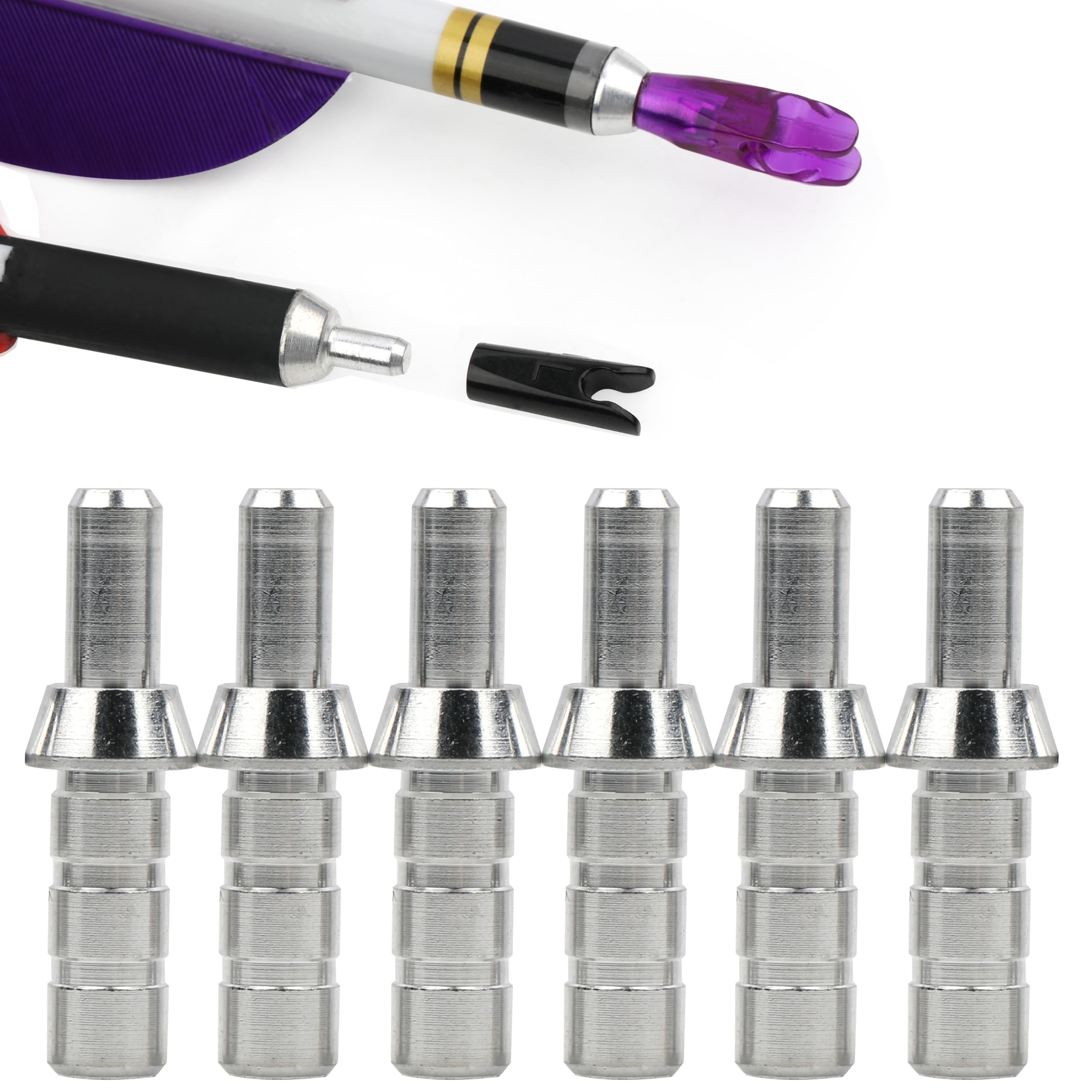
The second lever is the insert. Standard aluminum inserts add a modest few grains, but brass inserts and dedicated weighted collars can add 20, 50, or even 75 grains right at the front of the shaft — an enormous FOC boost per grain because it sits so far forward. Half-outs and outserts do the same job on modern micro-diameter shafts. Because this weight lands ahead of the balance point, it moves FOC more efficiently than the same grains added to the point itself.
Shop Brass Arrow Inserts on Amazon →
Working the back of the arrow moves FOC the other direction. Smaller-diameter nocks, shorter and lighter vanes, and skipping heavy wraps all shift the balance forward by removing rear weight. It is a subtle adjustment compared with point and insert changes, but it is free FOC if you were going to refletch anyway. What you should not do is chase a number blindly — the goal is an arrow that groups tightly and flies the same with broadheads as with field points, not a spreadsheet trophy.
Finding the Numbers That Fit Your Shooting
There is no universal “correct” FOC, only a right answer for a given purpose. Indoor and 3D target archers who prize a flat trajectory and tight ranging usually sit in the 7% to 11% range, favoring a slightly lighter, faster arrow. Western bowhunters shooting variable distances often settle around 10% to 14%, balancing trajectory against broadhead stability. Hunters after heavy game, or anyone who wants maximum penetration and quiet flight, climb toward 15% and beyond, accepting a loopier arc as the cost of momentum.
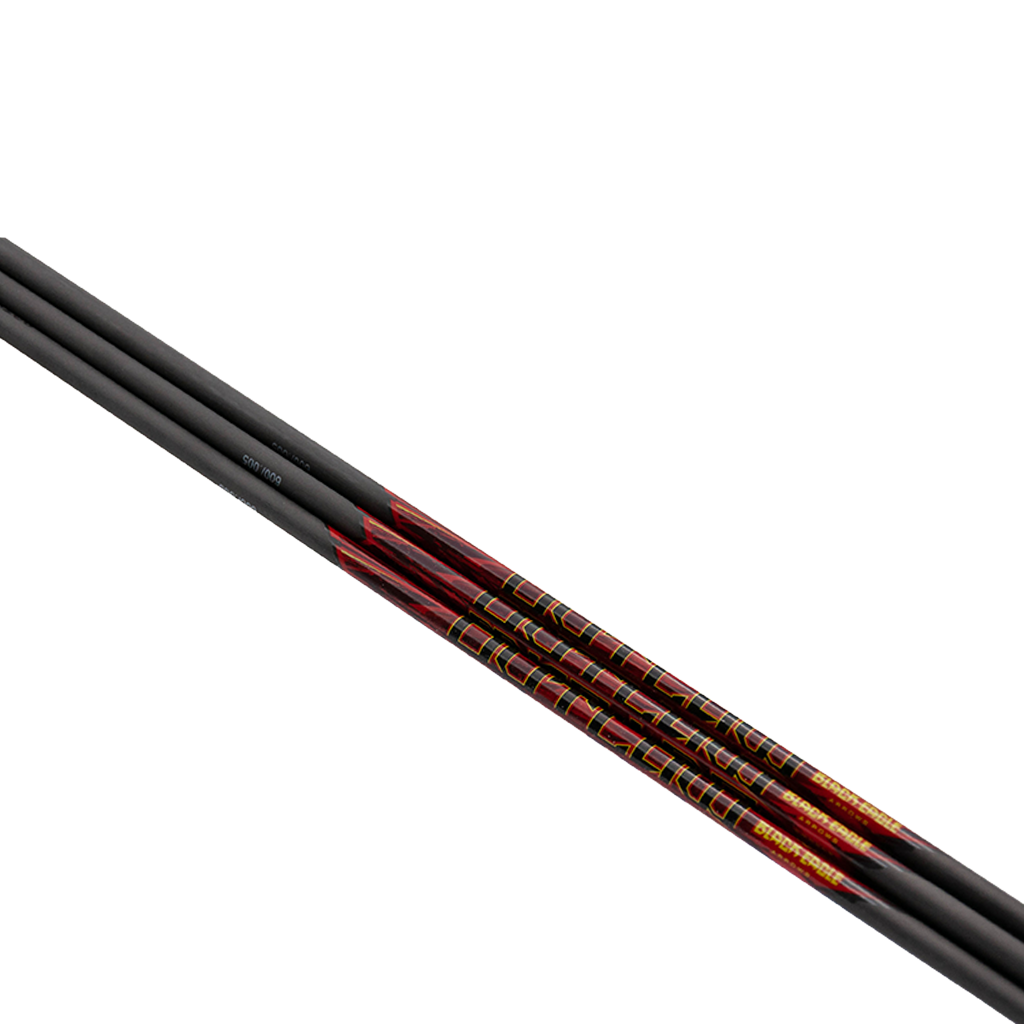
To dial any of this in reliably you need to actually weigh components, because a scale ends the guesswork. A grain scale lets you confirm that all your arrows match within a few grains — mismatched arrows print vertical fliers no tuning can cure — and it lets you verify a build before you glue anything permanently. Pair the scale with the FOC formula above and a balance stand, and you can predict how an arrow will fly before you ever nock it.
Shop Archery Grain Scales on Amazon →
Putting It All Together
Arrow weight and FOC are the two levers that turn a generic shaft into a purpose-built projectile. Total grains govern how much energy and momentum the arrow carries and how quietly it flies; FOC governs how that mass is arranged and therefore how forgiving, stable, and penetrating the arrow becomes. Change one and you almost always nudge the other, and both ride on top of a correctly matched spine.
The archers who shoot the most consistent arrows are not chasing a magic percentage — they are measuring what they build, testing broadheads against field points, and adjusting point and insert weight until flight and grouping agree. Spend an afternoon with a scale, a ruler, and a few point weights, run the FOC math on each build, and you will understand your setup better than most shooters ever bother to. That understanding, far more than any single number, is what puts arrows where you aim them.
Sources
- Wikipedia — Arrow construction and components
- Wikipedia — The grain as a unit of mass
- Wikipedia — Archer’s paradox and arrow flexing
- Easton Archery — Arrow shaft and spine reference
