Archery Blog
Arrow Selection Decoded: Spine, Material & Fletching for 2026 (2026)
Jun
An arrow is the one variable your bow can’t fix. You can micro-tune cam timing, dial in brace height, and shoot the most expensive release on the market — but a mismatched arrow turns every shot into a guess. The shaft that leaves your string carries every bit of energy you built, and if the spine is wrong, the fletching is wrong, or the front-of-center is off, that energy bleeds sideways instead of going into the target.
The good news: arrow selection is solvable. Spine, shaft material, fletching choice, and point weight interact in predictable ways. Once you understand the four levers and how they push against each other, building a quiver of arrows that flies clean stops being a black art and starts looking like a checklist. This 2026 edition walks through every decision in the order you should make it, so the arrows in your hand actually match the bow on your hip.
Why Arrow Selection Outweighs Bow Choice
Most archers spend months researching their next bow and then grab whatever arrows the pro shop has on the rack. That order is backwards. Two shooters with identical bows and identical form will see wildly different groups if one is shooting a properly spined, properly weighted arrow and the other is shooting whatever the catalog displayed first. Arrow flight starts the instant the string releases, and the shaft you chose is doing the actual work of converting stored energy into a downrange hole.
If your bow is throwing arrows left and you keep adjusting your sight, your rest, or your grip — but never your arrow — you may be solving the wrong problem. Spend the same care selecting the shaft that you spent selecting the bow and the rest of the tuning process becomes refreshingly short.
Understanding Arrow Spine
What Spine Actually Measures
Spine is the measurement of how much an arrow bends under a known load. The Archery Trade Association standard hangs a 1.94-pound weight at the center of a 28-inch suspended shaft and reads how far the middle deflects in thousandths of an inch. A 300-spine arrow flexes 0.300 inches under that load. A 500-spine arrow flexes 0.500 inches. Lower numbers mean a stiffer arrow; higher numbers mean a more flexible one. Counterintuitive, but consistent across every manufacturer that follows the ATA spec.
Static vs Dynamic Spine
The number printed on the shaft is the static spine — what the arrow does when nothing is moving. Dynamic spine is what the arrow actually does when your bowstring slams it forward at 290 feet per second. Dynamic spine is influenced by point weight, shaft length, insert weight, bow draw weight, cam aggression, and even string material. Two identical 340-spine shafts can behave like different arrows once you change the broadhead or trim a half-inch off the back.
The takeaway: charts give you a starting point, not a final answer. Once you have the right static spine, you tune dynamic spine with point weight and length.
Matching Spine to Your Setup
Every major arrow brand publishes a spine chart that plugs in your draw weight, draw length, and point weight to spit out a recommended shaft. For most compound shooters pulling 60 to 70 pounds at a 28- to 30-inch draw, that lands you between 340 and 400 spine. Heavier draws and longer shafts push you toward stiffer spines (lower numbers). Lighter draws and shorter shafts push you toward weaker ones.
Traditional and recurve shooters work the same chart in reverse — most stickbow setups under 50 pounds want something in the 500 to 600 spine range. When you’re caught between two recommendations, err stiffer. An over-spined arrow forgives a heavier point; an under-spined arrow porpoises and recovers slowly out of the bow.
Arrow Shaft Materials Compared
Carbon Fiber
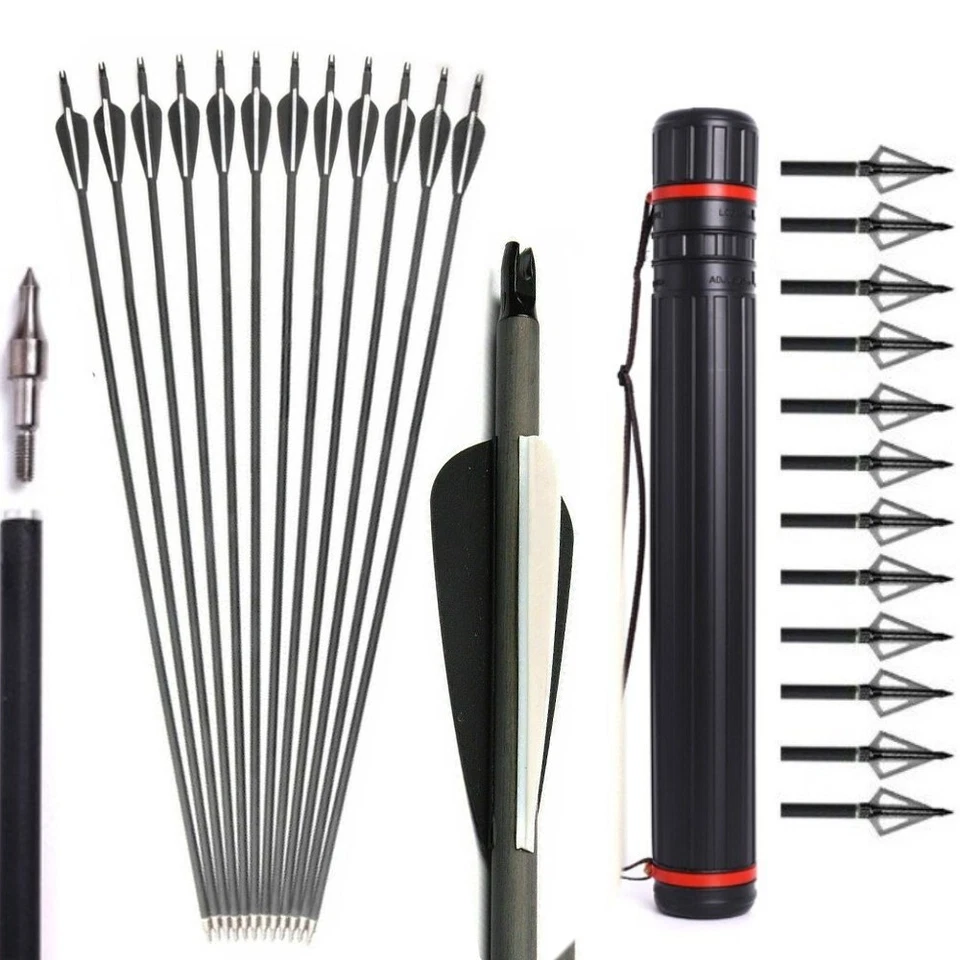
Carbon dominates the sport for one reason: it holds straightness through abuse. A good carbon shaft is rated to a straightness tolerance of ±0.001 or ±0.003 inches — numbers a wood shaft simply cannot hit. Carbon is light, recovers quickly in flight, and forgives the small inconsistencies in form that wreck other materials. The downside is cost (premium carbon runs $15 to $25 per shaft) and the risk of unseen micro-fractures after a hard impact. Flex a carbon arrow before every session and listen for cracking; retire it immediately if you hear or see anything.
Aluminum
Aluminum was the gold standard before carbon took over and still has a place in the quiver. It’s consistent shaft-to-shaft, easy to spine-match, and visibly bends rather than hiding damage like carbon does. Indoor target shooters often pick large-diameter aluminum because the fatter shaft catches more line scoring. The trade-off is weight and fragility on lateral impacts — a glancing hit on a tree trunk that would leave a carbon arrow intact can ruin an aluminum shaft.
Carbon-Aluminum Hybrid
Hybrid shafts wrap a carbon core in an aluminum sleeve, marrying the straightness of carbon with the diameter consistency of aluminum. They are the priciest arrows on the market — often $30 to $60 each — but they dominate target archery at the international level for a reason. If your competition rules let you shoot them and your wallet can take the hit, hybrids are the closest thing to a flawless arrow that exists.
Wood
Wood arrows belong to traditional and primitive archery. Port Orford cedar is the classic, but Douglas fir, sitka spruce, and ash all show up in custom shops. Wood is heavy, slower in flight, and never matches the spine consistency of carbon — but for a 45-pound longbow at 20 yards, none of that matters. Wood is quiet on the shelf and matches the aesthetic of a stickbow in a way that synthetics simply don’t. Just don’t expect to use them for elk at 50 yards.
Shop Carbon Hunting Arrows on Amazon →
Fletching Choices for 2026
Vanes Versus Feathers
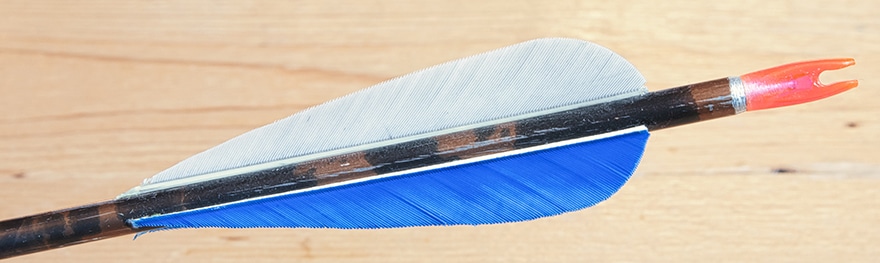
Plastic vanes are the default on every factory compound arrow because they’re cheap, weatherproof, and durable. Feathers are louder, slower, and absorb water — but they grip the air harder, recover from launch deviation faster, and fold flat when they meet an arrow rest. Compound shooters running a fall-away or drop-away rest can shoot either; recurve and longbow shooters who use a shelf or finger rest almost always go feather because the contact would crush a vane.
Length and Profile
Short vanes (1.5 to 2 inches) are for high-velocity target arrows where drag is the enemy. Tall, parabolic vanes in the 4- to 5-inch range belong on hunting arrows tipped with broadheads, where the larger steering surface is needed to stabilize the wider, blade-cut front end. For most general-purpose carbon arrows, a 2.5- to 3-inch low-profile vane is the workhorse choice — fast enough not to bleed speed, tall enough to recover from broadhead torque.
Helical, Offset, and Straight
The angle the fletching sits relative to the shaft is where most archers leave performance on the table. A straight fletch produces the least drag and the highest speed but offers almost no rotational stability. An offset fletch tilts the vane a few degrees off-axis without curving it — a moderate amount of spin for minimal speed loss. A helical fletch twists the vane along the length of the shaft and produces the most aggressive spin, the fastest recovery, and the best broadhead stability — at the cost of three to five feet per second.
For target arrows inside 30 yards, straight or offset is fine. For broadheads, hunting, or anything past 40 yards, helical is the right answer almost every time.
Arrow Length and the Cut
Arrow length is measured from the throat of the nock to the end of the shaft — not including the point. The rule of thumb is to start with a shaft that sits, at full draw, one inch in front of the arrow rest, then trim from there. Cutting an inch off a shaft stiffens the dynamic spine noticeably, so cut conservatively. You can always trim more; you cannot add carbon back.
For compound shooters, longer arrows let you push more weight forward without going to a heavier point. For traditional shooters, longer arrows weaken the dynamic spine, which can be useful when you’re caught between two static spine recommendations.
Points, Inserts, and the FOC Question
Front of Center (FOC) is the percentage of total arrow weight that sits in front of the shaft’s balance point. A target arrow lives happily at 7 to 10 percent FOC. A hunting arrow ideally sits at 12 to 18 percent. Heavy single-bevel and ultra-EFOC builds push that number to 19 percent or higher, trading speed for terminal momentum that drives through bone instead of deflecting off it.
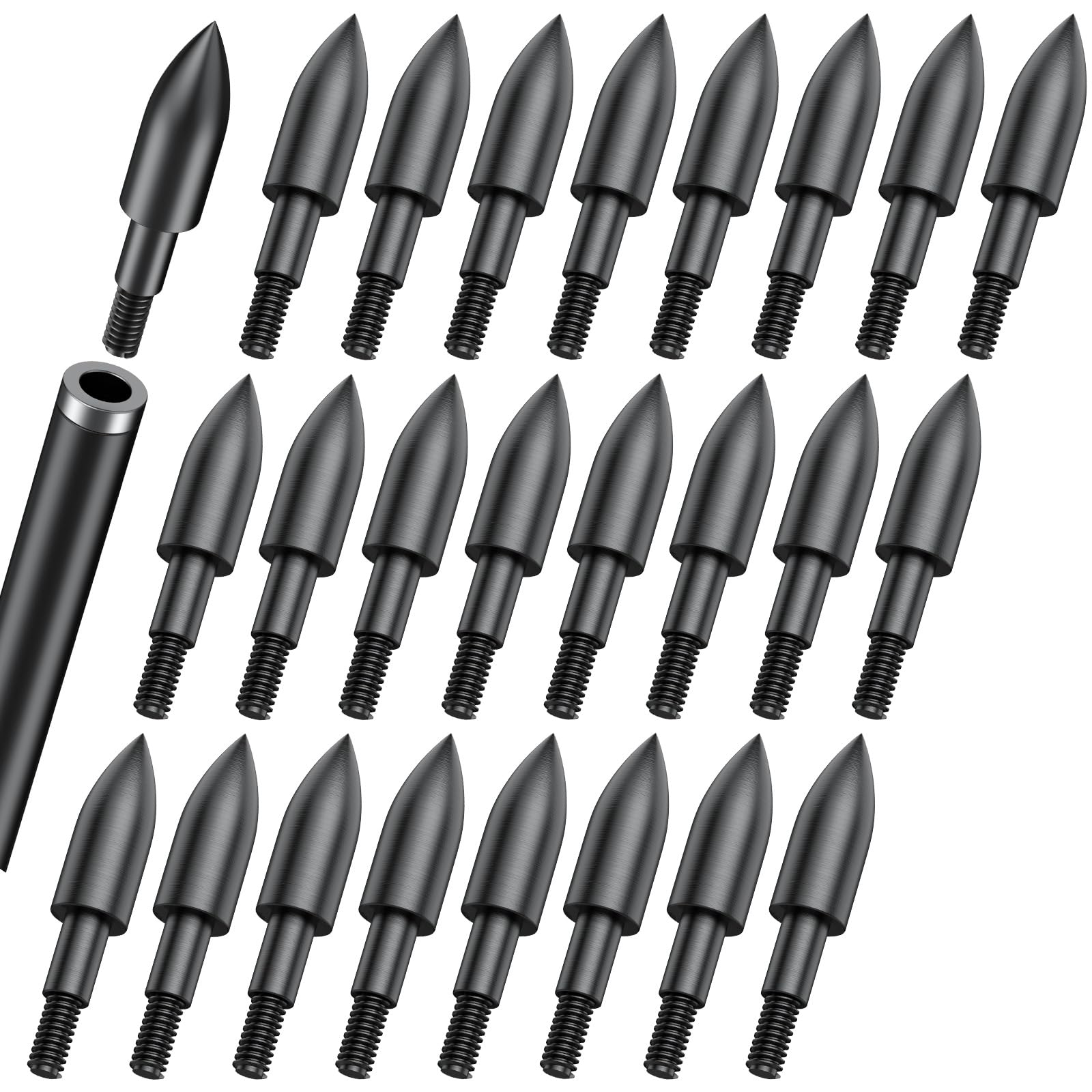
You raise FOC by going to heavier points (125, 150, 175, even 200 grains), heavier brass inserts, or by shortening the shaft. You lower FOC by going to lighter points or longer shafts. Increasing FOC also weakens the dynamic spine, so every time you swap points you may need to recheck arrow flight through paper or bare-shaft testing.
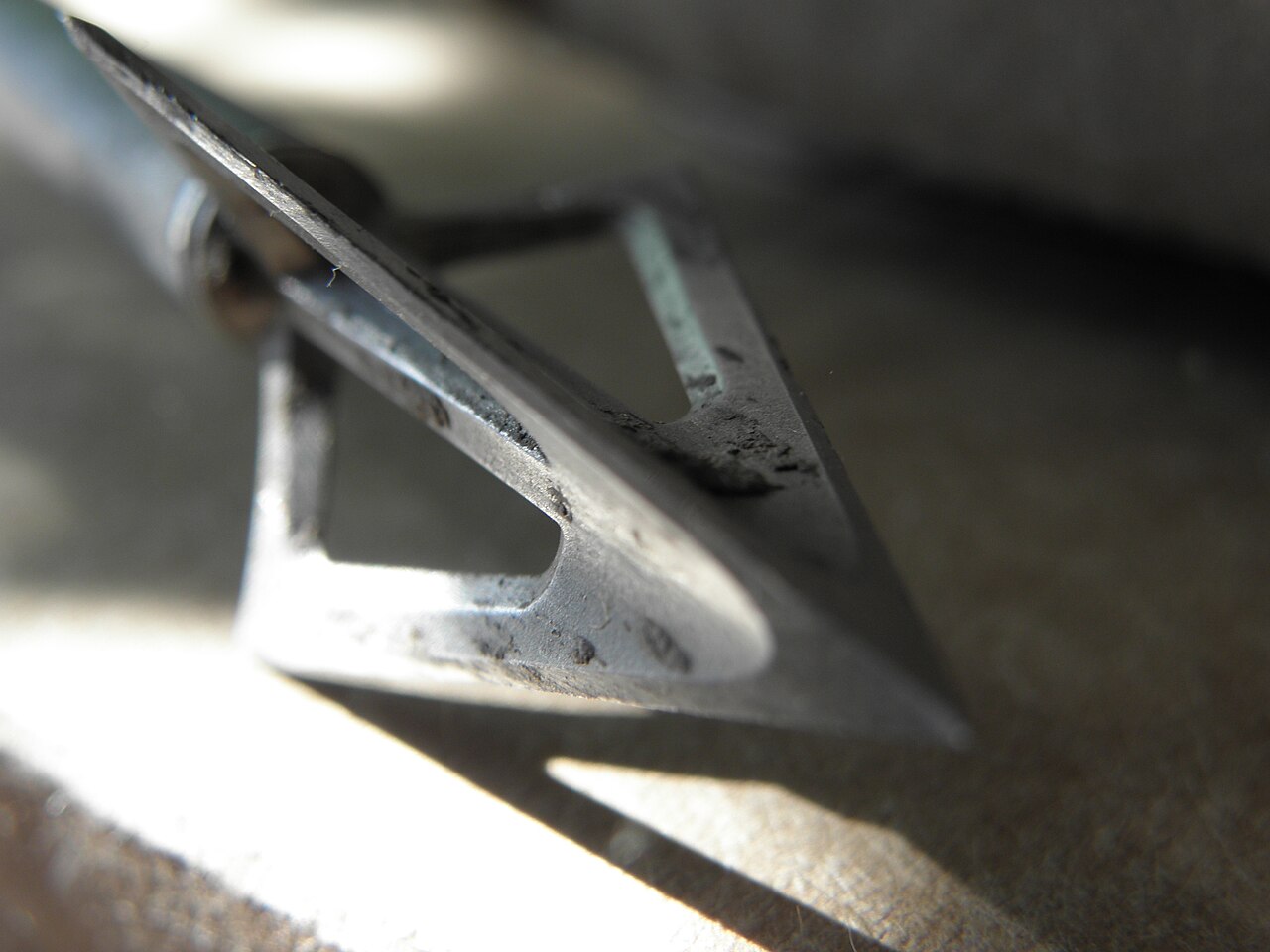
Shop Archery Field Points on Amazon →
Nock Fit and Throat Tension
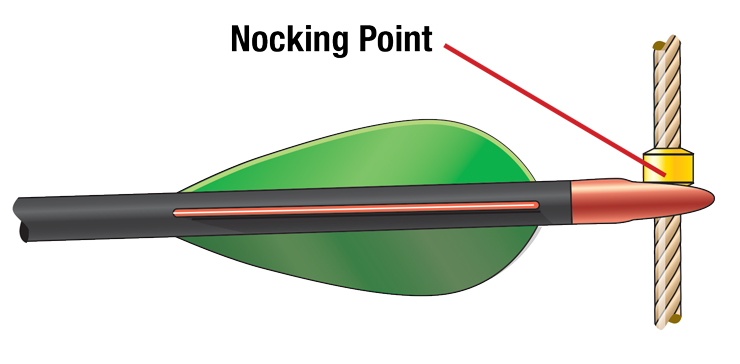
The nock is the smallest piece of the arrow and the easiest to ignore. A loose nock lets the arrow slip on the string at the worst possible moment; a tight nock pinches and skews launch. The proper test is to snap an arrow on the string vertically and tap the string a few inches below the arrow. The arrow should fall free with a firm but controlled drop. If it sticks and dangles, the throat is too tight. If it falls without any resistance, it’s too loose. Replace whichever nocks fail the test — they’re cheap insurance against missed shots.
A Real Build Example
Say you shoot a 70-pound compound at a 29-inch draw with a 100-grain broadhead for hunting. The spine chart drops you on a 340-spine carbon shaft cut to 28.5 inches. You fletch with 3-inch helical vanes for broadhead stability. You add a 50-grain brass insert behind a 100-grain head, putting 150 grains up front for a finished FOC near 14 percent. Total arrow weight lands somewhere in the 460- to 480-grain range — heavy enough to penetrate, light enough to stay flat to 50 yards. Paper tune, bare-shaft tune, then group at distance. If it groups with field points and broadheads in the same hole at 30 yards, you have an arrow you can trust on game.
Common Arrow Selection Mistakes
The mistake archers make most often is trusting the box. A factory-fletched arrow sold as “compatible with bows up to 70 pounds” is almost always under-spined for the high end of that range, especially with anything but a 100-grain field point. The second mistake is mixing arrow batches — even within the same brand and spine, different production runs can carry small differences in wall thickness and weight. Buy a dozen at a time, weigh them on a grain scale, and segregate any outliers more than three grains off the average for stump shooting only.
The third common error is hunting with target arrows. A 350-grain target arrow at 290 fps will hit a deer with the same kinetic energy as a 480-grain hunting arrow at 250 fps on paper — but the heavier arrow drives through bone, and the lighter one is far more likely to deflect on a rib. Speed sells; mass kills.
Shop Arrow Fletching Jigs on Amazon →
When to Replace Your Arrows
Carbon arrows do not retire on a schedule; they retire on damage. Flex each shaft between your hands before every session and rotate it slowly under your ear. Any cracking sound, splintering, or visible discoloration means the shaft goes in the trash, not the quiver. Aluminum arrows that show any bend should be checked on a rolling block, and wood arrows that have absorbed humidity should be allowed to dry and rolled flat on a hard surface to check for warping. The cost of a single arrow is a fraction of the cost of a fragmented shaft buried in your bow hand at full draw.
Sources
- Archery Trade Association — ATA spine standards and arrow specifications
- Wikipedia: Arrow — Materials, construction, and history overview
- USA Archery — Equipment guidelines and competition rules
